WORKOUTS

TREADMILL BOREDOM BUSTING WORKOUTS: HOW TO MAKE YOUR TREADMILL RUNS NOT SUCK

Welcome to the latest edition of Workout Wednesday! I was going to call this article how to make your treadmill runs fun, but I thought you might question my sanity if I used the words fun and treadmill in the same sentence. Let's just go with How To Make Your Treadmill Runs Not Suck.

I love outdoor running. I never had the kind of love for treadmill running as I do for the outdoors. However, I have to admit there are many good reasons to use the treadmill: They allow you to have strict control over your speed and time, they provide shelter from the weather and a safe environment to run, day or night. They are great for speed work training. The problem is that is that treadmills can be mind-numbingly boring. No one likes to feel like a hamster, going nowhere.

The thing is, you may be going nowhere is terms of physical space, but treadmill runs can help you meet your running goals. If your goal is to run faster, the treadmill can take you places. Here are some boredom busting treadmill workouts that will make the time fly by!

THE ULTIMATE BOREDOM BUSTING TREADMILL WORKOUTS
 

Here are a few ideas for treadmill workouts that beat the boredom. Interval workouts are great for your fitness and can help you mentally get through the workout. By changing up the variables you'll find that the time goes by so quickly you may not even need to cover the console with a towel.

PYRAMID SPEED WORKOUT

1. Walk for five minutes on the treadmill to warm up.
2. Increase your pace to a slow running pace that feels easy and comfortable to you for one minute. 
3. Every minute increase the MPH by .5 on the treadmill until you reach your max running pace.
4. Run for one minute at each .5 increment until you reach your max. You'll know your max when you get there, if you can't keep it up for a minute or if your breathing is really labored, you went too far.
5 Once you reach your max, start moving back down at .5 MPH increment at a time, for one minute, until you reach your slowest running pace again.
6. Repeat 2-3 times.

This is an example of what this workout might look like. Do not arbitrary follow these speeds. This example may be too advanced for some runners and too easy for others. The key is start at your easy pace and advance the speed by .5 mph until you reach your max. It will be different for everyone.
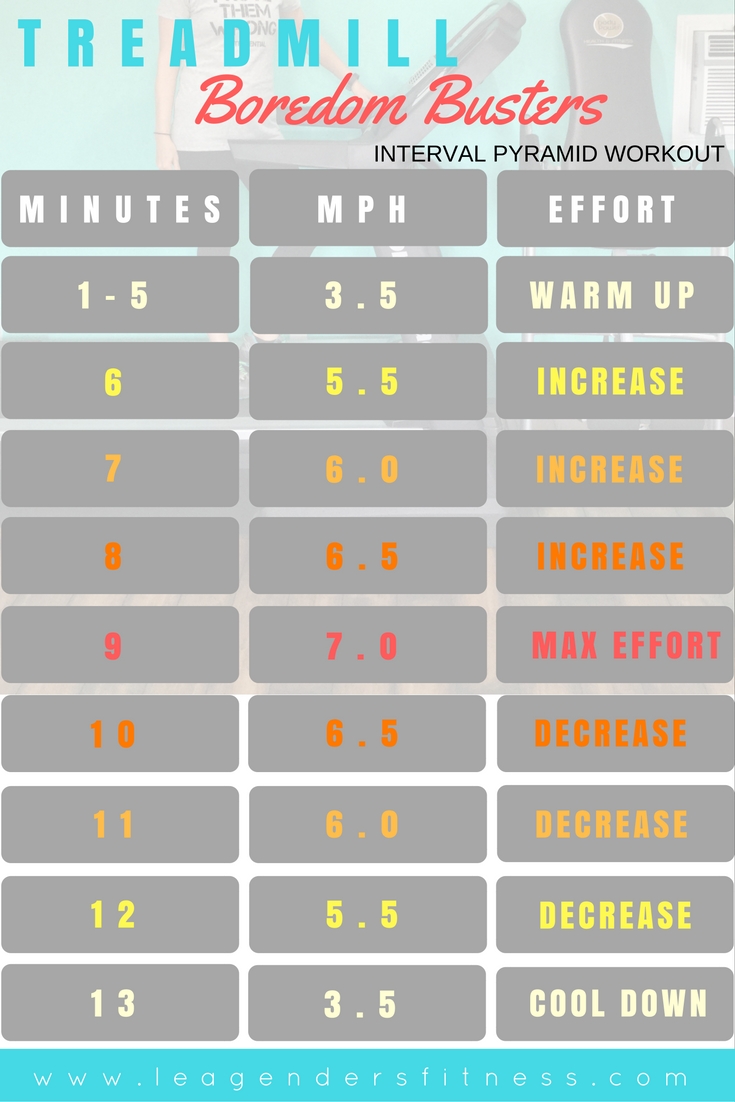
The great thing about this workout is that you can adjust it as your get stronger so that you are always pushing yourself. Adjust your slowest and fastest time to your current fitness level. If this is too slow for you, start at a faster pace and peak at a faster pace. This is a beginner's workout example. If it is too easy or too hard, adjust accordingly.

INTERVAL LADDERS

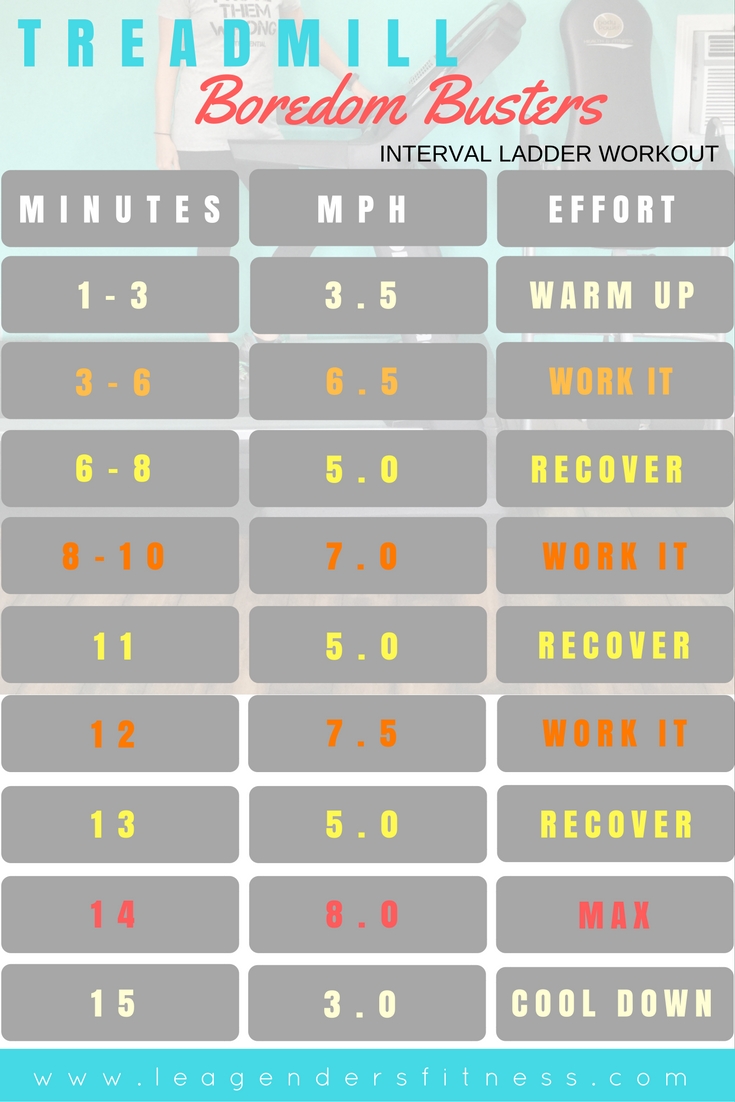
This is my favorite treadmill workout that I do all the time in the Shredshed. You can do it for 15 minutes or repeat for a full 30 minute workout. Each speed interval gets a little faster and shorter. You should build your speed gradually until you find the right pace for your workouts. Again, I can't stress enough that you should run at your own fitness level and not necessarily the speeds on this workout, it is just an example. Adjust your pace slower or faster according to your current fitness levels. 

1. 3 minutes warm up at a very easy speed

2. 3 minutes at a speed that is challenging, but not so challenging that you can't maintain it for 3 minutes.

3. 2 minutes at a jogging recovery pace.

4. 2 minutes at a speed that is slightly faster than your 3 minute interval.

5. 1 minute at a jogging recovery pace.

6. 1 minute at a faster speed than your 2 minute interval

7. 1 minute at a jogging recovery pace

8. 1 minute at a near max effort

9. walk to recover
 

STRENGTH AND SPEED WORKOUT

One of my favorite ways to incorporate strength into my running workouts is to mix up treadmill intervals with strength training. Run for 3 minutes then jump off the treadmill to perform one minute of an arm or core strength move in between intervals. Your "work" effort should be an effort that challenges you for three minutes but not so difficult that you can't sustain it for that time. 


Remember that making a treadmill run not suck is mostly about conquering your mind. For me, it is more of a mental battle than a physical one. When I finish a high intensity treadmill run, I usually step off the treadmill and onto cloud nine. It seems like the more I sweat, and the harder I worked, then the more intense the runner's high...and runner's high doesn't suck!

How about you? How do you make your treadmill runs not suck?

Download a PDF of these 3 workouts here!


Like this post? It helps me when you share.

Any questions? Ask them in the comments or join the conversation and submit your question to be answered in a future blog post. 

Coach Lea

I am a NASM personal trainer and RRCA adult distance running coach that specializes in strength training for runners. I offer in-person training in the Shredshed, online training and Fit to Run bootcamps. If you are interested in a more in-depth running or strength training plan, please contact me. Have questions? I'd love to help. 

While I am a certified personal trainer, I am not your personal trainer. Since I don't know your exercise abilities, injury background or medical history, please see your doctor before beginning any new exercise program.


TRY THIS BOSU BALL LOWER BODY TABATA WORKOUT

Hi, friends. Welcome to another edition of Workout Wednesday! Last week I told you about how I was nursing an arm/shoulder injury that is preventing me from lifting any weights or even running. 

I decided that I would focus on what I could do instead of what I couldn't do and return to the basics. While I am on a temporary hiatus from weight lifting and running, I am working on balance and stability which is the foundation of any good workout program, especially for runners. 

I have a (affiliate link) BOSU ball in the ShredShed that has been collecting dust. I've always loved my BOSU ball I just hadn't made the time for it lately in my strength training routine. Now with my arm injury, I have all the time in the world for it. 

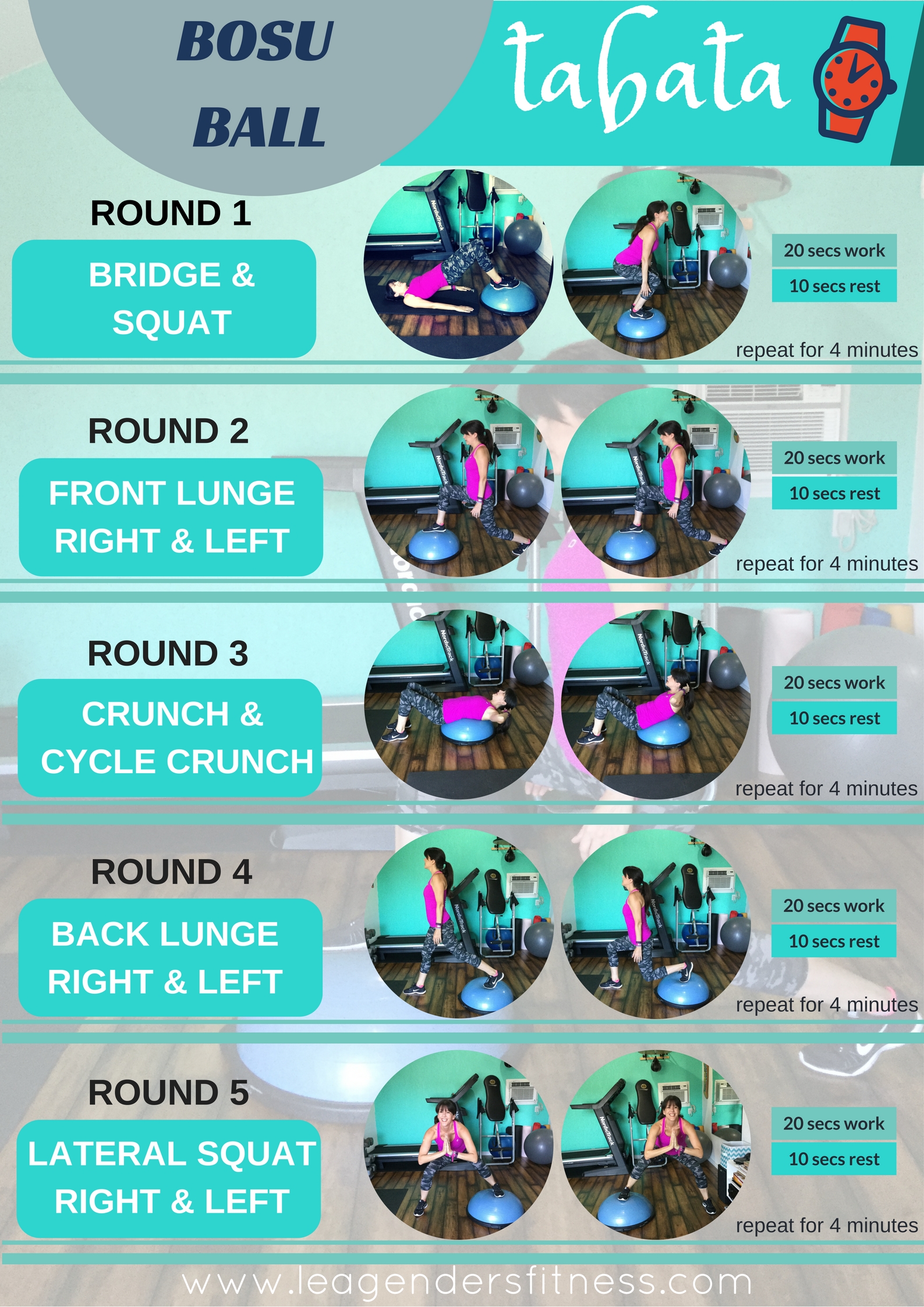
I put together this lower body BOSU Tabata-style workout. It is great for runners because it challenges the core, works the glutes and includes some lateral movements. You can complete the whole workout in 25 minutes. Don't have a BOSU? No problem. You can do the workout without one.

I like the Tabata-style workout because you move in a circuit fashion which keeps the heart rate up for a cardio and strength workout all in one. 

TABATA-STYLE

Try downloading a free Tabata app in the app store for an easy free timer. I use a GymBoss timer it makes it so easy to set varying interval times. Here is how it works:

Round 1

Exercise 1: 20 seconds

10 seconds rest

Exercise 2:  20 seconds

10 seconds rest

Exercise 1: 20 seconds

and so on...for four minutes.

Rest for one minute then move on to the next round.

Give it a try and let me know what you think!

Like this post? Please consider sharing.


Coach Lea

I am a NASM personal trainer and RRCA adult distance running coach that specializes in strength training for runners. I offer in-person training in the Shredshed, online training and Fit to Run bootcamps. If you are interested in a more in-depth running or strength training plan, please contact me. Have questions? I'd love to help. 

While I am a certified personal trainer, I am not your personal trainer. Since I don't know your exercise abilities, injury background or medical history, please see your doctor before beginning any new exercise program.
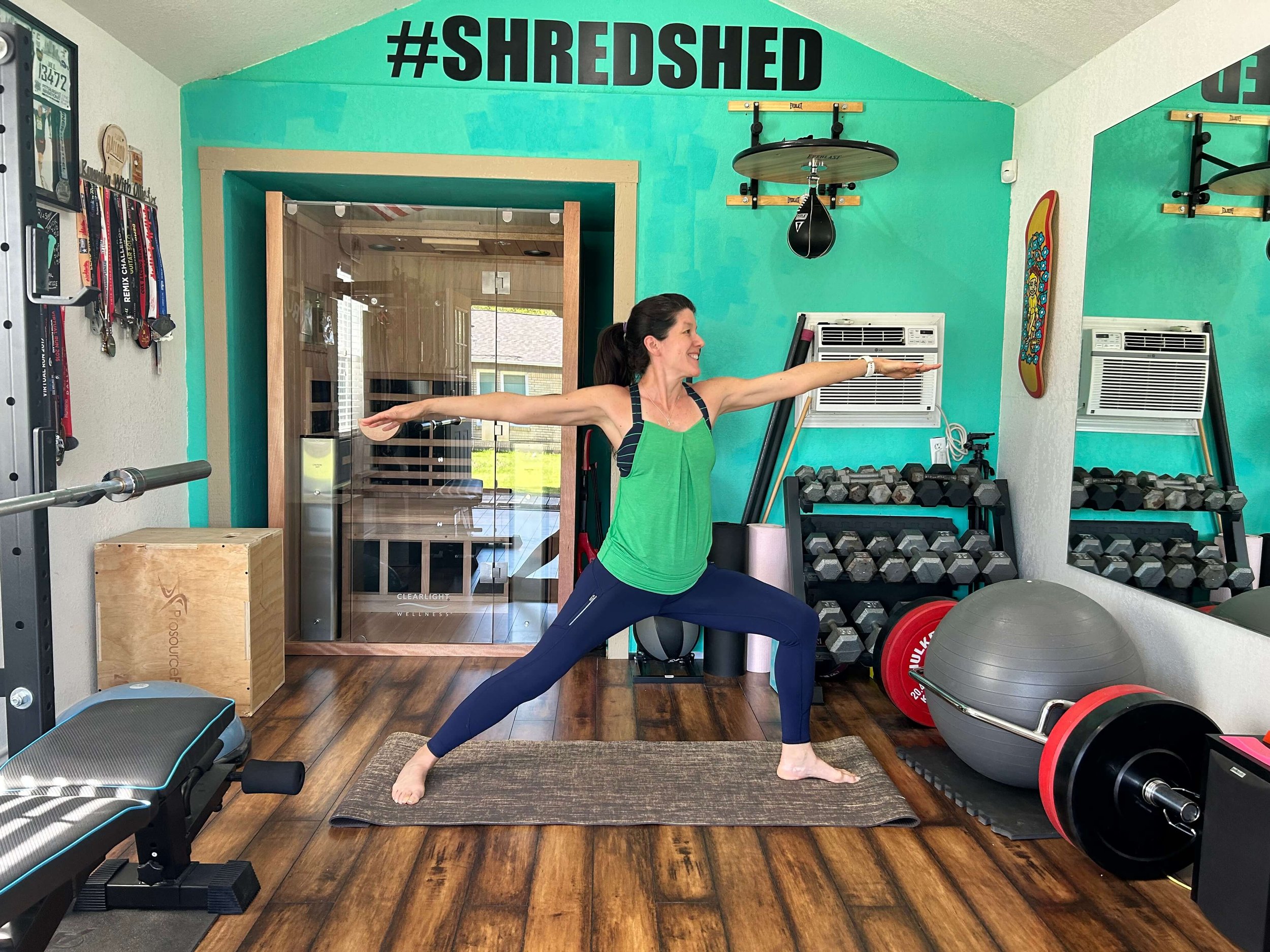
BACK TO THE BASICS: RECOVERY AND FOUNDATION BUILDING PLAN

For workout Wednesday I have some bad news to share. I'm not perfect! Gasp! Shocking! I know. 

It happens to the best of us. I got injured. I know I talk a lot about injury prevention for runners here, but this wasn’t a running injury…but it is preventing me from running. If you’ve even been injured, you know it sucks.

I was working really hard on my pushups. I was progressing quickly. I was feeling so great and confident about it that I pushed my progression too quickly. I know better. Slow progression should always be the goal, but I got overconfident and pushed too far. I pulled a muscle.

This is real life and I am far from perfect. I made a mistake by pushing myself too hard but I was ready to take corrective action. After I realized I did some damage I immediately stopped lifting any weights. You don’t get better by pushing through, you get better by resting. After I hurt my arm, I started running more than usual. I still wanted to workout and instead of dwelling on what I couldn’t do, I decided to focus on what I could do. Besides I love to run, I didn’t think twice about it. 

But time had passed and it wasn’t getting any better, in fact, it seemed to be growing worse. My shoulders felt sore and tight all the time and that pain in my arm wasn’t going away. It occurred to me one day after a six mile morning run when I was in a lot of pain that the arm swinging motion from running was making the problem worse. If I was going to get better then I needed to rest it. Really rest it and that means no running. 

I spent about a week feeling sorry myself and not doing anything but my bare minimum goal of 10K steps day (which, by the way, is a lot harder when you don’t run). It's time to get over it. I decided that this is a great opportunity to get back to the basics. 

I will focus on what I can do, not what I can’t do.


What does that mean when you can’t lift weights or run? It means focusing on lower body, core exercises, balance, mobility and flexibility. It is a great opportunity to return to the basics and rebuild a strong foundation while my arm and shoulder heels. 

It will be frustrating to eliminate weights even from my lower body exercises. Lifting a water bottle with my left arm hurts so I have to be careful not to put any unnecessary pressure on it. Even holding a weight while performing lunges or squats will be too much. I am mentally prepared that this will feel like a giant physical step backwards, but to stay positive as to how consistent work on the basics will propel me forward in the future.

I am breaking out the BOSU ball to work on balance, foam rolling to work on mobility and flexibility and bodyweight exercises for hip, ab and glute strength. 

Who knows? Maybe this was a good thing. It is forcing me to take a step back and rebuild my foundation. Once my base is strong and balanced again and my arm is fully healed, and I will be in a better position to get stronger than ever. 

Stay positive, right? 

So what does that plan look like? It looks like a lot of exercise plans I have shared with you here, so I thought I would round up my best recovery and foundation building exercises.

FOAM ROLLING

Foam rolling plays an important role in muscle balance, injury prevention, mobility and flexibility.

PREHAB

I will need to regress some of these exercises as to not put any pressure on my arm or shoulders, but many of these will work in my recovery plan. Back to the basics of clam shells, hip raises and glute bridges for me.

LOWER BODY STRENGTH

There is always benefit in working on lower body strength and this is a great opportunity for me to focus on balance and unilateral strength since heavy weights are not an option.

CARDIO

Since running is not an option, I will continue to walk on the streets with hubby, but will also work on treadmill hills to increase the intensity of my walks. I think I should be able to do it without much arm motion. I will let you know how it goes. 

I know I can't push recovery any more than I could push progression, but I am hoping to be able to run again by the end of September. I am running the rock 'n' roll half marathon in Vegas in November and I will need the time to get back up to speed with my training. We'll see how it goes.

Next week for workout Wednesday, I will break out the BOSU ball to show you some fantastic effective balance and stability exercises. Despite my injury, I am looking forward to rebuilding and coming back stronger than ever. 

Have you ever felt my pain? Wish me well in the comments. Stay tuned next week for some fun on the BOSU ball.

Like this post? Please consider sharing.


Coach Lea

I am a NASM personal trainer and RRCA adult distance running coach that specializes in strength training for runners. I offer in-person training in the Shredshed, online training and Fit to Run bootcamps. If you are interested in a more in-depth running or strength training plan, please contact me. Have questions? I'd love to help. 

While I am a certified personal trainer, I am not your personal trainer. Since I don't know your exercise abilities, injury background or medical history, please see your doctor before beginning any new exercise program.


Body Weight Boot Camp: Rep Pyramid Workout

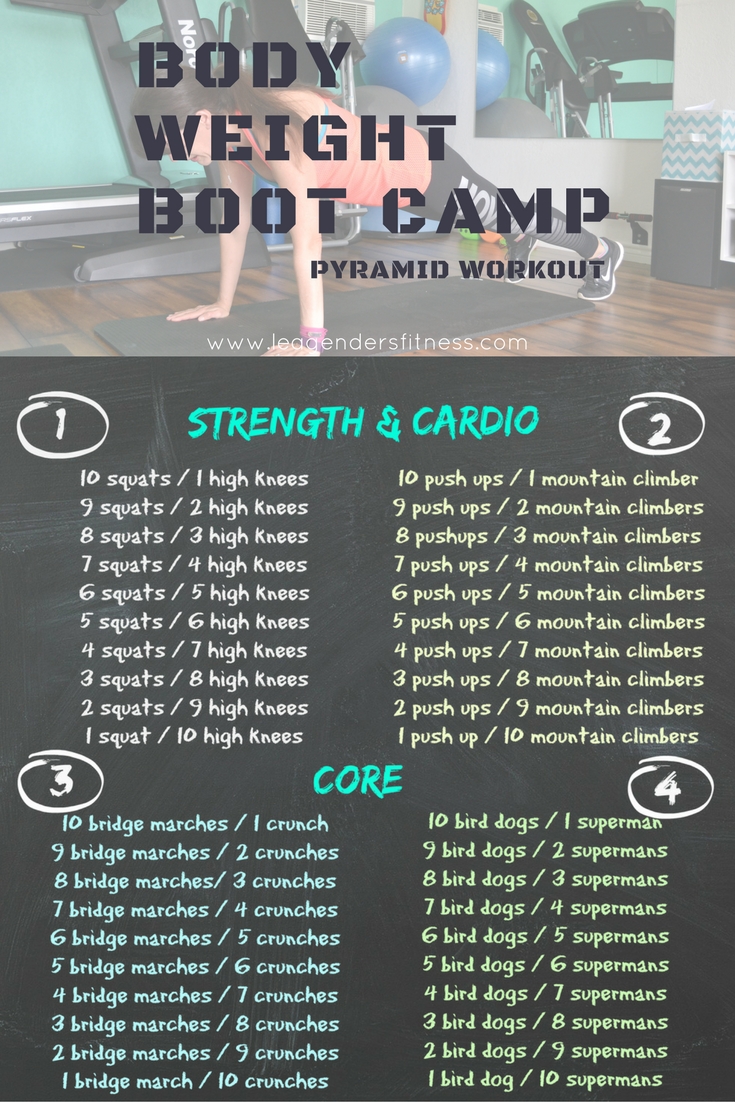
Welcome to the latest edition of workout Wednesday! I am excited to share a great rep-based pyramid workout for you today. This is a high intensity full body workout that you can do anywhere with no equipment. 

Ready to get started? Always warm up before beginning an intense workout. 

CIRCUIT #1: LOWER BODY STRENGTH & CARDIO

The first circuit is a lower body strength and cardio workout. You will perform 10 squats immediately followed by 1 rep of high knees (right up, left up = 1 rep). Without resting, perform 9 squats and 2 high knees, followed by 8 squats and 3 high knees and so on until you reach one squat and 10 high knees. Rest for at least one minute or until you are recovered before moving on the next circuit. 

Squat: Starting with your feet hip width apart, your toes pointing forward and your back straight, push your hips back and lower your body until your thighs are parallel to the floor (or as low as your flexibility allows) like you are sitting in a chair. In the low position engage your core, squeeze your glutes and push up to standing while putting your weight into your heels. 

High Knees: Stand up straight with the feet hip width apart. Jump from one foot to the other while using your core to lift your knee to hip height. Swing your arms with each rep. Touch the ground with the balls of your feet quickly moving back and forth between legs.

CIRCUIT #2: UPPER BODY STRENGTH & CARDIO

The second circuit follows the same format as the first. Start with 10 push ups followed by 1 mountain climber (right leg in, left leg in = 1 rep). Then move on to 9 push ups and 2 mountain climbers, 8 push ups and 3 mountain climbers until you reach 1 push up and 10 mountain climbers. Rest until recovered.

Pushups: Start in a high plank position with your hands placed directly under your shoulders. Keeping your body in a straight line, while engaging your core bend your elbows to slowly lower your chest to the floor. Once in the low position, push back up to the starting position. If this is too challenging, drop to your knees. 

Mountain Climbers: Start in a straight arm plank position with shoulders directly over wrists. Step one foot up in line with hip, then step back to plank position then repeat with opposite foot. This is one rep. Move as quickly as possible while keeping your core engaged and back straight.

CIRCUIT #3: CORE 

Let's start the second half of the workout with some core work that includes your abs and glutes. Start with 10 bridge marches (right leg, left leg = 1 rep) followed by 1 crunch. Follow the rep pyramid until you reach 1 bridge march and 10 crunches. Rest until recovered before moving on to the last circuit.

Bridge Marches: Lie on your back with your knees bent 90 degrees and lift your hips off the floor to form a straight line from your knees to your shoulders. With your hips off the floor bring your knees in towards your chest one at a time to march. March on the right leg then left leg equals one rep. 

Crunches: Lying on your back push your lower back into the floor, place your hands behind your head (do not pull) and lift your shoulders and chest up off the floor into a crunch. Pause for 1 second in top position while engaging your entire core before lowering back to the ground. 

CIRCUIT #4: CORE

Last but not least we have bird dogs and supermans for core work that includes abs, glutes and lower back. Start with 10 bird dogs (right arm and left leg extended hold for 1 second then switch sides = 1 rep) followed by 1 superman. Follow the rep pyramid until you reach 1 bird dog and 10 supermans.

Bird Dogs: On all fours with your wrists directly underneath your shoulders lift one arm off the floor to shoulder height while lifting the opposite leg in line with the hip. Hold for one second and switch sides. 

Supermans: Lying face down on the floor with your arms extended in front of you, raise your arms, chest and thighs off of the floor and hold for one second. Slowly lower your arms, legs and chest back down to the starting position.

Cool down and stretch after completing the workout.

Try it out and let me know how it goes.

LIke this post? It helps me a lot when you share!

Coach Lea

I am a NASM personal trainer and RRCA adult distance running coach that specializes in strength training for runners. I offer in-person training in the Shredshed, online training and Fit to Run boot camps. If you are interested in a more in-depth running or strength training plan please contact me. Have questions? I'd love to help. 

While I am a certified personal trainer, I am not your personal trainer. Since I don't know your exercise abilities, injury background or medical history, please see your doctor before beginning any new exercise program.
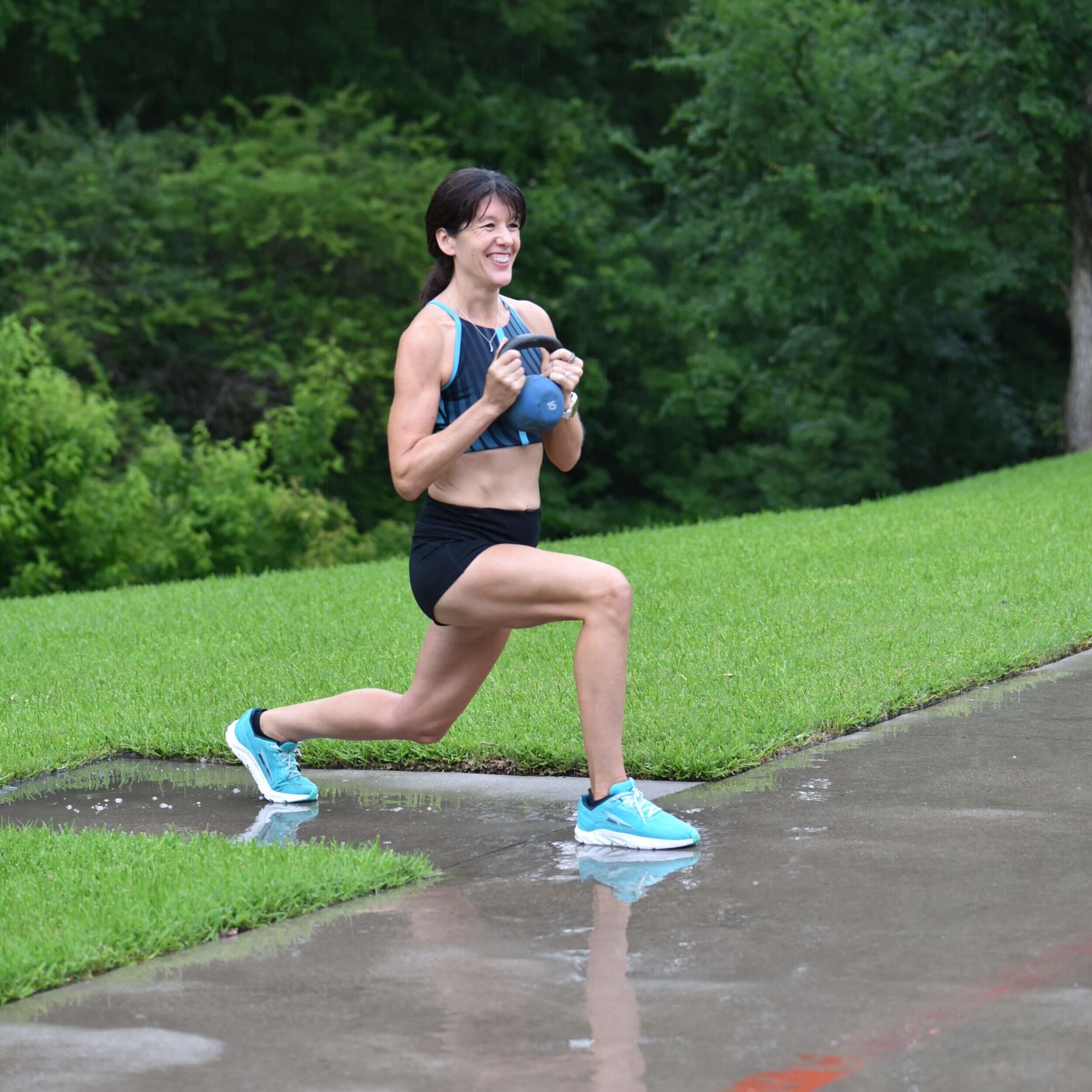


Warm up, Cool Down & Stretching

In this day and age we are often short on time so we look at ways to make things more efficient. What can we do faster? What can we do in less time? Sometimes that means that we do interval workouts instead of ones that take more time with long rest periods. Sometimes it means we increase the intensity but spend less time working out overall. These are great solutions to working out more efficiently but one thing you should never do to save time is skip the warm up, cool down or stretching portions of your workout. Skipping your warm up, cool down and stretching will not get you to your goals faster and may lead to injury, hinder your results and performance. 

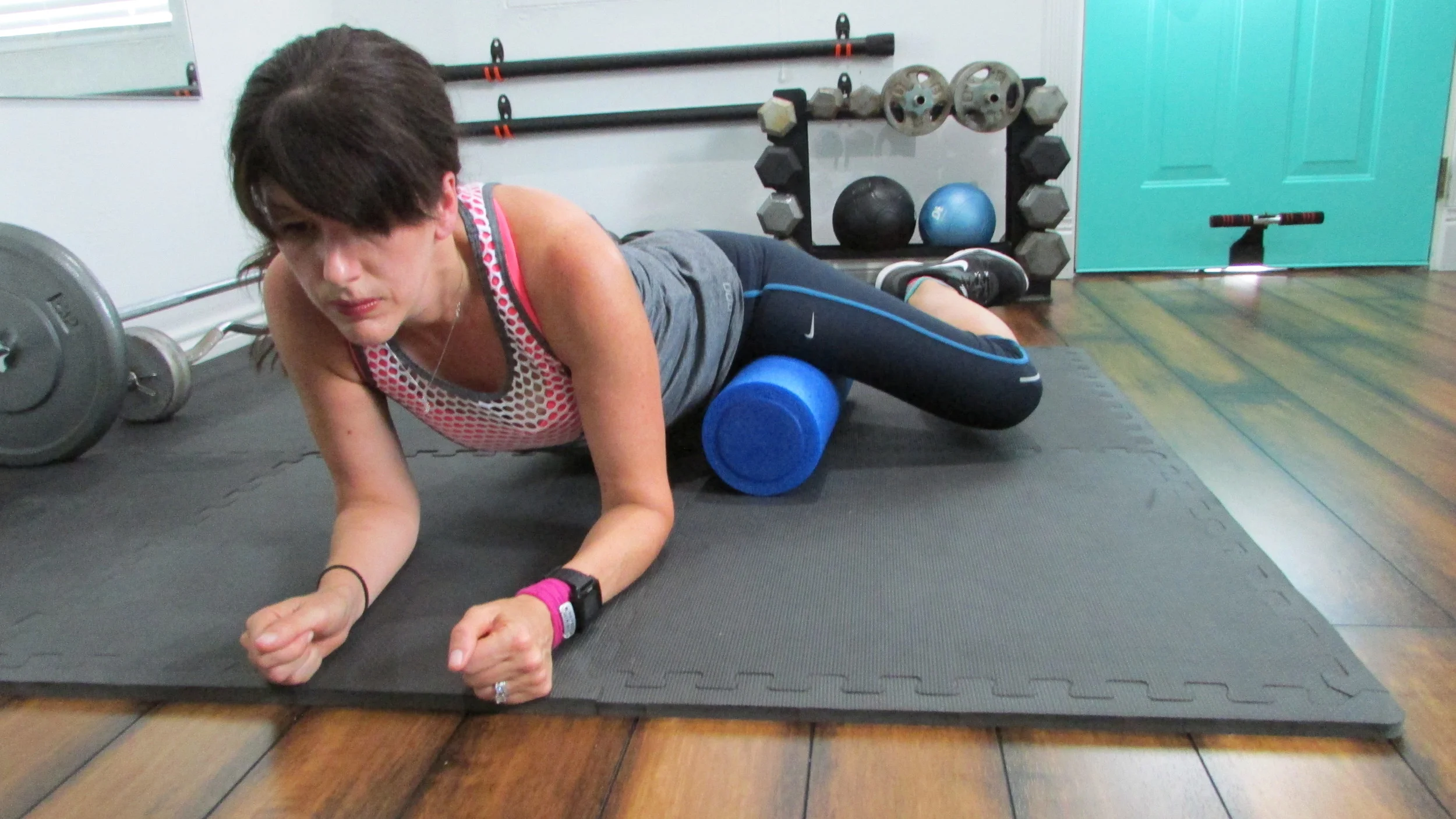
FOAM ROLLING

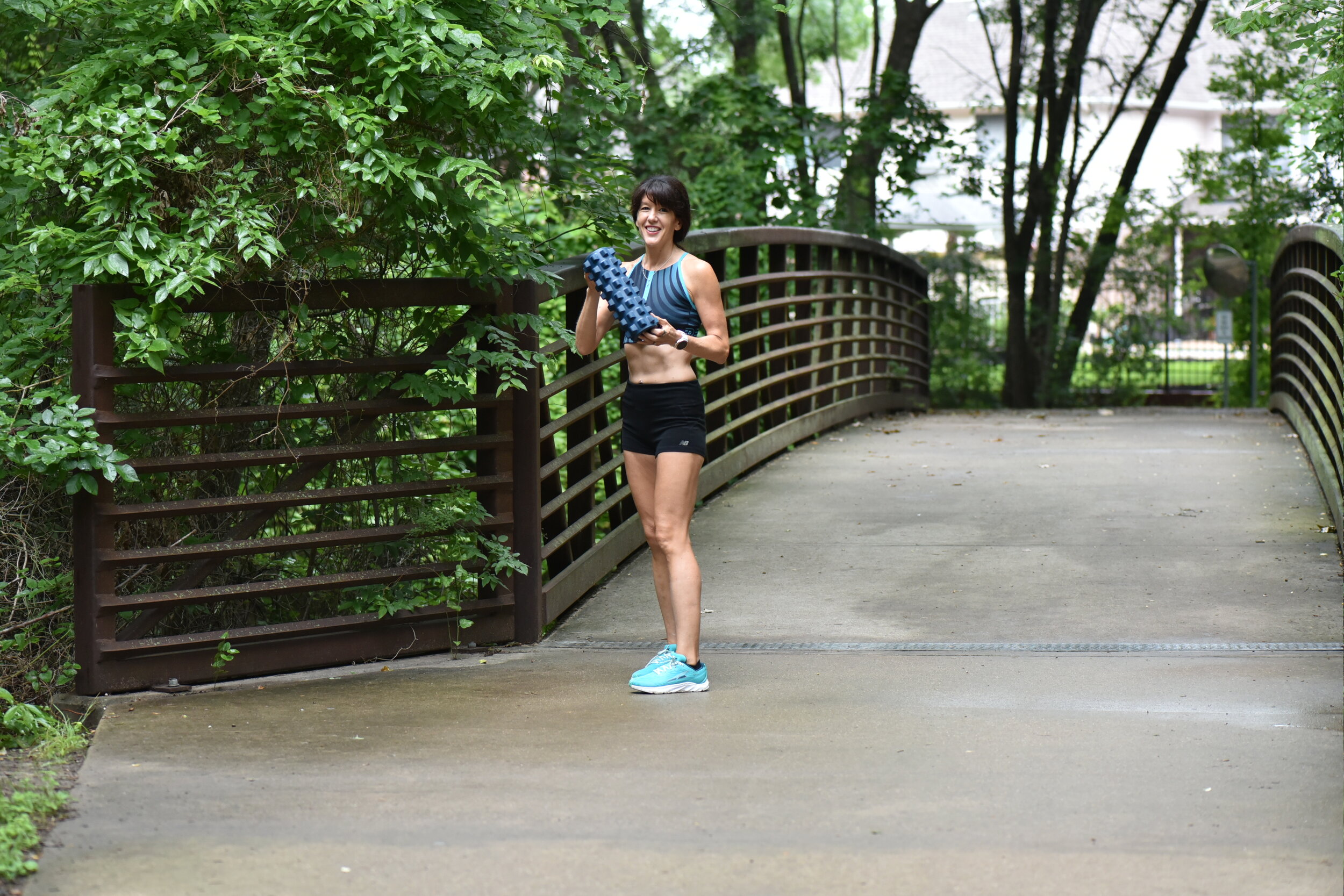
foam rolling in the SHREDSHED

foam rolling in the SHREDSHED

Foam rolling is called self-myofascial release. It is similar to a massage in that it releases muscle tension in overactive or shortened muscles. Use a foam roller (or similar device) before exercise to apply pressure to break up the knots within the muscle to release muscle tightness or tension. Foam rolling is suggested before stretching to potentially improve flexibility. I go into more detail on foam rolling in this post about foam rolling for runners. Foam rolling is appropriate before or after exercise.

WARM UP

GENERAL WARM UP

An example of a general warm up is walking for 5-10 minutes before running or lifting weights. A general warm up is not necessarily specific to the movements that will be performed during the workout, but it prepares your body for the workout by increasing heart rate, raising your body temperature, increasing blood flow to your muscles and mentally preparing you for higher intensities. 

SPECIFIC WARM UP

A specific warm up mimics the motions of the activity that will be performed during the workout. An example of a specific warm up is body weight squats before doing back squats with a weighted bar in the gym or high knees/butt kicks before a run. 

STRETCHING

Stretching before exercise warms up your muscles, improves flexibility and can help correct muscle imbalances. 

ACTIVE-ISOLATED STRETCHING

Active-isolated stretching is moving the joint through the full range of motion and holding the stretch for only 2-3 seconds. This is often considered superior to static stretching (holding the stretch for 30 seconds) because there is some evidence that static stretching before a workout can hinder performance in athletes performing explosive or power exercises. Consider the type of exercise you will be performing when choosing your stretch.

DYNAMIC STRETCHING

Dynamic (or functional) stretches are ideal for reasonably healthy and fit individuals. Dynamic stretches use momentum to take the joint through the full range of motion repeatedly. Hip swings, high knees, butt kicks and skips are examples of dynamic stretches.

COOL DOWN

The goal of the cool down is to gradually cool body temperature, reduce heart rate and slowly transition the body from exercise back to rest. You can reduce soreness and stiffness with a cool down after you exercise.

STATIC STRETCHING

Static stretching is holding the muscle in a stretched position for a minimum of 30 seconds. It allows your body to cool down after intense exercise and relaxes the muscles you worked. Exercise shortens and tightens the muscle, stretching it after exercise returns the muscles to their normal state, beginning the recovery process and improving flexibility.

Repeat after me: "I will never skip my warm and cool down again and I will foam roll and/or stretch before/after every workout." Your body will thank you for it!

Like this post? Please consider sharing.

Coach Lea

I am a NASM personal trainer and RRCA adult distance running coach that specializes in strength training for runners. I offer in-person training in the Shredshed, online training and Fit to Run boot camps. If you are interested in a more in-depth running or strength training plan please contact me. Have questions? I'd love to help. 


While I am a certified personal trainer, I am not your personal trainer. Since I don't know your exercise abilities, injury background or medical history, please see your doctor before beginning any new exercise program.