Sometimes we have to adapt our fitness to our circumstances. I don’t mean that as you get older, you need to regress or do less, although that could be true in some contexts. One of the most important skills you can learn in your fitness journey is adapting your activities to your current circumstances so you can keep moving forward. I have a few stories of how I see this playing out with clients, but I will start with myself.
Gentle Yoga, Breath work, and the Power of A WIND DOWN ROUTINE
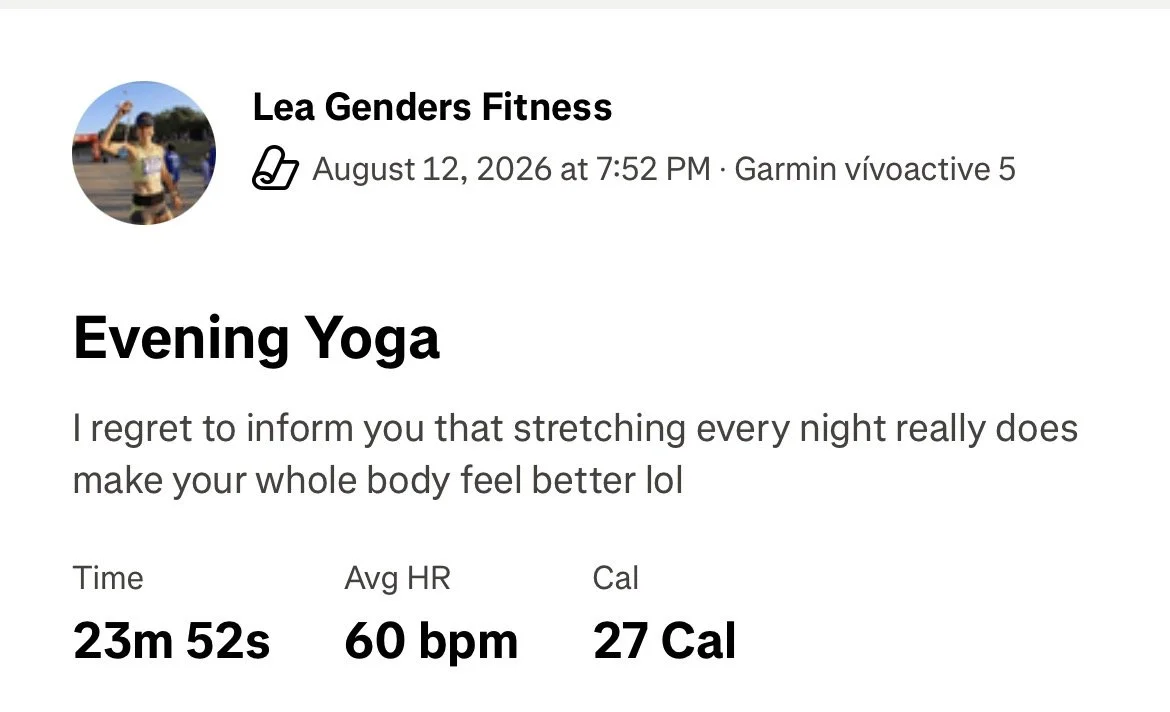
I started doing Yoga at night. And by Yoga, I don’t mean some advanced high-intensity balancing-act flow. Mostly, I sit cross-legged on my mat in front of YouTube and follow along with a gentle breathing and stretching practice. I don’t have time or energy in my day for another workout, but my body definitely is benefiting from taking the time to decompress.
"Nervous-system reset" is a trending way to say it, but I think the combination of long, slow breathing, gentle stretching, and simply the wind down routine before bed is helping me sleep better and feel better. I search YouTube for Yoga, then words like Sleep, Gentle, Yin, or Relax and follow along. It has been a net positive experience in every way. It reminds me that moving your body can be relaxing and restorative, and that exercise has benefits far beyond burning calories or getting a high heart rate.
are we connected on Strava?
Strength Training BEYOND THE MIRROR
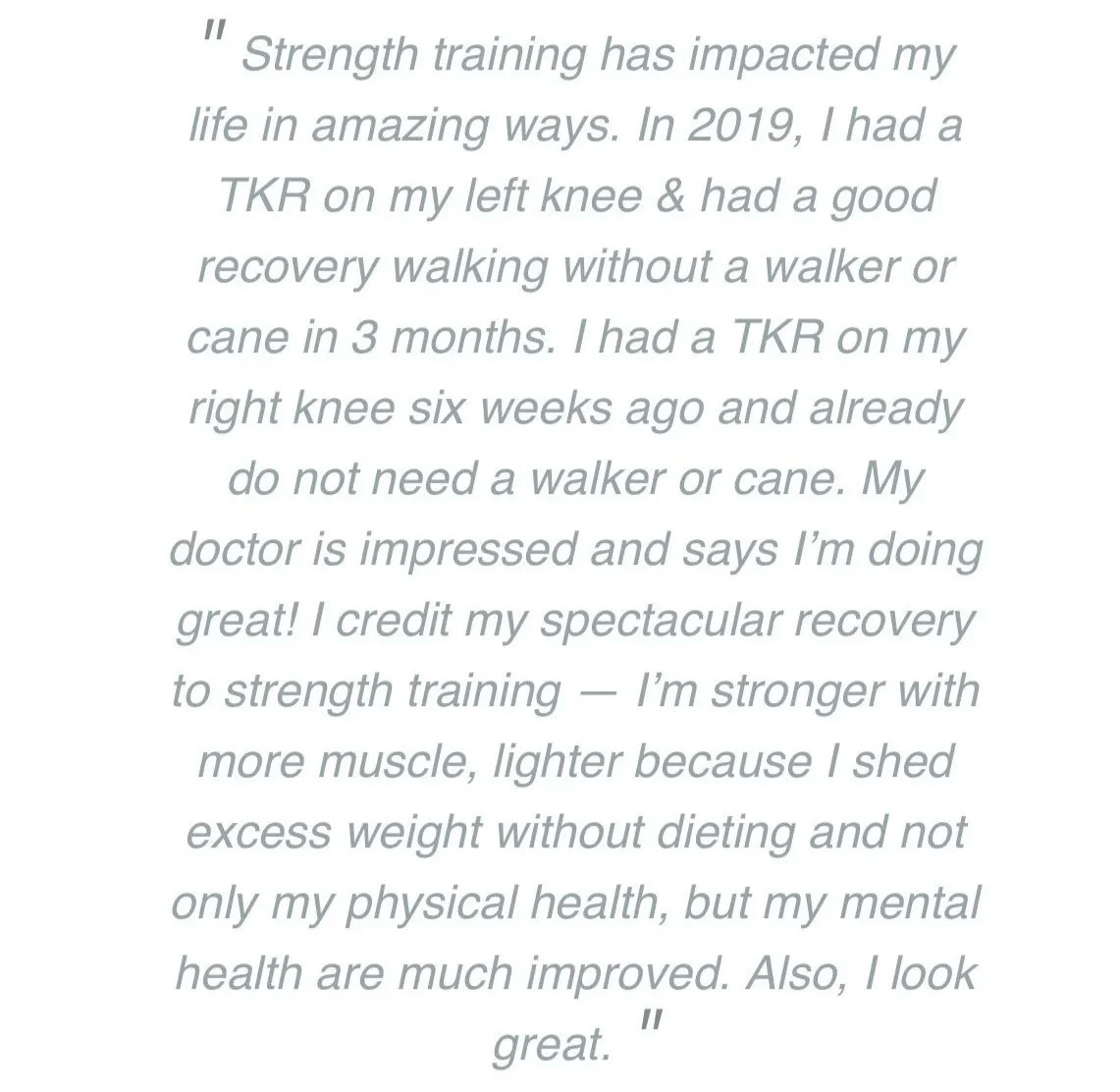
My next story about successfully adapting fitness to your circumstances is my 70-year-old client who has been strength training with me over Zoom for at least the last three years. One day a week, remarkably consistent. She gets stronger, feels better, moves more. She has been struggling with knee pain for a while and decided to go in for knee replacement surgery.
After surgery, she texts me to tell me how well she is recovering, how the doctors and nurses are impressed with her progress, and how they attribute it to her strength training over the last several years. But the most eye-opening part is that this is her second knee surgery, so she has a direct point of comparison. She told me she didn't recover as quickly from her first surgery before she started lifting weights. This reminds us that strength training is about so much more than looking good in the mirror, getting strong is the ultimate catalyst for moving and living well as we age.
DON’T LET WHAT YOU CAN’T DO GET IN THE WAY OF WHAT YOU CAN
But wait…there’s more! Immediately after surgery, my client was in physical therapy and took a few weeks off training with me as she worked through PT, but recently came back for upper-body workouts only. We sit in a chair with 15 lb dumbbells and get a great back, shoulder, chest, arm, and core workout.
I am so proud of my client for not letting what she can’t do right now get in the way of what she can. She said that at her next doctor check-in, she was going to ask him if she is cleared to do standing exercises again. I’m thrilled to work alongside her and her doctor to help her move forward from where she stands (or sits) today.
Building Power with High-Intensity Hill Repeats AT ANY AGE
Sometimes when we talk about adapting fitness to our needs, it doesn’t mean doing less, it could mean doing more, and not letting age dictate capacity. I’ve been working with another 70-year-old client on running hill repeats. She has been an avid run/walker for over forty years, does a half dozen half marathons a year, and has been strength training for over thirty years (five years with me!). She is a very fit and healthy active-ager!
Still, we started at a low-grade incline, and over several 12-week blocks we built up to an impressively steep hill followed by strides. She repeatedly tells me how much she enjoys it and how she can't believe how great it makes her feel. Instead of being intimidated by a new challenge, she approached it with curiosity. It’s not to say that age isn’t a factor or doesn’t need to be considered, but there is no reason this runner can’t do hill repeats appropriate for her experience and skill level. The purpose here isn’t necessarily about getting faster or improving pace (though that’s a nice bonus!), but about building and preserving explosive power through intentional, high-intensity work with appropriate rest and recovery. I am so freaking proud of her and hold her up as an example of what is possible.
ADAPTING TO PAIN OR INJURY
Another client started training with me in her sixties, having never done serious strength training before. We started with appropriate loads and began building. Everything was going fine, but then something happened that threw her training off track: she started experiencing debilitating pain in her lower back.
She later admitted she had been feeling the pain for a while and didn’t mention it to me because she didn’t want to seem like she was making excuses or wasn't willing to work hard. So without knowing she was in pain, we kept progressing her weight and volume until she couldn’t ignore the pain signals, and was forced to take time off deadlifting to let things calm down.
When we restarted, we lightened the load a lot, but she was really uncomfortable moving forward at first out of fear of re-injury. Still, we started again from the ground up with five pound dumbbells, slowly and progressively building that deadlift strength back. This time, she made sure to communicate how she was feeling every step of the way.
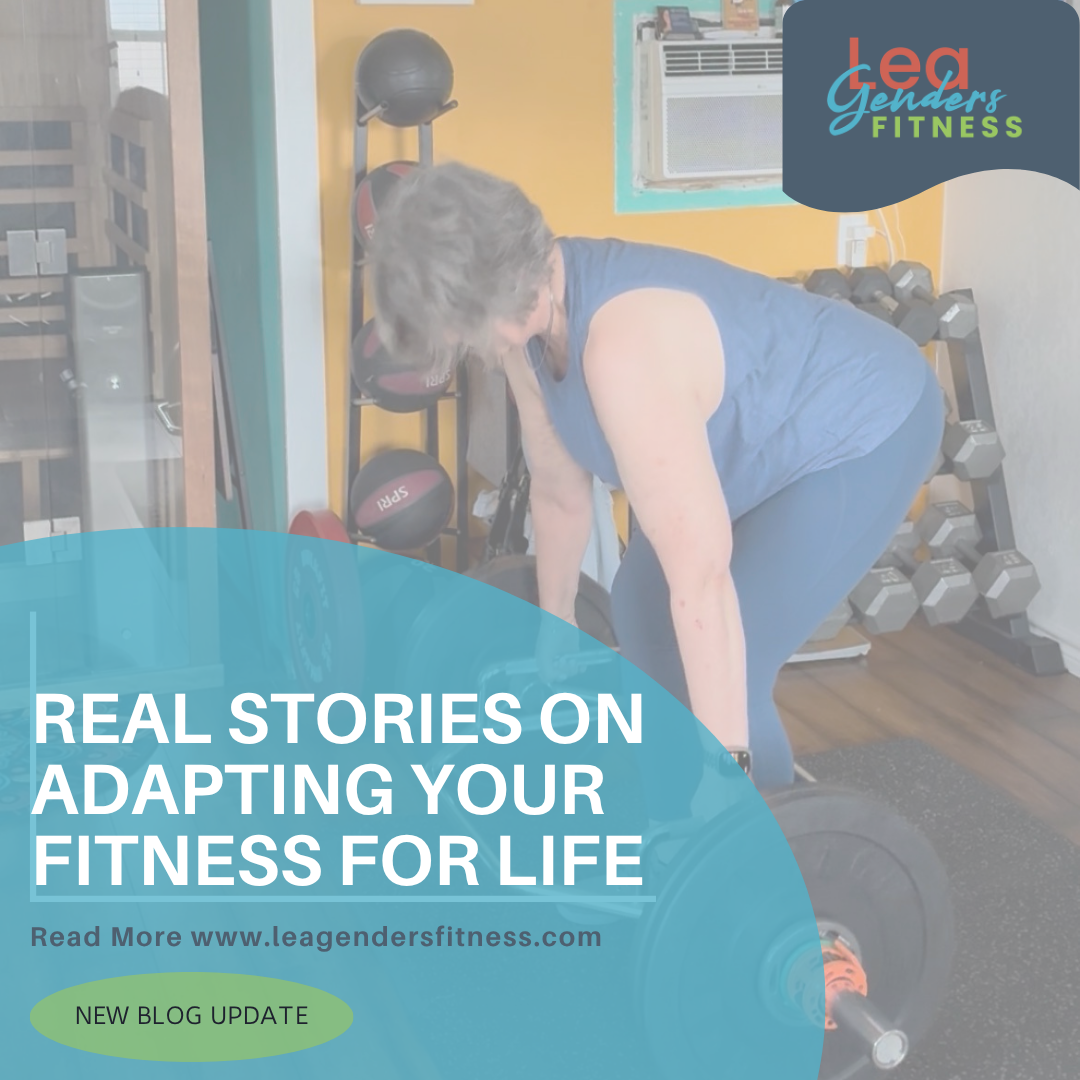
The happy ending here? (Or should I say happy middle? She is not done yet!) She is now pulling triple-digit weight on the hex bar deadlift every single week, and we are still building! Pain can be scary, but it is temporary, and it’s simply your body's way of telling you something needs attention. My client was determined to do what she could: listen to her body, consult her doctor, and trust her coach to move her forward safely, and it paid off.
Tendon Pain VS. Total Rest
Adapting your fitness may mean working around injuries as you heal, but a common misconception is that all injuries require total rest. This is a lesson I learned in my rehab certifications, but more importantly, the hard way, in my real-life experience.
A couple of years ago, I was walking my dog in a field when he started sniffing around. I was distracted; he spotted a bunny (or a blowing leaf) and lunged after it, twisting and yanking my arm backward. I felt an immediate pull in my bicep and the front of my shoulder. The next time I tried to bench press, I couldn’t get the bar into the low position without extreme pain.
No problem, I thought. I’ll take a couple of days off. When I got back, I still had pain, so I worked around it by doing lower-body exercises, thinking I was doing the right thing by letting it rest. The problem is, it got noticeably worse over time. The pain did not go away, and I eventually lost the mobility to put the barbell on my back. So now I couldn’t barbell squat or do my upper-body exercises.
How Tendon Load Management Helps You Rebuild Strength
The lesson I learned the hard way is that tendons aren’t like muscles or joints. Tendons need load to stay strong and resilient. Without appropriate load, you lose capacity, and it doesn’t get better, it gets worse.
Once I realized total rest wasn't the answer, I started back with about 10% of my usual capacity (super easy and very ego-deflating) to keep the movement tolerable. My self-assessment was that as long as the pain on a scale of 1 to 10 was under a four, I kept going. Four or over, I reduced weight further. Over several months (this is not a fast process!), I built back up both my strength and mobility (and years later, I am still building).
Tendons don't benefit from complete rest, they need an appropriate load. If we reduce the weight and focus on tolerable movement, we give the body what it needs to rebuild without further damage.
The Skill of Matching the ACTIVITY TO THE NEED
The lesson here is that fitness is not an all-or-nothing decision. Learning how to match your activity to what your body needs is a skill you can develop over time. There is always nuance and context to consider, but the answer is usually to do what you can, when you can, with what you have available. That’s always enough.
Sometimes listening to what your body needs may mean doing more, and sometimes less. Don’t let age, injury status, or anything else limit your creativity for moving forward. There is always a reasonable accommodation to keep going, whether it means taking a step back for rest and recovery, pushing yourself to higher fitness, working around surgery, or building up after pain. There is always a way to move forward when you keep an open mind, listen to your body, and aren’t afraid to ask for a professional set of eyes when you need it.
Lea
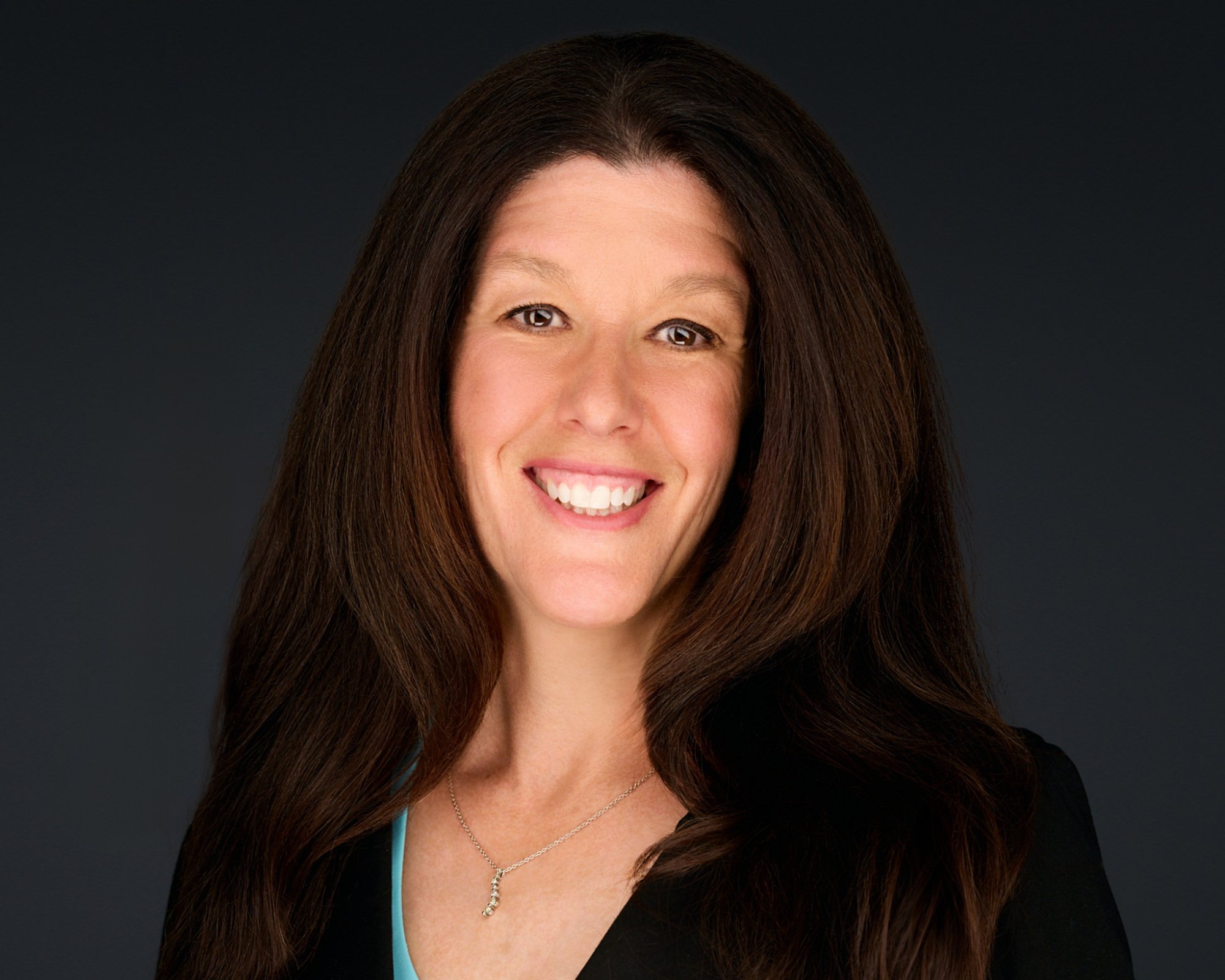
Lea Genders is a board-certified health coach, personal trainer, and workplace wellness consultant based in Fort Worth, TX. She offers corporate wellness programs for employee health and productivity, as well as in-person and virtual training / coaching for individuals worldwide. Her blog shares expert guidance on strength training, running, and sustainable nutrition @fortworth_trainer



I’d been calling my runs easy effort all summer. My heart rate disagreed, and the same thing might be happening in other parts of your life. In today’s post I talk about the difference between high tolerance and easy effort, and how that applies to sleep, stress, and recovery.