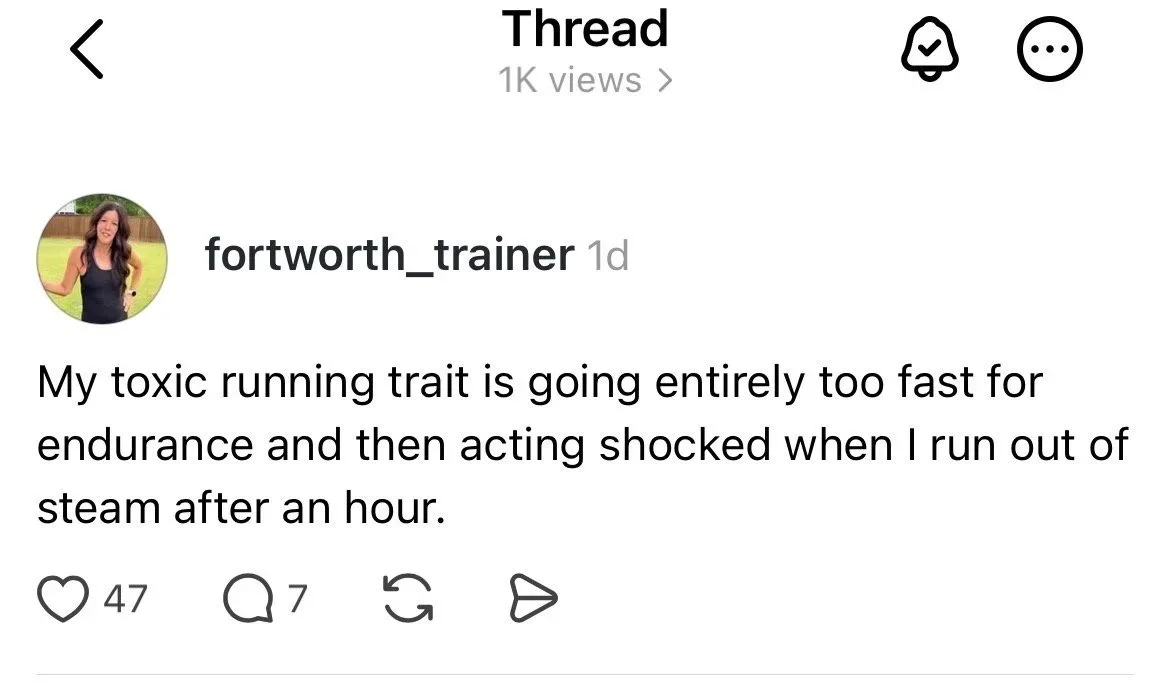
“My toxic running trait is going entirely too fast for endurance and then acting shocked when I run out of steam after an hour.”
I posted the above joke about running on Threads recently and immediately braced myself for the influx of unsolicited running advice. Right on cue, the “helpful” suggestions rolled in to fix it: Slow down to run farther, buy a Garmin to track pace, or try the run/walk method. The issue was that people were trying to solve a problem I didn’t actually have. They lacked the context to know that I am a running coach, I’ve owned a Garmin for 20 years, I’m well aware slowing down builds endurance (hence my joke), and I already know the (wildly popular) run/walk method is an option for endurance.
ThE Difference Between Knowing and Doing in Fitness
But just because I’m a running coach doesn’t exempt me from normal human (bad) habits, and it certainly doesn’t mean I execute perfect workouts every single time I step out the door. Like anyone else, I work hard to minimize the space between what I know and what I do. Just because you intellectually understand a concept doesn’t mean it automatically shows up in all your actions.
I was making a self-deprecating joke online, and I mistakenly thought opening with "My toxic running trait" made it clear I wasn’t seeking advice. But this compulsion to give advice isn't isolated to the internet.
"Girl, You Got to Pace Yourself"
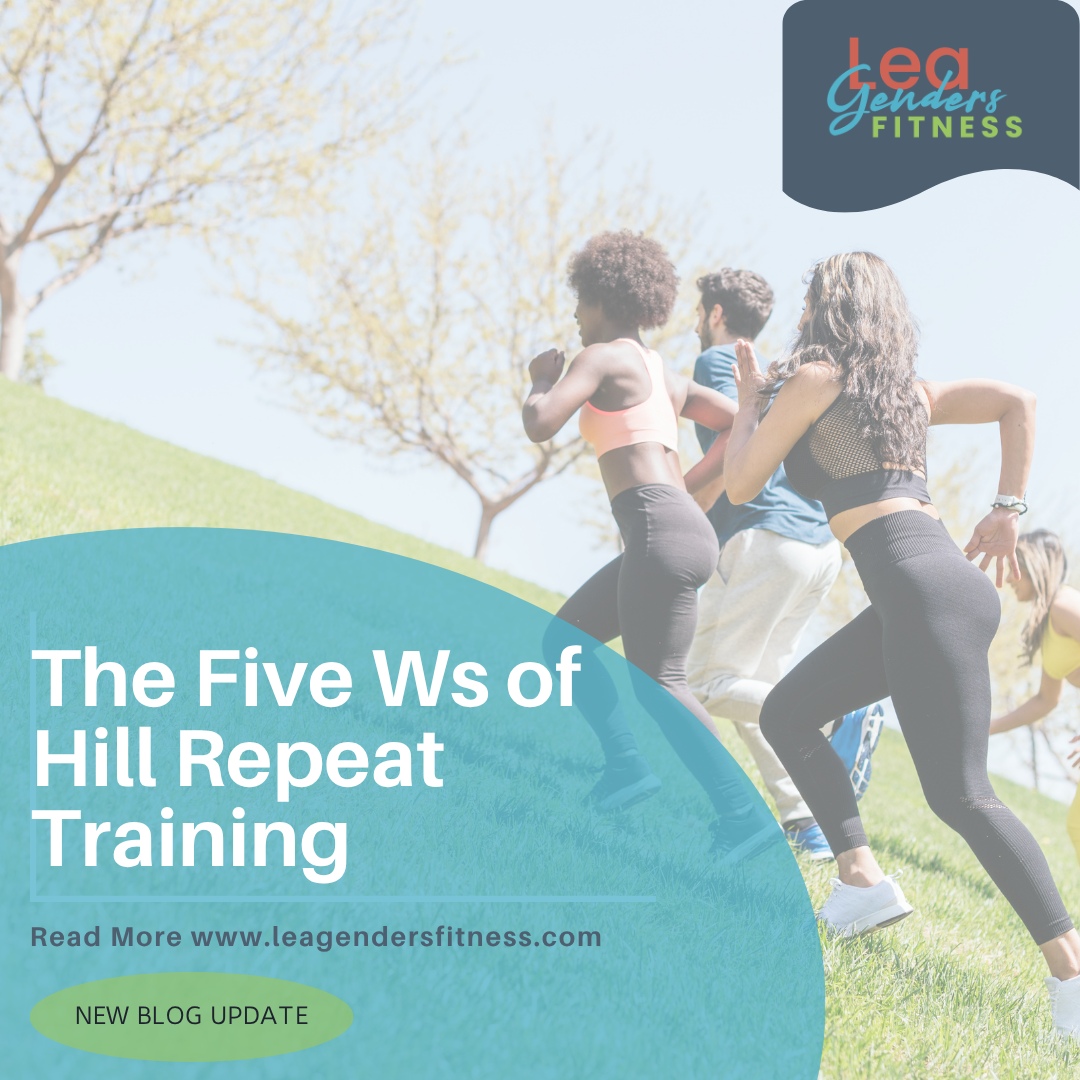
It reminds me of the time, years ago, I was doing hill sprint repeats outdoors. I sprinted up a steep incline at full speed, and as I bent over at the top with my hands on my knees to catch my breath and recover, a skinny guy wearing baggy jeans, no shirt, and holding a cigarette walked by and said… “Girl, you got to pace yourself.”
Haha. Thanks, coach.
It all stems from a basic human need to give advice, seem smart, or be helpful. I think it generally comes from a good place. People instinctively assume that the missing piece of the puzzle is information, something they know, that you don’t, but that is rarely the case. Online, I was poking fun at myself. On that hill, I knew exactly what I was doing. In both cases, the people jumping in to help were missing the context of my life and my training (but that didn’t stop them).
Why Information Rarely Changes Behavior
As both a health coach and a human, this experience was a good reminder that it rarely feels good to be told what to do, even if the person is right, especially when you never asked.
One of the first principles you learn in health coaching certifications is that true coaching isn't about giving advice or telling people what to do. That’s mentoring, consulting, or advising. Coaching is helping people explore their options within the context of their own lives so they can figure out what works best for them. Behavior change science shows that we are far more likely to make meaningful, lasting changes when an idea is our own, or at least when we have a heavy hand in the decision-making. People generally don’t change simply because someone told them they should, or provided them more information.
Autonomy vs. Unsolicited Advice
Unsolicited advice chips away at a person's autonomy. Coaching builds self-efficacy (believing in your own ability to succeed). In contrast, unwanted advice implies the other person thinks you're doing it wrong or don't know any better, and that never feels good.
Of course, in sports coaching, structured programming and clear progressions are why people hire a running coach or personal trainer in the first place. We wouldn’t just look at an athlete and say, "Well, what do you think you should do next?" But even then, an athlete’s history, lifestyle, experience, and personal preferences come first. The best program in the world fails if it doesn’t fit into the real life of the person executing it. That’s where the term ‘client-centered’ comes from: the client comes first, and the program is built around them. It’s never about what is ideal, but what the athlete can reasonably execute consistently.
Most people make the mistake of searching for a perfectly crafted training schedule and trying to cram their life into it, rather than building the schedule around the life they are living. Then they wonder why it didn’t work for them, and at worst, blame themselves for failing. It doesn’t mean you don’t need to make changes or even sacrifices to reach your goals, simply that it has to make sense in the context of what is reasonable in your real life.
That’s why I’ll give away free training plans all day long. The value isn’t in the training calendar, it’s in the coaching around it: what to do when things get off track, how to overcome obstacles, or make adjustments. That is what you pay for, not the calendar of workouts.
Holding Back AN Opinion
As a coach, I spend a lot of time biting my tongue when I overhear outdated or incorrect training advice, see questionable online posts about nutrition, or feel tempted to drop my unsolicited "expert" opinion on people in my life who didn’t ask. That Threads interaction reminded me how lousy it feels to receive uninvited advice, and I do my best not to inflict that feeling on anyone else.
Information is abundant. The magic is in doing and experimenting. Doing it wrong is often the first step in getting it right. Lord knows I have experience in doing it wrong. My habit of blowing through my energy reserves in the first hour of a run proves that. Even with a couple of decades of training experience, sometimes the only way I learn a lesson (or relearn every summer, ha) is by doing it. I pace poorly, experience the consequences, and ultimately make adjustments for future runs.
Ask for help or advice when you need it, read the books, listen to the podcasts, or ask your favorite GPT. Information rarely changes behavior. A coach can help guide you in making the decisions that work for your unique life. You are the expert on your life, a coach may be the expert on health/fitness, together you take that shared expertise to make decisions that bring you closer to achieving your personal goals.
One of these days, I’ll be forced to learn (again) to slow down on my long run, and it won’t be because a guy with a cigarette or someone on the internet suggested it.
What’s the worst bit of unsolicited advice you received? Tell me on Threads.
Lea

Lea Genders is a board-certified health coach, personal trainer, and workplace wellness consultant based in Fort Worth, TX. She offers corporate wellness programs for employee health and productivity, as well as in-person and virtual training / coaching for individuals worldwide. Her blog shares expert guidance on strength training, running, and sustainable nutrition @fortworth_trainer



A look back at my 19-week training journey, my race day strategy, and how my vacation Tiki Beach 10K in Huntington Beach played out!