
Running in Texas Heat: What Easy Effort Really Means
I’ve been running for over twenty years (wow, time really does fly when you’re having fun!), and I’m a running coach, but this summer something I’d known intellectually for a long time clicked in a new way. It changed how I think about my training, and much more than that.
I’ve been running all summer in the Texas heat. Even at 6 a.m., it can be in the 80s with high humidity. The main benefit of early morning runs is that the sun isn’t out yet.
One thing that is hard to manage in high heat and humidity is heart rate. Your heart has to work a lot harder, pumping blood to your skin to cool you down and to your muscles to keep you moving, so your heart rate runs much higher than it would in cooler temperatures. This is why it can be hard to train by heart rate in the hot months. Your body works harder, even if your pace is slower or even if it feels psychologically easier.
After a few weeks of running in these less-than-ideal conditions, your body starts to adapt to the heat. But in my experience, a big part of it is your brain adapting to the effort.
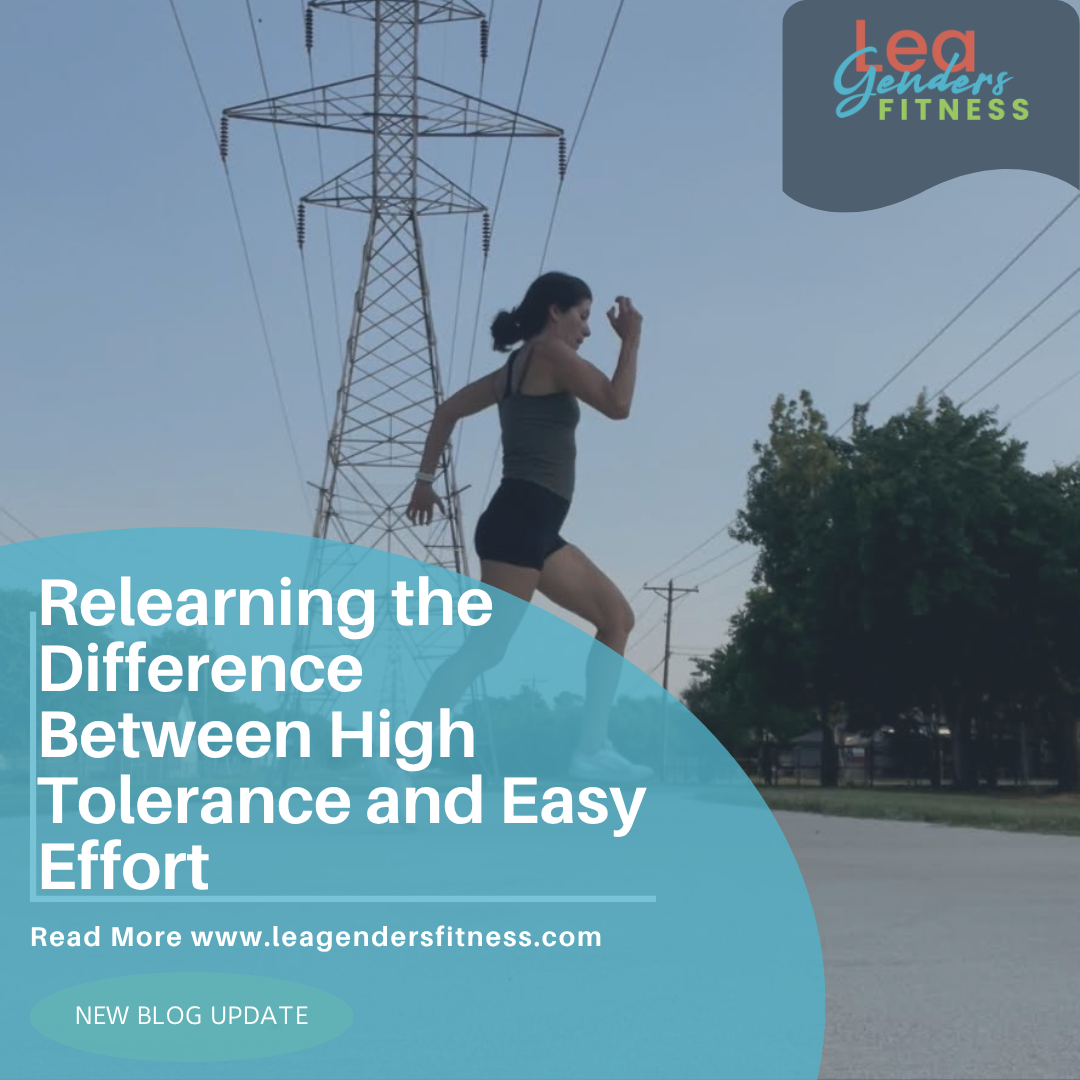
The Difference Between High Tolerance and Easy Effort
I realized around the time I started increasing my long run to train for the Dallas half marathon that what I’d been calling my easy runs were way too fast for long distances at my current fitness level. They didn’t feel hard, per se, so I kept calling them easy.
Of course, as a coach, I know anything with a heart rate of 160 beats per minute isn’t easy for my body. It takes longer to recover from and requires enough food, sleep, and rest to bounce back. But my mind stopped sending the alarm bells of high-intensity. I got used to harder effort, and it felt normal because I did it all the time. Psychological comfort does not necessarily mean physical ease.
Because of the heat, runs that felt easy were really tempo effort (comfortably hard, the kind you could hold for about an hour). Any good running coach will tell you that not all your runs should be at tempo effort. You need pace variety to improve fitness, and if every run is tempo, you’re missing the easy days that make the hard days work. So I slowed down.
How High Stress Becomes the New Normal
This isn’t a blog post about heart rate or summer running. This aha moment immediately put something else in view for me: we do this in many parts of our lives. Sometimes we mistake high tolerance for normal. Just like my runs felt easy, when too little sleep or too much stress becomes your normal, that doesn’t mean your body isn’t feeling it.
Take the professional who sleeps five hours a night, stays highly productive, and gets by on coffee and adrenaline. Because she does it all the time, it just feels normal, and our brains love normal. The problem arises when the consequences of that poor sleep can start to show up in her life, like irritability, brain fog, stalled progress in the gym, getting sick more often, or needing a bigger and bigger coffee to get through the afternoon. A lot of times she doesn’t even make the connection.
You’ve heard the saying that we change when the pain of staying the same is worse than the pain of changing. Often, staying in the same stress is psychologically easier to handle than the stress of making lifestyle changes or having uncomfortable conversations.
The difference between good stress (eustress) and bad stress (distress) often comes down to whether or not we can recover from it. Working out is good stress with proper recovery, and a potential injury without it. It’s worth paying attention to how we are recovering, not just from our workouts but from the stress of our daily lives. We recover by sleeping well, getting enough nutrients, and allowing our bodies and minds to calm.
Just because a high-intensity lifestyle feels normal doesn’t mean we can skip recovering from it. Simple practices like walking outdoors, art, dance, conversations with friends, reading, or intentional downtime can help fill the recovery bucket.
So, Is It Normal?
My “easy” runs weren’t easy on my body; they were tolerable and familiar. And I think that’s true for a lot of us, whether it’s the pace we run, the hours we sleep, or the stress in our lives.
The question becomes: is this normal for me, or is it what’s best for me? It’s not for me to tell you; it’s for you to decide. It’s rarely about what you know and more about what you actually do. (Case in point: I’ve been coaching runners on rate of perceived exertion, basically how hard a run feels, for over a decade.)
So, what do we take away from this idea? Here are a few questions to help you see where you might be mistaking tolerance for ease.
Where in your life do you say “I’m fine” or “it’s easy” when it might have unintended consequences?
What do your normal habits give you? What might they be costing you?
When’s the last time you felt really good, and what was different then?
If a friend described your week to you as their own, what would you tell them?
How are you filling your recovery bucket?
As a coach, a friend, and a person, I never want to come across like I have all the answers. My running pace is a great example of why even coaches sometimes need coaches: as humans, we have blind spots. (What’s the saying? You can’t read the label from inside the jar.) Even though I’ve spent all these years studying and practicing, I’m always learning and uncovering new insights into my own training and my clients’. I’m grateful you’re here, and I hope it gets you curious about your own normal.
Lea
Lea

Lea Genders is a board-certified health coach, personal trainer, and workplace wellness consultant based in Fort Worth, TX. She offers corporate wellness programs for employee health and productivity, as well as in-person and virtual training / coaching for individuals worldwide. Her blog shares expert guidance on strength training, running, and sustainable nutrition @fortworth_trainer








I’d been calling my runs easy effort all summer. My heart rate disagreed, and the same thing might be happening in other parts of your life. In today’s post I talk about the difference between high tolerance and easy effort, and how that applies to sleep, stress, and recovery.