RUNNING

Running A-Z: P is for Pacing How to Find Your Perfect Running Pace

Hi, friends. Welcome to another edition of Running A to Z. Each week I cover a running related topic following the order of the alphabet. This week we are on letter P. P is for pacing, how to find your perfect running pace. If you missed any Running A-Z posts you can catch up on letters A-O in the archives

Pace seems like something you shouldn't have to think about. Strap on your shoes and hit the streets. The average time it takes you to move through each mile is your pace. But in order to run most efficiently you don't want to start off too fast for your abilities or your goals. It's the biggest mistake I see in new runners. It not only makes for a poor running experience, but you risk burnout and injury. So how do you find your perfect pace? You'll need to determine the appropriate pace for easy runs and for speed work. 
P is for Pacing

P is for Pacing


CONVERSATIONAL PACE

I am a big fan of running according to how you feel because you don't need any fancy equipment like a GPS watch or treadmill. You run by feel, your rate of perceived exertion (chart below) and the talk test. Conversational pace is exactly what it sounds like, it's the pace you can maintain while holding a conversation without pausing to gasp for air between words or sentences. On the RPE chart (below) this would be between a 4-6 on a scale from 1-10.

RPE = Rate perceived exertion

RPE = Rate perceived exertion

As a running coach I recommend that most of your runs (especially your long runs) should be at this pace. There is room for speed work and hard workouts in the week, but you have to give your body adequate time (usually 48 hours, but depends on the athlete) to recover in between hard sessions. Run easy enough on easy days to allow your body to recover. 

5K PACE

A lot of runners want to train to run faster. Some training plans that are designed to increase speed are based on your current 5K pace. The example below is adapted from the RRCA Pace Chart developed by Amby Burfoot (www.ambyburfoot.com). The chart gives you the appropriate pace to run different types of speed workouts based on your current fitness level (your 5K time). For example, if you currently run a 5K in 29 minutes (or a 9:21 pace) then your tempo pace should be 9:49, your long interval pace 9:10 and your short interval pace 8:25. If you try to run faster you could risk injury. It is important to reiterate that the 5K pace on the chart is your current pace, not your desired pace. If you currently run a 5K in 33 minutes but want to improve your time to 29 minutes, you would follow the paces on the first line, not the middle line. You always train to your current fitness level, not your desired level. Once your 5K time improves you can then increase your speed workout paces.

5K PACE 5K TIME EASY & LONG RUN PACE TEMPO PACE LONG INTERVAL PACE SHORT INTERVAL PACE
10:48 33:30 13:24 11:20 10:35 9:43
9:21 29:00 11:36 9:49 9:10 8:25
8:13 25:30 10:22 8:43 8:03 7:24

The best way to determine your 5K pace is to run a 5K. If you never ran an organized 5K race, you can map out a 3.1 mile course on the street (choose a flat route), on a track or on a treadmill. Run your 5K at a comfortably hard pace, about a 7 on the RPE chart. You should be working hard but not an all-out effort (because you won't be able to maintain it for three miles). 

If you would like help with a running plan, I can put together a workout schedule for you that safety and systematically increases distance and speed over time based on your current fitness abilities. Check out my run coaching services for more details. 

The main lessons to learn are to run your easy runs at conversational pace and run your speed workouts based on your current fitness levels, not your desired fitness level. If you train at the correct paces and master these two concepts you'll run longer and faster with little risk of injury or overtraining. 

Any questions about pacing? I'd love to help. Let me know in the comments. 

Like this post? It helps me when you share!


Coach Lea

I am a NASM personal trainer and RRCA adult distance running coach that specializes in strength training for runners. I offer in-person training in the Shredshed, online training and Fit to Run bootcamps. If you are interested in a more in-depth running or strength training plan, please contact me. Have questions? I'd love to help. 

While I am a certified personal trainer, I am not your personal trainer. Since I don't know your exercise abilities, injury background or medical history, please see your doctor before beginning any new exercise program.

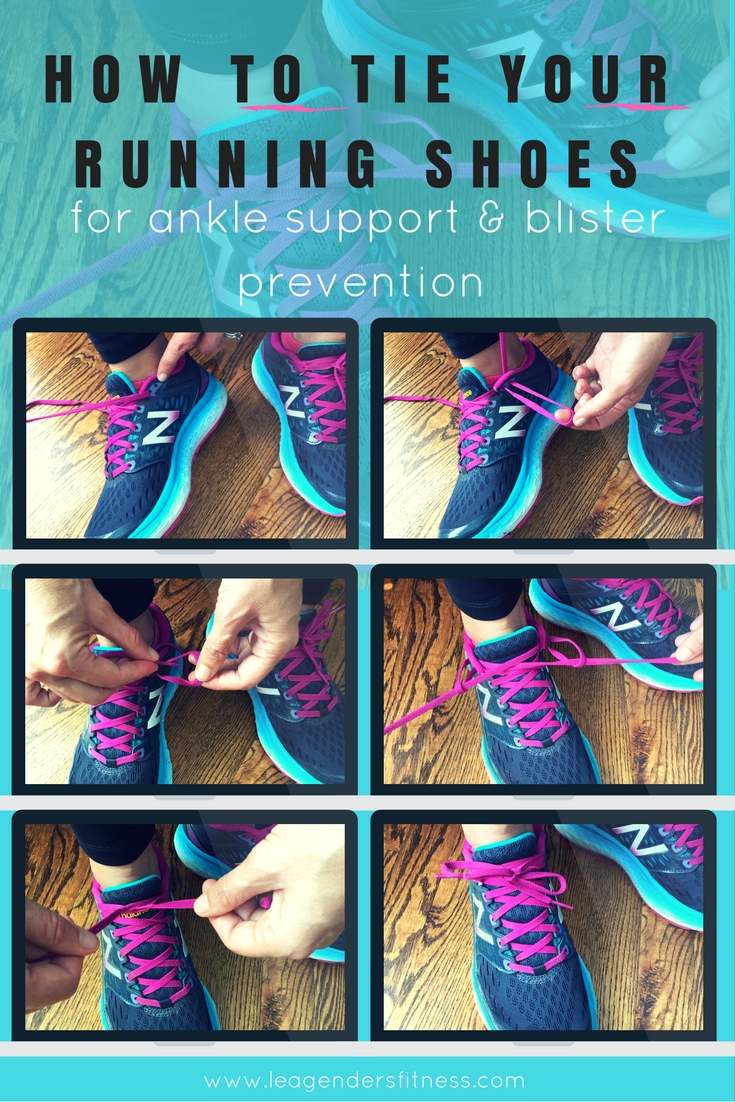
How to Tie Your Running Shoes for Ankle Support and Blister

Hi, Friends! Today I have a quick video on how to tie your running shoes. I know what you might be thinking...

"Geez, Lea, I may not be an expert in running, but I've been tying my shoes since I was three; I think I have that part covered."

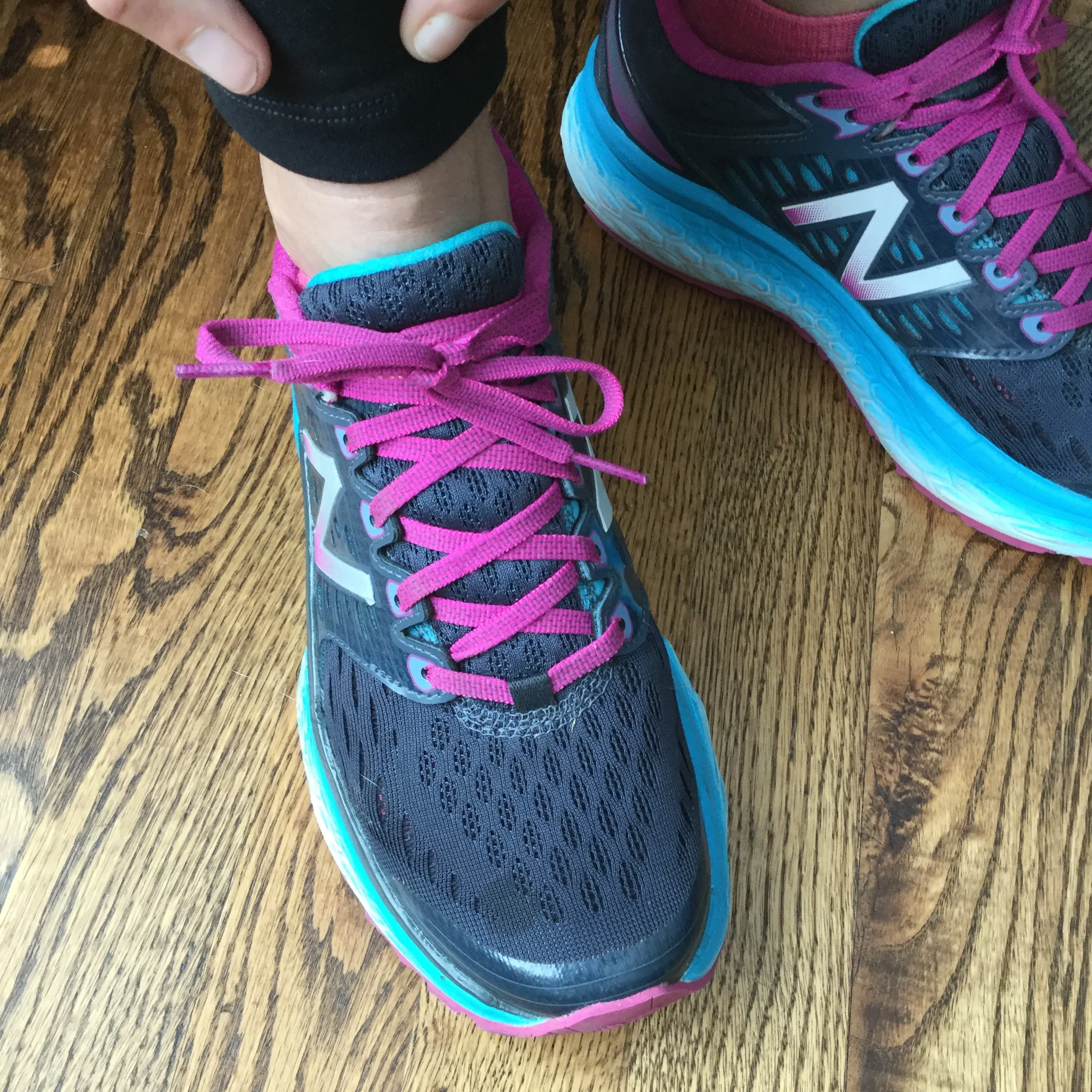
Stay with me. I will show you how to tie your running shoes for better ankle support and to avoid blisters. This technique is called a "heel lock."

How to tie your running shoes for better ankle support and blister prevention

How to tie your running shoes for better ankle support and blister prevention

Ever wonder what that extra hole is for on your running shoes? Watch my short video for an explanation and demonstration on how to tie your running shoes. Watch for a special appearance by the beloved internet sensation, Ollie!

Try it out and let me know how it works for you!

Any questions? Let me know in the comments.

LIke this post? It helps me when you share!
 

Running A-Z: O is for Overcoming Running Obstacles

Welcome to another edition of Running A-Z where I cover a running related topic following the order of the alphabet. If you missed any past posts, you can catch up on letters A-N here.

This week we are on the letter O. Overcoming Running Obstacles. I am not talking about those obstacle course races, although those are loads of fun! When starting and continuing on a regular running program we will likely run into both physical and mental hurdles we need to overcome. Let's get over it together and tackle these obstacles. 

Running A-Z: O is for Obstacles

Running A-Z: O is for Obstacles


GETTING STARTED

Whether getting started means running for the first time or just getting out the door for the hundredth time, getting started can be the hardest part of running. If we find we are spending more time thinking about running and reading about running than actually running, it may be time to get over that hurdle. There's nothing left but to do it. Strap on those running shoes and hit the pavement. Sometimes I tell myself that I just need to run a mile to get myself out the door. Once I am out there I almost never want to stop at a mile. After you're done, you'll be glad you did it.

I regret that run.
— said no runner ever


STAYING MOTIVATED

Motivation is tricky because not all people are motivated to run in the same way. Some people find motivation in external sources like signing up for a future race with friends, running to raise money for charity or hiring a running coach. This is initially effective because you feel motivated to do the work due to expectation from others. You wouldn't want to let down your friends, your charity or your coach. Some people are internally motivated. They are motivated to improve themselves, to beat personal records and prove to themselves they can do it. Figure out what motivates you and run with it (pun intended). Sometimes the external motivation sources get you started and the internal motivation is what drives you to keep going. What motivates you? 

INJURIES

It happens to the best of us. We find our running groove and then get sidelined by an injury. The key is to recover properly so you can return to running as soon as possible. Running through an injury only makes things worse and can majorly extend the time you are off. If possible, spend this time cross training, strength training or any exercise that keeps you active but doesn't stress your injury. Talk to your doctor about what is safe. Want to avoid injuries in the first place? Download my Injury Prevention Checklist on the sidebar.

TIME CONSTRAINTS

The biggest obstacle for not exercising or running is not having enough time. I get it. We are all busy, but it is a matter of priorities. What is important to you? If you don't have time, look at your schedule to see where you can make time. Any time wasters in your day? I spend too much time scrolling social media. Is there an opportunity to multi-task? Maybe run with a friend to catch up instead of meeting for dinner or drinks. Maybe watch your favorite TV show (Walking Dead anyone?) on the treadmill. I get up an hour early and do it before I start my day. If you're not a morning person you could squeeze it in during your lunch break or schedule it after dinner. Schedule your workout like any other important task in your day. You don't have to find an hour every day, 30 minutes several times a week will do the trick. If we make it a priority and look closely at how we spend our time, most of us can find the time for it. 

What are your biggest obstacles to overcome in order to run? Did I cover them all? 

Like this post? Please consider sharing. 

Coach Lea

I am a NASM personal trainer and RRCA adult distance running coach that specializes in strength training for runners. I offer in-person training in the Shredshed, online training and Fit to Run bootcamps. If you are interested in a more in-depth running or strength training plan, please contact me. Have questions? I'd love to help. 


While I am a certified personal trainer, I am not your personal trainer. Since I don't know your exercise abilities, injury background or medical history, please see your doctor before beginning any new exercise program.


7 Reasons Runners are Awesome

Last week I wrote a blog post called Runners are Gross: 7 Things We Don't Tell You. My best friend read the article and said "You're not doing a good job in convincing me to become a runner!" She was kidding, of course, since she recently met her personal running goal of running one mile without stopping. Sounds like she doesn't realize I convinced her afterall. I'm sneaky like that, become my friend and I'll figure out a way to get you to run. 

But her comment gave me an idea. Yeah, runners can be gross, but we're also pretty awesome. So in case it wasn't abundantly clear, being a runner is amazing! Here are seven reasons runners are awesome. 

7 reasons runners are awesome

7 reasons runners are awesome

We are goal setters

Runners have an amazing ability to set goals and then smash them. I remember when it was a great accomplishment to run one mile. Then I wanted to run a 5K. Then a 10K. A half marathon seemed impossible, but I trained for it and achieved it. Runners keep setting bigger and bigger goals. Even if we don't achieve our goals in the timeline we expected we keep trying. 

We overcome obstacles

Sometimes we get injured or deal with life issues that get in the way of our running, but we always seem to bounce back. Once we make running a priority in our lives almost nothing can stop us long term. We find a way. If I could apply one characteristic to runners it would be tenacity. We don't give up when the going gets tough. We all have good and bad days, but over the long term we keep going. We are a persistent bunch.

We have mental toughness

Running teaches us to deal with the hard times and work through them in running and in life. I'm not gonna lie, sometimes running sucks, but it is hard parts that make us great. 

We are supportive and uplifting

I can honestly say that in all my years of running I have never come across a significantly negative or unsupportive runner or running group. Runners by large are welcoming, accepting, encouraging and supportive. It doesn't matter who you are, where you come from, how old you are, how much money you have or how many friends you have, chances are if you find a running group they will accept you with open arms. I have yet to see otherwise. 

We have fun

Runners take fun to the next level. Why else would you dress in costumes and tutus to run a race? Runners may be focused and dedicated but they also have a knack for not taking themselves too seriously. 

WE'RE HUMBLE

Just because I am listing 7 reasons why we're awesome doesn't mean we are not humble. Running gives us a ton of opportunities to practice humility. We fail, we fall, we cry, we stink, we crap our pants (wait. just me?) and we get hurt. That's just a few ways running humbles us.

We're Happy

Maybe it is the endorphins, but runners are generally a happy bunch. I think we make our own happiness by goal setting, overcoming obstacles and having fun! The same things that make runners awesome makes us happy. 

Did I miss any? How else are runners awesome? 


Like this post? It helps me when you share!


Coach Lea

I am a NASM personal trainer and RRCA adult distance running coach that specializes in strength training for runners. I offer in-person training in the Shredshed, online training and Fit to Run bootcamps. If you are interested in a more in-depth running or strength training plan, please contact me. Have questions? I'd love to help. 

While I am a certified personal trainer, I am not your personal trainer. Since I don't know your exercise abilities, injury background or medical history, please see your doctor before beginning any new exercise program.


Running A-Z: N is for Newbies Success Principles for New Runners

Welcome to the latest edition of Running A-Z where I cover a running related topic in the order of the alphabet. This week we are on the letter N. Newbies: Success principles for new runners. If you missed any of the previous Running A-Z articles you can catch up on letters A-M here

N was a tough letter. I'll admit when I came up with the idea to write about running topics following the alphabet, I didn't plan ahead on what the topic would be for each letter. I knew that some letters would be more challenging than others. N was a tough one. Hubby's brilliant idea? Running naked. Good one, babe. Although I did consider spinning the topic a bit to be less about running without clothes (stupid, of course) to running "naked" aka without technology. Then I came to my senses and decided to write an article dedicated to the success principles for new runners. 

I have dedicated many articles to how to run efficiently, how to run faster and how to improve in running, but before you start thinking about those things as a brand new runner, it is more important to nail down the basic success principles. Get your mind ready for the challenge ahead. If you follow these five principles I can guarantee much smoother sailing (or running, I suppose) than if you did not. 

success principles for new runners

success principles for new runners


Have Patience

Not everyone loves to run. People remind me all the time that they hate running. But I know the truth. A lot of people only think they hate running because they never gave it a real chance. Most people quit before breaking through to that sweet spot when running becomes enjoyable. I'm not suggesting that everyone should love running. If it is not your thing, that is OK, move on and find some other way to move your body that you actually enjoy. My point is that if you quit in the early stages because it sucks (and no sugar coating, it does suck at first) you will never find out if you actually can enjoy it or not. Give it time. Have patience in the process. 

Be Consistent

The only way to get better at running is to run. Remaining consistent, especially in the beginning when you are developing as a runner is important. If you run once a week it will take much longer to make progress than if you run three times a week. If you run three times a week for three weeks, but then take two weeks off, you are losing fitness as fast as you are gaining it. You'll never get better without consistent action. Commit to running three times a week, even if that just means running one mile or just 15 minutes at a time. Getting out the door is often the hardest part. Force yourself to be consistent in order to build a solid running base.

Take it slow

I don't mean running speed, but starting off at slow and sustainable pace is advisable. When just beginning many new runner runners follow training plans that are far too aggressive for their abilities. Doing too much too soon is a sure fire path to exhaustion, burnout and injury.

A better action plan would be to ease into your new running routine. Start by committing to just 15-30 minutes three days a week. Allow proper rest and recovery days in between workouts. This will allow your body (and mind) time to adapt to your new program and allow for plenty of room for growth well into the future. You can always add more days, miles or time as you progress.

Put in the Work

Accept that it will take some hard work to achieve your goals. If you are mentally prepared for the challenge, the more likely you will succeed. Work hard and do your best, whatever that may be for any given day. Showing up and doing the work will ensure success. 

Set Goals

Write your running goals down. Set weekly, monthly and long term goals. Have both process goals (i.e. I will run 3 times this week) and result goals (I will improve my 5K time by 1 minute or will complete a 10K in six months). Working towards a written goal goes a long way in maintaining consistency and dedication to the process.

Be accountable

Be accountable to someone else. Tell people your goals. Sign up for a race. Some people start blogs to document their training, others do it on Instagram or they find a running partner, join a running group or hire a running coach. We sometimes are all too quick to let ourselves down, but will be held accountable to someone else. Find your people and get to work!

Are you ready for this adventure called running? I can tell you that it changed my whole life. If you would have told the younger version of me that I would one day become runner, a personal trainer and running coach, I probably would have fallen off my bar stool in laughter and disbelief. 

Have patience, be consistent, take it slow, put in the work, set goals and be accountable to someone else and I can guarantee your success. 

Like this post? It helps me when you share on social media.


Keeping running, friends.

Coach Lea

I am a NASM personal trainer and RRCA adult distance running coach that specializes in strength training for runners. I offer in-person training in the Shredshed, online training and Fit to Run boot camps. If you are interested in a more in-depth running or strength training plan please contact me. Have questions? I'd love to help. 

While I am a certified personal trainer, I am not your personal trainer. Since I don't know your exercise abilities, injury background or medical history, please see your doctor before beginning any new exercise program.