As a health and nutrition coach, one thing I hear a lot is, “I eat pretty well; I'm not sure why I’m not losing weight.” Things like hormones, age, or a slow metabolism are often blamed, and while those factors can play a role, the real issue is often much simpler. I am not denying that things can feel harder as we get older, or that hormones can change how our bodies look. I am just suggesting that before you throw your hands in the air to declare it a lost cause, we take a look first at the things we have the most control over.
To clear up this mismatch of expectations between what we eat and how much we weigh, we usually have to get really honest about two things: what we are eating and how much.
I’m going to walk you through what this looks like, but let’s be clear upfront: I am not the food police. It’s not my job to tell you, dear reader, what you should or should not eat, nor am I here to blow a whistle and tell you you're doing it wrong or that I know more about your body than you do (because I don’t; you’re the expert there). I just want to help you identify the limiting factors that might be blocking your progress. This isn’t about piling on more rules or heavy restrictions. I just want to help you make more informed decisions.
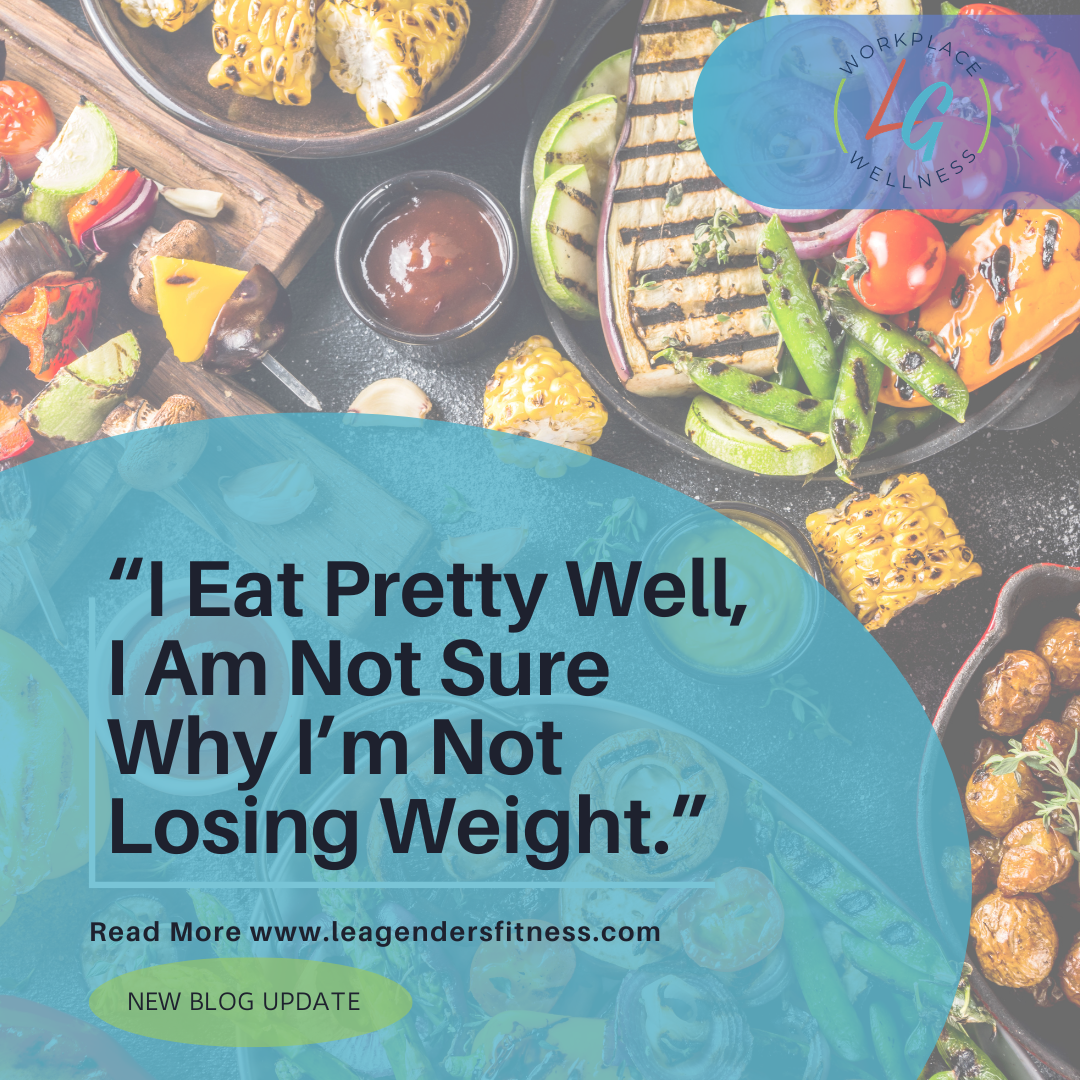
The Vagueness of Eating Pretty Well.
First, let's talk about the vagueness of “I eat pretty well.” What does that actually mean? Often, it means eating mostly whole, unprocessed, or minimally processed foods, which is a fantastic foundation for health. But if we are not being more specific about what ‘pretty well’ means, and considering if it aligns with our health and calorie goals, we are just guessing.
We have to be clear. It’s easy to reach for protein bars, fat-free snacks, or foods marketed as healthy, organic, gluten-free, vegan, keto, or GMO-free, assuming they're automatically good for your waistline. Food packaging marketing is incredibly clever. None of those labels guarantee low-calorie or good health.
You can absolutely choose to eat whatever you want (you’re grown), but a good rule of thumb is the 80/20 rule: aim for about 80% whole or minimally processed foods, leaving that remaining 20% for your favorite processed or convenience foods. Yes, the ones that say “high protein” in bold letters on the outside of the package likely fall into the 20% category.
Research shows that most people, including nutrition experts, are poor at remembering what they ate and can underestimate their daily intake by up to 1,000 calories!!! In order to lose fat, we need to be in a calorie deficit, taking in fewer calories than we use, (but not drastically so, as you’ll read about later).
Take Action: Because eating well means completely different things to different people, sometimes keeping a food journal can be a good way to record the facts of what you ate to help you review without judgment. Some people like calorie-tracking apps, others like a photo journal, and some just write it down on an old-fashioned piece of paper. You don’t have to do it forever, but it can help you assess without guessing because we, as humans, are notoriously bad at estimating.
A Healthy Food Surplus
Secondly, even when you are choosing health-promoting foods, it is still possible, and shockingly easy, to overeat them. Just because a food is healthy, doesn’t mean it won’t cause you to gain fat when eaten in excess. This is especially true for calorie-dense, high-fat options like nuts, oils, dried fruit, trail mix, and avocados. If you aren't paying attention to portions, these can easily wipe out that calorie deficit you need to lose fat.
Have you ever actually measured out a single, standard serving of nuts? It is likely way smaller than those couple of handfuls you grabbed as you passed through the kitchen today. Have you ever opened a bag of trail mix and ate half the bag before you realized the serving size was a 1/4 cup? (What? Just me?)
Snacking between meals, even with healthy snacks, can you push you into a calorie surplus if you’re not paying attention. Snacks also can be helpful to control hunger between meals, when you account for total calories in your day. So it’s about awareness and intention, rather than rules.
Take Action: Pay attention to the portion sizes and total daily calorie intake. If you’ve never measured before, it can quite a learning experience. As a health coach, every once in a while I’ll track my meals for about a week to get clarity on what and how much I’m eating, then I can go back to doing it more intuitively.
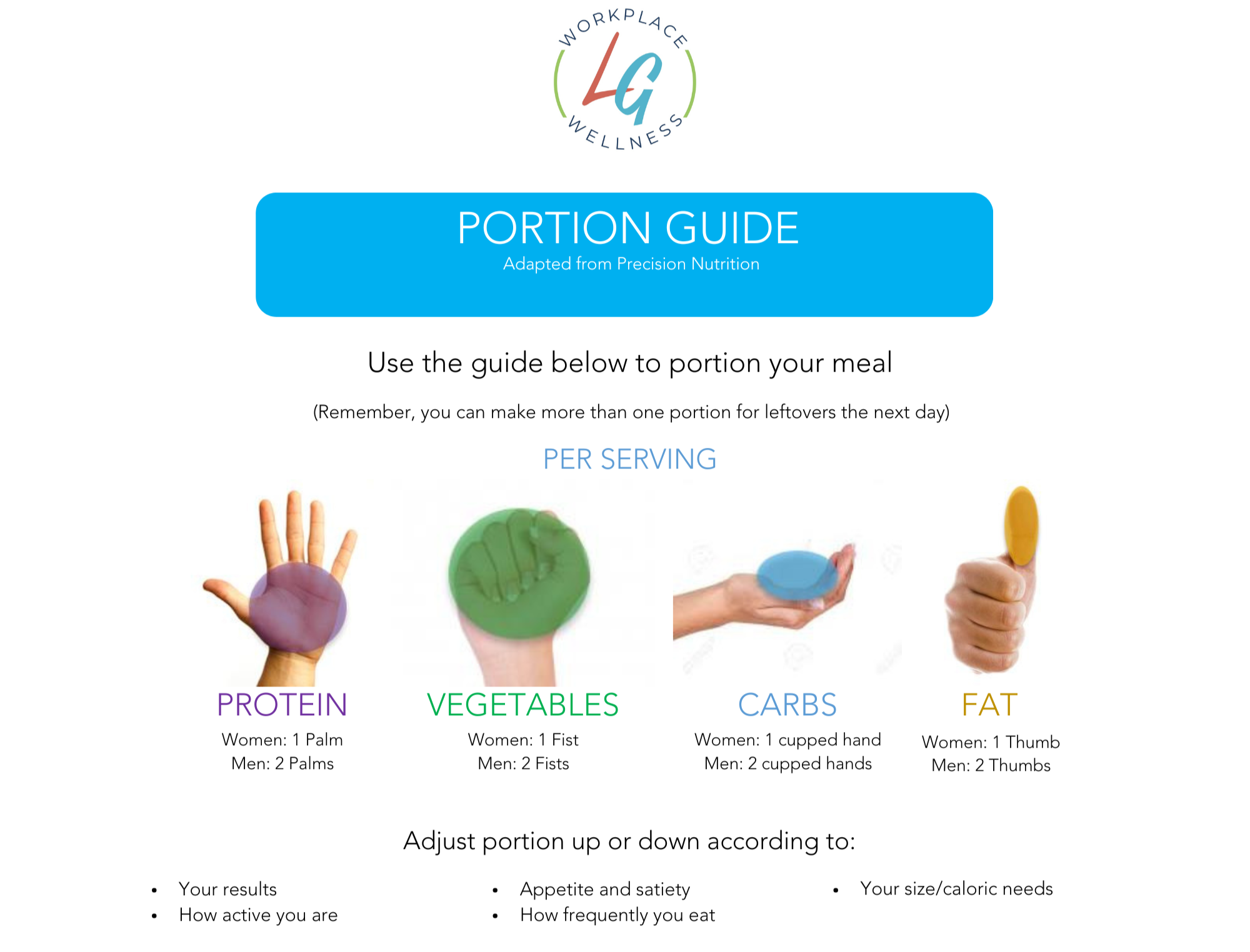
You can use your hands to portion: a thumb for fats, a cupped handful for carbs, a palm-size portion for protein, or, if you prefer, weigh and measure with a food scale. I am often surprised by the difference between what I thought two tablespoons of peanut butter when I guessed, and what it actually measures out to.
I have an app available to my clients for tracking calories, if they desire. Then I can help them review their food choices/calorie intake through an objective lens (no judgment).
The Restrict/Binge Cycle
Often, when we try to diet to lose fat, we go too far and end up eating much less than our bodies need (especially if we do intentional exercise). These extreme diets may seem to work for a while, but usually just lead to overeating later. Your body perceives chronic low calories as a threat and a stressor and reacts accordingly.
If you get hungry every night or can’t stop yourself from overindulging on the weekends, it’s possible that your body is turning up those hunger hormones and dropping the fullness hormone, driving you to want to eat more. This is why when we try to restrict too hard, we often end up overeating later. So it ends up feeling like you did “pretty well” all week, but those excessive calories on one or two days are the real culprit. Overeating on the weekends is rarely a lack of willpower. It’s your body’s logical short-term solution to the perceived threat from under fueling.
Take action: Eat balanced meals in a slight calorie deficit all week, rather than extreme restrictions that can lead to binging later. Allow yourself measured indulgences, as desired. Almost any foods can fit into a healthy diet when done with intention.
ALCOHOL
It’s not just the added calories, but the lowered inhibition that can sometimes sabotage our best efforts. Alcohol has seven calories per gram, which is more calories per gram than protein and carbs, but without any nutritional value. Alcohol can also lead to fragmented or poor quality sleep which can also affect hunger hormones.
Enjoy a drink if you want (a healthy lifestyle isn't about deprivation). And I’m not suggesting you have to give it up forever, but consider if you are not getting the results you want, alcohol can be a low-hanging fruit to experiment with.
Managing Expectations
One topic that comes up again and again with clients is the scale and the frustration behind the inconsistent readings despite their hard work. But it is normal for weight to fluctuate, and the scale is easily manipulated. Beyond water, salt, carbs, bowel movements, and where you are in your cycle (women), daily weight changes are also heavily influenced by stress and poor sleep, the physical weight of undigested food, and inflammation from a hard workout. None of these are an indicator of fat gain (even if the scale goes up or stays the same).
One of the healthiest mindsets you can have around the scale is to consider it one of many markers of progress, not the end-all-be-all for success or failure. Tracking subjective wins like energy, mood, and lifestyle improvements helps you learn to trust your internal cues of health.
Some of my favorite client wins are the ones where they tell me they can stand up more easily from a chair, that they are the strong one in their friend group who can help others move or lift heavy things, or that they felt proud they didn’t struggle with the heavy dog food bag at the store, or didn’t need help lifting their bag into the overhead compartment on the airplane. The scale can’t measure any of that.
FAT LOSS ISN’T LINEAR
A normal, healthy, and realistic expectation for fat loss is .5 to 2 pounds per week (or roughly 0.5% to 1% of your total body weight). Anything faster than that usually means you are losing water or precious muscle mass, not fat. We always want to prioritize losing fat rather than just weight. We can do this by ensuring our protein intake is adequate and by doing some form of resistance training to preserve or build muscle. A good way to track fat loss if the scale isn’t moving is to take a waist measurement. A decreasing waist measurement can indicate fat loss.
But fat loss isn’t linear. We often expect that if we “eat pretty well” and exercise, the scale will drop week to week. But the truth is that because of normal fluctuations, you might drop a few pounds, then appear to gain a few, then drop back down. The important thing here in order to stay sane is to watch for trends over time, rather than hyper focus on day-to-day or week-to-week. Two weeks at the same weight is not a plateau. It’s more helpful to look at meaningful trends over four week blocks to maintain a big picture perspective. It takes patience, kindness to ourselves, focusing on our health and the positives we feel from healthy changes, and letting go a bit of our grip on the outcome.
NEED MORE PERSONALIZED HELP?
I know it can be frustrating when the scale doesn’t bend to your will. The fact that you care and are trying says a lot about how much you value your health. Lots of times with clients, I find we just need to fine-tune some things to start seeing the results we are looking for. I hope you I gave you a few ideas to consider. If you need more personalized help, I am announcing a big program later this week that can give you the support you need. If you’ve joined my groups in the past, this is nothing like anything I’ve done before. More live calls, more individual programming, more personalized attention.
Lea
There is no greater compliment than a referral or a review.

Lea Genders is a board-certified health coach, personal trainer, and workplace wellness consultant based in Fort Worth, TX. She offers corporate wellness programs for employee health and productivity, as well as in-person and virtual training / coaching for individuals worldwide. Her blog shares expert guidance on strength training, running, and sustainable nutrition @fortworth_trainer
Interested in coaching? Apply here.




I’d been calling my runs easy effort all summer. My heart rate disagreed, and the same thing might be happening in other parts of your life. In today’s post I talk about the difference between high tolerance and easy effort, and how that applies to sleep, stress, and recovery.