Last week, I wrote about the scale and how it provides an incomplete picture of progress. Since then, I’ve had some serious breakthroughs that I wanted to talk about here.
I actually had a whole different post written to publish this week. However, I feel compelled to talk about what I am currently learning as I put myself back into a calorie deficit.
To get you up to speed in case you missed last week’s post: my pants started feeling a little tight, and I stepped on the scale to discover my weight had been creeping up a bit. I was six pounds up, which is nothing to fret over, but it was a signal that my daily actions were becoming misaligned with my long-term health goals.
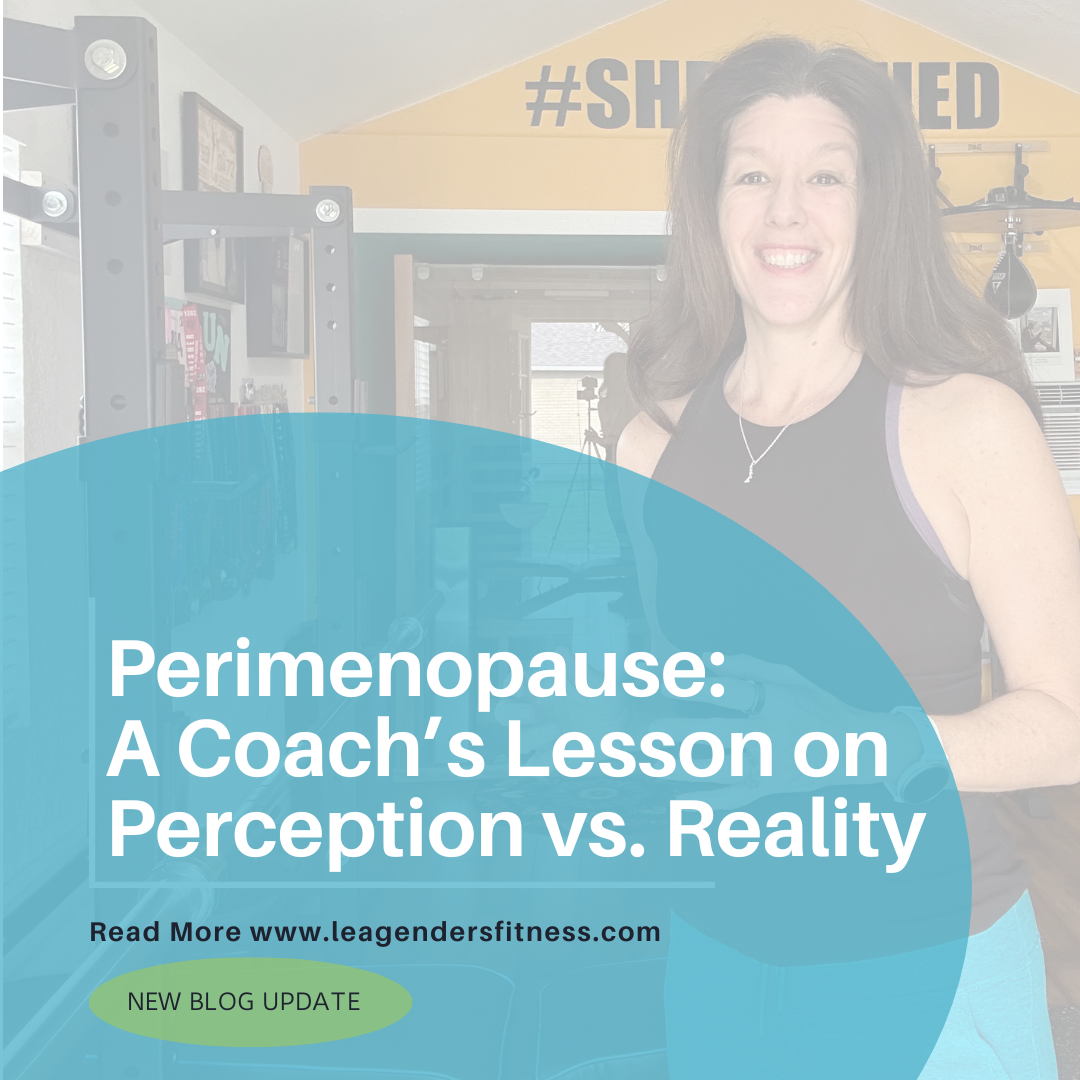
The Midlife Weight Gain Scapegoat: "Damn You, Perimenopause!"
I have a confession. When the scale showed I was up six pounds, my very first thought was, “Damn you, perimenopause!” Because I am so deep in the fitness world on social media, it seems like every other post is someone talking about perimenopause weight gain or how to avoid it.
But I had to get honest with myself before I started blaming something outside of my control. When I really thought about it, I realized there were a few other factors at play.
First, while I have always been generally consistent with my workouts, both my strength training and running volume had declined a bit. Second, my nutrition was more of the same. I generally ate well and cooked meals at home, but my husband had been bringing home more sugar- and fat-laden snacks lately.
Between that and what felt like near-non-stop snacking, even on healthy things like grapes and nuts, my calorie intake was definitely up. Finally, if I’m being really honest, I hadn’t been holding myself to my 10K steps-a-day goal as strongly, so there was less movement overall.
To be absolutely clear, I am not denying that struggles due to perimenopause are real. Our hormones change, fat distribution can shift, and sleep changes can affect absolutely everything. I am only suggesting that before we decide it is entirely out of our control, we take an objective step back and examine the variables that are within our ability to change. Often, speaking to your doctor about perimenopause symptoms can also lead to further helpful conversations about your options.
It is also important to note that we don’t have to, and shouldn't be expected to, adhere to a high output and precision all the time. It is completely natural to move in and out of more intense focus depending on what is going on in our lives. Giving myself permission to loosen my standards while keeping basic healthy habits in place is 100% normal. The essential piece is having that solid baseline to fall back on when life gets busy. No one is perfect, and perfection is never the goal.
Back to Basics
So, let’s revisit the facts. I was working out less, eating more, and generally moving less. Of course, my body would react to the change in energy balance, which is a completely natural response (at any age).
To course-correct, I did what I hadn’t done in a long time. I put myself in a slight calorie deficit, started tracking my food in the same app I use with my personal training clients, cut out the extra snacking, and intentionally increased my step count.
And what happened? Drum roll, please.
After the first week, I lost a whopping 0.3 pounds. This was with near-perfect adherence to my nutrition and increased movement. Can you guess what my very first thought was?
“Damn you, perimenopause!” Hah.
It’s so easy to default to that mindset. But I had to check myself again. Sure, it seems like this was easier when I was younger, but I had to dig deeper to get the whole picture. What I discovered surprised me.
The Reality of Fat Loss vs. Weight Loss
If you read my blog post last week, I talked about all the ways the scale can mask progress or hide the real story around fat loss. I had to set aside my emotions and look strictly at the facts of fat loss.
After four weeks, I had an eye-opening experience. Each week, the scale dropped very slowly, less than half a pound a week, for a total loss of 1.8 pounds after a month of adherence to my new program.
There was a part of me that was annoyed at this glacier-slow progress, despite everything I know as a coach about fat loss. What can I say? I’m human too. If you have ever tried to intentionally lose fat, you can probably relate.
But this slow movement is actually a great sign that I am preserving the lean muscle mass I work so hard in the gym for. I may have gained six pounds, but I am not willing to lose muscle just to see a lower number on the scale. Keeping my muscle mass is my first priority.
At first glance, it seemed I could lose weight more easily when I was younger. But a quick reality check set me straight. I wasn't seriously lifting weights back then, so when I would eat less and run more to lose weight, I would lose more quickly. But that rapid weight loss would have included muscle mass, which explains why my weight would yo-yo back then. A smaller body with less muscle mass has a slower metabolism (not to mention higher injury risk), making it harder to keep weight off.
So it really wasn’t easier back then, I just didn't know how to do it effectively. Sure, the weight dropped faster, but dealing with the constant up-and-down of the scale is definitely the hard way, not to mention less healthy.
The Metrics That Matter
Then, I looked at my other measures of progress and was blown away. I realized that if I had only looked at the scale, I would have felt like I wasn’t making much of a dent towards my new goal. Many people might even give up at this point! But the truth is, I was making incredible progress; I just needed to remember where to look.
First, I tried on a pair of shorts that were too tight to be comfortable at the beginning of May. By the end of the four weeks, they fit just fine. Then, I measured my waist and realized I had lost two whole inches!! (I almost can’t believe it!) That is the strongest sign that I was losing mostly fat while maintaining my hard-earned muscle. Finally, I had been taking progress pictures, and I could see considerable improvements in my body composition over the past four weeks (differences I didn’t really notice just looking in the mirror).
Turns out my “Oh no, perimenopause sucks” mantra was just a story I was telling myself. I was actually making great progress, as proven by the measurements, clothes, and pictures.
It can be so helpful to examine the stories we tell ourselves. Are they true? Are they helpful? Often, simply asking ourselves those questions allows us to step back long enough so we don't default to unhelpful narratives.
The Best Ways to Track Fat Loss Progress
The lesson I relearned here is that waist measurements, how your clothes fit, and progress photos tell a positive story that the scale completely misses. This prompted me to think a bit about the true hierarchy of progress metrics when fat loss is the goal.
If you want an accurate picture of your progress, rank your metrics like this:
How your clothes fit and how you feel
Monthly progress photos, which tell a more objective story than just looking in the mirror
Waist measurements, which can confirm fat loss if your waist measurement is smaller while the scale remains steady
DEXA scans, which are considered the gold standard, but are still not perfect because hydration levels can affect your lean mass reading
Home body-fat scales, which require you to weigh under the same conditions each time, are less precise but can be helpful for monitoring body fat % trends
The regular bathroom scale is the least effective way to monitor fat loss progress.
What’s Next?
I hope that reading my story and personal revelations helps you on your own fat-loss journey. Going through this experience firsthand has been incredibly valuable to me as a coach because it helps me empathize more with my clients.
It’s a great reminder that while there are many things beyond our control, when we seize what is in our control, we can make meaningful progress, even if it doesn’t look exactly as we expected. Slow progress is still progress, and an important reminder of why we play the long game. When we focus on sustainable behaviors we can stick with for life, that’s when we see the best results.
The most eye-opening thing so far for me is how easily my brain fell into blaming (perimenopause) and emotional frustration, despite everything I know as a wellness professional. Being able to step outside yourself and review the facts rather than the feelings can change your whole perspective on your progress. Remembering to practice self-compassion is where the real breakthrough happens. If you struggle to do this on your own, this is where a coach can help.
Lea
There is no greater compliment than a referral!
Have I helped you? Leave a Google Review here

Lea Genders is a board-certified health coach, personal trainer, and workplace wellness consultant based in Fort Worth, TX. She offers corporate wellness programs for employee health and productivity, as well as in-person and virtual training / coaching for individuals worldwide. Her blog shares expert guidance on strength training, running, and sustainable nutrition @fortworth_trainer
Interested in coaching? Apply here.







Meal prep sounds so Type A, but here’s how a self-proclaimed queen-of-good-enough does it: protein, veggies, and dinner without the Sunday prepping marathon, plus why the best meal prep food is the kind you’ll still want to eat on Wednesday.