MOTIVATION

Goal Setting Exercise

I am working on a brand new program that includes a running plan, strength training for runners, an injury prevention tool box and a nutrition guide. 

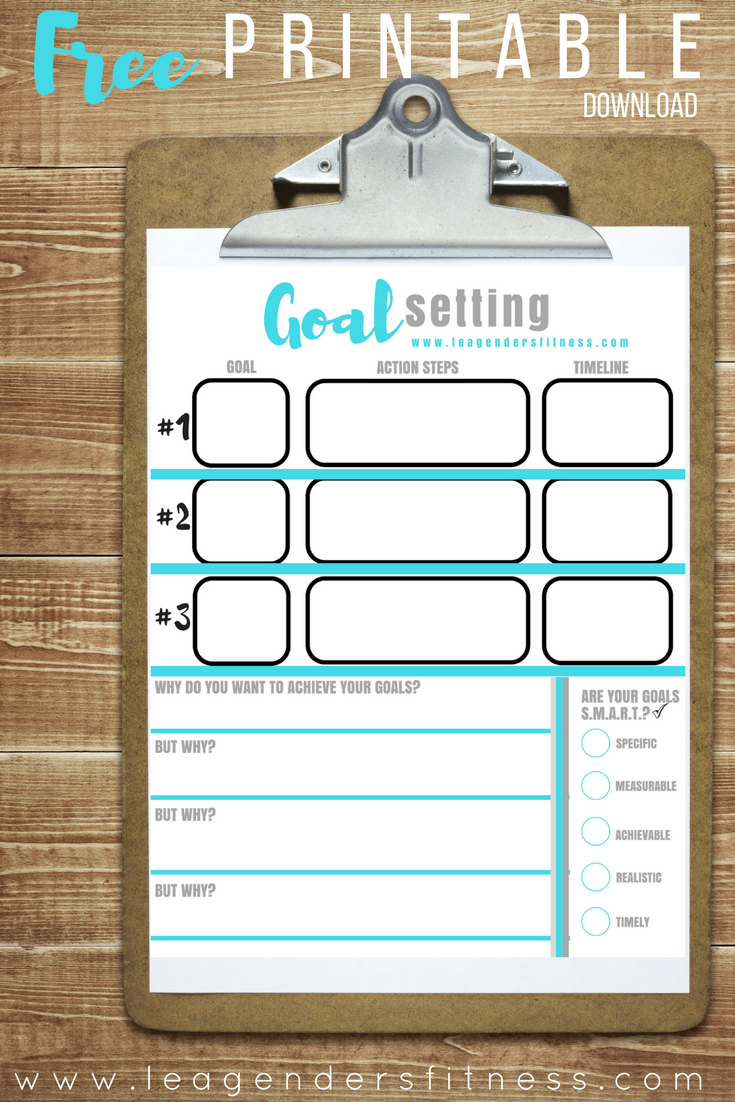
Before starting any new running, training or healthy-living program (we don't "diet" around here) it is a good idea to take some time to think about your goals. After all, if you don't know where you want to go it's kind of hard to get there. Set clear goals before starting any new program. Write down your goals for the best results. Yes, on old fashion paper. Did you know when you write down your goals you are more likely to achieve them? Of course you still have to do the work, but the first step is to write them down.
BE SMART

Get specific. Make sure your goals are S.M.A.R.T.  Specific, Measurable, Achievable, Realistic and Timely. Instead of saying that your goal is to run faster, it is better to say you want to decrease your 5K time by 30 seconds per mile in 12 weeks by running four times per week, including three or four 20 minute strength training workouts and eating properly for running performance. Be specific as possible with a goal that you can measure, that is realistic and achievable within a reasonable timeframe.

FOCUS ON ACTION

Goals don't achieve themselves. Write down your goals then write down three to five things you can do every day (or every week) that will bring you closer to your goal. If your goal is to lose 10 pounds, your five action steps might be: 1. Eat mostly whole foods from natural sources 2. limit added sugars to 20-25 grams a day 3. walk 10K steps a day 4. Do a workout that gets your heart rate up for 30 minutes 3x a week 5. Sleep 8 hours a night. Then focus on action. You can't always control the outcome or timeline of achieving your goals, you can almost always control the actions. Focus on one new action at a time and build slowly over time. 

CHANNEL YOUR INNER FIVE YEAR OLD

The next step is to understand the why. Find your inner five year old. Did you ever tell a five year old to clean his room? But why? Because it's messy. Why? Because you left for school without putting your toys away. Why? Because we ran out of time and the bus was coming. Why? Because the bus driver is on a schedule. Why? Because our tax dollar pay him. And so on...

You want to lose weight? Why? To feel better. Why do you want to feel better? So I'll have more energy. Why do you want more energy? So I can do more things with my family without feeling worn out. Aha. The why is the family values. While you may want to lose weight to look sexier, there is often an underlying reason that helps connect you emotionally to your goal. If you want look skinnier so you can get more likes on instagram, you are less likely to achieve it. Find the reason that connects your goal with what you value in life.

Make sure you have a goal that you find meaningful. Make sure it is something you actually want to achieve instead of what you think you should want. Find your why. Dig deep to uncover your why for better success in achieving your goal. 

BE FLEXIBLE

Things change. Goals change. Sometimes you don't want what you thought you wanted six months ago. It's OK to change your goals as you go, in fact, it's a natural progression. It's not quitting. It's pivoting. It's evolving. It usually means you are growing. Don't feel the need to hold tight to goals that don't serve you anymore. When your goals no longer align with your values, it's time to pivot. 

SHARE YOUR GOALS AND JOURNEY

Some people say that social media is turning us all into cast members of The Walking Dead. People are walking into traffic and tripping into water fountains because they are too busy staring at that object permanently attached to their hand. But there are good things about the internet and social media. Leave the bad behind (caring about likes, drama and fake news) and embrace the good. Social media allows you to connect with like-minded people all over the world. If you are a knitter who loves basketball and techno music, there is probably more than one other person in this world with those same passions. You can find them on the internet. If you happen to love running, reading blogs, working out, alternative rock music and dogs, then hey, we should probably be friends, because that is what I love. 

Tell your friends and family your goals. If you want to expand your friend circle, tell like-minded folks on social media your goals. You're likely to find hundreds of supportive people ready to cheer you on. Use hashtag #strengthandrunninggoals to share online. Find me on Instagram or twitter and I'll be your virtual accountability buddy!

Like this post? It helps me a lot when you share with your friends and followers on social media.

5 WAYS TO FIT STRENGTH TRAINING INTO YOUR RUNNING ROUTINE

Runners are notorious for being runners. D'uh, right? I know because I was there. I love(d) to run. I worked out an hour a day 4-5 times a week and it was all running, because that is what I loved to do. I know I needed to exercise and now I found this exercise that I love. I was burning calories, moving my body and strengthening my heart. I was exercising. Most people don't even get off the couch. Yay me.

Then someone comes along and tells me that it's not enough...that I just can't run all the time, that I need to do more. Even worse, I need to do less of what I love and more of something that I love not-so-much, strength training. UGH.

At that time I may have had visions of spending hours in the gym, but I quickly learned it didn't have to be all-or-nothing. There are many ways to work strength training into a running routine, I could do both. I could focus on running as my priority while also getting in my strength training. Turns out strength training made me a better runner. I got faster, leaner and was less prone to those pesky running injuries. What's not to love about that? 

The first step is to stop thinking of strength training as something that you have to do instead of running, consider it something that you do to improve your running performance. Just like sports athletes work with a strength coach, a runner can improve at their sport by focusing on gaining strength, improving flexibility and fixing imbalances.

5 WAYS TO FIT IN STRENGTH TRAINING IN YOUR RUNNING ROUTINE

ADD 15 MINUTES TO THE END OF YOUR EASY RUN DAYS

It doesn't have to be all-or-nothing. If you can't spend an hour on strength training, just add a quick strength workout to the end of your runs on easy days. Spend 15 minutes focusing on runner specific strength. Start with twice a week and add additional days as you get stronger.

BREAK UP THE MILES BY ADDING STRENGTH MOVES ALONG YOUR RUNNING ROUTE

Do it obstacle course style. Run a mile, then do 10 squats, 10 pushups and a 30 second plank. Repeat at the end of every mile. Vary your exercises on different days. On your next run do 10 lateral squats, 10 lunges and 10 tricep dips after each mile. 

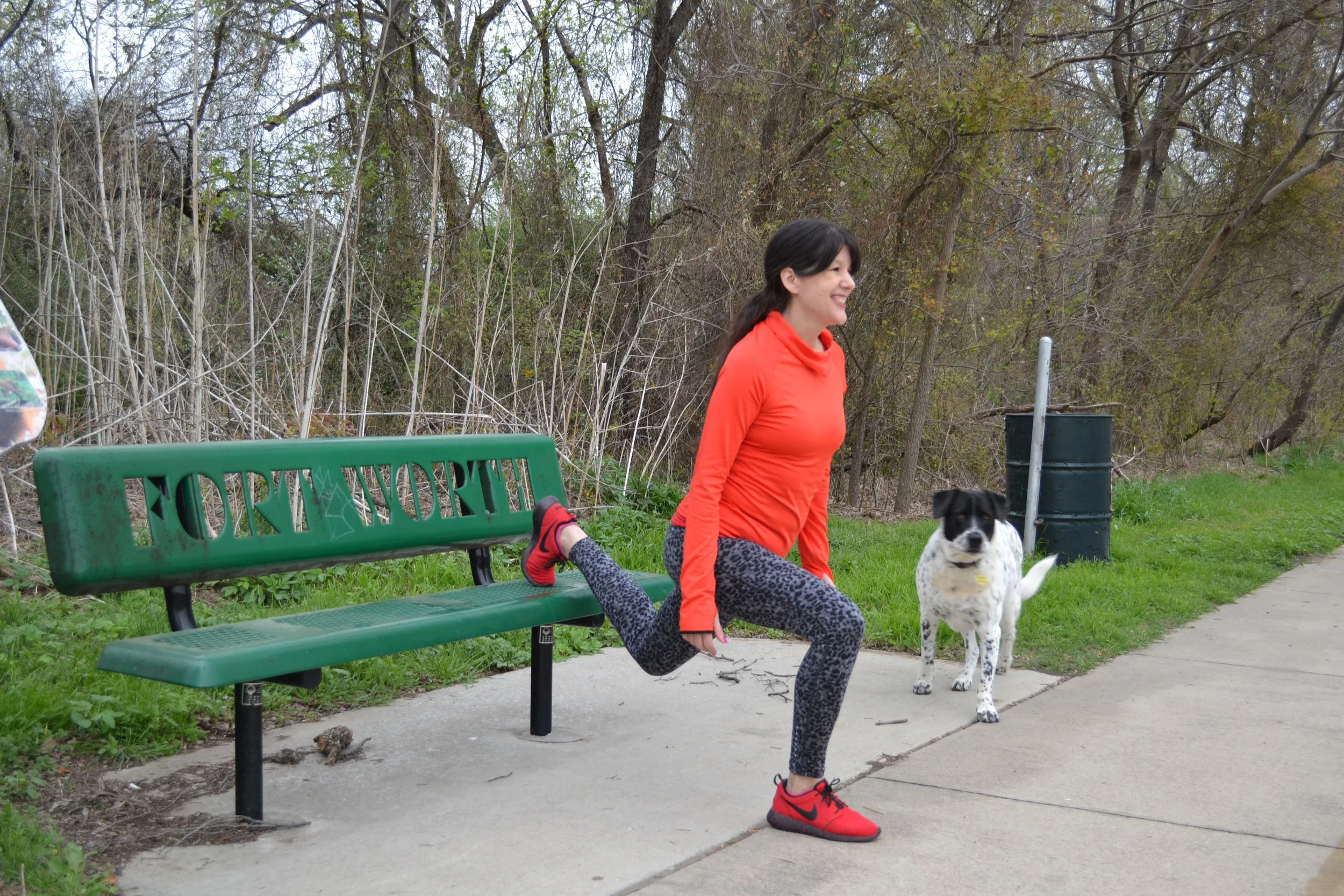
Run past a park bench? Try these exercises. How about outdoor stairs? There are plenty of ways to break up your easy run with some strength training moves.

Try incorporating running intervals into your strength workouts, like this one. 

Go ahead get in those reps, your running partner can wait. 

Go ahead get in those reps, your running partner can wait. 

DO TWO 30 FULL BODY WORKOUTS A WEEK

If you would rather focus on running during your run days, then start with two 30 minute full body workouts each week. Try doing compound movements (like squats with overhead press) and circuit-style workouts help maximize your time in the gym to get the most bang for your biceps. 

JOIN A CLASS OR BOOTCAMP

Misery loves company? Or so they say. Too bad bootcamps are fun and when you join with other like-minded people you can get in running shape while having fun. 

HIRE A COACH

If you can't muster up the motivation to do anything but run, it may be time to hire a coach for some accountability. A coach can help ensure you are getting the most of that time away from running. I am both a running coach and a personal trainer, so I can help you meet your running goals while building runner-specific strength to avoid injuries.  

One point I'd like to reinforce is that strength training should always be done on easy run days. High intensity runs should not compounded by additional strength work. In other words, don't max out on hill work or speed intervals, then try to get in strength training afterwards.

Always take rest days after hard or high intensity days. Remember that our body adapts to the effects of exercise (gets stronger, faster) during rest, not during the workout itself. Always give adequate time for your body to rest and repair for maximum results. Got it? Good. 

Like this post? Please consider sharing. 

Coach Lea


52 Healthy Habits: Drink More Water!

Welcome to the latest edition of 52 Healthy habits, where each week we tackle a new healthy habit. No matter where you are in your fitness and healthy lifestyle journey, there is always room for small incremental improvements. Each week we look for small ways to inch towards a healthier lifestyle. It's not about overhauling your whole life, but making changes that are sustainable over a lifetime. Common sense in an industry where it is uncommon. 

DRINK MORE WATER
 

I'll start by saying that we definitely need to drink water. Water has important jobs. Water brings nutrients to the cells and carries waste products away. It regulates our temperature and provides minerals.

Most adults need a baseline of 12 cups a day. Depending on the foods we eat, we get about four cups of water a day in our foods. Raw fruits and vegetables are mostly water. That leaves the general recommendation that you've probably heard of 8 cups a day.

Larger people may need more. If you're at high altitudes you may need more. When it's hot or dry you may need more. When you exercise you need more. To answer the question, "How much water should I drink?" The answer is, it depends. Let's start with a baseline:

IF YOU'RE MOSTLY SEDENTARY: 8 CUPS A DAY

Drink one cup upon waking, before you drink your coffee. 

Drink one cup before each meal and one cup during each meal 

Drink one cup a couple hours before bed. (Not too close to bedtime or you may end up interrupting your sleep with bathroom runs.)

FOR MODERATE EXERCISERS UNDER 2 HOURS A DAY: 12-16 CUPS A DAY

Drink 2 cups upon waking, before you drink your coffee

Drink 2-4 cups during workouts depending on the length and intensity of your workout

Drink 2-4 cups after workouts

Drink 2 cups at each meal

As always, you should experiment with water intake and adjust based on your body's feedback. Drink more if you feel thirsty and less if you feel water logged. While 8 cups a day is a baseline, everyone may have different needs. 

If you are not drinking any water right now, it is ok to start small and build over time. Focus first on just drinking one cup with each meal, when that becomes habit, continue to add until you reach the baseline. It should never be all-or-nothing. Do what you can today and work to improve over time. 

This post contains affiliate links. That means if you click on a link in this post and make a purchase, I make a small percentage of the sale with no additional cost to you. No one is getting rich here, it just helps with the running (pun intended) of this blog. As always, thank you for your support. 

STRATEGIES TO DRINK MORE WATER

MAKE IT A HABIT

By always drinking one cup of water upon waking and before each meal, you start to build a habit. After awhile It becomes second nature to drink water during those times.

SPARKLE, BABY!

Consider sparking water. Sometimes I want the fizz of a soda and sparkling water is a good alternative. Just be sure to read the ingredients listed on the nutrition label to ensure that it doesn't contain any "extra ingredients." Sparkling water isn't sweet, it tastes like water with bubbles. If it is sweet, then they added something to it. It's fine to drink artificial sweeteners in moderation, but they probably shouldn't be in every cup of water you drink a day.

DO IT LIKE THE SPAS DO!

Take a cue from the luxury spas and add cucumbers, berries, mint leaves or lemon to your water. It gives water a refreshing, natural flavor. You could just add to your water or use one of these fruit-infused water bottles.

HAVE A TEA PARTY

Add decaffeinated tea bags to your water. Drink it hot or cold. Green tea is great for you. Just be careful about adding too much caffeine. I personally try to limit by caffeine intake to 1-2 cups a day. 

TRACK IT

Use an app or a tracking log to track your water intake. Download my free tracking log! You may find if you start to pay attention to your water intake you will increase it. In order to improve anything, the first step is to measure where you are currently. 

BUY A REFILLABLE WATER BOTTLE

Buy a fun refillable water bottle to track your intake. 

Are you drinking enough water? Would you like to improve? Try one of these strategies to increase your water intake and let me know how it goes.

Need help with your nutrition strategy? Tired of dieting? Want help developing healthy habits while staying sane and balanced? My nutrition and lifestyle coaching program begins in June, get on the list for a big pre-sale discount. 

Need to catch up on the 52 healthy habits series? 

52 HEALTHY HABITS SERIES

week 1: Early to Rise
week 2: Track calories
week 3: Macro cycling
week 4: Morning pages (journaling)
week 5: Stop the scrolling (reading instead of social media)
week 6: Be a good student (take time for learning) 
week 7: Strength Training 15 minutes per day   
week 8: Eat more protein
week 9: Take a coffee break (break from caffeine)
week 10: Mindful eating
week 11: Create and follow a sleep ritual
week 12: 10 Easy ways to eat more vegetables 
week 13: A rant 
week 14: 10K steps a day

Like this post? It helps me when you share. 

52 Healthy Habits: 10K Steps a Day

Welcome to the latest edition of 52 Healthy Habits, where each week we tackle a new healthy habit. No matter where we are in our fitness journey, small incremental improvements in our lifestyle inch us forward closer to our goals. 

The idea behind 10K steps a day is to simply move more. We don't always have to get in a run or a sweat session at the gym. While intense exercise contributes to a healthy body, heart and mind, just focusing on intentional movement goes a long way towards our weight loss or weight maintenance goals. 

Total Daily Energy Expenditure (TDEE) is our metabolic rate. This includes our resting metabolic rate (minimum energy we need to maintain vital functions of the body) + physical activity + thermic effect of feeding (energy used digesting and processing the food we eat). 

The only thing we can control is physical activity. You can increase your metabolic rate by increasing your activity. This doesn't mean you have to spend four hours in the gym every day (in fact, that may backfire). You can increase your physical activity by moving more intentionally throughout the day. It doesn't replace your weekly sweat sessions, it is in addition to them. This extra energy expenditure gives you a big advantage when working towards weight loss (and maintenance) goals. All the little stuff adds up to big results. 

This post may contain affiliate links. That means if you click on a link within this post and make a purchase, I make a small percentage of the sale at no additional cost to you. No one is getting rich here, it just helps with the running (pun intended) of this blog. Thank you for your support.

Why 10 steps?

The American Heart Association recommends 10K steps a day for heart health, but it shouldn't be 10K or nothing. If you have a tracker (I have a FitBit) then measure your daily steps for three days, take the average of the three days, then add 3000 steps to that as your beginning goal. 

For example, if you walk 3000 steps on Monday, 4500 on Tuesday and 5000 on Wednesday, your daily average steps are 4166. Your starting step goal would be 7166. Once you are consistently hitting that goal, you can up it again by 3000 steps. 

If you don't have a fancy tracker, don't let that stop you. You can get an inexpensive pedometer or just add intentional movement into your day (without tracking). It can make a big difference, even if you don't know exactly how many steps you took. 

Strategies to Increase Daily Steps

1. Park farthest away from the entrance at work, school, grocery store and the gym. it drives me crazy to see people fighting for close parking spots at the health food stores or at the gym. 

2. Return your shopping cart all the way back to the store rather than leaving it in the parking lot port. 

3. Take the stairs whenever possible.

4. Use the restroom at work or school on another floor.

5. Always walk the the long way around.

6. Visit your co-workers at their desk instead of calling or emailing.

7. Pace when on the phone.

8. Walk during breaks at work or school.

9. Set reminders on your phone or computer to take short hourly walk breaks.

10. Take a walk after dinner (or in the morning, or at lunch).

11. Walk your dog (or borrow one).

12. Commit to only look at social media when walking (man, you'd be walking ALL THE TIME). I learned this one from Carla Birnberg. 

13. Walk in circles around your house or walk in place like a crazy person until you hit your goal. (Not that I do that...as far as you know.)

I work to walk 10K steps a day every day. It's one of my bare minimum goals for the day. Even if I don't get anything else accomplished, I usually get in my steps. The only exception is when I am sick or injured. Like anything else, you don't want to take it to the extreme. Our goal should always be healthy body and mind. 

While I love my FitBit Check out my post on the potential downfalls of activity trackers. 

Like this post? It helps me when you share.


How to Set Goals That Stick: Process vs. Outcome

It's April and a great time to review those New Year Resolutions. Remember those? How's it going? We've had three months to kick off our new year goals. If you are rocking and rolling then congratulations on being part of the small percentage of people that stick to their New Year goals after March 1st. 

If you've struggled to stay committed or forgot all about those goals by now, never fear, we don't have to wait until 2018 to give it another go. April is a new quarter and a perfect opportunity for a new start or a chance to evaluate (maybe change?) those original goals. The truth is if you made big goals for 2017 and they didn't pan out exactly as you hoped, it probably is not your fault. It's the fault of the goal itself. We are human and have certain universal limiting factors. We can make intense goals then try to white-knuckle our way into achieving them using willpower and extreme self-discipline but that hardly ever works. The better way to lasting change is to change the way we set goals. 

HOW TO SET GOALS THAT STICK

You know about setting S.M.A.R.T. goals, right? Make sure your goals are Specific, Measurable, Achievable, Realistic and Timely. These are all important factors for goal setting. In a nutshell, instead of saying that your goal is to lose weight, it is better to say that you want to lose 10 pounds of fat in two months by exercising 4 times a week and reducing calories by 250 per day. Be specific as possible with a goal that you can measure, that is realistic and doable within a reasonable timeframe. 

The biggest issue with most goals is that they are outcome-based goals alone. It's OK to have outcome-based goals (lose fat, run faster, lift heavier), the problem is that we can't always control the outcomes. We can't wish for our goals to come true, we have to work for them. The trouble is that our bodies can be snarky (yes, it's a word) and sometimes even if it seems we do everything right, we still don't see the outcomes we want in the time we expect. That can be frustrating and cause some people to become disheartened and give up.

Some of that may just be having realistic expectations. If it took you five years to put on extra weight, it's just not realistic to expect that you will lose it in two weeks or two months. Yes, we all want results as quickly as possible, but slow and steady wins the race. The secret sauce is finding the sweet spot between sanity and sustainability. We want to set goals we can achieve over the long term without driving ourselves crazy. Healthy lifestyle includes healthy body and healthy mind. If your goals are making you miserable, interfering with your family and social life or making you feel bad about yourself, it might be time to refine your goals. 

SETTING PROCESS GOALS

You set your outcome-based goals (lose fat, run faster, lift heavier, etc.). The next most important thing to do is set your process goals. What are the things you need to do each day in order to achieve your goals? If your goal is to lose fat, then your process-based goals probably would look like something this:

Cardio exercise 3 times a week for 30-45 minutes with one intense interval session, full body strength training 2-3 times a week, 8-10k steps a day and reduce calorie intake by 250-350 calories per day, reduce added sugar intake to under 20 grams a day. (This is just an example, if you are starting from zero, then you would build up to this over time.)

Your goal would be to check off each day or each week that you completed the process goals. At the end of two weeks you might decide to reward yourself (healthfully) for completing all your process goals, even if you didn't see large improvements in your outcome goal. 

If you are nailing the process goals, they become habit. When healthy habits are part of your lifestyle they go a long way to helping you achieve those outcome goals. It's about sustainable actions over the long term. It's not what you can do in one hour or in one week, it's about what you can sustain over the long term. In other words, it is better to lose 40 pounds slowly over six months, than it is to starve yourself, lose it quickly and then gain it back because you reached your goal weight and loosened up on your unsustainable practices. Trust me when I tell you I learned this lesson the hard way.

Here is an example: I am studying for my Precision Nutrition Sports and Exercise Nutrition Level 1 certification. I set process goals and outcome goals each week. My goals last week were to study one hour each night for six nights and at lunch three days per week. I planned to complete three chapters in seven days. See how I included both process and outcome goals? 

Ollie, my study buddy.

Ollie, my study buddy.

At the end of the week I met my process goals but not my outcome goal. I studied each night and at lunch as I had planned but only completed two out of three chapters because I underestimated the length of the chapters and therefore had unrealistic expectations of my outcome this week. It took me longer to get through chapters 13 and 14 than anticipated. I was tempted to rush through the workbook questions in order to finish faster and possibly be able to get in another chapter this week, but I quickly realized that hurrying through the chapter to meet some arbitrary goal was not serving me and my larger purpose (you know, to actually learn this stuff).

So I slowed down and did what was realistic and sustainable. I am closing in on the end of this certification, so an extra few days or an extra week won't make a difference once I am certified, but slowing down to make sure I learn the material is key to my success with the program. I still consider the week a success because I did the actions I needed to do to meet my long term term goal (pass the certification test). 

You see, my outcome goal was unrealistic but I didn't know it until I started the process. This often can happen with our health and fitness goals. Rushing through or trying to speed up the process does not serve us in the long term. 

(Edited to include that I passed the certification test!)

ACTION STEPS

Set your outcome-based big goals, then decide on the actions you need to take each day and each week to reach your goals. Then focus heavily on these process-based goals. Judge your success by your completion of the process goals. If you are unable to complete your process goals, make them smaller until they are achievable. Failed to workout for an hour four times last week? This week try to achieve just 30 minutes 3 times. You have the rest of your life to progress forward. Start small for the best chances of success. A 15 minute workout that you completed is always better than an hour workout you didn't have time to do. 

It's important that your process goals are sustainable. What can you do every day for the long term without driving yourself crazy?

Experiment and find out and you'll be well on your way to achieving all your goals. 

Like this post? It helps me when you share.