MOTIVATION

Build a Home Gym on any Budget

I work out at home in the #shredshed but it is not your typical home gym. We went all-out and built our ideal gym environment in a separate building on our property. Since I am a trainer, it is part home gym, part private studio. I can train clients in a studio environment without the monthly overhead. For me, spending more on building my own gym made sense. (Although I do miss the pool and sauna at the big box gym.) 

There are a lot of benefits of a home gym. You eliminate the commute so you can get your workout done faster. After an initial investment of basic equipment, you don't have to pay a monthly fee so you could save money in the long run. You never have to wait to use equipment, wipe someone else's sweat off equipment or elbow strangers in the weight room. 

I understand that not everyone has the budget or desire to spend a lot of money on their home gym, so whether you are on a shoestring budget or if money's no object, let's talk about what you'll need to build your own version of the #shredshed.

This post contains affiliate links which means If you buy from my links I make a (very) small percentage of the sale at no additional cost to you. It helps with the running (pun intended) of this blog.

THE BASICS

You don't need a lot of equipment to get started building your own home gym. Whether you make some room in your garage, clear out a spare bedroom or build a gym in your backyard, with a few basic essentials you will have everything you need to get started. You can always add on with additional equipment later. 

FLAT BENCH

An affordable simple flat bench is all you need to get started, it's what we use in the ShredShed. It doesn't take up much room and can be easily moved around and out of the way. You can upgrade by buying an adjustable bench with leg extension if you have the space. 

FREE WEIGHTS

Choose three different dumbbell weights to start. For women just starting out, I recommend 8, 10, 15 pound dumbbells. You can always add heavier weights as you get stronger. If you are already working out, purchase weights according to your current fitness level.

STABILITY BALL

A stability ball is an inexpensive way to add an unstable surface to challenge your balance and help strengthen your stabilizing muscles and joints. Check out my stability ball workout for some ideas to get started.

RESISTANCE BANDS

Resistance bands are great for when you're traveling, but also are an inexpensive way to add resistance to your workouts. Check out my resistance band workouts for some ideas to get started

EXERCISE MAT

If you are working out on hardwood or tile floors you will want to have an exercise mat for floor exercises. You could opt for a roll-up mat or a foam floor tiles.

I also recommend a timer and a foam roller. 

ADD VARIETY

Once you get started on your home gym, you may find you want to add a little variety to your workouts. While not a necessity, these are some nice-to-own pieces of equipment in your home gym depending on your fitness goals and abilities. 

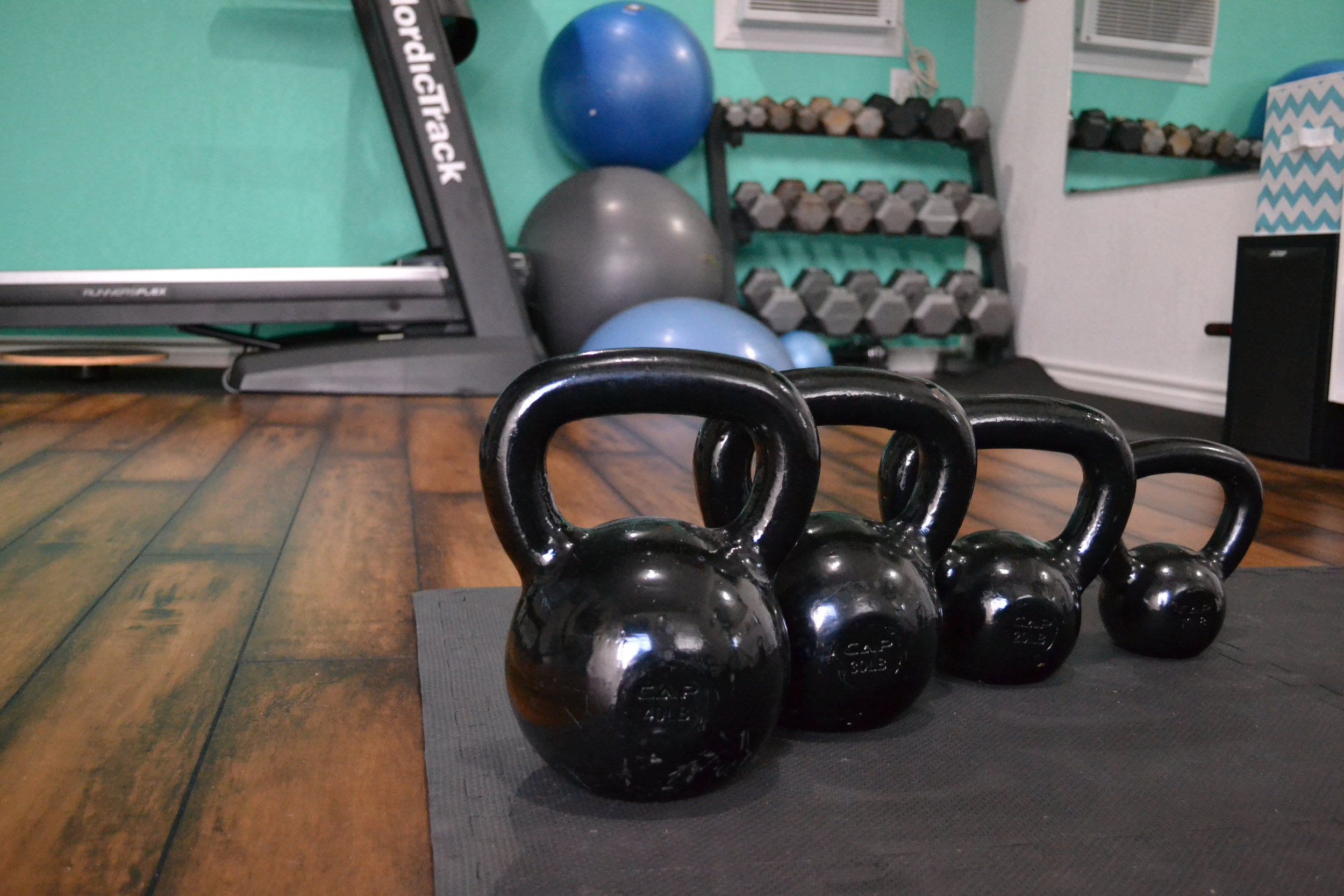
KETTLEBELLS

Kettlebells are ideal equipment for functional training. With kettlebells you can do whole body movements in a strength and cardio workout in one. 
BARBELL

A barbell can be a great tool for building strength. The ShredShed has both a barbell with adjustable plates and a weighted exercise bar. They each can be beneficial depending on your goals.

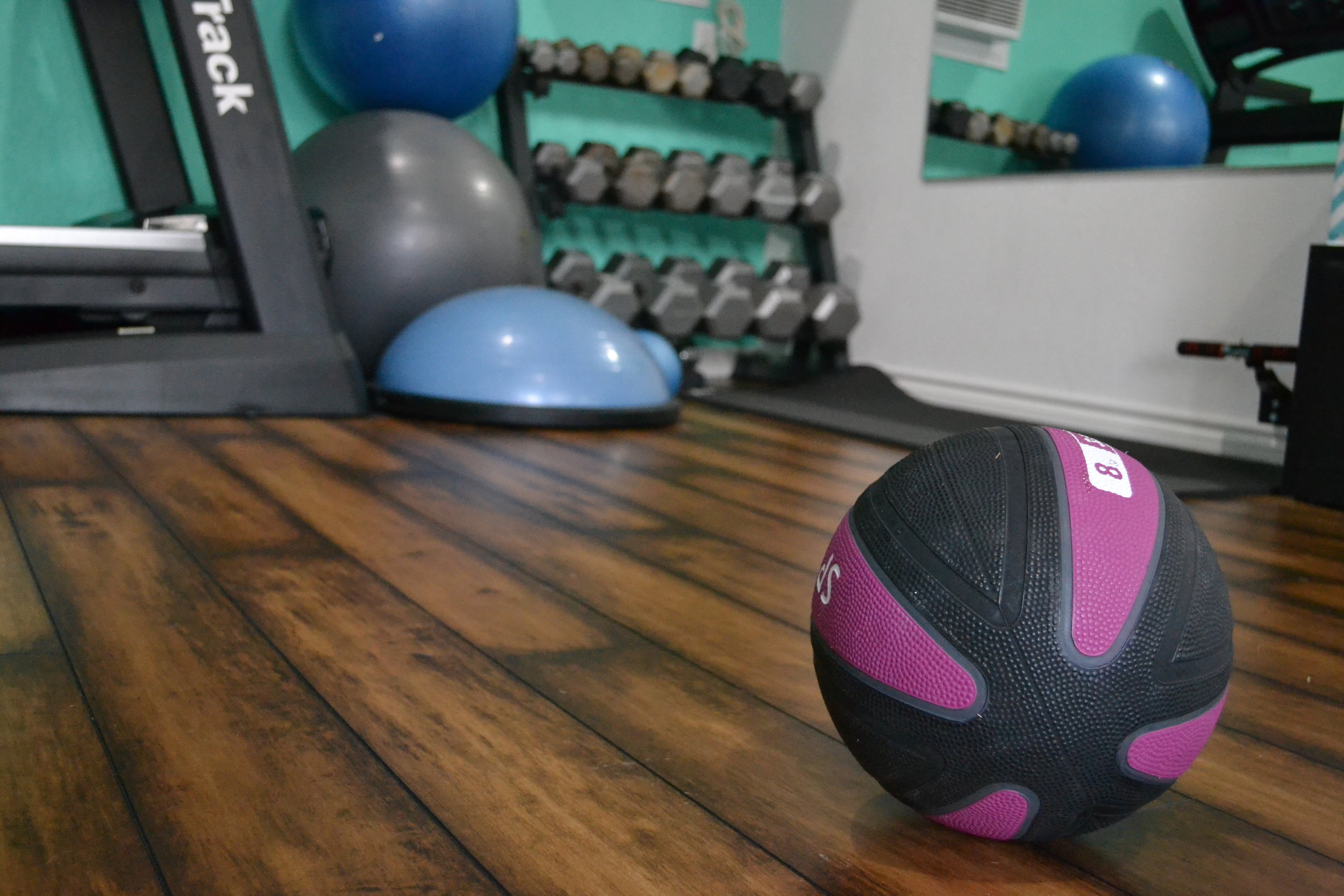
MEDICINE BALLS

I recommend an 8 or 10 lb medicine ball to add some variety to your workout. It can be used for strength, power or stability workouts. Check out my medicine ball workout for some ideas.
BOSU BALL

The BOSU ball is a fun addition to any home gym. BOSU stands for BOth Sides Up. One side is flat plastic and the other is a half rubber dome. The BOSU ball adds an element of instability to your workouts to challenge your core. Check out my BOSU workout for some ideas.

GO ALL-OUT 

Once you have all the basics covered and added a little variety, there are a few high ticket ticket items that are nice to own if your space and budget will allow. 

SUSPENSION STRAPS (TRX)

I fell in love with my suspension straps as soon as we installed them. They use your own bodyweight as resistance and can challenge you in multiple planes of motion (especially important for runners). You can get a full-body workout incorporating the stabilizers and the core.

TREADMILL

Although I will always profess my love of running outdoors, it is very convenient to have a treadmill available for those days when the daylight or weather is not cooperating with my workout schedule. The treadmill doesn't have to be boring, I put together these boredom busting treadmill workouts to keep things interesting. 

Are you considering a home gym? Any questions? Let me know in the comments.

Like this post? Please consider sharing. 


Hot Tips for Cold Weather Running

I live in Texas so my window of opportunity to write about cold weather running is limited. Last week we had a 30 degree day and a 70 degree day. I pulled out my gloves and hat, only to quickly put them away again. While the weather here is fickle, it does get cold.

I moved to Texas from Pennsylvania largely to get away from the snow and ice. I was 23 at the time and I had just about enough to shoveling the snow out from under my tires, my car locks freezing over and icy road conditions. They don't close the schools and businesses for a drop of snow (or 5 feet) like they do here. You just have to deal with it.

Before I moved here I didn't realize it snowed in Texas. I thought that because it was a southern state, like Florida, that it didn't snow. I was wrong. Obviously we don't get the snow like up north, but it still snows nonetheless. If I would have known it snowed in Texas I may have decided to move somewhere else. Good thing I was fooled because if I didn't move here, I would never have met my husband.

Despite the fact that there is snow in Texas and the temperature can drop quite low, I still want to keep running. I take it indoors on the treadmill all the time, but I prefer to run outdoors, so I try to make it work outside when it is safe to do so.  

1. Dress in Layers

The rule of thumb is to dress for 10-20 degrees warmer than the current temperature, because once you start running, you will warm up considerably. Ideally you would dress in layers. A long sleeve synthetic (aka not cotton) base layer, a warmer zip up on top and if really cold a third layer. You can always remove layers as you go if you get too hot once you start running.

2. Head, Fingers, Knees and Toes

It sounds like a children's song: Head, Fingers, Knees and Toes, but it is a good reminder to cover all exposed skin. We lose heat from our extremities so a hat and gloves go a long way in keeping us warm. For cold and windy days, I like a wear a neck gaiter (either attached to a top or a separate piece) to cover my mouth and nose. 

3. Wear Fitted Clothing

You want to wear clothes that provide both insulation and breathability. Fitted clothing keeps the cold air from creeping in under your clothes. You can layer loose fitting clothes over your first fitted layer.  

4. Avoid cotton socks

Cotton absorbs water and can provide an unfavorable environment for your feet when you sweat. To keep your feet dry and blister free look for socks made from synthetic materials that help wick moisture away from the skin. 

5. Hydrate

It may seem like you don't need to hydrate as much much it is cold but it is just as important as in warm weather running. Hydrate early and often during cold weather runs, just like you would in the heat. 

6. Warm up Indoors

Take five to ten minute and warm up indoors before heading out for a cold weather run. You want to get the blood flowing to your muscles in preparation for your workout. Some jumping jacks, high knees and butt kicks (dynamic stretches) should do the trick. If you like Yoga, also try a few sun salutations to get those muscles warmed up before your run. It may take a little longer to warm up in extremely cold weather so it is important to warm up indoors to prevent injury.

7. Prepare Mentally

Running in cold weather can be uncomfortable, but preparing for it mentally can make it more bearable and make you stronger. I look at it as another opportunity to practice stepping outside my comfort zone. You are building mental toughness (as well as physical toughness) every time you hit the road in uncomfortable situations. Mental toughness is a skill that transcends far beyond your running journey.

Of course, I recommend common sense. In extremely cold, icy or snowy conditions, take your run indoors, schedule a rest day or do some other physical activity inside. Be safe, friends!

Do you run in the cold, take it to the treadmill or take time off until Spring? Will a little preparation, you can run outdoors all winter long! 

Like this post? It helps me when you share or save to Pinterest.

So You Think You Can Run? How to Get Started

If your new year's resolution was to start running you have come to right place. So many times when I tell people what I do, they say to me, "I wish I could run" and I am here to tell that you can.

While your first lap around the block gasping for air might try to convince you otherwise, I am sure if you put in the work required that you can be a successful runner too.

Most people can start running and even (gasp!) learn to enjoy it. I may be a little biased but I think running is the perfect cardiovascular activity for most healthy individuals.

So you think you can run? You can. Just follow a few simple principles and you'll be on your way to healthy, strong, injury-free running journey. 

1. BUY QUALITY RUNNING-SPECIFIC SHOES

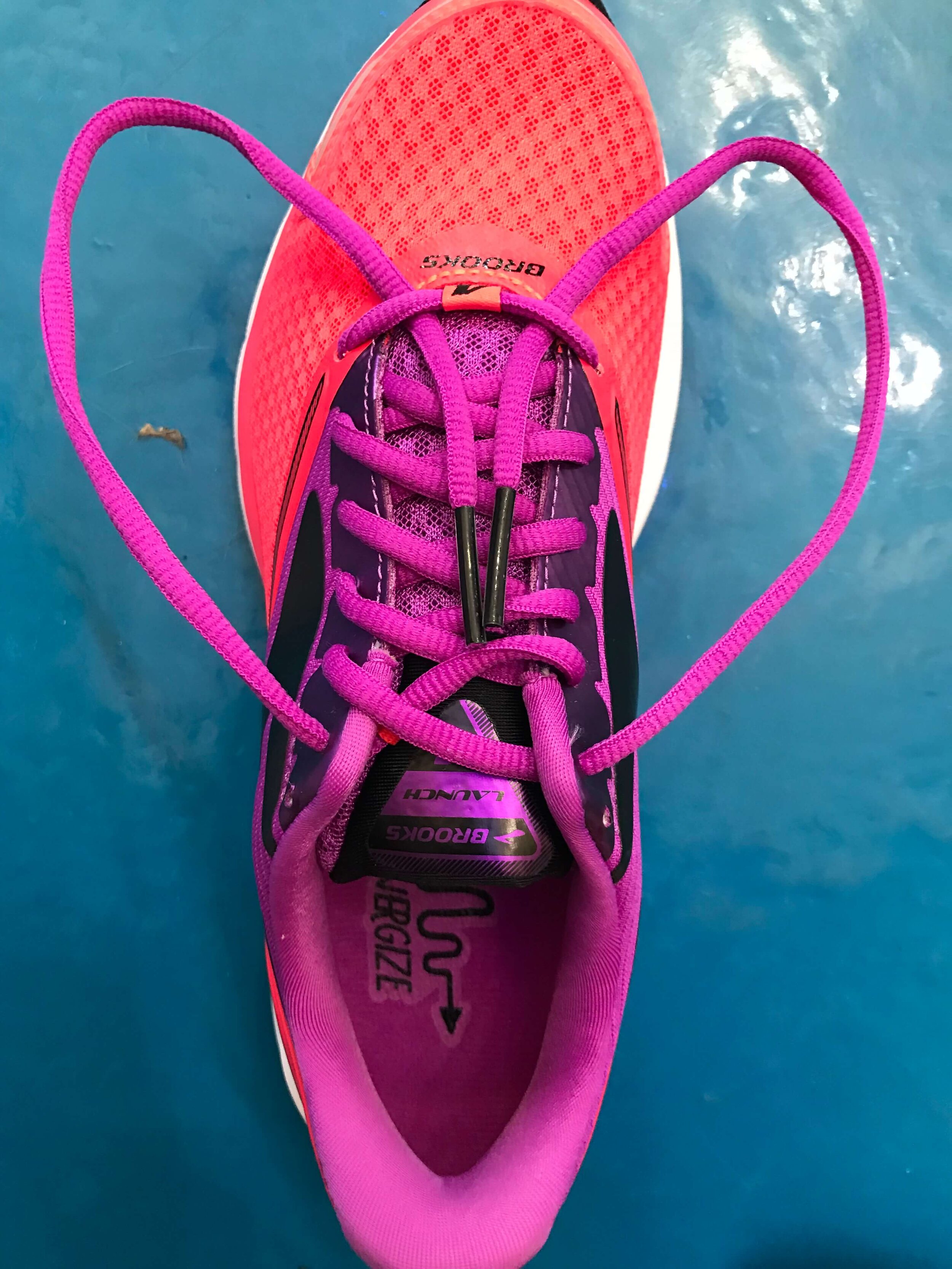
This is probably the most important thing you need to do before you start running. Yes, they can be expensive, but it is one of the only big investments into running. This is not the place to cut corners. Go to a speciality store to get help from a knowledgeable store associate if you are not sure what kind of shoes to buy. (Spoiler alert: don't buy them for color.) There are tons of running-related products you could (and will probably want to) buy, but nothing is as essential as a good pair of running-specific shoes. 

2. SET GOALS

Now that you have your shoes it is time to set goals. What do you want to do? Run a 5K? Run a mile without stopping? Run a half marathon? Run a 10 minute mile? You have to know where you want to go in order to make the plans to get there. Having a goal is the first step in staying motivated. When you are working towards a specific goal you have a reason to get everyday and put in the work.

3. BE REALISTIC

One of the biggest mistakes new runners make is that they do too much too soon. It all sounds great in the beginning when you are new and enthusiastic, but if you bite off more than you can chew you'll only increase the chances that you will quit due to overtraining or worse, injury. Slow and steady is the best, safest way to get started. If you think of running as a long-term commitment, you have the rest of your life to get better. Start off with low and slow milage and build slowly over time. Trust me on this one. 

4. BE CONSISTENT

In order to be a better runner you have to run on a regular basis. It will probably be hard at first and you may even want to quit after a few tough runs, but I can promise with consistent running, it will get better. Even if it is just one mile at a time, lacing up those shoes and hitting the pavement on a regular basis is the key to success (just don't forget about #3). 

5. STRENGTH TRAIN

I know you said you wanted to be a runner, not a bodybuilder but adding in regular strength training into your workout schedule will improve your running and reduce your risk of injury. You don't have to spend all day in the gym or grow giant muscles, spending 20-30 minutes 2 or 3 times a week on runner-specific strength moves will do the trick. While running is a fantastic exercise for losing weight and staying heart healthy, we want to build ourselves into well-rounded athletes. Strength training will make you a better, faster, stronger runner. You can find some some workouts to try in the archives.

6. GET SUPPORT

You can usually find support with your family, friends or local community. Join a running group, recruit a friend, hire a coach, start a blog, get a four-legged running partner or find like-minded people online (social media is full of supportive running communities). I'm here to cheer you on. If you tell people your goals and have a support system in place you'll be more likely to stick with your new running program. 

7. START RUNNING

The only thing left to do is lace up your shoes and hit the pavement. My favorite running quote is this one from John Bingham. You think you can run? You can. Just do it. 

“If you run, you are a runner. It doesn’t matter how fast or how far. It doesn’t matter if today is your first day or if you’ve been running for twenty years. There is no test to pass, no license to earn, no membership card to get. You just run.”
— John Bingham

Are you inspired to give it a try? With a little patience and consistency I know you can do it. Let me know if you have any questions. 

Like this post? It helps me when you share. 


Coach Lea


5 Things Introverts can Gain from Running with a Group

If you have been considering running with a group but were intimidated by joining strangers for a run, then I am here, as a self-professed introvert, to tell you that running with a group is beneficial for all personality types. Yes, especially for us introvert-types that generally prefer to be alone or just around close friends.

Being an introvert doesn't mean that we don't like people, that we are socially-awkward or even shy. Some might say that I am quiet, but my friends will attest that they can't get me to shut up most of the time. We write, we read, we are creative-types that thrive on alone time in our internal worlds.

An introvert is drained by social situations, while an extrovert is energized by them. We can utilize our strengths as an introvert, step out of our comfort zone, make new friends and have fun while running with a group. I'd argue that introverts have more to gain from running with a group than extroverts. 

5 THINGS INTROVERTS CAN GAIN FROM RUNNING WITH A GROUP

FRIENDSHIP

When you become a part of a running group you have the opportunity to make some like-minded friends. One of the issues introverts have with meeting new people is the dreaded small talk. We crave deeper connections. When you join a group of like-minded people in a running group, you start off on common ground. It is easy to make conversation, jump in on an existing conversation or just listen in. Making new friends comes naturally when you share the same passions.

ACCOUNTABILITY

Often we can feel more accountable to others than we do to ourselves. If we know people are counting on us to show up, we don't want to let them down. We can get stuck in our own heads, in our own internal worlds. A running group can provide the accountability we need to get out and get moving when we might otherwise be stuck in front of our computers or with our nose in a book. 

RUNNING IMPROVEMENTS

While we generally enjoy doing things alone, having others around can push us to new levels. When we run with a group we have the opportunity to run with faster pacers which can elevate our own running. Friendly competition and positive social pressure that comes from running groups can encourage us to push ourselves harder than we would if we were alone. 

MOTIVATION

Running groups come in with their own built-in cheering stations. In all the years I have been running I have rarely seen runners act in a way that wasn't inclusive, supportive and encouraging. Having people around to cheer you on, no matter what your fitness level or ability can be a game changer. One of my favorite things about runners is that when we come together in real-life (IRL as the kids say) there is usually a wide variety of ages, skin colors, sizes and abilities, but we are all the same. We are all runners cheering each other on. 

PERSONALIZED ADVICE

Running groups are usually led by coaches. Running with a group is a great way to get access to a running coach for much less cost (if any) than hiring a personal running coach. The type of advice and recommendations that you can get from running coaches and your fellow runners can be more personalized than what you can read on the internet or in a book.

Being an introvert isn't a character flaw. I am introspective, thoughtful, a writer and a thinker. Those are all wonderful things. I just need to remember to step outside of my comfort zone when I know it is for my own good. Can you relate?

Like this post? Please consider sharing.
How To Make a Successful New Year's Resolution

Happy New Year, friends! I hope you had a fit, fun and successful 2016. I know a lot of people talk about 2016 being a drag, and not to minimize anyone else's pain, but 2016 was a great year for me. I have a roof over my head, food on my plate, a job (or three), friends, family and you. Sure, we lost some celebrity icons in 2016 and there are political and social issues that seem to be cultivating fear in the masses. I choose to think and act positively, to try to approach life from a grateful and loving heart instead of a place of fear. There are problems in the world but all I can do is to try be a shining light in my own little way. I fail sometimes, but I try and that is enough.

But I digress. Here we are in 2017. For some it may feel like a fresh start. I love that the New Year inspires the world to want to make positive changes in their lives. But New Year's Resolutions don't have a great track record for success. Why is that? Why do we want to change but then fail to take the actions necessary to follow through? I am as guilty as any. 

After 42 years of experimenting (aka trying and failing), I know that going all in on an aggressive goal on January 1st usually doesn't last. After a few weeks or even a few days you end up burned out, stressed out or worse, injured. Then you go back to just doing what you always do, because well, it's easier that way. But doing what you've always done will never inspire growth and change.

Whether your goal for 2017 involves a diet or exercise plan, a professional goal, a financial goal or anything else, the key to success is sustainability.

Whatever your goals are for 2017 evaluate each of them for sustainability. Ask yourself, is this something that I can do for the rest of my life? Not 12 weeks, not 6 months, but the rest of your life.

A 60 day no carb challenge? Fails the test. I can tell you right now I am going to want to eat carbs again in my remaining years on this earth. Period. No question. (Besides, we as athletes, this includes you, need carbs to thrive.) 

A 6 day-a-week one hour high-intensity workout plan? Maybe this will work out fine for the short terms, and maybe you will even lose some weight, but this is not sustainable long term (aka the rest of your life). You are much better served sticking to 20-30 minutes most days of the week alternating between high and low intensity workouts. Think of it like this: Would you rather workout hard and diet for 12 weeks, lose 30 pounds and then gain it all back once the program is over? Or lose 30 pounds over a longer period of time and keep it off for the rest of your life?

Whatever your goal, make it something that is sustainable for the rest of your life. Suffering for 12 weeks won't benefit you in the long run. An old lady on her deathbed doesn't remember that 12 weeks from her 30s when she worked out or dieted really hard. Temporary actions lead to temporary results.

If you really want something you  have to make commitments to yourself that may be uncomfortable at first, but small consistent action over time will snowball into big results. 

The big secret: Choose something that is sustainable over the long term. Commit to small action every day. Be consistent over the long term. That's how you have a successful New Year's Resolution.

I wrote a post called "How to Make Exercise a Daily Habit" if you want some ideas to get started on your sustainable workout goals. Remember it is always best to start slow, you have the rest of your life to build on it. 

What are your new year's resolutions? Do they pass the sustainability test? I am going to start getting up early again, at 5:30am to workout some days and work on my blog and business other days. It is a good habit that has fallen to the wayside and a positive change I can make in my own life in 2017.

I thought this article on Breaking Muscle was outstanding and illustrated my point even further. "Changing Your Life is Not a 45 Day Challenge."

Like this post? It helps me when you share.