Running A-to-Z S is for Shoes: How to Buy Running Shoes

Welcome to another edition of Running A-to-Z. Every week I share a running-related post following the order of the alphabet. This week we are on letter S: S is for Shoes. How to buy running shoes. If you missed any past posts you can catch up on letters A-through-R in the archives.

How to Buy Running Shoes

How to Buy Running Shoes

One of the great things about running is that it is a sport where you don't need a lot of equipment, gear, or even formal training to get started. Most people can just hit the pavement and begin their journey into running. The one thing that every runner needs to know before getting started is how to buy the proper running shoes. A good running shoe is the only big investment into the sport and you want to make sure you get it right. 

You walk into the shoe store and the giant wall of shoes overwhelms your senses. The colors, the claims, the technology, the price tags and the marketing are all fighting for your attention. Your head spins with confusion. How do I know which ones to buy?

I recommend buying your shoes from a running speciality store. I am a big proponent of supporting small businesses and when you shop local you get individualized help from a knowledgeable store associate. They can help guide you to choose the correct shoe for your running mechanics. Once you get a feel for what type of shoe works best for you then it is safe to buy your shoes at a big box retailer or online, but it's usually best to start with a store that can provide you with some guidance and where you can test them before you buy them.

Here are some factors to consider when buying running shoes.

PRONATION

NEUTRAL SHOES

If you run with a neutral pronation the foot makes contact on the outside of the heel first, then the foot rolls towards the inside until the entire foot is on the ground before pushing off from the ball of your foot. I wear a neutral shoe. I determined this by going to a running store for a gait analysis. They filmed me running on a treadmill and watched how my foot hit the treadmill in slow motion. 

STABILITY SHOES

If you overpronate, then your foot rolls to the inside more than ideal and you end up pushing off from your big toe instead of the ball of your foot. Overpronation can be the cause of running injuries if not controlled. If you have mild to moderate overpronation then stability shoes can help control pronation.

MOTION CONTROL SHOES

Motion control shoes are best for runners with flat feet and severe overpronation. As the name suggests, motion control shoes help control the motion of your foot. 

SIZE

You should buy your running shoes 1/2 size to 1 full size larger than your casual or dress shoes. Your feet swell when you run and you need the additional room to keep your toes hitting the front of the shoe. Your toenails will thank you!

BRAND

Try on many different shoes to choose a brand but be aware shoes sizes can fit considerably different between brands. You may find you wear an 8 in Mizunos but a 8 1/2 in New Balance. A lot of runners find a brand they love and stay loyal throughout their running journey, but many change them up every 300-500 miles. Try on many different brands, test them out on the in-store treadmill and make a final decision based on what feels most comfortable. After all, you will be logging many miles in these shoes. 

COLOR/DESIGN

The look of the shoe should be the last consideration when choosing running shoes. Don't get caught up in the pretty colors. Find the right shoe for your gait and this will help narrow down your choices considerably. Choose your brand and your size, then finally choose the colors as the last consideration.

What do you think? Any questions? Let me know in the comments or submit your question to Ask The Trainer to be answered in a future blog post. 

Like this post? Please consider sharing. 


Coach Lea

I am a NASM personal trainer and RRCA adult distance running coach that specializes in strength training for runners. I offer in-person training in the Shredshed, online training and Fit to Run bootcamps. If you are interested in a more in-depth running or strength training plan, please contact me. Have questions? I'd love to help. 

While I am a certified personal trainer, I am not your personal trainer. Since I don't know your exercise abilities, injury background or medical history, please see your doctor before beginning any new exercise program.

5 RUNNING SHOE MISTAKES YOU MAY BE MAKING

Hi, friends! Are you making any of these running shoe mistakes? Running shoes can be expensive, so you want to get the most out of your investment. Don't make these mistakes with your running shoes.

YOU RUN, TAKE FITNESS BOOT CAMP AND GO TO ZUMBA IN YOUR RUNNING SHOES

Running shoes are made specifically for running. When you run, you move in a single plane of motion: forward. Running shoes support you only in forward movements. Those side-to-side lateral moves are not protected if you go to a fitness boot camp or Zumba class wearing your running shoes. Buy a pair of cross-trainers for your fitness classes and save your running shoes for running.

YOU BUY THE SAME SIZE AS YOUR DRESS SHOES

Running shoes should be bought 1/2 size to 1 full size bigger than your street shoes. It would help if you had about a thumb width space empty in the toe box.

The reason for this is that your feet tend to swell when you run, and you need a bit more room to keep your toes from hitting the end of the shoe, which doesn't matter so much in an everyday shoe but matters a lot in a running shoe. Give those tootsies room to breathe.

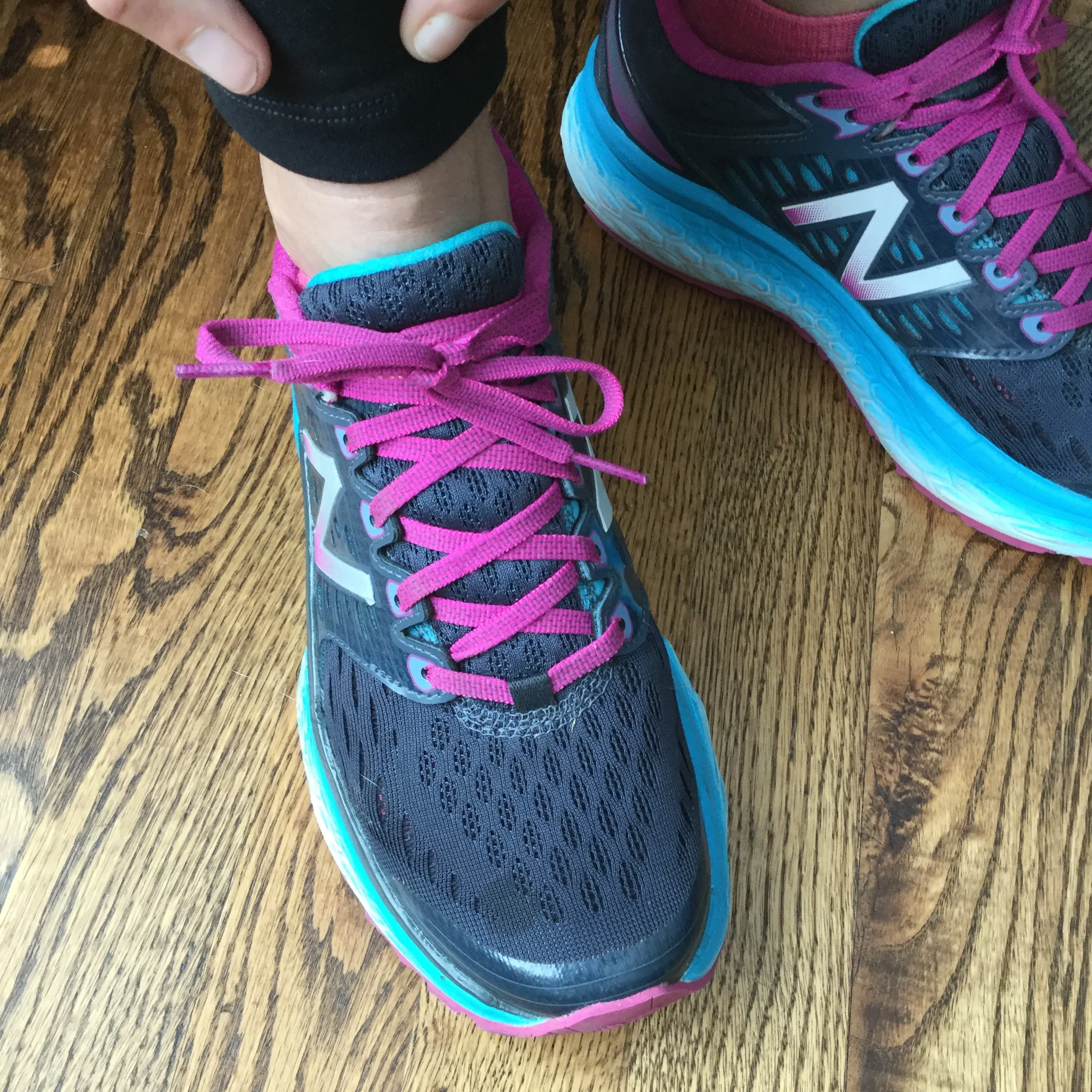
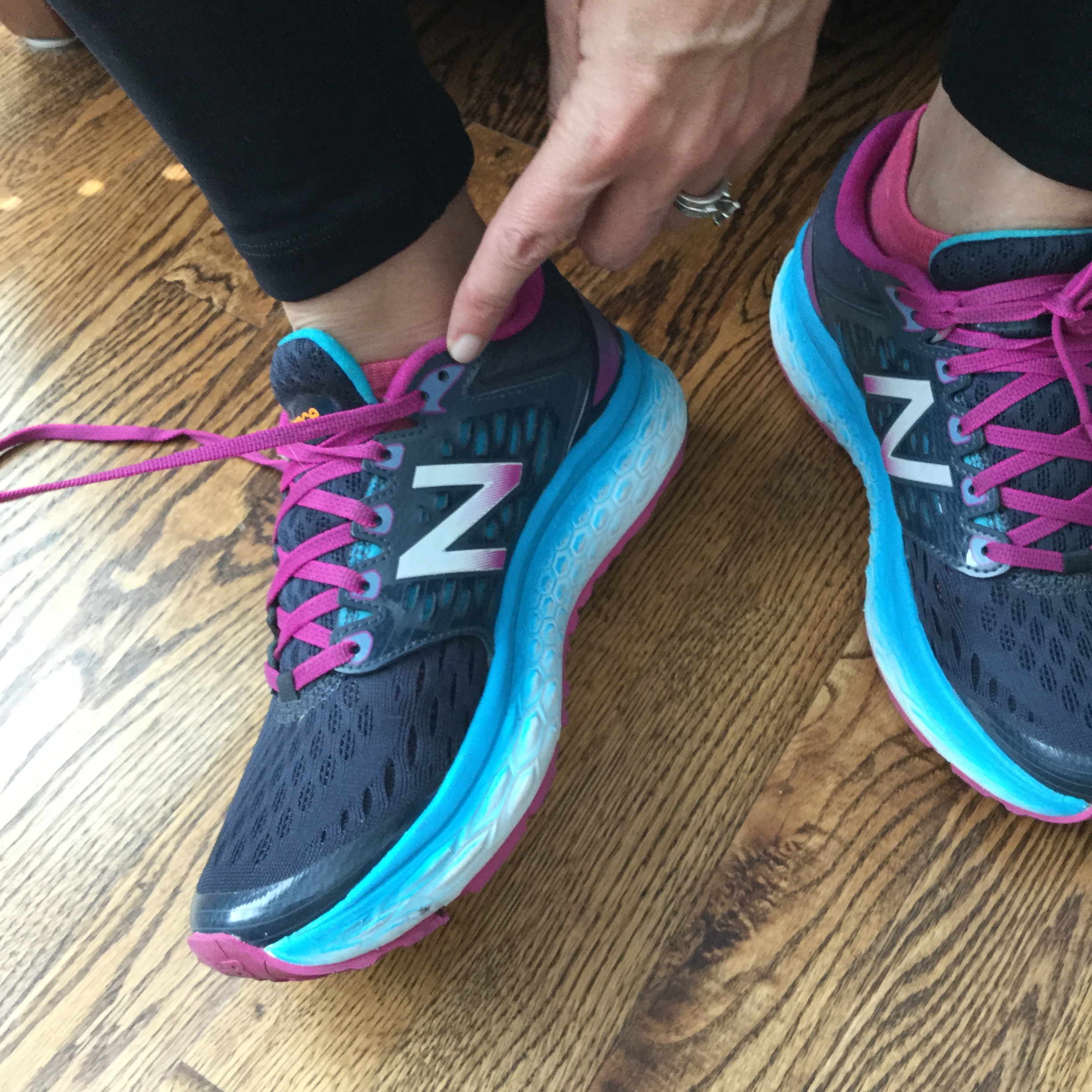
YOU DON'T TIE THEM FOR ANKLE SUPPORT

Ever wonder what that extra hole was for in your running shoes? Use it to tie your shoes for better ankle support. Check out my quick video where I show you how. It is easy and makes a big difference in how your shoes fit.


YOU ALSO WEAR THEM AS CASUAL SHOES

You probably have noticed that running shoes can be expensive. They have a limited lifespan, and every step wears away at the tread and shock absorption. Save your running shoes for running and buy a pair of less expensive tennies for walking around.

YOU DON'T REPLACE THEM EVERY 300-500 MILES

After 300-500 miles, you may start to notice the tread is wearing down, and the shock absorption pads are beginning to crush down. It's a good idea to note when you bought your shoes in your training journal or even with a sharpie on your shoes. Aches and pains out of the blue could be a sign that you need to replace your shoes. Keep a close watch on your milage and pay attention to the tread. 300-500 miles is an estimate; it varies based on the manufacturer, shoe model, and running terrain.

Like this post? It helps me when you share.

TREADMILL BOREDOM BUSTING WORKOUTS: HOW TO MAKE YOUR TREADMILL RUNS NOT SUCK

Welcome to the latest edition of Workout Wednesday! I was going to call this article how to make your treadmill runs fun, but I thought you might question my sanity if I used the words fun and treadmill in the same sentence. Let's just go with How To Make Your Treadmill Runs Not Suck.

I love outdoor running. I never had the kind of love for treadmill running as I do for the outdoors. However, I have to admit there are many good reasons to use the treadmill: They allow you to have strict control over your speed and time, they provide shelter from the weather and a safe environment to run, day or night. They are great for speed work training. The problem is that is that treadmills can be mind-numbingly boring. No one likes to feel like a hamster, going nowhere.

The thing is, you may be going nowhere is terms of physical space, but treadmill runs can help you meet your running goals. If your goal is to run faster, the treadmill can take you places. Here are some boredom busting treadmill workouts that will make the time fly by!

THE ULTIMATE BOREDOM BUSTING TREADMILL WORKOUTS
 

Here are a few ideas for treadmill workouts that beat the boredom. Interval workouts are great for your fitness and can help you mentally get through the workout. By changing up the variables you'll find that the time goes by so quickly you may not even need to cover the console with a towel.

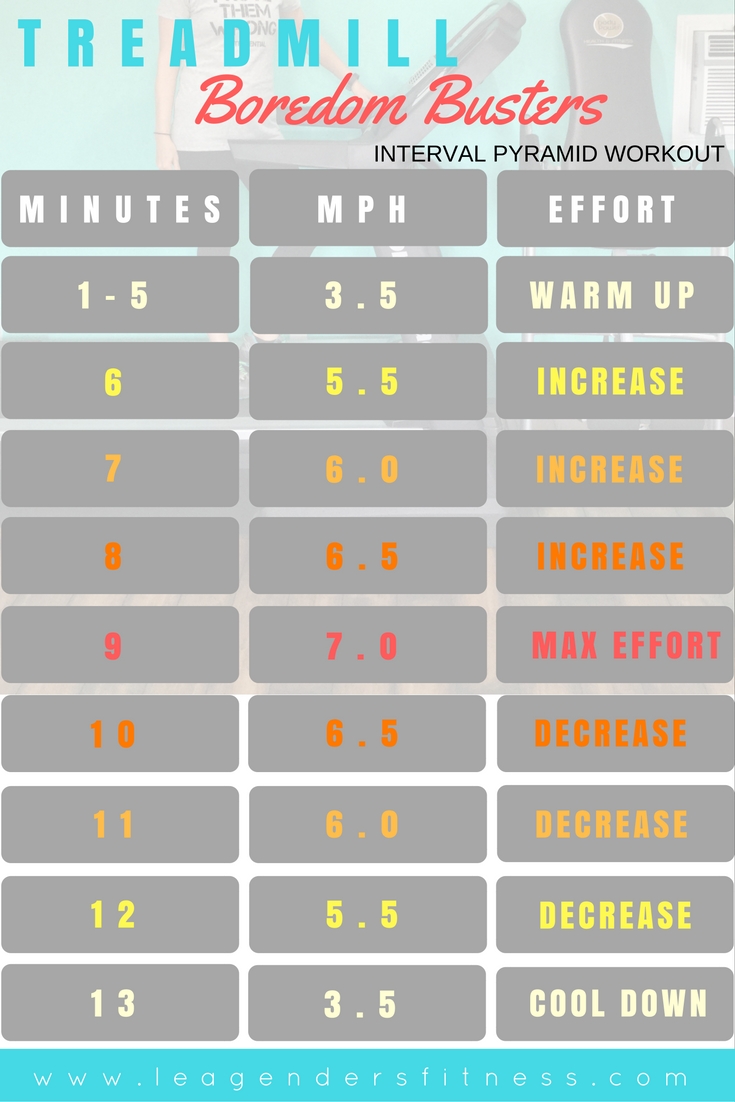
PYRAMID SPEED WORKOUT

1. Walk for five minutes on the treadmill to warm up.
2. Increase your pace to a slow running pace that feels easy and comfortable to you for one minute. 
3. Every minute increase the MPH by .5 on the treadmill until you reach your max running pace.
4. Run for one minute at each .5 increment until you reach your max. You'll know your max when you get there, if you can't keep it up for a minute or if your breathing is really labored, you went too far.
5 Once you reach your max, start moving back down at .5 MPH increment at a time, for one minute, until you reach your slowest running pace again.
6. Repeat 2-3 times.

This is an example of what this workout might look like. Do not arbitrary follow these speeds. This example may be too advanced for some runners and too easy for others. The key is start at your easy pace and advance the speed by .5 mph until you reach your max. It will be different for everyone.

The great thing about this workout is that you can adjust it as your get stronger so that you are always pushing yourself. Adjust your slowest and fastest time to your current fitness level. If this is too slow for you, start at a faster pace and peak at a faster pace. This is a beginner's workout example. If it is too easy or too hard, adjust accordingly.

INTERVAL LADDERS

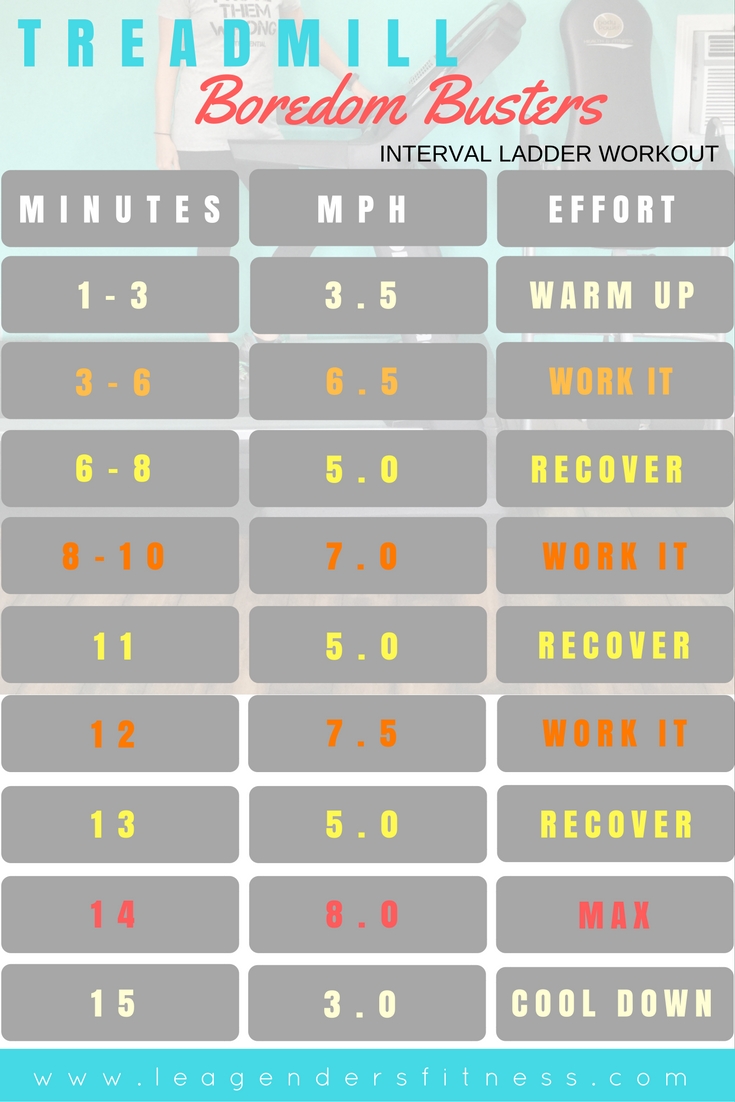
This is my favorite treadmill workout that I do all the time in the Shredshed. You can do it for 15 minutes or repeat for a full 30 minute workout. Each speed interval gets a little faster and shorter. You should build your speed gradually until you find the right pace for your workouts. Again, I can't stress enough that you should run at your own fitness level and not necessarily the speeds on this workout, it is just an example. Adjust your pace slower or faster according to your current fitness levels. 

1. 3 minutes warm up at a very easy speed

2. 3 minutes at a speed that is challenging, but not so challenging that you can't maintain it for 3 minutes.

3. 2 minutes at a jogging recovery pace.

4. 2 minutes at a speed that is slightly faster than your 3 minute interval.

5. 1 minute at a jogging recovery pace.

6. 1 minute at a faster speed than your 2 minute interval

7. 1 minute at a jogging recovery pace

8. 1 minute at a near max effort

9. walk to recover


STRENGTH AND SPEED WORKOUT

One of my favorite ways to incorporate strength into my running workouts is to mix up treadmill intervals with strength training. Run for 3 minutes then jump off the treadmill to perform one minute of an arm or core strength move in between intervals. Your "work" effort should be an effort that challenges you for three minutes but not so difficult that you can't sustain it for that time. 


Remember that making a treadmill run not suck is mostly about conquering your mind. For me, it is more of a mental battle than a physical one. When I finish a high intensity treadmill run, I usually step off the treadmill and onto cloud nine. It seems like the more I sweat, and the harder I worked, then the more intense the runner's high...and runner's high doesn't suck!

How about you? How do you make your treadmill runs not suck?

Download a PDF of these 3 workouts here!


Like this post? It helps me when you share.

Any questions? Ask them in the comments or join the conversation and submit your question to be answered in a future blog post. 

Coach Lea

I am a NASM personal trainer and RRCA adult distance running coach that specializes in strength training for runners. I offer in-person training in the Shredshed, online training and Fit to Run bootcamps. If you are interested in a more in-depth running or strength training plan, please contact me. Have questions? I'd love to help. 

While I am a certified personal trainer, I am not your personal trainer. Since I don't know your exercise abilities, injury background or medical history, please see your doctor before beginning any new exercise program.


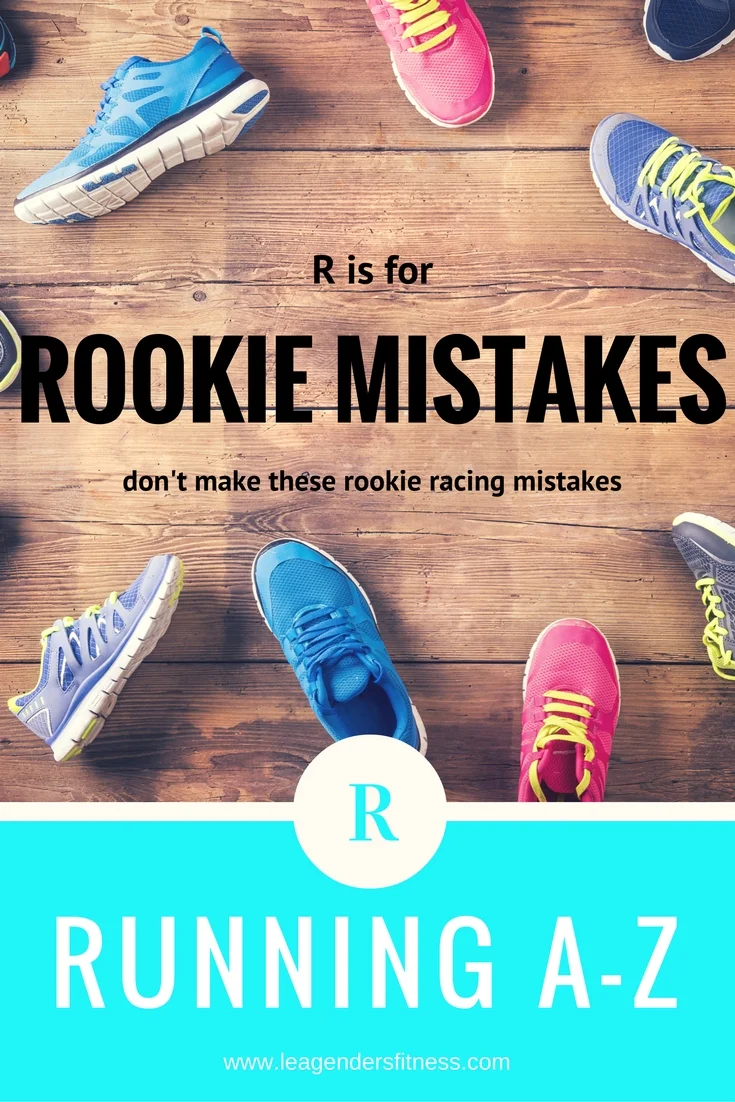
Running A-to-Z R is for Rookie Racing Mistakes

Welcome to another edition of Running A-to-Z where I cover a running related topic following the order of the alphabet. This week we are on letter R. R is for for Rookie Racing Mistakes. If you missed any past posts you can catch up on letters A through Q in the archives

I am an authority on rookie racing mistakes because I have made them all myself. Sometimes you have to make the mistakes in order to learn from them. Let's run through the what not-to-do on race day. These mistakes are not just reserved for rookies. It took me years to learn some of these lessons.


TRY ANYTHING NEW

The golden rule of racing is to not try anything new on race day. Not shoes, not that new singlet from the expo, not a new breakfast because you heard it's what Meb eats on race day. Go with what you know on race day to avoid any surprises. Those shoes could cause blisters, that tank might rub your armpits the wrong way and Meb's breakfast of champions could be the worst thing for your stomach on race day. You train for a reason. You are practicing for the big race. You already know what works for you. Don't mess with it on race day. 

START OUT TOO FAST

It took me a long time to learn to reign it in at the start line and beyond. It is so easy to run faster than you trained when you are hyped up on adrenaline. It seems everyone is going fast and you feel great, why not keep up this pace and bank some time? You can slow down later. 

Except it never works. Never. If you are trained at a certain pace you can't expect to run your race faster than you trained. You will empty your fuel tank and hit the wall. A steady pace will get you across the finish line. If you feel great towards the end can you pick up the pace in the last few miles, not the first few. 

OVERLOAD ON CARBS

It can be tempting to rationalize a large pizza and an extra serving of garlic bread the night before a race in the name of carbo-loading, but don't fall for this myth. This can cause gastrointestinal distress which can ruin a race. Yes, runners need carbs, but healthy carbs should be increased gradually in the days leading up to race day, not one giant unhealthy carb meal the night before the race.

WEAR COTTON APPAREL OR SOCKS

Just say no to anything cotton on race day or any other training day. Cotton absorbs sweat which can lead to blisters, embarrassing sweat stains and an uncomfortable racing experience. Stick to performance apparel that wicks away sweat.

NOT PLAN ENOUGH TIME BEFORE THE START

Plan on everything taking longer than you think. The porta-potty lines are long, parking can take a lot of time, the walk to the start line may be farther than you thought. You have enough on your mind on race day, you don't need the stress of showing up late. Minimize the stress by getting to the race site early. 

FORGET TO HAVE FUN

Checking your GPS watch at every quarter mile marker to make sure your on pace and putting an immense amount of pressure on yourself can suck the fun right out of race day. It's great to have goals and go for new PRs but don't forget, this is supposed to be fun! Enjoy race day! 

Have you ever made any of these mistakes? I sure have. Did I miss anything?

Like this post? Please consider sharing.

Have questions? Leave them in the comments or be a part of my new series "Ask the Trainer" and have your questions answered in a future blog post.

Coach Lea

I am a NASM personal trainer and RRCA adult distance running coach that specializes in strength training for runners. I offer in-person training in the Shredshed, online training and Fit to Run bootcamps. If you are interested in a more in-depth running or strength training plan, please contact me. Have questions? I'd love to help. 

While I am a certified personal trainer, I am not your personal trainer. Since I don't know your exercise abilities, injury background or medical history, please see your doctor before beginning any new exercise program.

Ask the Trainer: Open Invitation to Submit Your Questions

Happy Friday, Friends. If you have been following along you know that I have been working on a blog series 'Running A-to-Z' where I cover a running-related topic in the order of the alphabet. Every Monday I publish a new Running A-to-Z post. It's been a great way for me to stay inspired week after week to provide you with helpful content. I hope you have been enjoying it. 

As I worked on my weekly alphabet post I realized that after 26 weeks this series will be over. I just published Q is for Quotes -Motivational Running Quotes and only have nine shorts weeks before I reach the end of the alphabet. 

I considered running (pun intended) through the alphabet again, this time choosing a new topic for each letter, but I thought it might be more fun to answer your questions each week. 

ask the trainer

ask the trainer


I'd love to know your fitness, strength training or running related problems or questions. What can I help you with? Each week I will choose a question and answer it in a blog post. If I use your question in a post, I will link back to your website, social media handle or you can choose to remain anonymous. 

So, friends. Tell me. What are your burning questions? I would love to help! Fill in the form below or follow this link to ask your questions.


Thank you, as always, for your continued support. I can't wait to start answering your questions. 

Like this post? Please consider sharing.

Coach Lea

I am a NASM personal trainer and RRCA adult distance running coach that specializes in strength training for runners. I offer in-person training in the Shredshed, online training and Fit to Run bootcamps. If you are interested in a more in-depth running or strength training plan, please contact me. Have questions? I'd love to help. 

While I am a certified personal trainer, I am not your personal trainer. Since I don't know your exercise abilities, injury background or medical history, please see your doctor before beginning any new exercise program.