I did an accidental digital experiment the other day. It was a Saturday, and it started out fairly normal. I had a few clients in the morning, but when I got back home, I had a sudden cancellation and found myself with a block of open time.
Instead of filling it with the endless list of things I could be doing, I decided I just needed a break. I gave myself permission to do absolutely nothing. I spent the next few hours flipping through Netflix, scrolling through my phone, and basically checking out of life. I was parked on the couch, and it really felt like I was relaxing.
I took a couple of short walks, but I didn't do a workout or get any significant movement in. To top it off, my husband brought home some chocolate, so I had way more sugar than I usually would.
At the end of the day, I expected to feel rested and refreshed. I had spent hours doing "nothing" after all. But I didn't feel rested. I felt sluggish, blah, and a little cranky. It was noticeable how much worse I felt compared to a normal, active day.
That feeling is the major difference between true recovery and just not being productive. We all need breaks because we can’t work twenty-four hours a day (or even twelve or eight) without a break. Recovery is a major factor in growth. We often mistake scrolling our phones for that break, but it does not work that way. It engages our mind in a low-grade, constant way, so we are never really resting.
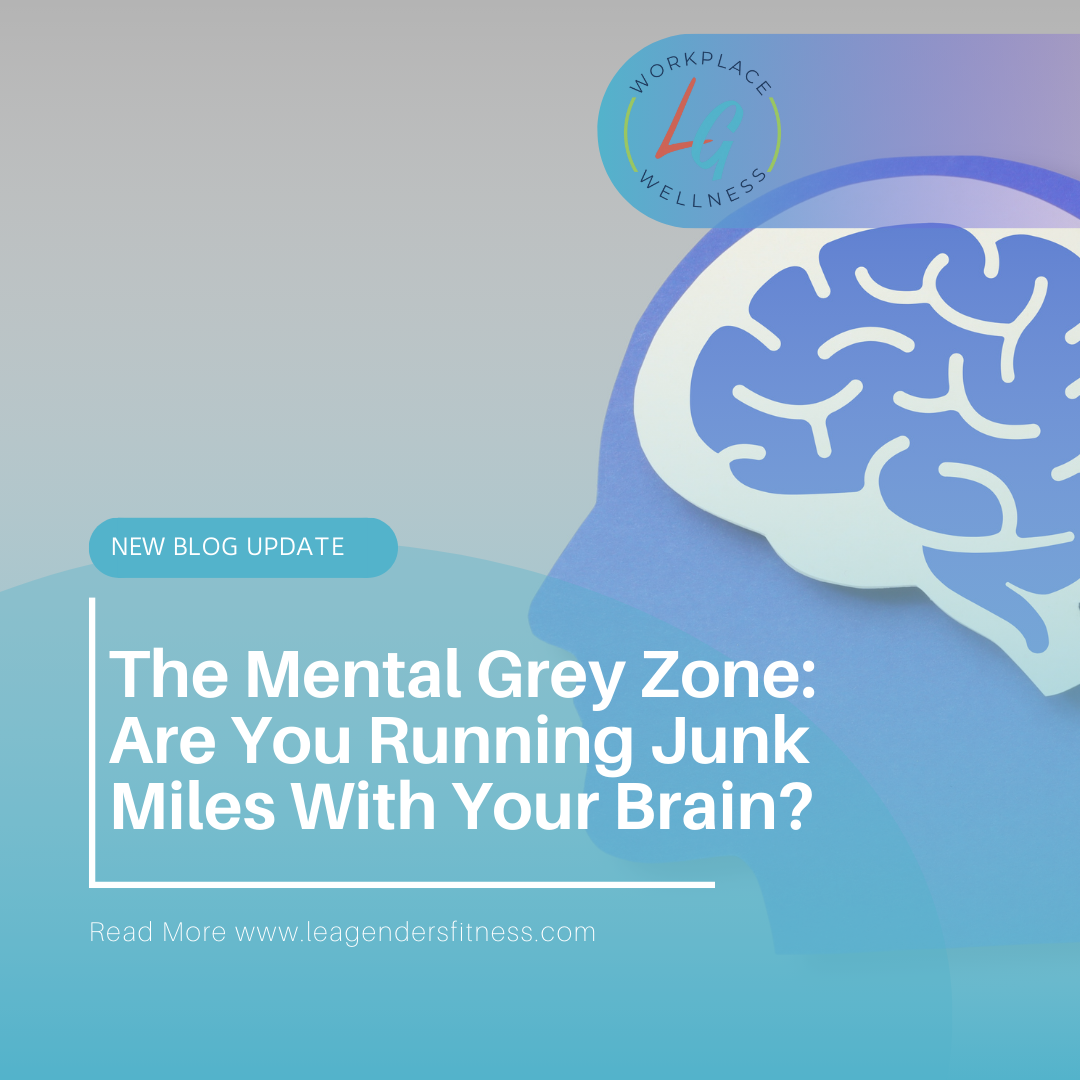
The Grey Zone
I like to think about this in terms of an athlete. In the fitness world, we talk a lot about not spending all of our cardiovascular time in the "grey zone." If you are not familiar with the term, it refers to a specific training intensity level.
We want to spend a lot of time in Zone 2. This is the easy-ish effort you feel like you could maintain forever. It is often fast walking , slow jogging, or casual biking. It is enough to get your heart rate up a bit, but it is not taxing on the body. It allows recovery while still moving. On the other end of the spectrum, we want to spend time getting our heart rate higher with intervals, hill repeats, and short bursts of high-intensity. This top-end work helps an athlete improve their fitness levels.
Problems arise when athletes spend all their time in the middle. We call this the grey zone. The effort is too hard for daily recovery, but it’s not hard enough for growth. When you train in the middle all the time without varying your paces, you limit your potential and increase injury-risk. We need the high heart rates for growth and the low heart rates for recovery. The middle zone has its place, but it just doesn’t count as recovery or a hard workout.
Junk Miles for Your Brain
I told you that to explain this: Our brains work almost exactly the same way.
We want to engage our brains. We want to study new topics, try new things, have new experiences, work hard on a project, stretch our comfort zones, or even play challenging puzzles or games. That is the high-intensity work. That is when we are really "ON” to improve our mental fitness. It feels hard but satisfying. When you come out the other side of that effort, you are better for it. That is good stress. That is the kind of stress that makes us grow. But you can’t do that all the time; you need rest. We need to let our brains relax and recover, just like our bodies.
The problem is that in this digital age, we spend far too much time in the mental grey zone. We are not fully challenging ourselves, or even if we are, we are never fully recovering. We exist in that middle ground.
Alcohol feels like relaxing, but it is raising your resting heart rate and interrupting deep sleep. Social media is the ultimate grey zone, along with the twenty-four-hour news cycle and unproductive gossip with coworkers or friends. It feels relaxing because we are not engaging in a high-stakes way, yet we are constantly processing information. We are reacting to headlines, comparing our lives to others, and making judgments. It is not letting our brains (and bodies) truly relax. It is the mental equivalent of running junk miles. You are putting in the time, but you are just wearing yourself out without getting any of the benefits of training or recovery.
Finding True Recovery
So how do we get into that true relaxation zone for our brains? We have to find things that allow the mind to disengage from active processing.
Intentional breathing is a great place to start. Spending time in nature is another. But my favorite concept for this is something called soft fascination because you do it anywhere, at anytime.
Soft fascination lets your attention rest on something calming without requiring any real mental effort. Think about concentrating on how your pet’s fur feels as you pet them. Watch water drip from a faucet. Watch a leaf blow in the wind. Examine the lines on your own hands.
These activities allow your brain to focus, but they do not require you to process information, make decisions, or filter data. It allows the directed attention part of your brain to rest and replenish. This is true mental recovery.
My unintentional experiment on Saturday reminded me of what I already knew deep down. Sitting and scrolling and mindlessly eating might feel good in the moment, or at least it feels easier than doing something intentional. But it is not providing the recovery we need.
If you are feeling burned out or sluggish, check your grey zone time. Are you resting, or are you just engaging in a different unproductive way?
Try spending intentional time in nature. engage in positive and uplifting conversations with people who love you. Snuggle with your pets. Create art or write something just for yourself. Read a book. Pray. Meditate. Try soft fascination. Practice breathing exercises. Give yourself permission to truly relax. Your brain will thank you for the break.
Lea
There is no greater compliment than a referral!
Have I helped you? Leave a Google Review here

Lea Genders is a board-certified health coach, personal trainer, and workplace wellness consultant based in Fort Worth, TX. She offers corporate wellness programs for employee health and productivity, as well as in-person and virtual training / coaching for individuals worldwide. Her blog shares expert guidance on strength training, running, and sustainable nutrition @fortworth_trainer





Meal prep sounds so Type A, but here’s how a self-proclaimed queen-of-good-enough does it: protein, veggies, and dinner without the Sunday prepping marathon, plus why the best meal prep food is the kind you’ll still want to eat on Wednesday.