How to Set Goals That Stick: Process vs. Outcome

It's April and a great time to review those New Year Resolutions. Remember those? How's it going? We've had three months to kick off our new year goals. If you are rocking and rolling then congratulations on being part of the small percentage of people that stick to their New Year goals after March 1st. 

If you've struggled to stay committed or forgot all about those goals by now, never fear, we don't have to wait until 2018 to give it another go. April is a new quarter and a perfect opportunity for a new start or a chance to evaluate (maybe change?) those original goals. The truth is if you made big goals for 2017 and they didn't pan out exactly as you hoped, it probably is not your fault. It's the fault of the goal itself. We are human and have certain universal limiting factors. We can make intense goals then try to white-knuckle our way into achieving them using willpower and extreme self-discipline but that hardly ever works. The better way to lasting change is to change the way we set goals. 

HOW TO SET GOALS THAT STICK

You know about setting S.M.A.R.T. goals, right? Make sure your goals are Specific, Measurable, Achievable, Realistic and Timely. These are all important factors for goal setting. In a nutshell, instead of saying that your goal is to lose weight, it is better to say that you want to lose 10 pounds of fat in two months by exercising 4 times a week and reducing calories by 250 per day. Be specific as possible with a goal that you can measure, that is realistic and doable within a reasonable timeframe. 

The biggest issue with most goals is that they are outcome-based goals alone. It's OK to have outcome-based goals (lose fat, run faster, lift heavier), the problem is that we can't always control the outcomes. We can't wish for our goals to come true, we have to work for them. The trouble is that our bodies can be snarky (yes, it's a word) and sometimes even if it seems we do everything right, we still don't see the outcomes we want in the time we expect. That can be frustrating and cause some people to become disheartened and give up.

Some of that may just be having realistic expectations. If it took you five years to put on extra weight, it's just not realistic to expect that you will lose it in two weeks or two months. Yes, we all want results as quickly as possible, but slow and steady wins the race. The secret sauce is finding the sweet spot between sanity and sustainability. We want to set goals we can achieve over the long term without driving ourselves crazy. Healthy lifestyle includes healthy body and healthy mind. If your goals are making you miserable, interfering with your family and social life or making you feel bad about yourself, it might be time to refine your goals. 

SETTING PROCESS GOALS

You set your outcome-based goals (lose fat, run faster, lift heavier, etc.). The next most important thing to do is set your process goals. What are the things you need to do each day in order to achieve your goals? If your goal is to lose fat, then your process-based goals probably would look like something this:

Cardio exercise 3 times a week for 30-45 minutes with one intense interval session, full body strength training 2-3 times a week, 8-10k steps a day and reduce calorie intake by 250-350 calories per day, reduce added sugar intake to under 20 grams a day. (This is just an example, if you are starting from zero, then you would build up to this over time.)

Your goal would be to check off each day or each week that you completed the process goals. At the end of two weeks you might decide to reward yourself (healthfully) for completing all your process goals, even if you didn't see large improvements in your outcome goal. 

If you are nailing the process goals, they become habit. When healthy habits are part of your lifestyle they go a long way to helping you achieve those outcome goals. It's about sustainable actions over the long term. It's not what you can do in one hour or in one week, it's about what you can sustain over the long term. In other words, it is better to lose 40 pounds slowly over six months, than it is to starve yourself, lose it quickly and then gain it back because you reached your goal weight and loosened up on your unsustainable practices. Trust me when I tell you I learned this lesson the hard way.

Here is an example: I am studying for my Precision Nutrition Sports and Exercise Nutrition Level 1 certification. I set process goals and outcome goals each week. My goals last week were to study one hour each night for six nights and at lunch three days per week. I planned to complete three chapters in seven days. See how I included both process and outcome goals? 

Ollie, my study buddy.

Ollie, my study buddy.

At the end of the week I met my process goals but not my outcome goal. I studied each night and at lunch as I had planned but only completed two out of three chapters because I underestimated the length of the chapters and therefore had unrealistic expectations of my outcome this week. It took me longer to get through chapters 13 and 14 than anticipated. I was tempted to rush through the workbook questions in order to finish faster and possibly be able to get in another chapter this week, but I quickly realized that hurrying through the chapter to meet some arbitrary goal was not serving me and my larger purpose (you know, to actually learn this stuff).

So I slowed down and did what was realistic and sustainable. I am closing in on the end of this certification, so an extra few days or an extra week won't make a difference once I am certified, but slowing down to make sure I learn the material is key to my success with the program. I still consider the week a success because I did the actions I needed to do to meet my long term term goal (pass the certification test). 

You see, my outcome goal was unrealistic but I didn't know it until I started the process. This often can happen with our health and fitness goals. Rushing through or trying to speed up the process does not serve us in the long term. 

(Edited to include that I passed the certification test!)

ACTION STEPS

Set your outcome-based big goals, then decide on the actions you need to take each day and each week to reach your goals. Then focus heavily on these process-based goals. Judge your success by your completion of the process goals. If you are unable to complete your process goals, make them smaller until they are achievable. Failed to workout for an hour four times last week? This week try to achieve just 30 minutes 3 times. You have the rest of your life to progress forward. Start small for the best chances of success. A 15 minute workout that you completed is always better than an hour workout you didn't have time to do. 

It's important that your process goals are sustainable. What can you do every day for the long term without driving yourself crazy?

Experiment and find out and you'll be well on your way to achieving all your goals. 

Like this post? It helps me when you share.



Rock 'n' Reps Pyramid Workout

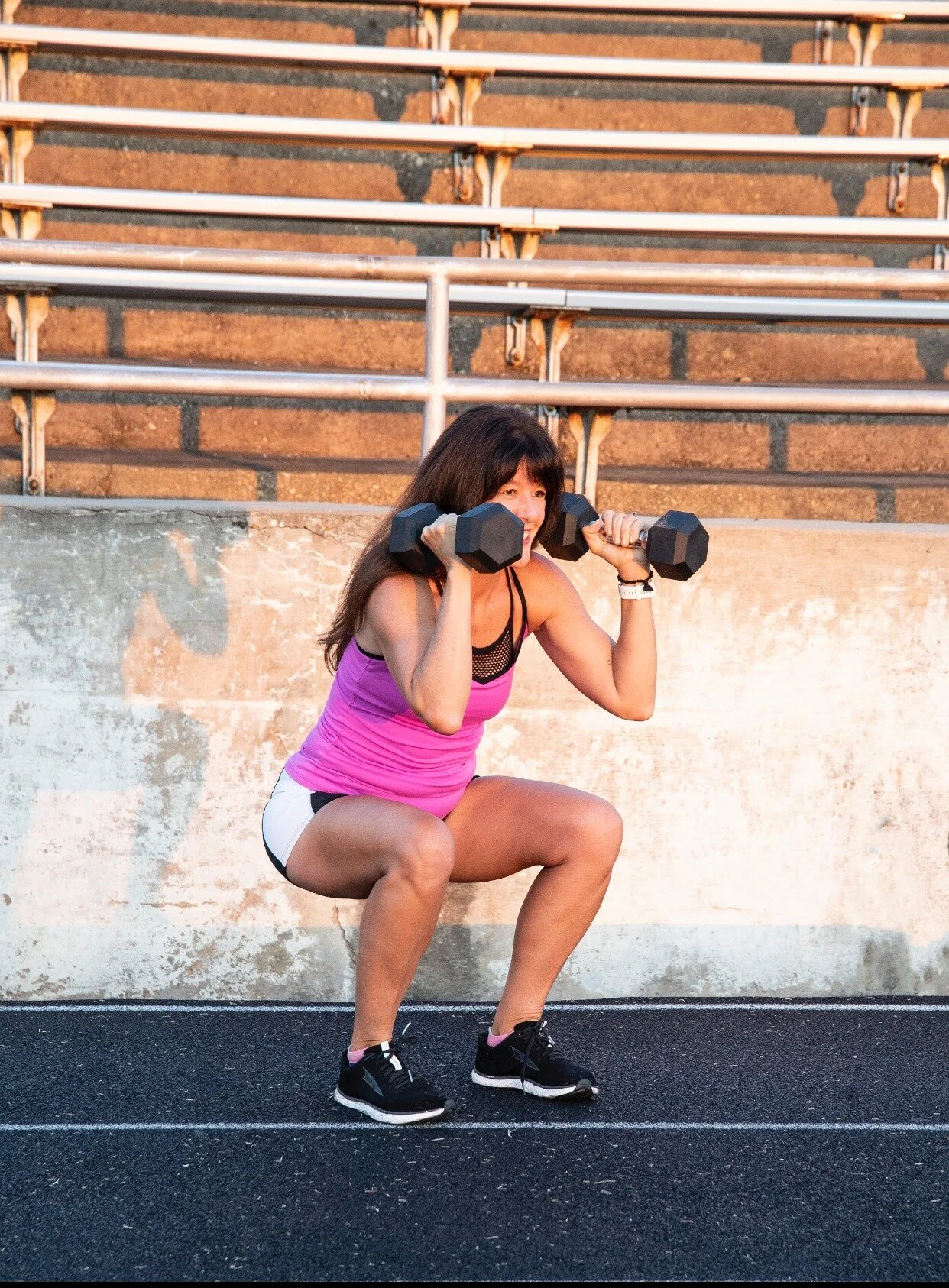
Are you ready to Rock 'n' Rep? Welcome to the latest edition of Workout Wednesday! This week I have a quick workout for you to try after your next easy run. It's the Rock 'n' Reps Pyramid workout. The rock part is an isometric hold. This means you hold the position for the time indicated. You can you use a timer or just count one-mississippi, two-mississippi, etc. Then perform the assigned amounts of reps for each exercise. 

SQUAT PYRAMID

5 second isometric squat hold, 5 reps
10 second isometric squat hold, 10 reps
15 second isometric squat hold, 15 reps
10 second isometric squat hold, 10 reps
5 second isometric squat hold, 5 reps

PLANK AND PUSH-UP PYRAMID

5 second isometric plank, 5 push-ups
10 seconds isometric plank, 10 push-ups
15 second isometric plank, 15 push-ups
10 seconds isometric plank, 10 push-ups
5 seconds isometric plank, 5 push-ups

BRIDGE PYRAMID

5 second isometric bridge hold, 5 reps
10 second isometric bridge hold, 10 reps
15 second isometric bridge hold, 15 reps
10 second isometric bridge hold, 10 reps
5 second isometric bridge hold, 5 reps

This is also a fun one to try if you have a partner. One partner would perform the reps while the other partner holds and then switch roles before you work up and down the pyramid time/reps.

Like this post? It helps me when you share or save on Pinterest

52 Healthy Habits: Create and Follow a Sleep Ritual

Welcome to the latest edition of 52 healthy habits when each week we tackle a new healthy habit together. 

Last week our healthy habit was mindful eating. This includes paying attention to hunger and fullness signals, eating slower and avoiding all distractions during meals. This was harder than I anticipated. I didn't even notice that it had become a habit for me to catch up on my Facebook feed in the morning while I shovel in my breakfast. After all, I don't have a lot of time in the morning. I was multi-tasking, but at what cost? While I was catching up on my "on this day" Facebook updates I was scarfing down my eggs, barely tasting them or even noticing that I was eating. I had developed this bad habit that I didn't even realize until I started to pay attention. 

It seems easy so I was surprised when I struggled last week. Sitting at the table in the morning without my phone felt weird and I felt oddly anxious. I tried counting my bites and setting the fork down between bites like we talked about last week. It sounds easy, it was harder than I thought. It is definitely something I need to continue to work on. But that's why we do this, right? Small improvements every week. 

I also want to mention that my caffeine reset from two weeks went well. I mean besides the misery that was the first five days, of course. I went two full weeks without coffee to reset my tolerance. I only intended to go for one week, but felt so great after those pesky headaches went away that I extended it for another week. After two weeks I am ready to reintroduce caffeine. I am looking forward to my Monday morning cup of coffee and i'm sure i'll feel its positive effects after just one cup. 

CREATE AND FOLLOW A SLEEP RITUAL

In our busy lifestyles we often glorify lack of sleep. Someone might even brag that they get by on five hours of sleep, but they are missing out on the fact that most of our body's recovery processes happens during sleep. If you are eating well, exercising, but not feeling great or seeing the results you desire, then lack of sleep may be to blame. Most adults should aim for 7-9 hours of quality sleep per night. If you are getting a lot less than that, start by adding just 30 minutes a night. 

We always seem to be looking for the magic bullet to achieve our health and fitness goals, trying new supplements, intense workout routines, macro manipulation and meal timing. While these things can be helpful as we work to meet our goals, we shouldn't be attempting advanced strategies until the basics are covered. Sleep is an important basic. Are you getting 7-9 hours of quality sleep?

ESTABLISH A ROUTINE

Try to get up in the morning and go to bed at the same time each night (yes, even on weekends) in order to establish a sleep routine. 

TURN OFF ELECTRONICS

60 minutes before bed turn off electronics in order to prepare your brain for sleep. Shut down Facebook, put away the blogs (yes, even this one) and say goodnight to your Instagram friends. Try to read a book or magazine to unwind for an easier transition to sleep.

AVOID CAFFEINE & ALCOHOL

Alcohol may help you fall asleep but it will disrupt that much needed deep sleep. Caffeine may cause you to have trouble falling asleep in the first place. Try to avoid caffeine eight hours before bed. 

LIMIT WATER INTAKE BEFORE BED

To avoid getting up in the middle of night to use the potty, avoid excess fluid intake before bed. 

SET UP YOUR ENVIRONMENT FOR DEEP SLEEP

Sleep in a cool dark room. I wear a sleep mask. 

I am as guilty as any, scrolling my iPad while watching TV to unwind before bed. While I usually sleep 7-8 hours per night, I am going to work on improving the quality of my sleep by creating and following a healthy sleep ritual.

Are you with me this week? What can you do to increase the number of hours of sleep or to improve the quality of your sleep. Your body will thank you. 

 If you are interested in nutrition and lifestyle coaching starting in June get your name on the pre-sale list for a reduced introductory price. 


Easy DIY Race Medal Hanger

Full disclosure: I'm terrible at DIY projects. I long to have the talent of those Pinterest sorceresses who magically turn random craft supplies into beautiful works of art. When I look for projects I usually search "kid friendly" to make sure it is within my scope of abilities. My largest limiting factor is patience. When I start a project, I just want it to be done, I don't want to wait for the paint to dry or to carefully cut out anything. Can't I just buy one? I needed a DIY project so easy that even I could do it. 

This idea to attempt my own DIY project stemmed from the fact that my current race medal holder is full and I saw one on Etsy that I loved for $75. It was gorgeous, but $75? It looked easy enough, maybe I could do that. I may not be good at DIY, but I had a backup plan...hubby! 

He actually had another big project going on around the house and my medal hanger was probably the last thing he wanted to focus on, but I think when he saw my sad DIY-self trying to spray paint chalkboard paint, he felt pity for me and helped...err...took over. 

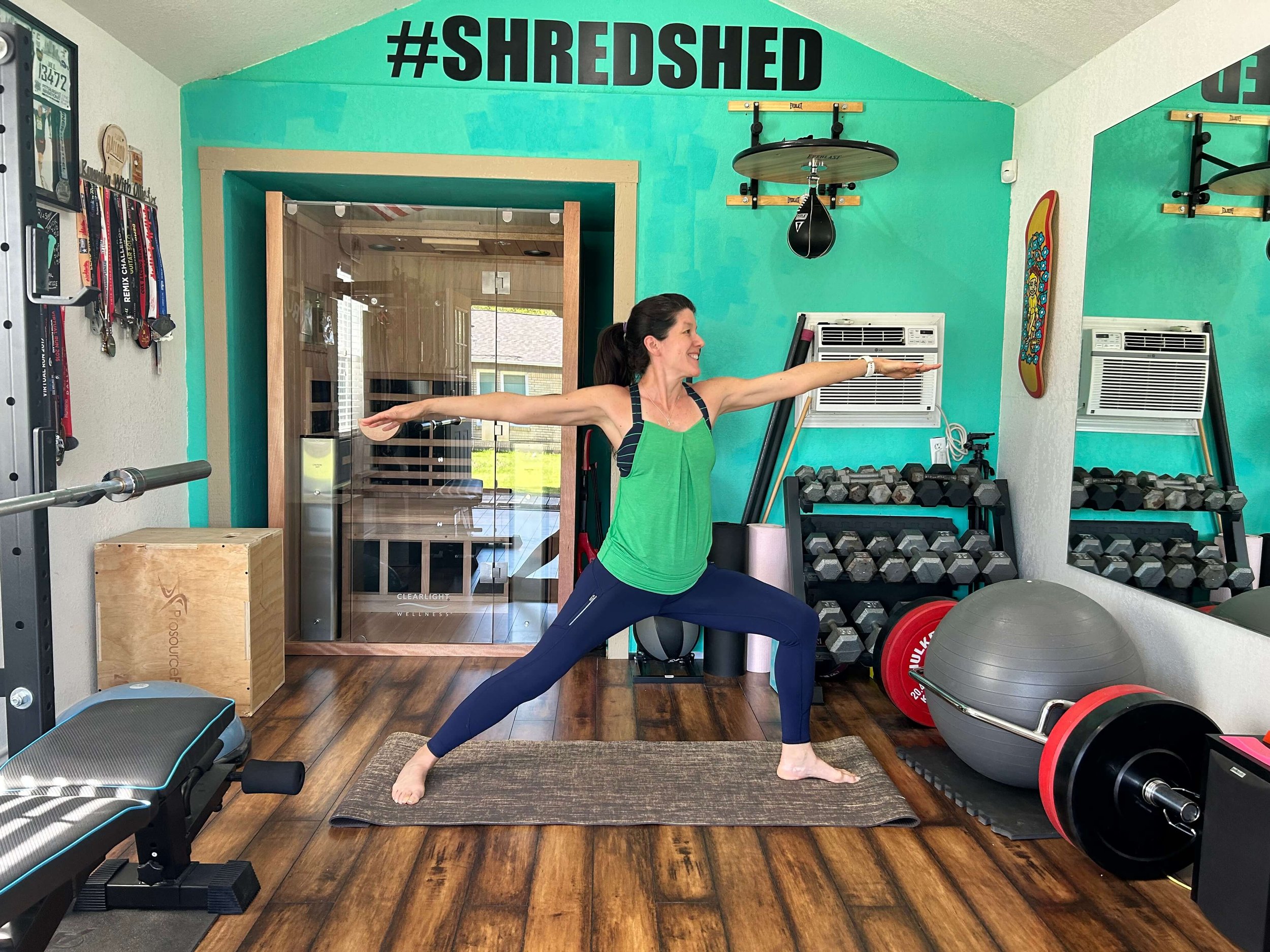
posing with my project in front of the #shredshed

posing with my project in front of the #shredshed

MATERIALS

Shopping for supplies? That I can do. 

I walked all over Home Depot looking for the perfect piece of wood and actually ended up buying a particle board shelf because it was already primed and just about the perfect size.

From Home Depot I bought the shelf, a can of chalkboard spray paint, a wooden dowel rod, a couple of hooks. About $13 total

From Hobby Lobby I bought wooden letters and metal clips. $7

Does the teal color look familiar? It's leftover from the #Shredshed.


THE PROJECT

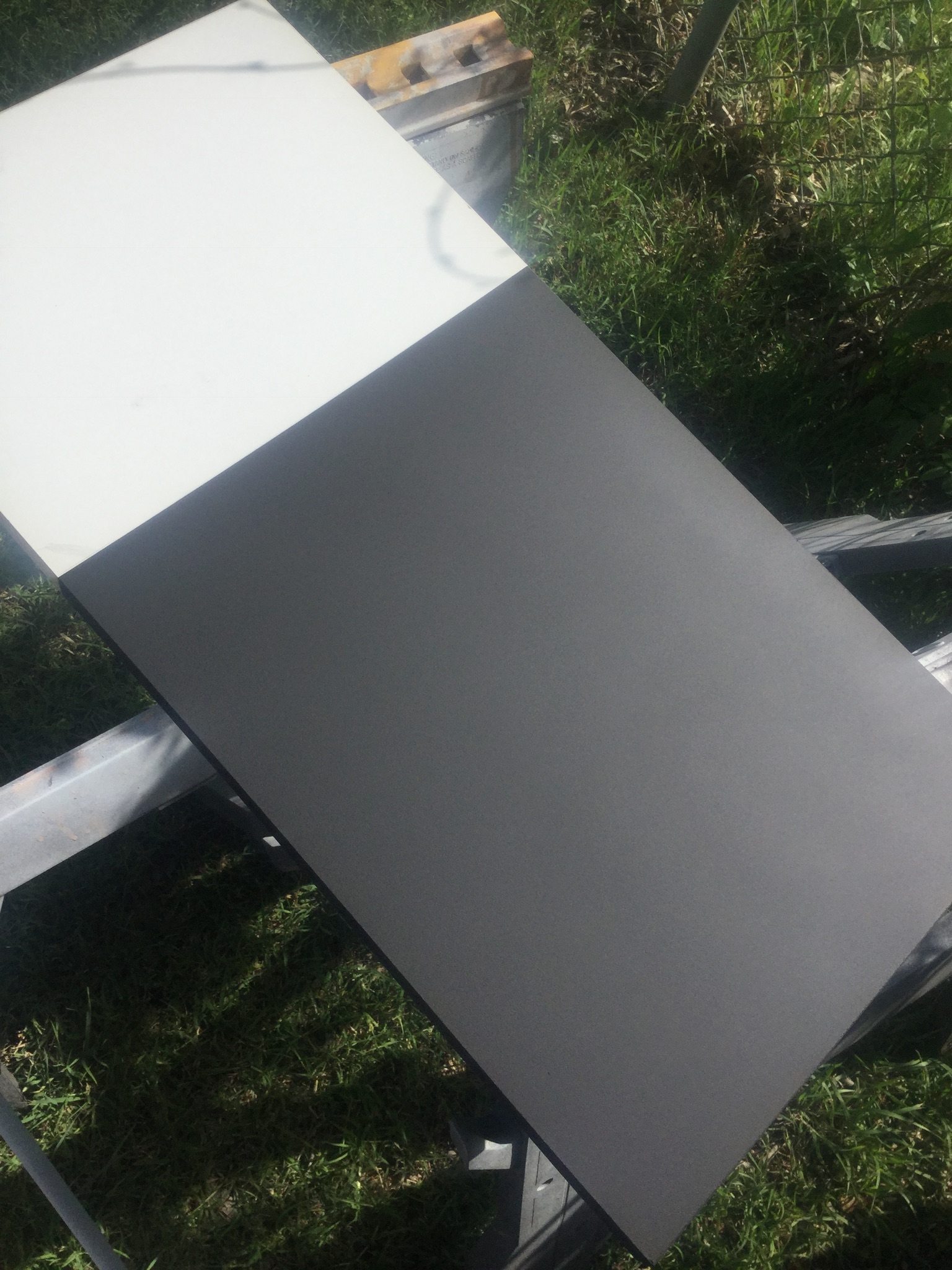
Hubs helped me tape off the board so I could spray the chalkboard paint. I was seriously annoyed when he told me we had to wait 24 hours for the chalkboard paint to dry before we could tape it off to paint the other side. Seriously? Ugh. Waiting. 

We (I use the word "we" liberally) painted the dowel rod white and cut it down to size. (Probably not in that order) Hah. 

I painted the letters, but I painted them on a magazine and that was a terrible idea. Don't do that. The paper stuck to the letters and I spent years (slight exaggeration) cutting the paper off the edges with a razor blade. I also used a paintbrush which was terrible idea number two. Hubby did the 2nd coat with a mini roller. 

lesson learned: Don't paint on a magazine

lesson learned: Don't paint on a magazine

Once everything finally dried and I cut off all that paper, hubs helped attach the clips, screw in the hooks and glue the letters. 

The idea was for it to say "RUN GOALS" and then I could write my current run goals in chalk under the letters. My super crafty-talented friend is going to help me paint the letters GOALS in white paint in some fancy hand lettering under the word run, but we haven't had a chance to get together on that yet. 

I know what you are thinking, For a DIY project, there is not a lot of "Y" going on. So maybe it's a DIYH (Do it Your Husband) or HDI (Husband Does It).

The Y in my DIY at work

The Y in my DIY at work

I'm grateful to have a hubby willing to help me with these types of projects, otherwise I might have had one of those Pinterest-fail pins to share. 
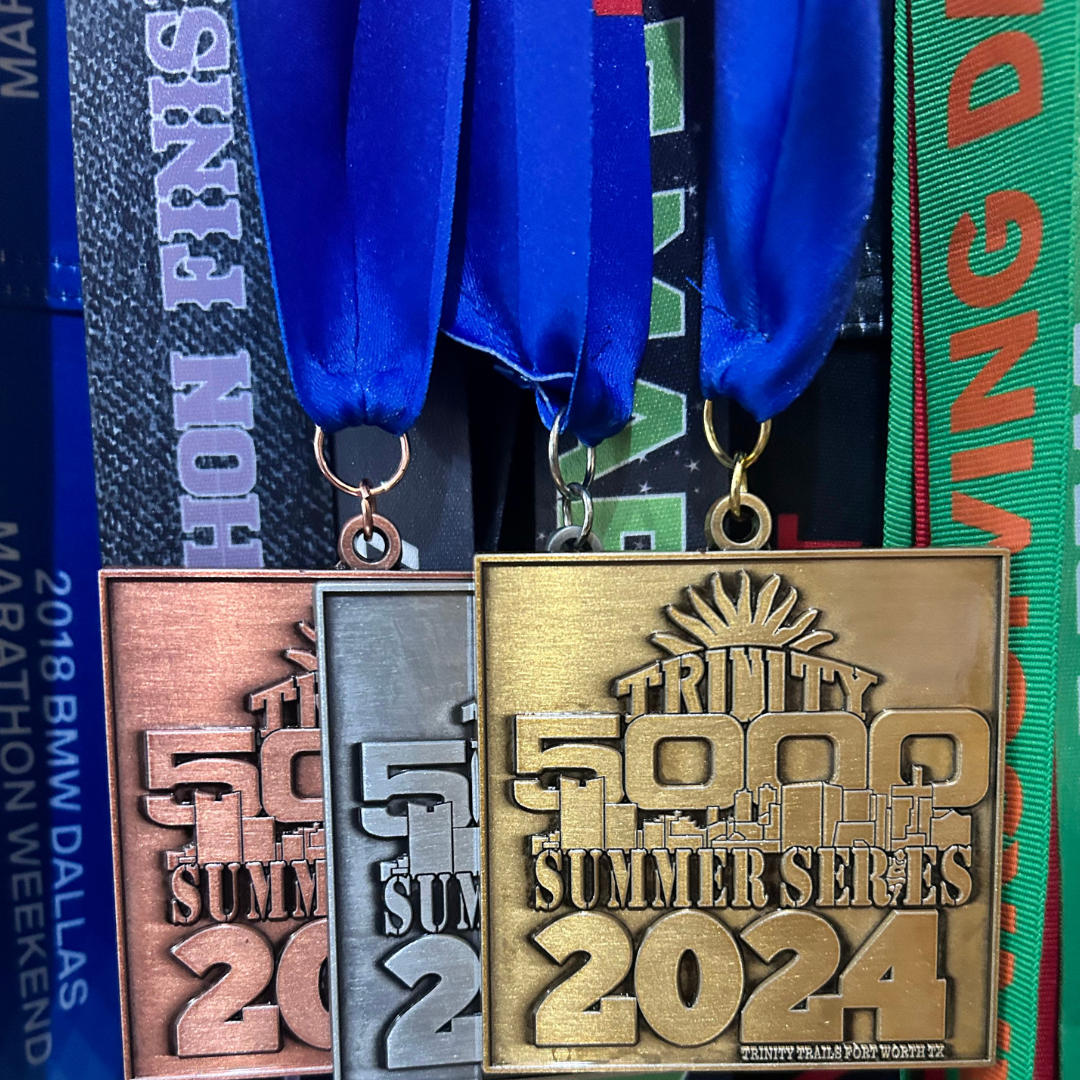
I think it turned out cute and best of all it was made with love. Perfect. Now I just need to add wall hangers on the back and find a spot for it in the #shredshed.

What do you think? Are you a DIY Queen or DIY-deficient, like me? 

Do you display your race medals? 

Like this post?

It helps me when you share on save on Pinterest


Coach Lea


Interval Running Workouts to Increase Speed

Welcome to another edition of workout Wednesday. This week we are talking running intervals. Intervals are get a great way to improve speed, VO2max and running economy, especially when you are short on time. Intervals allow you to up the intensity for short periods of time to get the maximum afterburn effect. We are going to dive into different types of interval running workouts. Sprinkle these workouts into your training once or twice a week to reap the benefits of interval workouts.

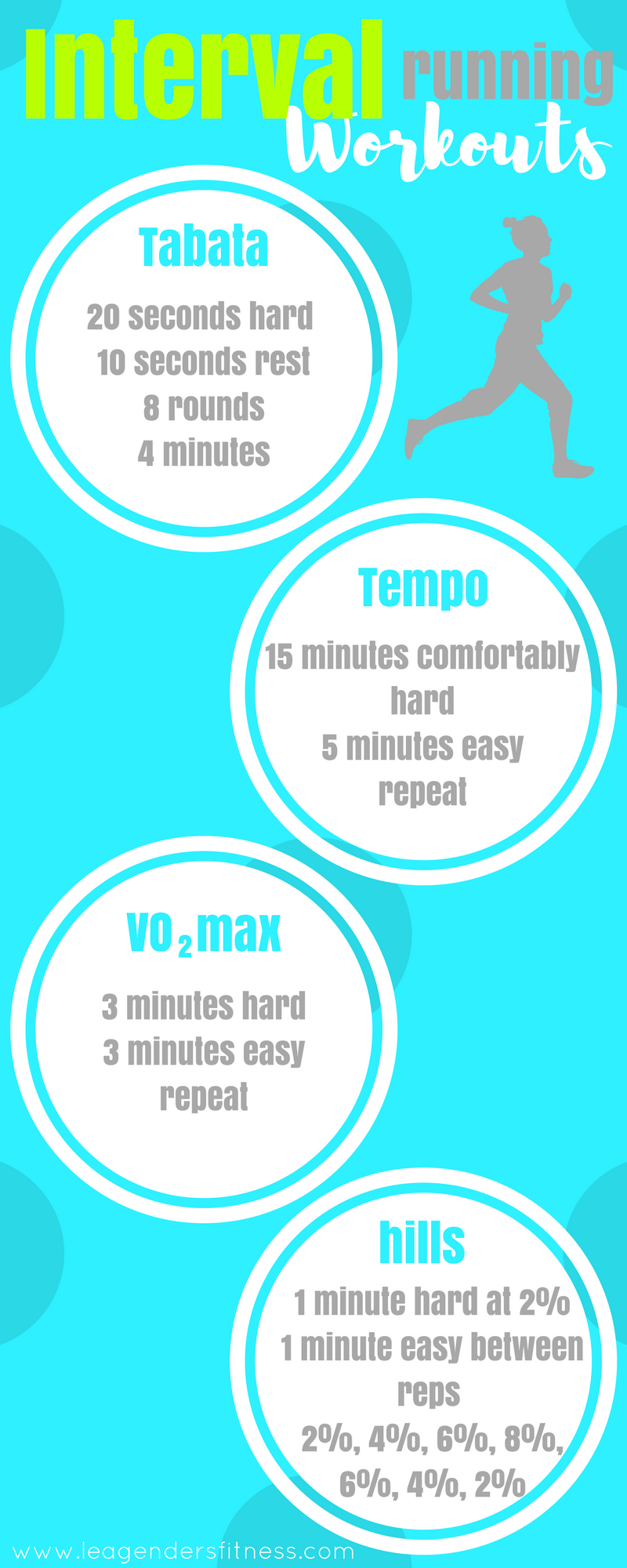
TABATA

I love the Tabata protocol and if you only have four minutes to workout this is the interval for you. After warming up, run 20 seconds as hard as possible (95% of max heart-rate) then rest completely for 10 seconds. Complete 8 rounds for four minutes. That's one set. Recovery fully between sets. Repeat as many times as your fitness levels allows up to 30 minutes. 

TEMPO INTERVALS

A tempo pace is the fastest aerobic pace you can maintain for a steady-state run. It should feel comfortably-hard. If you ever raced a 5K for time, that is likely your tempo pace. With tempo intervals, after warming up, hold that pace, about 80% of max heart-rate for 15 minutes, then recover with a slow jog or walk for 5 minutes. Repeat.

Another tempo interval variation is to run for five minutes at a comfortably-hard pace, followed by five minutes of easy pace. Repeat for 30 minutes.

V02MAX INTERVALS

VO2max is the size of your aerobic engine. It's the maximum rate at which you consume oxygen and the best indicator of your aerobic fitness.

Warm up then run for 3 minutes hard at 95%-100% of max heart rate. This is the fastest you can run for three minutes without stopping. If you ran faster, you wouldn't be able to keep up the pace for three minutes, if you ran slower, you could probably go on longer than three minutes. It may take some experimenting to find your pace. Run three minutes at an easy pace to recover. Repeat according to your fitness ability up to 30 minutes.

HILLS

Every runner's' favorite interval workout is hills! Right? (crickets). This treadmill hill pyramid variation will challenge you. Hills are great for building strength. After warming up run one minute hard at 2% incline, then recover for one minute at 0% incline. Increase the incline each rep to 4%, 6%, 8%, then back down to 6%, 4%, 2% incline with a one minute easy jog recovery between reps at 0% incline.

Always warm up for 5-10 minutes before beginning a challenging workout and cooldown for 5 minutes once complete. Intervals workouts should be done 1-2 times a week for most runners and 3 times maximum for well-trained athletes. Always allow your body time to rest in-between intense workouts. Remember that adaptation (getting faster, stronger) happens during rest, not the workout. Allow your body the time to properly recover to reap the benefits of these challenging workouts!

Like this post? It helps me so much when you share or save to Pinterest.