52 Healthy Habits: 4 Tips for Mindful Eating

Last week was rough. You may recall I gave up coffee as my weekly healthy habit in order to reset my caffeine tolerance. It is something that I do occasionally when my caffeine intake increases a lot and I realize that my morning cup (errr...I mean pot) of coffee just makes me feel normal rather than giving me an energy boost. It's an simple fix, give up caffeine for about a week to reset, then slowly introduce caffeine back into your diet. I said simple, not easy. 

I felt like crap all week. I was fine Monday morning, but by Monday evening the headaches started. I was cranky, irritable, unfocused and wasn't managing stress well (and it turned out to be an unusually stressful week). It took five solid days to feel normal, but once I got over the withdrawal symptoms, I felt clearer and better than ever. I think I am going to stay off coffee for one more week before I reintroduce it.

I was surprised to find that I enjoyed drinking my mint, caffeine-free tea in the morning as much as my coffee. I'm sure I will introduce coffee back into my diet eventually, but for now I am going to stay off caffeine.

WHAT IS MINDFUL EATING?

I may have mentioned that I am studying sports and exercise nutrition with Precision Nutrition. It is an amazing course and I am learning so much about the science of nutrition and lifestyle coaching. I should be able pass my exam by the end of April and I am introducing my nutrition and healthy lifestyle coaching services starting in June. 

In lifestyle coaching one of the key principles is to start with basics. It sounds like common sense (or un-common sense as hubs likes to say), but so many people are worried about supplements, meal timing and macro splits but don't have basic nutrition and healthy lifestyle habits in check. It sounds more exciting to try intermittent fasting or the ketogenic diet, and there is nothing wrong with those things in theory (possibly under the supervision of a Registered Dietitian), but if you are sleeping five hours a night and binge eating or drinking on the weekends, there are more important things to tackle first. 

Mindful (or intuitive) eating is one of the easiest ways to regulate intake and calorie balance because our bodies tells us what it needs. But because of our busy, technology-driven lifestyles, most of us (including me) have lost touch with the signals our body sends to tell us when we're full or hungry. We eat based on the time of day or our emotions and we clean our plates regardless of fullness signals.

A lot of us were brought up to clean our plates at dinner. My dad used to joke that I had to finish dinner or send the leftovers to a starving kid in Africa. (That's probably politically-incorrect to say now, but it was the 80s) We were taught not to be wasteful, but perhaps we should have been taught to listen to our body's signaling cues of hunger and fullness. 

Enter modern day technology and our hectic lifestyles and it got worse for all of us. Not only were we not listening to our bodies natural cues, but we were scarfing down food in the car on the way to work, or in front of the computer or TV. We lost our ability to sense hunger cues and we stopped enjoying our food. Yes, food is fuel, but food is meant to be savored and enjoyed. It's hard to do that while you're scrolling your Facebook feed over breakfast (I am as guilty as anyone).

Our bodies have built in signally cues to tell us what it needs. If we eat when we are not hungry and don't stop eating when we are physically satisfied, we can end up with a less than ideal body composition and overall health. 

5 TIPS FOR MINDFUL EATING

1. EAT SLOWLY

If you eat too quickly, your body doesn't have time to send the fullness signals to your brain and you may end up overeating or feeling stuffed 10-20 minutes later. There are several ways to tackle slowing down. One way is to time how long it usually takes you eat your meal, then try to add five minutes next time. Another way is to chew your food 20-30 times before swallowing. Try setting down your fork or taking a sip of water between bites. Choose the strategy that works best for you.

2. APPETITE AWARENESS

Hunger is a normal and healthy biological response. Fullness and satiation tells us when we've had enough. If we eat because it's a certain time of day, we are bored, upset or because of a habit (like always eating popcorn when we watch a movie on Friday night) then we might not be paying enough attention to our body's signaling cues. 

When you sit down to eat a meal, before you take the first bite, ask yourself how hungry you feel. Just be aware of your appetite. When you are eating slowly try to notice when you start to feel full or satisfied. Stop eating once you've had enough. Notice how you feel after each meal. Just taking the time to think about it can help you get back in tune with your appetite.

3. AVOID DISTRACTIONS

Turn off the TV, put away the cell phone at the table and don't try to eat while working at your desk. If you are a distracted eater then it's harder to pay attention to your body's cues. Have you ever scarfed down a meal in front of the computer and didn't even notice or taste it? I have. 

In our busy lifestyles it can be hard to do, but it is worth it to take the time to walk away from the technology and enjoy a meal. It's not to say you can never enjoy a meal while watching TV but it should be a conscious choice that is an exception, not a normal behavior. 

4. SAVOR FOOD

Pay attention to the food you are eating. Smell it. Look it at. Examine the texture. Think about the ingredients in it. Take note of what you observe. Even if you are enjoying an indulgent meal, take it slow. Sometimes when we slow down and think about the food we are eating, we discover that we really don't even enjoy some of those unhealthy foods, we eat them because they are cheap and/or convenient. Enjoy your food, no matter what you are eating, healthy or not. Take the time to savor your food and relish every bite. 

I am going to apply all these strategies this week. It will be a change for me to put away my phone and eat slowly. Will you also give it a try and let me know how it goes? If you are interested in nutrition and lifestyle coaching starting in June get your name on the pre-sale list for a reduced introductory price. 

Playing catch up? Follow along with the 52 Healthy Habits series:

52 HEALTHY HABITS SERIES

week 1: Early to Rise
week 2: Track calories
week 3: Macro cycling
week 4: Morning pages (journaling)
week 5: Stop the scrolling (reading instead of social media)
week 6: Be a good student (take time for learning) 
week 7: Strength Training 15 minutes per day   
week 8: Eat more protein
week 9: Take a coffee break (break from caffeine)
 

Like this post? Please consider sharing. 


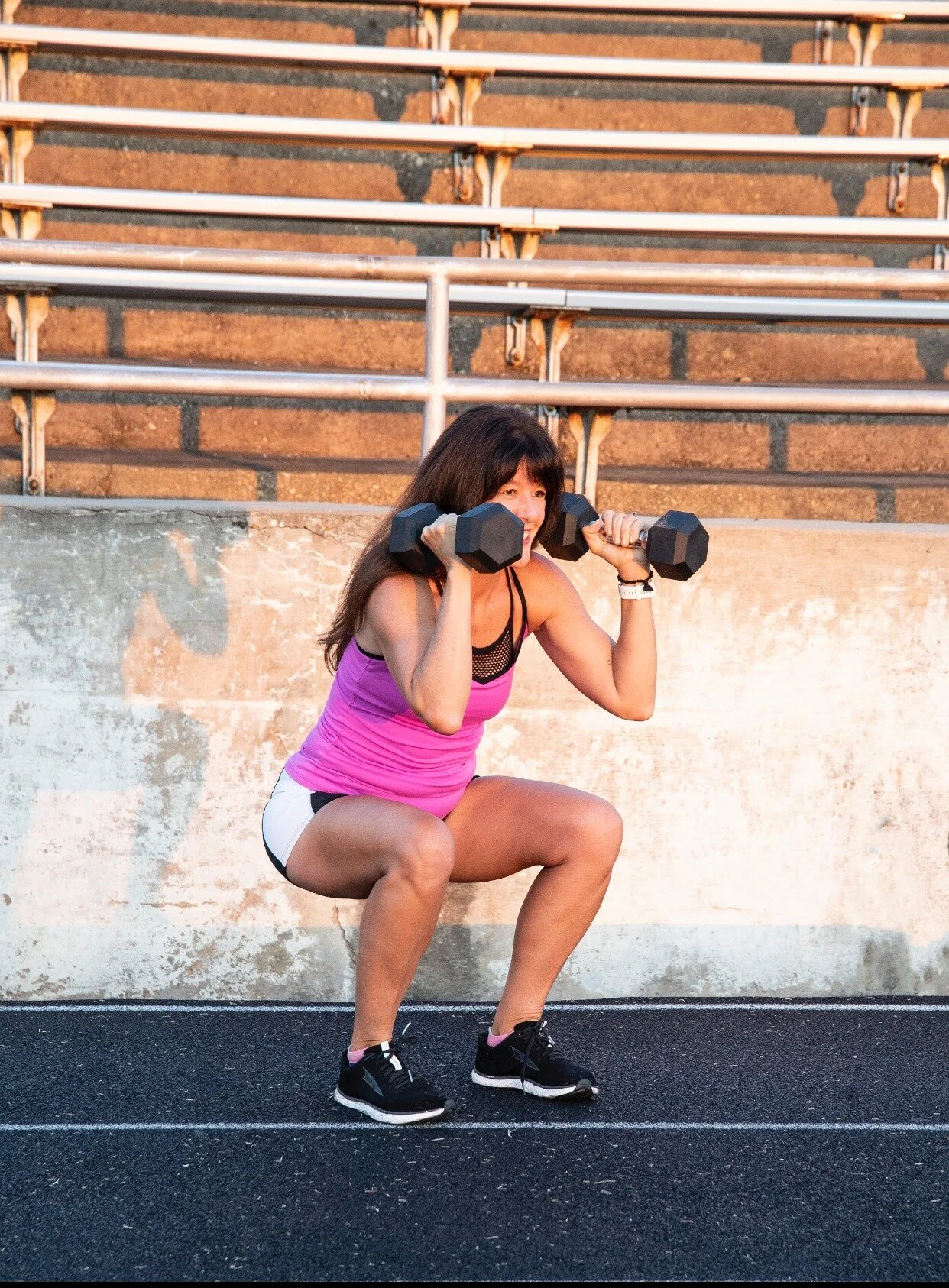
Beginner Kettlebell Circuit Workout for Runners

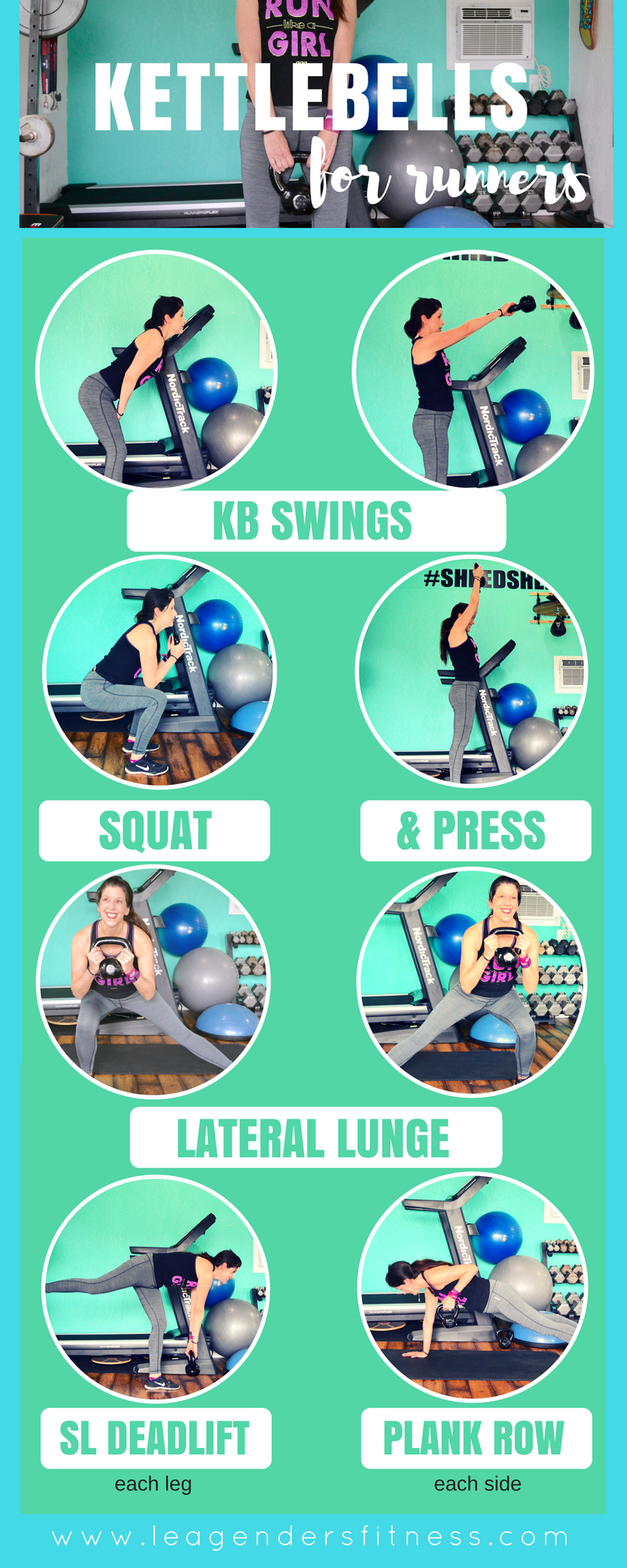
Welcome to the latest edition of Workout Wednesday! This week we are talking kettlebells! One of the reasons that I love kettlebells is that they are great for incorporating a cardio and strength workout in one. The kettlebell swing is a great exercise to get your heart pumping, and for that reason the swing is the cornerstone move in this kettlebell circuit workout for runners. 

I call it a beginner kettlebell workout because it is great for someone who is new to kettlebells to get a feel for the tool without too many complicated moves. There is nothing overly technical here (see notes below to ensure you are performing the swing correctly) and most of these exercises can be done with just a dumbbell too. 

This post contains affiliate links which means if you click on a link in this post and make a purchase, I make a small percentage of the sales with no additional cost to you. No one is getting rich here, it just helps with the running (pun intended) of this blog. 

I am using a 20lb kettlebell. Choose a weight according to your own fitness level.
I like the GymBoss timer to time my intervals, but you could also just use your phone as a timer.

THE KETTLEBELL CIRCUIT FOR RUNNERS

Start this circuit with 30 seconds of kettlebell swings, then do 30 seconds of each move with kettlebell swings between each strength move. 

Kettlebell swings 30 seconds
Squat & Press 30 seconds
Kettlebell swings 30 seconds
Lateral lunge right 30 seconds
Lateral lunge left 30 seconds
Kettlebell swings 30 seconds
Single leg deadlift right 30 seconds
Single leg deadlift left 30 seconds
Kettlebell swings 30 seconds
Plank row right 30 seconds
Plank row left 30 seconds
Rest 30 seconds

Perform circuit 3 times. 

Coaches Tips:

THE KETTLEBELL SWING

Start with your legs hip width apart with your knees slightly bent and the kettlebell between your legs, above your knees. Push your hips back behind your center of gravity. With your arms locked straight use your hips to thrust the kettlebell forward. Keep your core tight, your back straight and chest up. Do not lean back or extend your back at the top of the swing. The most important thing to remember is that this is hip hinge move, not a squat, there should never be more than a slight bend at the knees. 

SQUAT AND PRESS

With your feet a little wider than hip width apart, toes pointing forward, push your hips back and lower until your thighs are parallel to the ground (or as low as your flexibility allows) while shifting your weight onto your heels. Touch your elbows to your knees and press the kettlebell ball over your head into a shoulder press. 

LATERAL LUNGE (EACH SIDE)

Runners only move in one plane of motion, forward (& back). It is important for runners to build hip strength and stability by incorporating lateral moves into their workouts to run stronger and help avoid injuries. 

With both toes pointing forward, push your hips back and take a large step to your right and bend your right knee into a side lunge position and straighten your left leg. Lower your hips as low as your flexibility will allow. Push back to starting position. Repeat on other side. 

SINGLE LEG DEADLIFT (EACH SIDE)

When you run you are balancing on one leg at time repeatedly for the duration of your run. If you perform exercises unilaterally (one side at a time) it will help reduce muscle imbalances, improve core strength & stability and increase runner-specific strength. The single leg deadlift is an ideal exercise for runners.

Standing on one leg, keep your knee slightly bent and perform a deadlift by bending at your hip while keeping your back straight and neck neutral. Extend your free leg behind you in line with your body. Lower until your back is parallel to the floor. With your back straight return to the upright position. Repeat on other side. 

PLANK ROWS

Start in a high straight arm plank position with your wrists directly under your shoulders and your legs wider than hip width for stability. Keep your body in a straight line from your shoulders to ankles while engaging your core. Do not allow your hips to hike up or sag down.

With your core tight and your glutes engaged lift your right elbow to row as you bend your elbow up toward the ceiling. Keep your elbows close to your sides as you raise the kettlebell. Repeat on other side. 

Give it a try and let me know what you think!

Like this post? It helps me when you share or save to your favorite Pinterest workout board.

52 Healthy Habits: Take a Coffee Break

Welcome to the latest edition of 52 Healthy Habits when I tackle a new healthy habit each week because habits are the building blocks of a healthy lifestyle. No matter where you are in your fitness journey, there is always room for small incremental improvements. This column is part inspiration for you, to give you ideas of some things you can try, and part accountability for me as I try new things in my own journey. 

I have no expectations that I will be perfect or successful in all of these habits. I am sure I will find successes, failures and everything inbetween. It's about what we learn along the way about our priorities, our preferences and ourselves.

TAKE A BREAK FROM COFFEE

I'm sorry for the headline. I said 52 Healthy Habits: Take a Coffee Break, but what I meant to say is Take a Break from Coffee...but I didn't want to scare you away. 

Take a break from coffee...Say, what?

People hate this idea. When you tell people you want to quit sugar or fried foods or alcohol, they are mostly supportive and agree that they should probably do the same. But when you tell you people you want to take a break from coffee, they usually say, Why the hell would you want to do that? 

Before you start throwing things at me, hear me out. I love my coffee. I love it so much my husband and I share an entire pot every morning and on some days I buy another large coffee once I get to work. While there is nothing inherently wrong with coffee (I drink it black) or caffeine in itself, there can be negatives. 

One negative is that I noticed when I am heavy into caffeine, it can make it harder to get going in the morning before I have my coffee. When I am off caffeine, I don't have that terrible groggy feeling. It makes it easier to get out of bed in the morning. That groggy feeling is at least partly caffeine withdrawal. If you don't have the dependency on caffeine, you don't have the withdrawal symptoms, so you feel better when you wake up in the morning. 

Another is the issue of tolerance. Caffeine is a drug and just like any drug or alcohol, you build up a tolerance over time. So when you used to get a energy boost from one cup of coffee, now it takes three or four cups just to feel normal. I like to drink a whole pot now. Not good. 

I am not suggesting that anyone should give up caffeine forever, I wouldn't do that because I want you to still like me after reading this. 

A COFFEE RESET TO IMPROVE RUNNING PERFORMANCE?

The key to enjoying the benefits of caffeine while minimizing the negatives is a periodic coffee reset. Every few months take an entire week off of coffee. Admittedly, I feel like $hit the first couple of days, but when the fog clears I am better for it. 

I joke that caffeine is my performance enhancing drug. I like getting off caffeine the week before a race, then having a cup before I hit the start line. You really feel the energy and reap the benefits of a caffeine boost on race day.

It's just a reset. After a week off of caffeine, you'll go back to your coffee and feeling the benefits again after just one cup. 

SUCCESS STRATEGY

Replace your regular coffee with decaf or hot tea just for one week. Decaf still has a small amount of caffeine to help you get over the hump. If you're like me, having a cup (or pot) of coffee in the morning is a habit. I'll just temporarily replace my coffee with another hot drink so it doesn't feel like such a stretch from my normal behavior. But I know what you're thinking...

There's a time and place for decaf coffee: never and in the trash. Hah. 

There's a time and place for decaf coffee: never and in the trash. Hah. 

By the time you read this, I will be on my first day of no caffeine. Wish my husband and co-workers luck these first couple of days. 

What do you think? Don't knock it until you try it. Am I crazy? Wait. Don't answer that until after your caffeine withdrawal symptoms have subsided. We're still friends, right? 

Playing catch up? Follow along with the 52 Healthy Habits series:

52 HEALTHY HABITS SERIES

week 1: Early to Rise
week 2: Track calories
week 3: Macro cycling
week 4: Morning pages (journaling)
week 5: Stop the scrolling (reading instead of social media)
week 6: Be a good student (take time for learning) 
week 7: Strength Training 15 minutes per day   
week 8: Eat more protein

Like this post? Please consider sharing. 


5K HOORAY: 3.1 REASONS TO LOVE THE 5K

Happy Fri-YAY! This week we are talking 5Ks because I ran the Dallas Rock 'n' Roll marathon series 5K race last Saturday. While I still claim the half marathon as my favorite race distance, this race reminded me why I love 5Ks and racing in the first place. 

Why 3.1 reasons? Because a 5K race is 3.1 miles. Seems appropriate. 

1. 5Ks ARE FUN FOR EVERYONE

There's no question, most of the people who are out running a 5K are having fun. There are families, friends, kids, tutus and superheroes. A 5K offers a low barrier to entry, most people can at least walk a 5K no matter their current fitness level. It's a fun reason to get outside, get fresh air and some exercise. Even if you are a competitive type, a 5K can be the perfect reason to leave that GPS watch at home and remember why you fell in love with racing in the first place. 

2. 5Ks ARE A CHALLENGE FOR EVERYONE

Yes, 5Ks are fun, but don't get me wrong, that doesn't mean they can't be challenging. The great thing about 5Ks is that everyone can challenge themselves at their own level. For some, simply crossing the finish line is physically demanding enough. For others it may be a time goal. Whether you run a 35 minute 5K or a 19 minute 5K can you always challenge yourself to beat your PR by racing the clock. I once heard a misinformed person scoff that 5Ks were "too easy" and I knew right away that this person never really raced. Sure 3.1 miles may feel easy if you jog 3.1 miles, but if you are racing for time, you can push yourself to your limits (if you want to). 

3. 5Ks ARE EVERYWHERE

There is no shortage of 5K races. Most medium to large cities have organized 5Ks of different sizes almost every weekend. Whether it's a charity race, a city-organized event or a major race company rolling through town, the options for 5K races are everywhere! Want to run a 5K? Try a quick internet search or your local running store for a calendar of local events. 

3.1. NOW YOU CAN FINALLY BUY THAT 3.1 STICKER FOR YOUR CAR WINDOW

Join the club. Buy a 5K bumper sticker to start your running sticker collection and people will repeatedly ask you what it means. Any excuse to talk about running, right? You can hang a medal on a rack in your home, but everyone sees a sticker on your car.

If you want more info on training to run a 5K, I suggest that you start here: How to transition from running and walking intervals to just running. It's a good place to start if you can currently run with with walking intervals. 

Like this post? It helps me when you share.