Dear Lea,
I’m writing to you because I don’t trust myself anymore. A few years ago, I met someone who promised to change my life. She was attractive, sophisticated, a tech genius(!), and told me she’d help me reach my full potential. At first, she was incredible, our relationship was very eye opening. Every move I made, she was right there, acknowledging it, celebrating even!
But now, Lea, I feel like I’ve lost touch with myself. I think I’m in a codependent relationship!
She’s incredibly controlling. If I sit down for more than an hour to enjoy a book or a movie, she literally nudges me. She’ll buzz against my skin until I get up and move. She doesn’t care if I’m tired or if I’ve had a long day. Then, if I haven't met her expectations, I start to feel guilty.
I’ve lost my intuition. It’s gotten so bad that I don't even know how I feel until I check in with her. The other morning, I woke up feeling fine, but when I looked at her, she told me I’d had a poor night and that I was experiencing high stress. I skipped my workout and spent the rest of the day questioning if I should feel sluggish.
She demotivates me. You’ll never believe this one, Lea. She told me last week that I was unproductive, even though I had just finished a great race. I was feeling so good, and that response just made me feel deflated. Unproductive! How rude!
But the validation is addictive. When I do what she wants, she flashes and celebrates. But if I forget her at home for a day? I feel naked. I feel like my efforts don't even count if she isn't there to witness them. I found myself pacing around my bedroom at 11:30 PM last night just to make her happy even though I know a few hundred steps don’t really matter in the big scheme of things.
Lea, It’s all turned around, it’s like she’s draining my battery. I’m thinking about cutting ties, but I’m afraid of what the future looks like without the support she provides. How do I break up with someone who is literally strapped to my wrist?
— Signed, Running in Circles
Dear Running in Circles,
I see this all too often. You think you’ve found a partner who will hold you accountable, but instead, you’ve found a micromanager.
A healthy partner should empower you to listen to your body, not override it. If she doesn’t recognize that a great race requires a recovery period and instead calls you unproductive, she isn't looking out for your heart; she's just obsessed with her own metrics.
Maybe you can set some boundaries. Start with a trial separation (or maybe a trail separation ha). Go for a walk just because the sun is out, or a run because it feels good. If you can’t enjoy time in nature without her counting your heartbeats or tracking your pace, it may not be a healthy relationship.
You are more than a sleep score, and your worth isn't measured in steps. It might be time to tell her to power down for a temporary break.
— Lea
You probably figured out by now that we are talking about our relationship with our fitness trackers. Gone are the days of finishing my run and hopping in my car to drive the route to gauge the distance. Did I just age myself? Now we have metrics for everything. Here is why this relationship with your fitness tracker can feel unhealthy and how you use behavior change science principles to reclaim your inner compass.
1. Ignoring Internal Signals
Your tracker provides external cues that can be helpful and motivating as long as you don’t lose touch with your own feelings. Those internal cues are your sense of physical energy, mood, and mental alertness. When you wake up feeling bad but push through a workout because your watch says you should feel fine with a high readiness score, you let an external metric override your own feelings.
It is not just about ignoring our internal signals. The less we tune in to them, the more disconnected we can feel. We can tune into some of that by asking ourselves before we look at the data: How do I feel? What are my emotions right now? What do I need? Then we can determine whether the data supports how we feel or pulls us farther away.
2. The Accuracy Issue
It is important to remember that our smartwatches are often less precise than they claim. Calorie burn estimates from wearable devices can be off by 3% to 45%. At-home sleep trackers are reasonably accurate at telling you whether you slept, but they are not as accurate at determining specific sleep stages. I wear a Garmin watch and an Oura Ring and my sleep stages are always different. (See more in the image caption below.)
If you ever ran a race and your watch reported more or less than the course distance, you already know that GPS signals can be off. Heart rate monitors can be inconsistent. All of these data points are fine for casually watching trends over time, but they are not great for pinpointing exact metrics. Sometimes just knowing it is not an exact science can help take some of the pressure off.
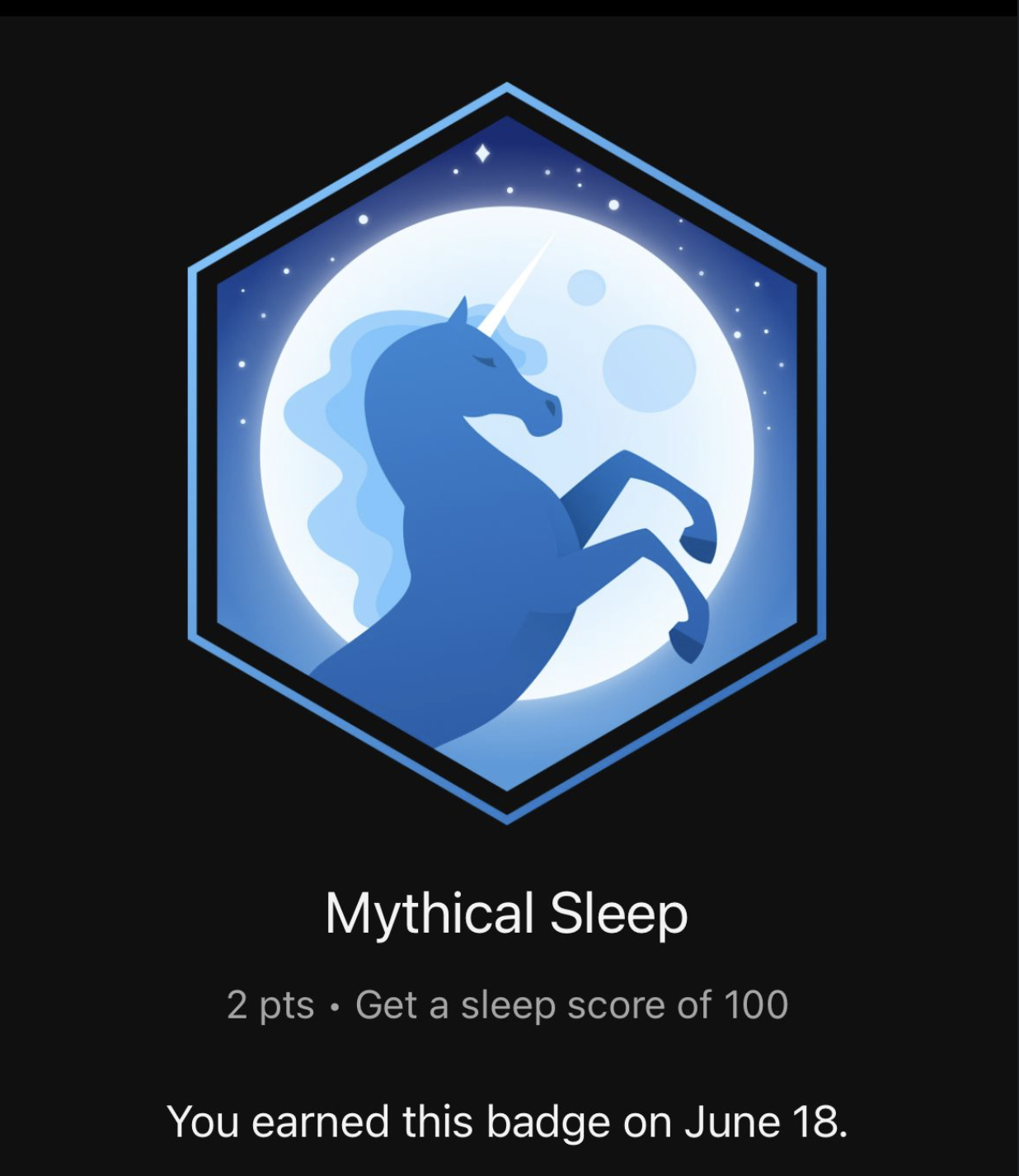
When Garmin gave me a badge for a perfect sleep score but Oura said “something was challenging your sleep quality” for the same night!
3. A False Sense of Control
Wearables can provide a sense of control that is not always real. By tracking every metric, it feels like we are taking ownership. While watching trends can be helpful, if the stress of the data that you cannot control outweighs the benefit you get from having the data, it is probably time for a break. This includes things like how much REM sleep you got last night or what you weigh this morning.
I’ve had many clients over the years tell me they stopped wearing it because they did not need another reminder of what they were not accomplishing. Sometimes life is a lot and a watch buzzing on your wrist makes you feel more anxious about your day. At that point, it has moved into the unhelpful category of your life.
4. Obsessing Over Numbers
While some people love to watch and crunch the numbers and that’s great, for others it can cause them to fixate. Obsessing over sleep data can lead to orthosomnia, an obsessive fixation on perfect sleep scores that can increase anxiety and worsen sleep quality.
Data can be helpful. But data that you are not doing anything about is meaningless. If your sleep score is poor, a productive use of that data is to take steps to improve your sleep hygiene or your wind-down routine before bed. If you improve your habits but your score doesn’t immediately improve, you still have a win in developing new behaviors.
Recognizing wins outside of data is important for whole-life health. Stressing about a slower pace, lower HRV, lower fitness age, poor REM sleep, weight on the scale, or any other metric outside of your immediate control, doesn’t make you healthier (it does the opposite). If it prompts you to adopt healthier habits or learn new skills, then you win regardless of the data outcome.
When you balance tracking data with your subjective experience, you get a fuller picture and a healthier relationship with technology.
FIVE MINUTE ACTION
Reading is great (I appreciate you!), but learning comes from action. No matter what your relationship is with fitness trackers, it can be a healthy practice to check in with yourself.
Before checking your data. Ask yourself:
“On a scale of 1-10 how do I rate my physical energy, my mood, and my mental alertness right now?”
Then when you look at your data, you can be sure you are taking into account how you feel to get a more accurate big picture. I’d love to hear how it goes for you!
Lea
Lea
There is no greater compliment than a referral!

Lea Genders is a board-certified health coach, personal trainer, and workplace wellness consultant based in Fort Worth, TX. She offers corporate wellness programs for employee health and productivity, as well as in-person and virtual training / coaching for individuals worldwide. Her blog shares expert guidance on strength training, running, and sustainable nutrition @fortworth_trainer
Interested in coaching? Apply here.


Meal prep sounds so Type A, but here’s how a self-proclaimed queen-of-good-enough does it: protein, veggies, and dinner without the Sunday prepping marathon, plus why the best meal prep food is the kind you’ll still want to eat on Wednesday.