The Method To My Madness
I’m working on a new workplace wellness presentation about stress, and I wanted to share my process with you. I start with an off-the-cuff video recording, under two minutes, just to get a feel for how I’d say some of the main points out loud. If I try to script it first, it ends up sounding too… well… scripted. After recording, I write out a script based on those initial videos, but expanded.
Then, I walk around the neighborhood trying to recite my new script from memory. This part is gold. I’ll end up saying parts of it a little differently each time I practice until I land on a version I like, then I quickly record it into voice notes while I’m walking so I don’t forget it by the time I get home. But I definitely risk a small child pointing, “Mommy, why is that strange lady talking to herself?”
Next, I write out cues on index cards to help me get through the speech without forgetting anything. I continue practicing from cards and from memory, making adjustments if one of my new off-the-cuff versions works better than what I wrote. I keep at it until I basically have a conversational version memorized, but I still keep my cards as "emotional support index cards." Ha.
(P.S. I tried putting my script into AI to help polish it, but AI usually edits out my hilarious jokes. I’ll stick to being unpolished so I can at least laugh at my own jokes.)
For this week’s blog post I’ve edited my “script” a little to make more sense as a blog post than a speech. I find that when I write about things first, it helps deepen my understanding of the topic before I speak about it. Thanks for reading, it helps me to write it.
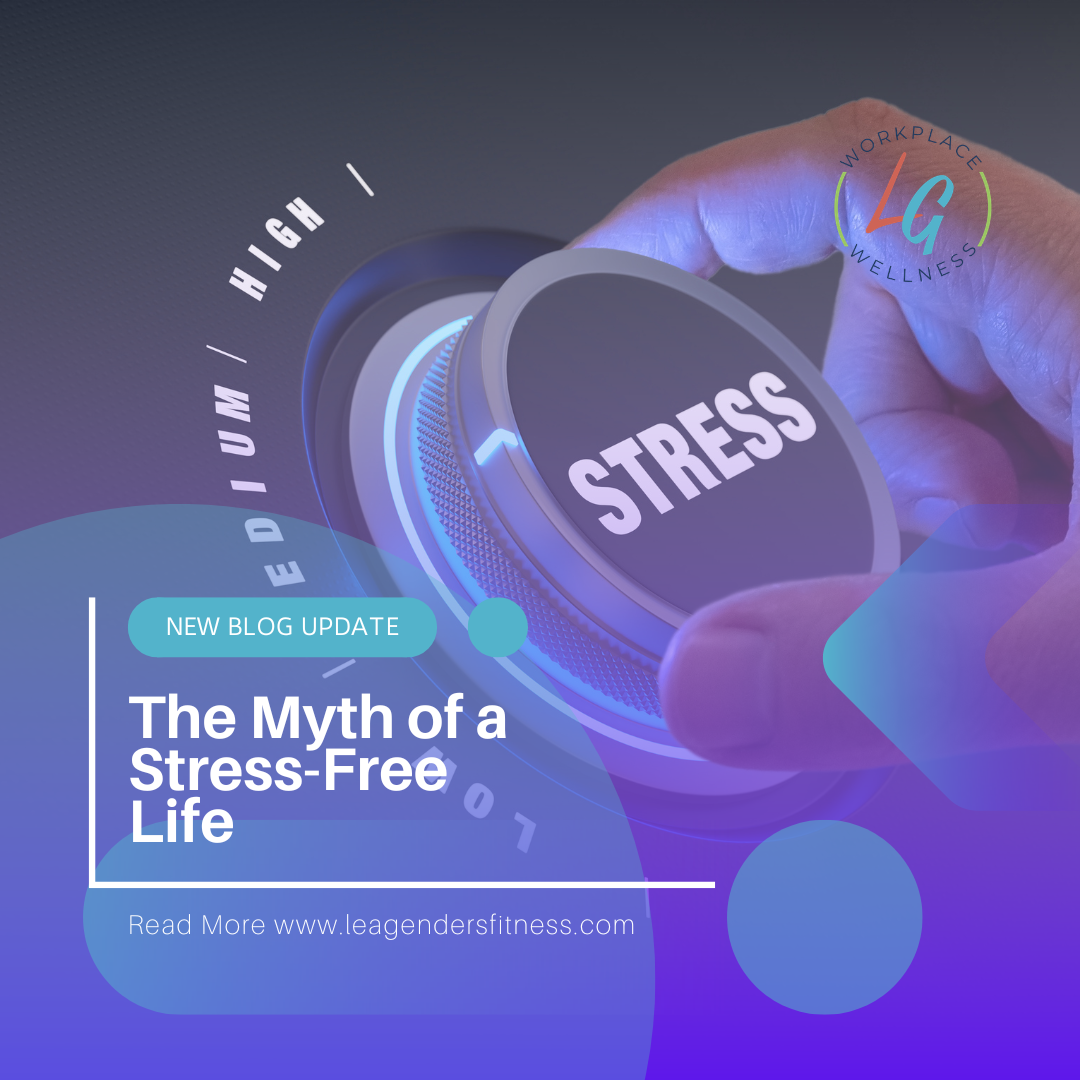
The Myth of the Stress-Free Life
As we get started I want you to think of words that you associate with stress. Got them? Good. Hold on to those. We’ll come back to them near the end.
Now imagine you are driving. It’s dark, it’s raining, and you’re taking a sharp corner at 70 miles an hour. Does that sound like a stressful situation? For me, it does. But we don’t all experience stress the same, to know for sure we have to consider the driver:
If you’re a young, brand-new driver, in a city you’ve never visited, in a rental car, that moment is likely terrifying. It’s overwhelming, likely more stress than you can handle.
But if you’re an experienced driver on a road you know well, in a car you’ve been driving for years, that same corner might just be the moment you sit up a little straighter. Your heart rate picks up, your focus narrows, you turn down the radio so you can see (right? ha). That stress helps you dial in to safely navigate the situation.
Now, what if you’re a professional stunt driver? This is a scene for a movie. You’re on a closed course with a full safety crew around you, with a radio in your ear. To you, this is just another Tuesday. There is zero stress.
This tells us something incredibly important: That most of the stress that we experience isn’t objective. It’s a subjective experience. Stress isn’t just what happens to you; It’s your perception of what is happening combined with your experience and resources.
STRESS MANAGEMENT IS A SKILL YOU CAN LEARN
Stress happens when demands are high and resources are low. Our new driver had very little experience or knowledge of the situation, and our stunt car driver was flooded with resources.
Same with you. If the demands of your life, your job, your relationships, your health, far outweigh the resources you have to deal with them. You might get stressed and overwhelmed.
A helpful way to think about this is that stress management is a skill you can develop, rather than trying to avoid stress or trying to reduce it, you can work on building new skills.
HOW CAN YOU INCREASE YOUR RESOURCES? (GET CREATIVE)
One way we can learn to manage stress is to think creatively about how we increase our resources.
We don't all have the same ones available to us. Some people have the budget to hire help. Not everyone has that. Some people have a big network of people they can count on for help and support. Not everyone has that either. Maybe at work, your boss is a resource in helping you manage (maybe not).
You don’t have to depend on outside help. Resources can be internal. It might be setting boundaries around what you are willing to do. It might be leaning on your personal strengths and the things you’re really good at. Being a natural leader, a skilled negotiator, or a good salesperson can all be resources you can use to manage stress. It might be your faith or simply the knowledge that you're capable of doing hard things because you’ve done them before.
Some major life stressors like loss of a loved one or loss of basic human needs may require professional help resources, and it is a strength in itself to be willing to ask for receive help when you need it.
THE MYTH OF THE STRESS-FREE LIFE
When we started, I asked you to think of a word, and usually, almost every word associated with stress is negative. And stress can feel negative, but without stress, we never grow.
But let’s be honest: zero stress is terrible too. Who wants to quit their job and live on the beach sipping a cocktail for a living? It sounds nice, but we’d get bored fast. If the stressors in your life are too low, nothing happens. You stagnate. You get bored, you lose your sense of purpose. We actually need stress to grow, learn, and improve.
DISTRESS VS. EUSTRESS
I'm a trainer, so I like to think about the gym. When you lift weights, you are breaking down your muscle fibers. That is a stress on your body. But when you rest, you repair and rebuild that muscle, and if you add resources like good nutrition and sleep, and you get stronger and fitter. Stress + recovery = Growth
It’s the same at work. A tight deadline with limited resources is a challenge. But when you do it, you learn lessons and gain skills to do it better next time. That temporary stress gave you focus and drive to get the job done. It made you more capable, more experienced, and more valuable in your job.
The only real difference between bad stress (distress) and good stress (eustress) is the ability to recover. When we feel overwhelmed with hard things, we need to be more intentional about the recovery. Good stress allows recovery. Bad stress is high demands, low resources, with limited or no recovery.
Stress is cumulative, that means every single thing, the demanding boss, the lack of nutrition, the relationship tension, and the gridlock traffic, builds up to what is called the allostatic load. These stressors don’t just add up; they multiply. When your stress bucket is already nearly full, one extra drop can cause a total overflow, triggering a stress response that feels completely out of proportion to the situation.
The good news is that recovery is also cumulative. It is so important to realize that those small recovery practices such as deep breathing, a creative hobby, gentle movement, or a quick journaling session multiply too. They act as a release valve for that internal pressure, preventing stress from overtaking.
A New Vocabulary
I want to go back to those words you thought of at the beginning and offer a few more "stress" words to consider.
How about Growth? Strength? Learning? Resilience? Fitness? Focus? What else?
All of these things require a certain level of stress, which makes us better. When we learn to look at stress as a challenge to rise to rather than something that defeats us, it changes things. We become more mindful of getting the recovery and resources we need so we can be even stronger next time.
So, the next time you feel the pressure of a high-demand situation, don't just ask how to make it go away. Ask yourself: What resources can I lean on right now? How can I be sure to get the recovery I need?
Lea
There is no greater compliment than a referral!
Have I helped you? Leave a Google Review here

Lea Genders is a board-certified health coach, personal trainer, and workplace wellness consultant based in Fort Worth, TX. She offers corporate wellness programs for employee health and productivity, as well as in-person and virtual training / coaching for individuals worldwide. Her blog shares expert guidance on strength training, running, and sustainable nutrition @fortworth_trainer
Interested in coaching? Apply here.






Meal prep sounds so Type A, but here’s how a self-proclaimed queen-of-good-enough does it: protein, veggies, and dinner without the Sunday prepping marathon, plus why the best meal prep food is the kind you’ll still want to eat on Wednesday.