The 30-20-10 Interval Running Workout

Welcome to the latest edition of workout Wednesday! This week I have a great interval running workout for you to try. This workout was developed by Dr. Jens Bangsbo at the University of Copenhagen in Denmark to increase speed in recreational runners. If you are looking for an easy way to incorporate interval or speed training into your running workouts this is a great place to start. You could do it on the street or the track with a timer (affiliate --> I use a gymboss interval timer) or on the treadmill.

This is a by-feel paced workout. That means you don't need a GPS watch to make sure you hit certain paces. All you need is a timer and a pair of running shoes (OK, clothes would probably be a good idea too). 

Warm up by walking or jogging 10 minutes or one mile.

30 seconds

Start at a slow pace for 30 seconds. This should feel very easy, breathing is easy. For a beginner this may even be a brisk walk. It's called conversation pace. You could hold a conversation while maintaining this pace. 

20 seconds

Accelerate to a moderate pace for 20 seconds. This should be your race pace. A little faster than your easy pace but not an all-out-sprint. It should feel comfortably hard. You could probably get out a sentence or a few words between breaths, but you are working too hard to hold a conversation.

10 seconds

Then sprint as hard as you can for 10 seconds. Go for it. Give it all you have for 10 seconds. You can't talk at all while holding this pace. 

Repeat four more times in a row without rest for a total of 5 minutes of these intervals.

2 Minutes

Rest until your breath is fully recovered (about 2 minutes).

Repeat

Repeat these 30-20-10 sessions and rest periods until fatigued (no more than 30 minutes) for a quick and effective speed workout for runners of all levels

Cool down by jogging or walking 10 minutes or one mile.

Doesn't Ollie demonstrate the 10 second sprint pace picture perfectly? Good dog. 

Doesn't Ollie demonstrate the 10 second sprint pace picture perfectly? Good dog. 

Add this workout to your schedule 1-2 times per week with rest days and easy-paced run days in between hard workouts.

A general rule for intense training: A little is better than none and a lot is too much. Remember that our bodies adapt (grow stronger and faster) during rest, not during the workout. Allow your body adequate time to recover between hard workouts for the best results.

Like this post? It helps me when you share. 

52 Healthy Habits: A Rant on Sugar, Cocaine and Artificial Sweeteners

One thing I love about writing a blog is it that it gives me a chance to air my grievances (even when it isn't Festivus!) to no one in particular and everyone on the internet all at the same time. 

When things bother me, I usually tell my husband, but when I start to notice his eyes glaze over I know it's time to get it out in writing. He even told me once, "You need to blog about that because I stopped listening 10 minutes ago." Hah. At least he's honest. 

I am not usually someone who rants. I usually keep things that bother me bottled up inside until it explodes...like a normal person. Just kidding. 

Last Friday we had a health fair at my corporate marketing job. It was a half day event when speakers came in to educate us with seminars and they served a delicious healthy lunch. It's a great benefit and I usually look forward to hearing speakers on various topics. It gets me out from my cubicle for a few hours and immersed in the world I love, heath and fitness. 

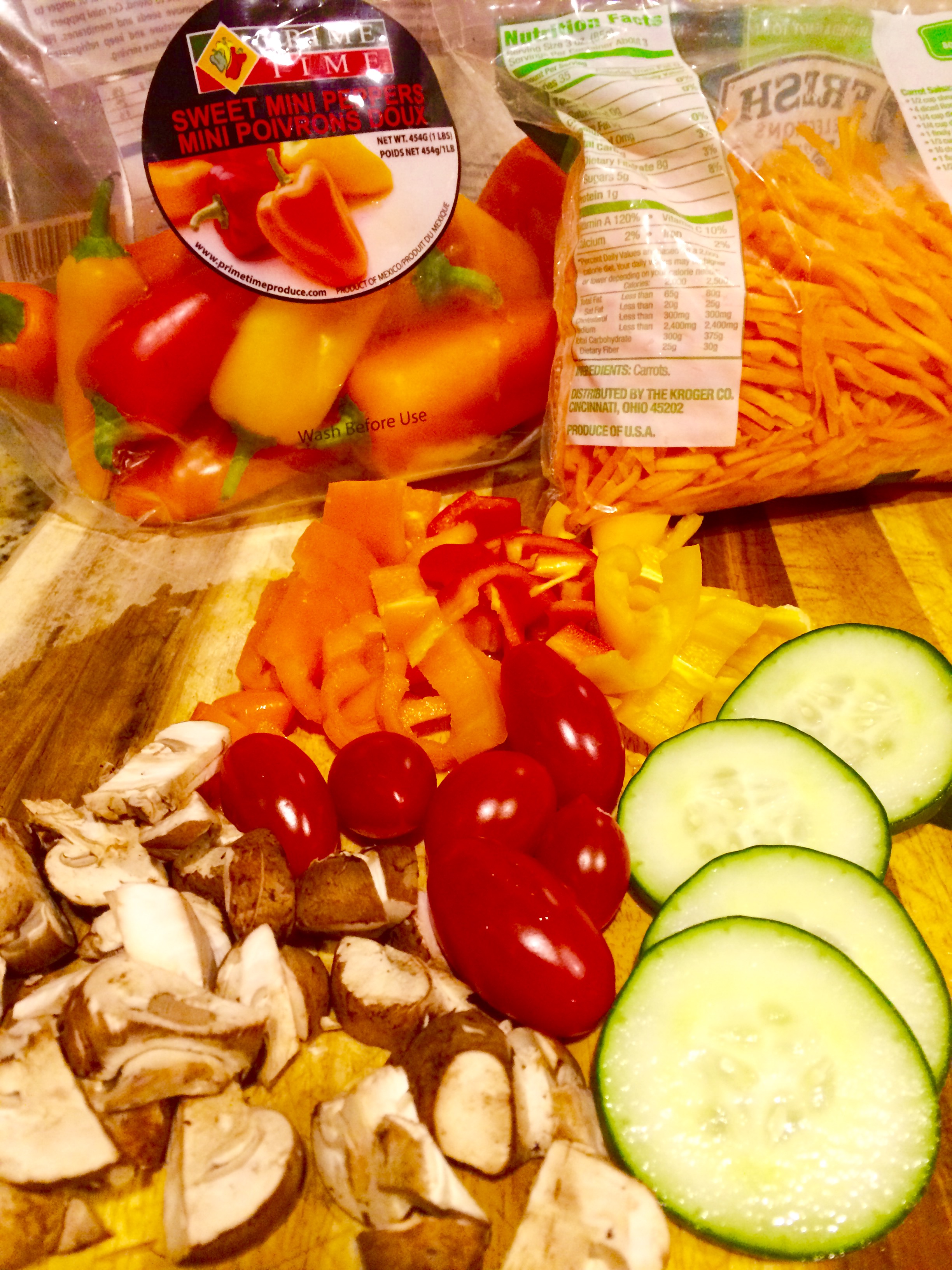
scenes from our healthy lunch - colorful mini peppers.

scenes from our healthy lunch - colorful mini peppers.

One of the speakers was a doctor. When you have some letters behind your name and a book under your belt you command a certain amount of respect and authority. Everything started out great. He showed us a sugar cube that equaled four grams of sugar. He taped plastic baggies of these sugar cubes to popular food products that are often marketed as healthy options. That box of organic bran cereal? Six cubes (24 grams of sugar) per serving...and watch out, that serving size is only 3/4 cup. So-called healthy yogurt? As many sugar cubes as a can of Coke. It can be eye-opening for someone who never really thought about hidden added sugars in their diet.

It was a great visual representation of the amount of sugar in processed foods and how, if we don't pay attention, the sugar adds up quickly and can hurt our health and body composition. It is a an important message that most people need to hear, but this is where things went south, in my opinion. 

He then recommended to replace the sugar in our diet with artificial sweeteners (he said he preferred to call them sugar substitutes) and not to eat any foods with more than 2 grams of sugar per serving, and this is where he really lost me....not even fruit.

He suggested that when you are in the produce section of the grocery store to think of bananas and grapes (and sometimes apples) as bad and berries as good. My takeaway from his message was that all sugar is bad and artificial sweeteners are the solution to the sugar problem because they do not spike blood sugar or raise insulin levels. 

He said sugar causes the same reaction in the brain as cocaine. Message received doc, Cocaine bad = Fruit bad. 

Look, I'm no doctor. This guy is clearly educated. He went to medical school and treated cancer patients. I respect that level of commitment and service. I went to a community college and have some personal training and nutrition certs. He obviously is far ahead on the education front. But I have something he has seemed to miss: Common sense, or at least context. 

It is irresponsible to tell the general population that fruit is bad and artificial sweeteners are the solution to the sugar problem. Yes, bananas are high in natural sugars but they are also nutrient-rich and have benefits. Are there better things you could eat? Maybe. But is it the worst choice? Absolutely not. Is natural sugar as bad as cocaine? Let's not be ridiculous. (To be fair, he didn't say that directly.) No matter what your health and fitness goals are, a banana, a cupped handful of grapes or an apple is generally a good, healthy choice for most people.

I like to look at all foods on a continuum. What food choice would be a little bit better? What food choice would be worse? If we are always inching towards making healthier, better choices, we are on the right track. We have to get away from all the all-or-nothing, it's either good or it's bad mentality. 

NUTRITION INFO

One small-to-medium sized banana (100g) contains about 89 calories, 1.10g protein, 0.33g of fat, 22.84g of carbohydrates, 2.60g of fiber, and 12.23g of sugar.

Bananas are rich in potassium, vitamin C, and manganese.


We can get into a discussion about high level athletes or physique stage competitors with body composition goals and how eliminating certain foods (temporarily!) can help them meet these aesthetic goals. However, in the context of our health fair, we are talking to office workers who are sedentary for at least eight hours a day looking to improve their lifestyle and eating habits. For general health and weight loss, moderate amounts of fruit is A-ok.

Most people eat a poor diet and a piece of fruit would be an improvement on a daily snack. Herein lies the problem: If you label fruit as bad, and you already know that a Snickers bar is bad, maybe you would just choose the snickers bar because it tastes better. After all, they are both bad, right? Um. No. 

When people start to label food as good or bad it causes all kinds of problems. It can lead to nutrient deficiencies and maybe worse, disordered eating or thinking. Especially when things get labeled as bad that are, in fact, nutritionally beneficial. For health (body and mind) we should aim to eat a wide variety of whole, minimally processed foods that we enjoy, in proper portions.

We are not talking about the nuisances of food intolerances, diabetes or other outliers. My problem is telling a room full of office workers that fruit is a generally a bad choice for them.

Nutrition isn't as hard as the industry would have us believe. It's just that there are so many mixed messages, that people start to get confused. Most people don't need to worry about the possible downside of eating a piece of fruit because they are still drinking soda, eating processed foods or restaurant meals on a regular basis and sleeping five hours a night. Let's work on improving the basics before we start talking about advanced diet strategies. 

On the subject of artificial sweeteners, I don't mind artificial sweeteners...wait for it...in moderation. Like anything else, what you do every day is more important than what you do occasionally. I happen to like the taste of Diet Coke, probably because I drank it most of my adult life. These days, I don't drink it often, but when I am craving a Coke, I go for the diet option. If I preferred the taste of regular Coke I would go that route. It is an occasional indulgence, not an everyday activity. For me, it's no problem.

I don't, however, recommend artificial sweeteners as a solution to your sugar problem. They are probably fine for most people in moderation, but we should be aiming to move towards whole natural foods whenever possible. If the problem is too much sugar, let's fix the problem by reducing added sugar intake (mostly by reducing processed foods), not just band-aid it by replacing all of our sugar intake with artificial sweeteners. 

I am all about balance, finding that sweet spot of sanity and sustainability. What healthy foods do you enjoy eating? Eat more of those. What not-so healthy foods make you feel like crap later? Eat less of those. Learn to tune in to your body's natural signals. If a less-than-healthy (notice I didn't say 'bad') food brings you joy, then definitely enjoy it in moderation without guilt. It sounds overly simplistic, but when nutrition is so far off track, it's exactly what we need: simplicity. 

I'm no smarty pants doctor but if you like bananas, go ahead and eat them. 

For my 52 Healthy habits this week, I encourage you to eat a piece of healthy, natural fruit every day this week, limit added sugars and artificial sweeteners and oh yeah, don't use cocaine. How's that for health advice? Who wants to hire me to speak at their health fair? My presentation will be called 'A Rant on Sugar, Cocaine and Artificial Sweeteners' Hah. 

Seriously. Need help with your nutrition strategy? Tired of dieting? Want help making healthy choices part of your lifestyle while staying sane and balanced? My nutrition and lifestyle coaching program begins in June, get on the list for a big pre-sale discount. 

Do you agree? I'd love it if you would share.

How To Cut Carbs Without Cutting Your Sanity

Let me start by saying that I love carbohydrates. It's my favorite macronutrient. Our bodies need carbs, especially if we are athletes. Who am I to deny my body something it needs. Amiright? 

Food is not just about nutrients and fuel, it is also about enjoyment. We need to find the balance of what we enjoy eating and what is good for our bodies. Let's find the sweet spot of sanity and sustainability. What healthy eating habits can we sustain for the rest of our lives?

If you tell me I can never have a carb again, then we are not friends. That is simply not sustainable for my lifestyle. I want to be healthy, but I also want to enjoy my life. Finding that balance is key. 

Cutting carbs is popular on the diet circuit because when we cut carbs we lose water right away and the number goes down on the scale. It isn't magic. In the beginning it is likely water weight. It's great. You look a little leaner, the scale shows a lower number and the button isn't popping off your pants anymore. You probably didn't lose fat, but you lost weight. I get it. It feels good. 

When we cut carbs we also cut calories. If you order a hamburger without the bun, you just cut 150-300 calories from your meal. The calorie deficit is also contributing to your weight loss.

I don't have any issues with limiting carb intake to reach body composition goals, the problem arises when we ignore our bodies feedback and take it too far. Our bodies have a way of telling us what it needs. We just need to get in tune with our bodies to hear these messages. 

Carbohydrates aren't bad. When we demonize foods we end up unbalanced and risk nutrient deficiencies. Our ultimate goal should always be health and balance. That includes a healthy body and mind. We shouldn't stress about any foods.

Our bodies are all different and we have different tolerances to carbohydrates. While some people may thrive on a low carbohydrate diet all the time, others will be grumpy, low energy and...did I mention grumpy? (Raises hand.) It's all about experimenting with carb intake and honestly assessing how you look, feel and perform. If you look, feel and perform your best on a low carb diet, then go for it. If you feel like $hit after day three and your workout sucks, maybe it's time to eat some oatmeal.

We are all individuals and have individual nutrient needs. Just because your friend claims to to have lost 20 pounds and feels great on a low carb diet, doesn't mean your body will react the same way. In turn just because I feel like crap on a low carb diet doesn't mean all my clients will too. As a nutrition coach, it is not about pushing my personal diet strategies on my clients, it is about working with them to establish a protocol that works best for their body. 

The key to achieving all the benefits of a low carb diet without going crazy is in carb quality and carb timing. 

FOCUS ON CARB QUALITY

The first way to cut carbs without cutting sanity is to simply cut out processed carbs. If we limit our carb intake to whole foods we eliminate most of the problems with carbs. Carbs aren't bad in themselves, it just so happens that most processed foods are carbs.

If you first work to eliminate or reduce the white flour, added sugar, salty snacks, most packaged foods, cereal, beer and soda you cut out the carbs that are less than ideal. What's left? Fruit, oatmeal, potatoes, whole grains, vegetables, quinoa and rice as some examples. If you limit processed foods and added sugars, that is probably all the carbs that most people need to cut. Especially athletes.

I am also not saying never to eat a potato chip or slice of pizza again, just that these things should be the exception, not the rule. What you do daily matters more than what you do once in awhile.

CARB TIMING

Once you have already reduced processed carbs from your diet you can take it to the next level with carb timing by consuming most your carbs for the day right before and after your workouts and reducing carb intake on your rest days. This is an effective way to ensure your body gets the carbs it needs to perform well, while reducing the chances that there will be excess calories that lead to fat storage. 

Remember that carbs don't make you fat. Fat doesn't make you fat. Calorie surplus over energy needs is a major factor in fat storage. It's about balance. 

Focus on eating whole nutrient-dense foods in proper portions from a variety of food sources for happy healthy body and mind. 

HOW'S THAT WORKING FOR YOU?

There is a lot of controversy surrounding nutrition and people can have very strong beliefs about their diet approach, the best way to eat healthfully and lose weight. The truth is there is no one best diet. Each of our bodies are different and only we know how our bodies respond to different diet philosophies. The problem only arises when we ignore our body's natural feedback in order to stick to a diet that clearly isn't working for us. The bottom line is that if you can honestly say that you LOOK, FEEL and PERFORM your best, then I'd say keep doing whatever you are doing. 

Me? I'm sticking with healthy carbs. Need help with your nutrition strategy? Tired of dieting? Want help making healthy choices while staying sane and balanced? Join my nutrition and lifestyle coaching program for long term sustainable results.

Like this post? I'd love it if you would share.



MINI BAND EXERCISES FOR RUNNERS

Welcome to the latest edition of Workout Wednesday! When I talk to runners about strength training we often talk about minimum required dose. Runners aren't usually thrilled of the idea of spending hours in the gym each week. They run because they love to run. They strength train (or they probably should) because they want to be a stronger, faster runner while reducing the chances of injury.

Minimum required dose is the least amount we can do to get results. The truth is you don't need to spend hours and hours in the gym each week. You can spend 10-15 minutes at the end of each run, or 30 minutes three times a week or an hour twice a week. It depends on your goals, your lifestyle, your preferences and your abilities.

My friend took these pictures for me in the #ShredShed and she sent me this GIF. 

My friend took these pictures for me in the #ShredShed and she sent me this GIF. 

If you want to be a great runner it makes sense to spend a lot of time running. However, investing the time in strength training often yields big results for runners. It is OK to start small and build over time. A little strength training is always better than none. Our goal should be to become well-rounded athletes. 

This post contains affiliate links. That means if you click on a link in the post and make a purchase I make a small percentage of the sale with no additional cost to you. No one is getting rich here, it just helps with the running (pun intended) of this blog. 

This is why I love mini bands. They are very inexpensive, portable and the exercises can be done anywhere at anytime (well, maybe not in the halls at work or school). You don't need to invest a lot of money into strength training equipment, these little bands provide plenty of resistance. You could even put one in your running belt so you can squeeze in some exercises after your outdoor run. 


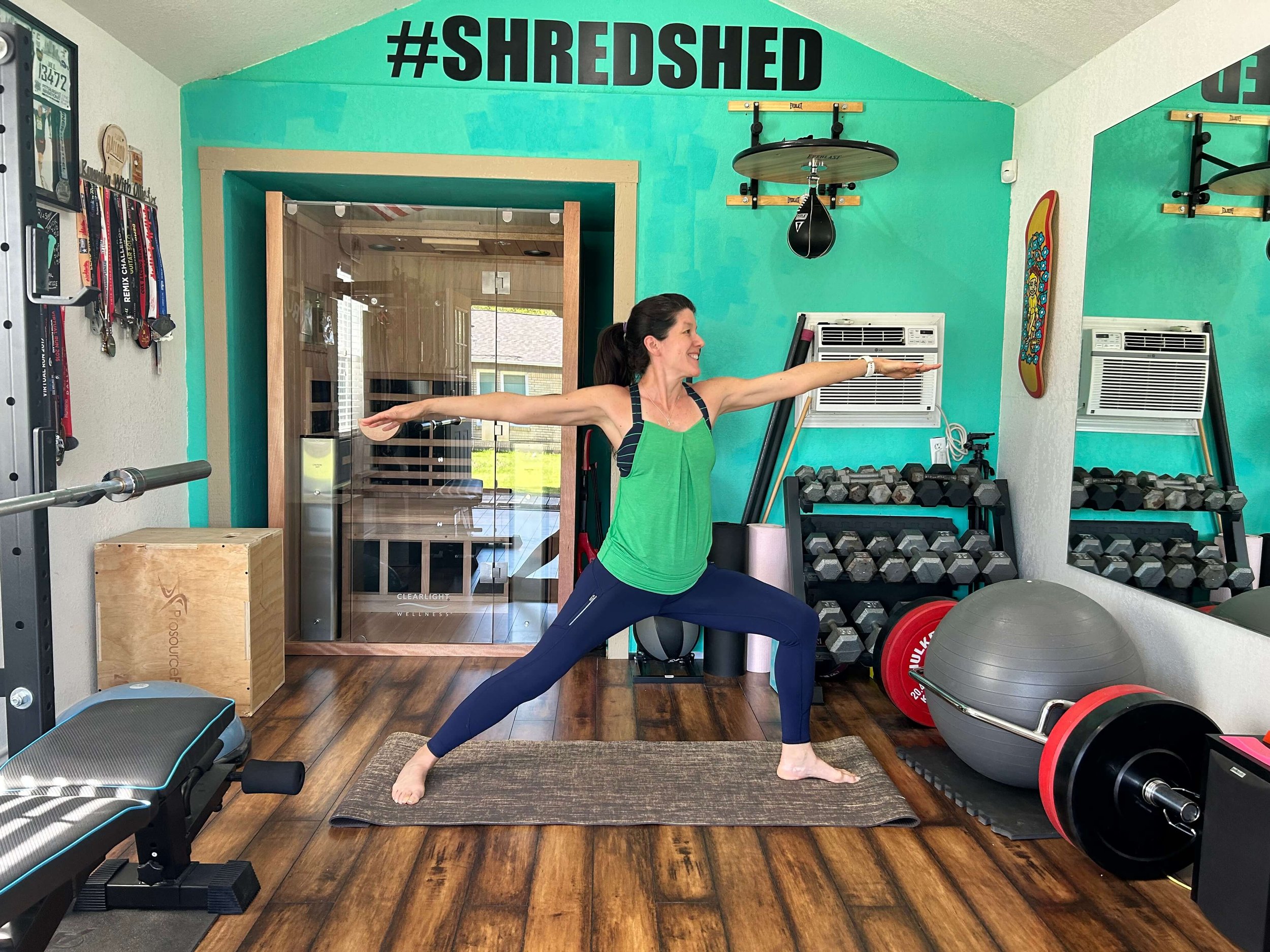
This weekend I hit the #Shredshed to show you some exercises you can do to incorporate glute/hip strength training into your running routine. Weak hips are often the missing link for runners and can be the source of all kinds of problems and injuries. A little pre-hab can go a long way in injury prevention. 

If you are brand new to this or if you don't have mini bands, you can do these exercises without the bands to start and then add bands in a few weeks in order to continue to progress. Our bodies adapt to the exercises that we do, so every three to four weeks look for ways to make the exercise harder, either by adding more resistance, more reps, more sets, more days, etc. 

I recommend starting by incorporating these exercises at the end of an easy run day two times per week. Start with 2 sets of 10 reps of each exercise. I like to do them in circuit fashion, moving from one exercise to the next with little break, then repeating the circuit one more time.

You can buy mini bands here on Amazon.

Coach's Tip

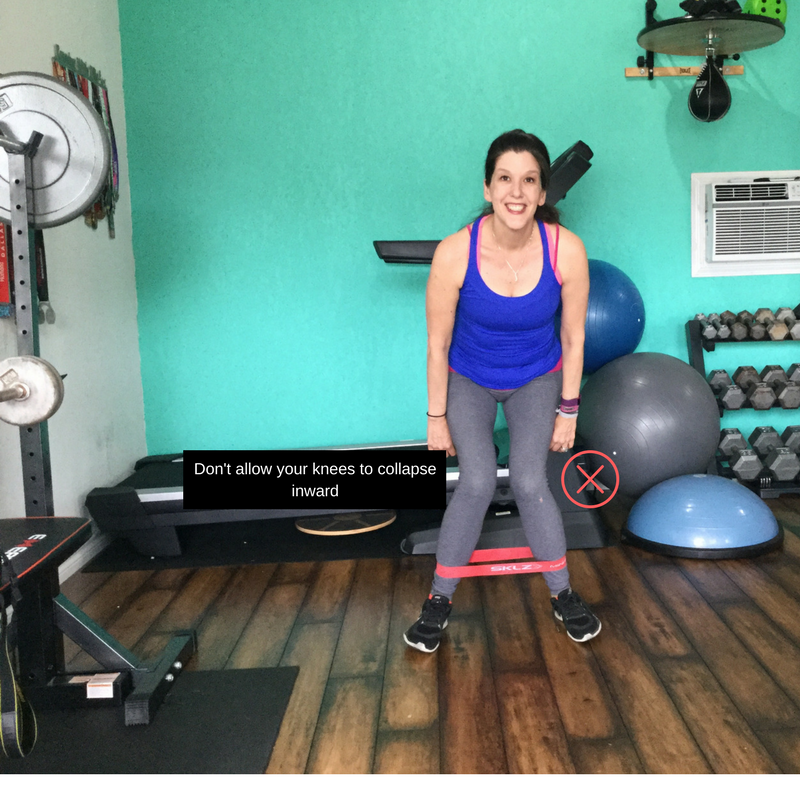
Be careful not to let your knees collapse inward when performing any of these exercises. Work to keep your knees out and inline with your toes. 

what NOT to do.

what NOT to do.

Good luck! Give it a try after your next easy run and let me know if you feel the burn! 

Like this post? It helps me a lot when you share or save to Pinterest.

52 Healthy Habits: 10 Easy Ways To Eat More Vegetables

Welcome to the latest edition of 52 healthy habits, when each week I tackle a new healthy habit. Healthy habits are the building blocks of a healthy lifestyle. In this series we look for ways to take small steps forward towards a healthier body and mind. It's not about overhauling our whole lives, it's about tackling one small lifestyle change at a time.

No matter where you are in your fitness journey, from beginner to elite athlete, there is always room for incremental improvements. It's the small things that snowball into big changes. Consistently improving your lifestyle will yield lasting results.

As much controversy that exists around diet and nutrition, one thing that is almost universally agreed upon is that most of us need to eat more vegetables. If you shudder at the thought of choking down soggy steamed squash, I have some better ideas. Vegetables are healthy, convenient and delicious!

This post contains affiliate links. This means if you click on a link and make a purchase, I make a small percentage of the sale with no extra cost to you. No one is getting rich here it just helps with the running (pun intended) of this blog. 

WHY VEGGIES?

Vegetables are high in nutrients and fiber and generally low in calories. They help you feel fuller, longer with less calories. They help fill you up and keep your digestive system healthy. For best results try a variety of multi-colored veggies. Look to add a variety of green, red, orange, purple and yellow vegetables to your diet. It's nearly impossible to overeat vegetables, so next time you're looking for a side dish, a meal or a snack, a vegetable is always a great choice.

10 EASY WAYS EAT MORE VEGETABLES

Add veggies to your eggs

Cut up some peppers, onions, mushrooms and spinach to scramble into your morning eggs. I often prep the vegetables by cutting them up on Sunday for the week, then in the morning, I can just grab a handful and toss into the pan with my eggs. 

Add spinach to your protein shake

An easy, sneaky way to get in a serving of greens is to add a handful of spinach or other leafy greens to your protein shake. When you mix it up with fruit and protein powder you won't even taste it. Think about what other veggies can you add for an anti-oxidant boost. Carrots, celery, cucumbers and beets are all good choices. 

Eat a small spinach salad with every meal

Instead of a side of processed carbs, order or make a salad as a side to your main dish or eat a salad with a lean protein as your meal. You can choose the convenience of pre-washed salad or choose raw spinach that needs washed and cut for a much lower cost. 

Snack on raw veggies

Raw veggies make a great snack. You can chop and wash them yourself to save money or buy them already cut and prepped for convenience. Carrots, broccoli, cauliflower, peppers and celery are all great choices. 

Buy frozen veggies

Frozen vegetables have nearly the same nutrient profile as fresh vegetables. Even if we lose a little in the process, frozen vegetables are still better than not consuming vegetables at all, or say, ordering a pizza. In other words, we do the best we can with what we have. When in a pinch, steamed frozen veggies can be a great option for a quick healthy serving of vegetables.

Add double veggies to a casserole

Casserole dishes are an easy way to sneak in some extra veggies. Just chop and add, or use frozen, you really can't go wrong. Shredded vegetables, like zucchini or summer squash, can be added to your favorite casserole dish without affecting taste or texture.

Dip and spice up

Vegetables don't have to be boring. Uses spices to flavor cooked vegetables. Melt cheese over your broccoli, dip those raw vegetables into a guacamole mixture or make your own Greek yogurt-based dip. 

Make veggie noodles or spaghetti squash

I love spaghetti squash. It is easy to prepare and when you top with pasta sauce and parmesan cheese you may not even realize you're eating a vegetable.

I also love those veggie spiralizers that turn your zucchini, carrots or summer squash into pasta-like noodles.

Join a vegetable co-op

Join a local vegetable co-op to try a variety of fruits and vegetables. You support local farmers while getting an opportunity to try different types of vegetables you normally wouldn't buy. Variety is a huge factor to ensure we are getting all of our vitamin and mineral needs. 

Supplement with powdered greens

Once you added all the whole foods you can in your meals, it may be time to supplement if you still are not meeting your requirements. Whole foods are always better, but a powdered greens supplement can help fill in the nutritional gaps. 

Just try one or two of these suggestions this week to add more vegetables in your diet. I always like to look at a diet as what we can add, rather than what we will take away. If we add vegetables first, we may be less likely to fill up on less-healthy alternatives. 

Are you with me? 

Need to catch up on the 52 healthy habits series? 

52 HEALTHY HABITS SERIES

week 1: Early to Rise
week 2: Track calories
week 3: Macro cycling
week 4: Morning pages (journaling)
week 5: Stop the scrolling (reading instead of social media)
week 6: Be a good student (take time for learning) 
week 7: Strength Training 15 minutes per day   
week 8: Eat more protein
week 9: Take a coffee break (break from caffeine)
week 10: Mindful eating
week 11: Create and follow a sleep ritual

Like this post? It helps me when you share or save to Pinterest. 


Coach Lea