52 Healthy Habits: Create and Follow a Sleep Ritual

Welcome to the latest edition of 52 healthy habits when each week we tackle a new healthy habit together. 

Last week our healthy habit was mindful eating. This includes paying attention to hunger and fullness signals, eating slower and avoiding all distractions during meals. This was harder than I anticipated. I didn't even notice that it had become a habit for me to catch up on my Facebook feed in the morning while I shovel in my breakfast. After all, I don't have a lot of time in the morning. I was multi-tasking, but at what cost? While I was catching up on my "on this day" Facebook updates I was scarfing down my eggs, barely tasting them or even noticing that I was eating. I had developed this bad habit that I didn't even realize until I started to pay attention. 

It seems easy so I was surprised when I struggled last week. Sitting at the table in the morning without my phone felt weird and I felt oddly anxious. I tried counting my bites and setting the fork down between bites like we talked about last week. It sounds easy, it was harder than I thought. It is definitely something I need to continue to work on. But that's why we do this, right? Small improvements every week. 

I also want to mention that my caffeine reset from two weeks went well. I mean besides the misery that was the first five days, of course. I went two full weeks without coffee to reset my tolerance. I only intended to go for one week, but felt so great after those pesky headaches went away that I extended it for another week. After two weeks I am ready to reintroduce caffeine. I am looking forward to my Monday morning cup of coffee and i'm sure i'll feel its positive effects after just one cup. 

CREATE AND FOLLOW A SLEEP RITUAL

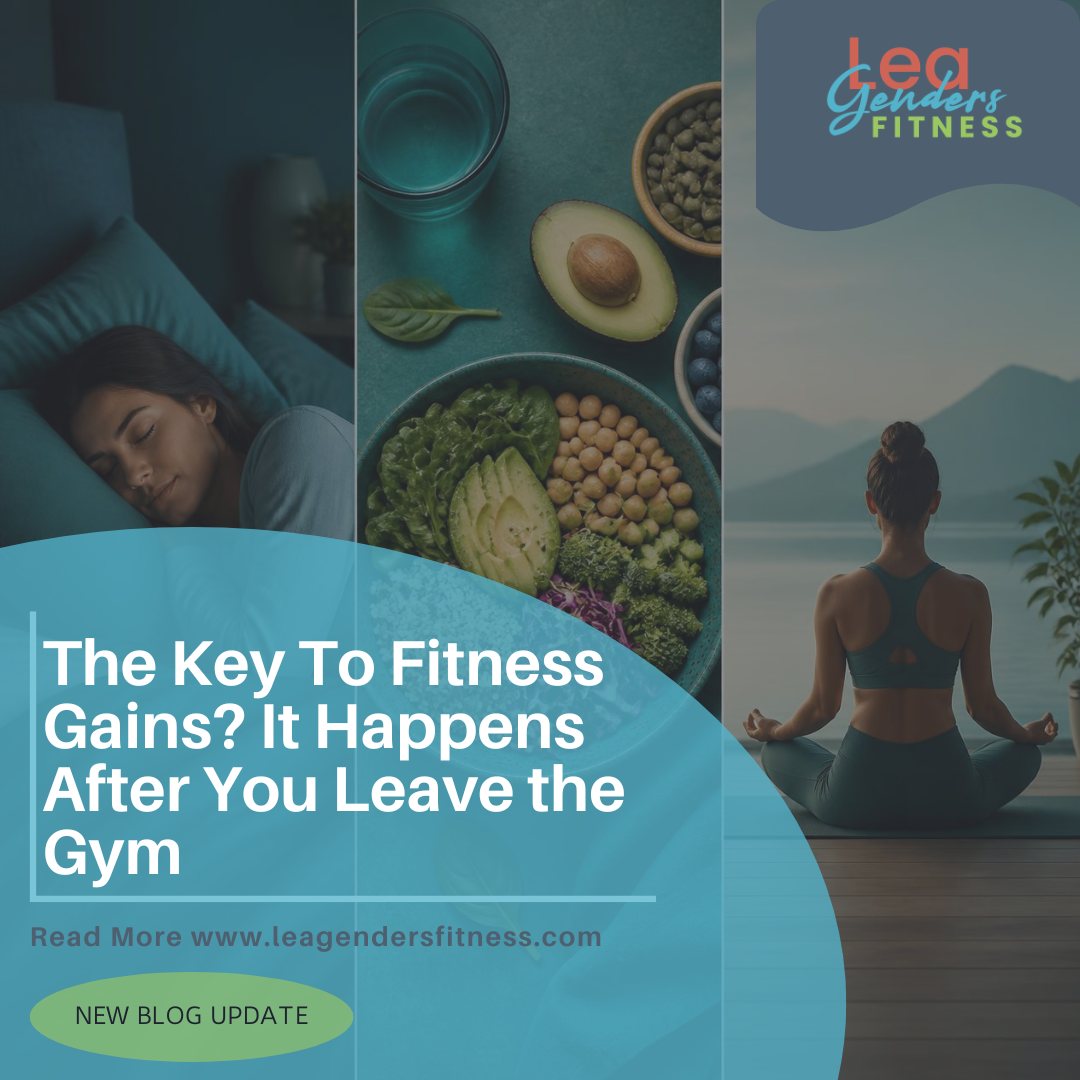
In our busy lifestyles we often glorify lack of sleep. Someone might even brag that they get by on five hours of sleep, but they are missing out on the fact that most of our body's recovery processes happens during sleep. If you are eating well, exercising, but not feeling great or seeing the results you desire, then lack of sleep may be to blame. Most adults should aim for 7-9 hours of quality sleep per night. If you are getting a lot less than that, start by adding just 30 minutes a night. 

We always seem to be looking for the magic bullet to achieve our health and fitness goals, trying new supplements, intense workout routines, macro manipulation and meal timing. While these things can be helpful as we work to meet our goals, we shouldn't be attempting advanced strategies until the basics are covered. Sleep is an important basic. Are you getting 7-9 hours of quality sleep?

ESTABLISH A ROUTINE

Try to get up in the morning and go to bed at the same time each night (yes, even on weekends) in order to establish a sleep routine. 

TURN OFF ELECTRONICS

60 minutes before bed turn off electronics in order to prepare your brain for sleep. Shut down Facebook, put away the blogs (yes, even this one) and say goodnight to your Instagram friends. Try to read a book or magazine to unwind for an easier transition to sleep.

AVOID CAFFEINE & ALCOHOL

Alcohol may help you fall asleep but it will disrupt that much needed deep sleep. Caffeine may cause you to have trouble falling asleep in the first place. Try to avoid caffeine eight hours before bed. 

LIMIT WATER INTAKE BEFORE BED

To avoid getting up in the middle of night to use the potty, avoid excess fluid intake before bed. 

SET UP YOUR ENVIRONMENT FOR DEEP SLEEP

Sleep in a cool dark room. I wear a sleep mask. 

I am as guilty as any, scrolling my iPad while watching TV to unwind before bed. While I usually sleep 7-8 hours per night, I am going to work on improving the quality of my sleep by creating and following a healthy sleep ritual.

Are you with me this week? What can you do to increase the number of hours of sleep or to improve the quality of your sleep. Your body will thank you. 

 If you are interested in nutrition and lifestyle coaching starting in June get your name on the pre-sale list for a reduced introductory price. 


Easy DIY Race Medal Hanger

Full disclosure: I'm terrible at DIY projects. I long to have the talent of those Pinterest sorceresses who magically turn random craft supplies into beautiful works of art. When I look for projects I usually search "kid friendly" to make sure it is within my scope of abilities. My largest limiting factor is patience. When I start a project, I just want it to be done, I don't want to wait for the paint to dry or to carefully cut out anything. Can't I just buy one? I needed a DIY project so easy that even I could do it. 

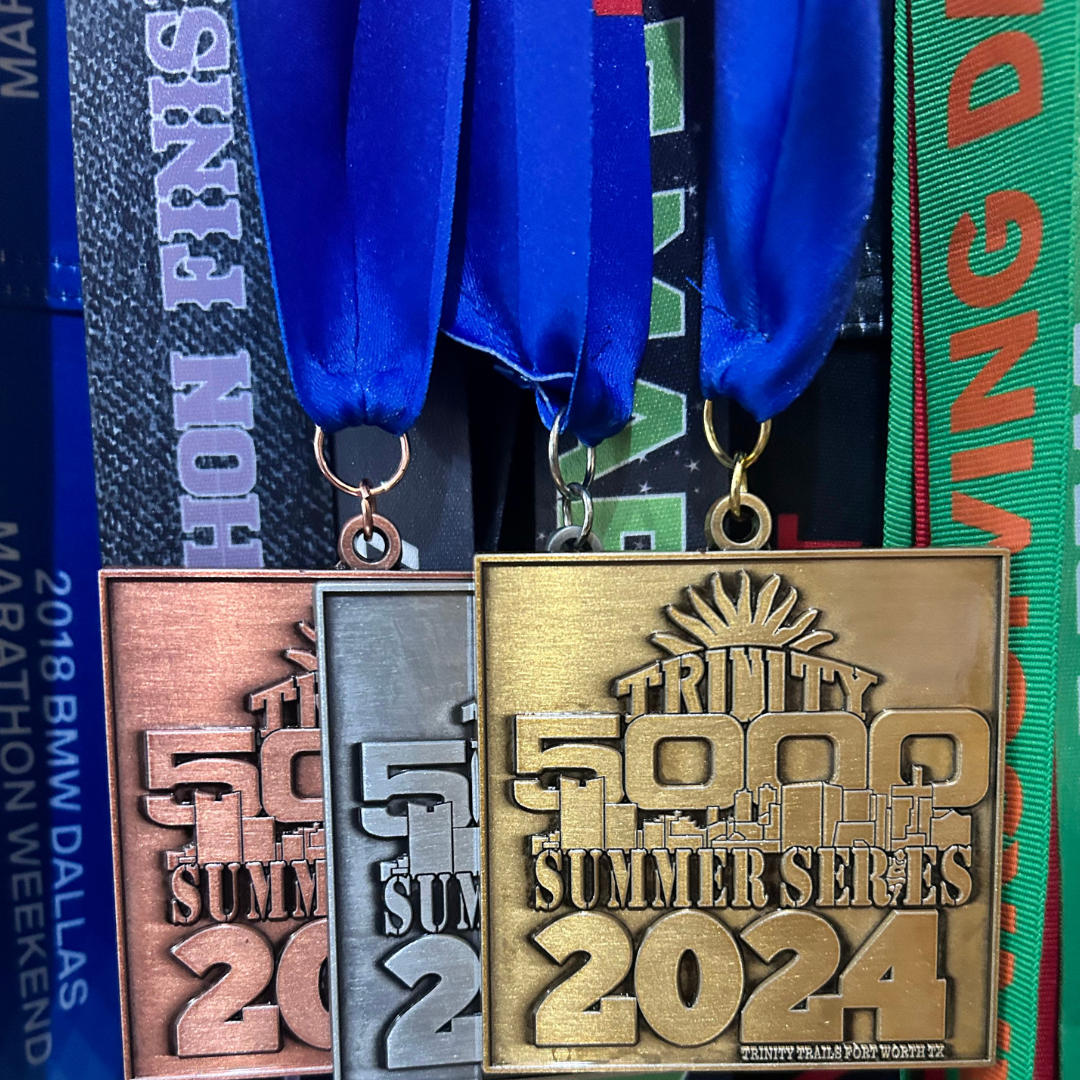
This idea to attempt my own DIY project stemmed from the fact that my current race medal holder is full and I saw one on Etsy that I loved for $75. It was gorgeous, but $75? It looked easy enough, maybe I could do that. I may not be good at DIY, but I had a backup plan...hubby! 

He actually had another big project going on around the house and my medal hanger was probably the last thing he wanted to focus on, but I think when he saw my sad DIY-self trying to spray paint chalkboard paint, he felt pity for me and helped...err...took over. 

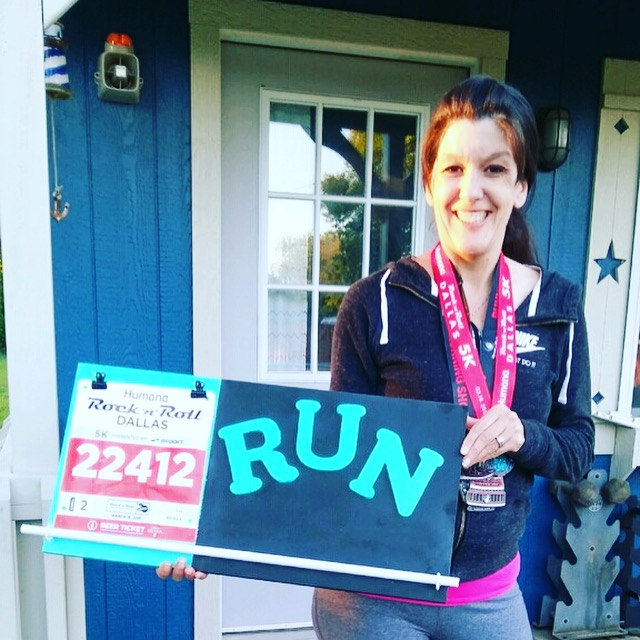
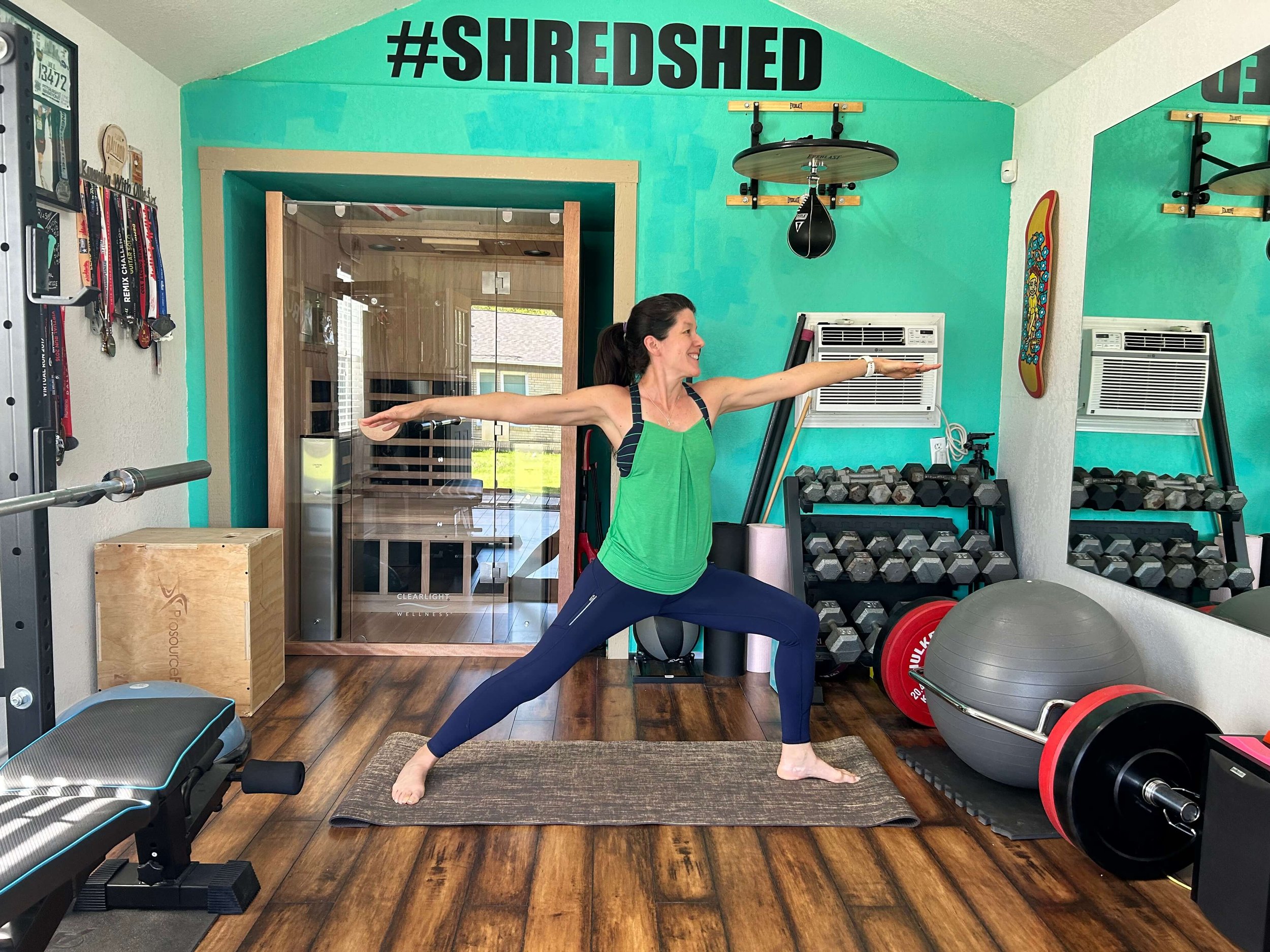
posing with my project in front of the #shredshed

posing with my project in front of the #shredshed

MATERIALS

Shopping for supplies? That I can do. 

I walked all over Home Depot looking for the perfect piece of wood and actually ended up buying a particle board shelf because it was already primed and just about the perfect size.

From Home Depot I bought the shelf, a can of chalkboard spray paint, a wooden dowel rod, a couple of hooks. About $13 total

From Hobby Lobby I bought wooden letters and metal clips. $7

Does the teal color look familiar? It's leftover from the #Shredshed.


THE PROJECT

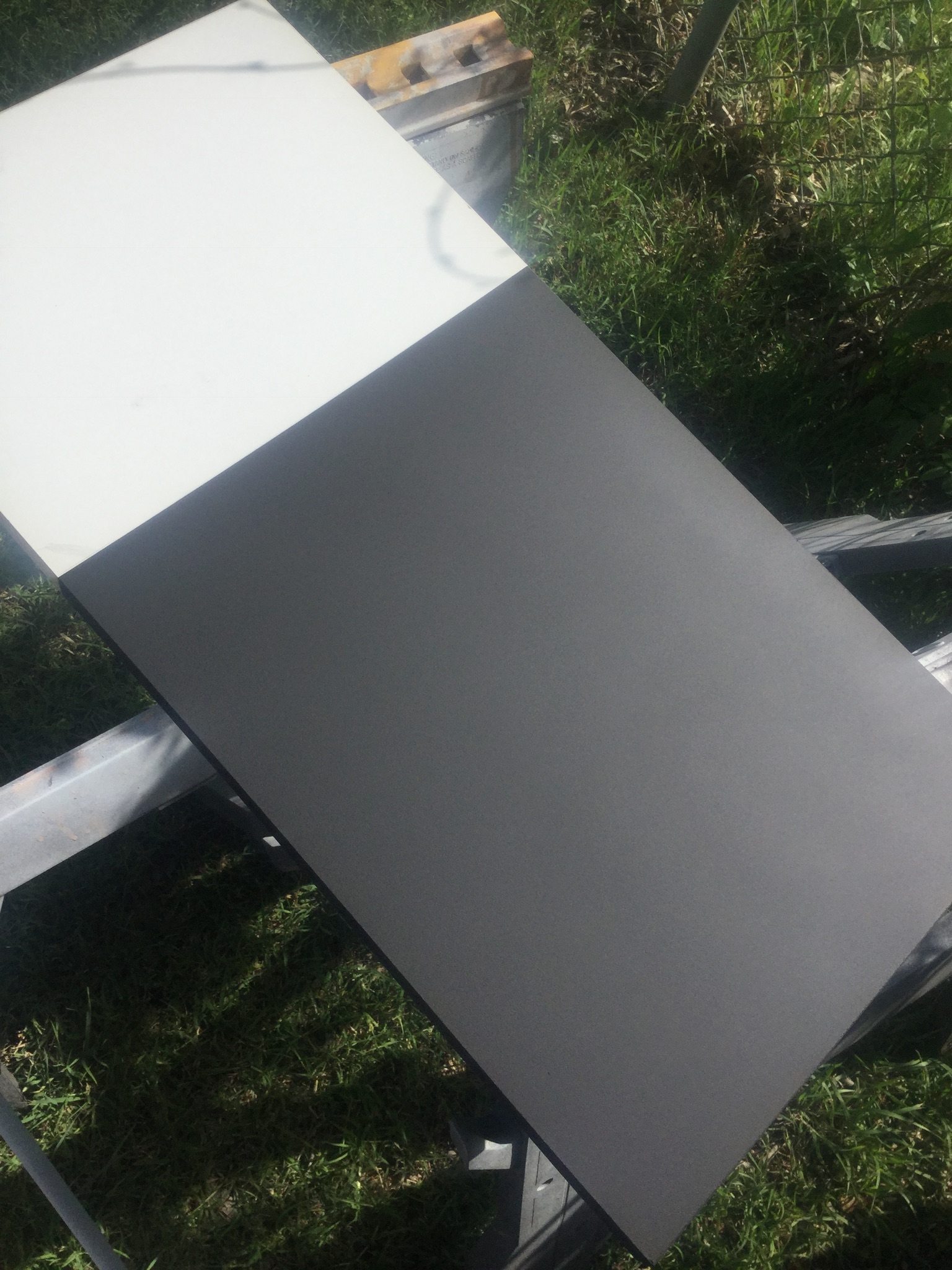
Hubs helped me tape off the board so I could spray the chalkboard paint. I was seriously annoyed when he told me we had to wait 24 hours for the chalkboard paint to dry before we could tape it off to paint the other side. Seriously? Ugh. Waiting. 

We (I use the word "we" liberally) painted the dowel rod white and cut it down to size. (Probably not in that order) Hah. 

I painted the letters, but I painted them on a magazine and that was a terrible idea. Don't do that. The paper stuck to the letters and I spent years (slight exaggeration) cutting the paper off the edges with a razor blade. I also used a paintbrush which was terrible idea number two. Hubby did the 2nd coat with a mini roller. 

lesson learned: Don't paint on a magazine

lesson learned: Don't paint on a magazine

Once everything finally dried and I cut off all that paper, hubs helped attach the clips, screw in the hooks and glue the letters. 

The idea was for it to say "RUN GOALS" and then I could write my current run goals in chalk under the letters. My super crafty-talented friend is going to help me paint the letters GOALS in white paint in some fancy hand lettering under the word run, but we haven't had a chance to get together on that yet. 

I know what you are thinking, For a DIY project, there is not a lot of "Y" going on. So maybe it's a DIYH (Do it Your Husband) or HDI (Husband Does It).

The Y in my DIY at work

The Y in my DIY at work

I'm grateful to have a hubby willing to help me with these types of projects, otherwise I might have had one of those Pinterest-fail pins to share. 

I think it turned out cute and best of all it was made with love. Perfect. Now I just need to add wall hangers on the back and find a spot for it in the #shredshed.

What do you think? Are you a DIY Queen or DIY-deficient, like me? 

Do you display your race medals? 

Like this post?

It helps me when you share on save on Pinterest


Coach Lea


Interval Running Workouts to Increase Speed

Welcome to another edition of workout Wednesday. This week we are talking running intervals. Intervals are get a great way to improve speed, VO2max and running economy, especially when you are short on time. Intervals allow you to up the intensity for short periods of time to get the maximum afterburn effect. We are going to dive into different types of interval running workouts. Sprinkle these workouts into your training once or twice a week to reap the benefits of interval workouts.

TABATA

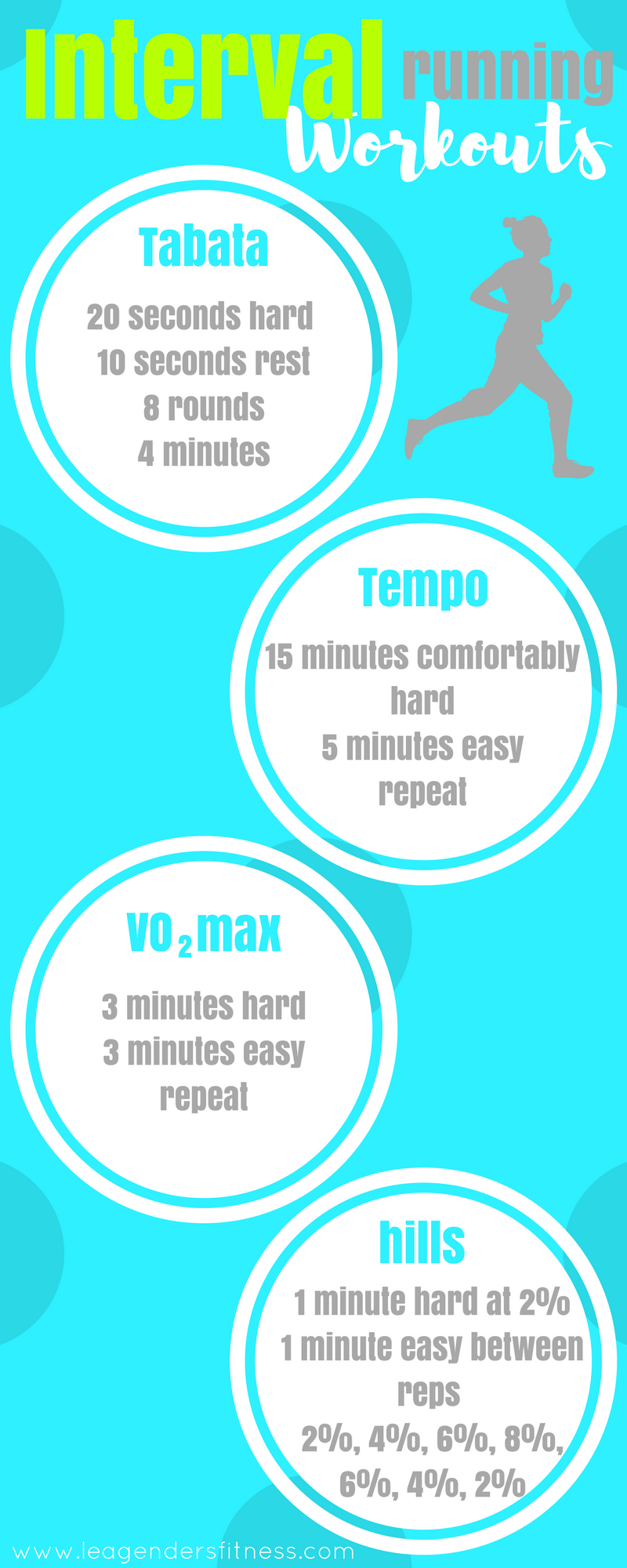
I love the Tabata protocol and if you only have four minutes to workout this is the interval for you. After warming up, run 20 seconds as hard as possible (95% of max heart-rate) then rest completely for 10 seconds. Complete 8 rounds for four minutes. That's one set. Recovery fully between sets. Repeat as many times as your fitness levels allows up to 30 minutes. 

TEMPO INTERVALS

A tempo pace is the fastest aerobic pace you can maintain for a steady-state run. It should feel comfortably-hard. If you ever raced a 5K for time, that is likely your tempo pace. With tempo intervals, after warming up, hold that pace, about 80% of max heart-rate for 15 minutes, then recover with a slow jog or walk for 5 minutes. Repeat.

Another tempo interval variation is to run for five minutes at a comfortably-hard pace, followed by five minutes of easy pace. Repeat for 30 minutes.

V02MAX INTERVALS

VO2max is the size of your aerobic engine. It's the maximum rate at which you consume oxygen and the best indicator of your aerobic fitness.

Warm up then run for 3 minutes hard at 95%-100% of max heart rate. This is the fastest you can run for three minutes without stopping. If you ran faster, you wouldn't be able to keep up the pace for three minutes, if you ran slower, you could probably go on longer than three minutes. It may take some experimenting to find your pace. Run three minutes at an easy pace to recover. Repeat according to your fitness ability up to 30 minutes.

HILLS

Every runner's' favorite interval workout is hills! Right? (crickets). This treadmill hill pyramid variation will challenge you. Hills are great for building strength. After warming up run one minute hard at 2% incline, then recover for one minute at 0% incline. Increase the incline each rep to 4%, 6%, 8%, then back down to 6%, 4%, 2% incline with a one minute easy jog recovery between reps at 0% incline.

Always warm up for 5-10 minutes before beginning a challenging workout and cooldown for 5 minutes once complete. Intervals workouts should be done 1-2 times a week for most runners and 3 times maximum for well-trained athletes. Always allow your body time to rest in-between intense workouts. Remember that adaptation (getting faster, stronger) happens during rest, not the workout. Allow your body the time to properly recover to reap the benefits of these challenging workouts!

Like this post? It helps me so much when you share or save to Pinterest.

52 Healthy Habits: 4 Tips for Mindful Eating

Last week was rough. You may recall I gave up coffee as my weekly healthy habit in order to reset my caffeine tolerance. It is something that I do occasionally when my caffeine intake increases a lot and I realize that my morning cup (errr...I mean pot) of coffee just makes me feel normal rather than giving me an energy boost. It's an simple fix, give up caffeine for about a week to reset, then slowly introduce caffeine back into your diet. I said simple, not easy. 

I felt like crap all week. I was fine Monday morning, but by Monday evening the headaches started. I was cranky, irritable, unfocused and wasn't managing stress well (and it turned out to be an unusually stressful week). It took five solid days to feel normal, but once I got over the withdrawal symptoms, I felt clearer and better than ever. I think I am going to stay off coffee for one more week before I reintroduce it.

I was surprised to find that I enjoyed drinking my mint, caffeine-free tea in the morning as much as my coffee. I'm sure I will introduce coffee back into my diet eventually, but for now I am going to stay off caffeine.

WHAT IS MINDFUL EATING?

I may have mentioned that I am studying sports and exercise nutrition with Precision Nutrition. It is an amazing course and I am learning so much about the science of nutrition and lifestyle coaching. I should be able pass my exam by the end of April and I am introducing my nutrition and healthy lifestyle coaching services starting in June. 

In lifestyle coaching one of the key principles is to start with basics. It sounds like common sense (or un-common sense as hubs likes to say), but so many people are worried about supplements, meal timing and macro splits but don't have basic nutrition and healthy lifestyle habits in check. It sounds more exciting to try intermittent fasting or the ketogenic diet, and there is nothing wrong with those things in theory (possibly under the supervision of a Registered Dietitian), but if you are sleeping five hours a night and binge eating or drinking on the weekends, there are more important things to tackle first. 

Mindful (or intuitive) eating is one of the easiest ways to regulate intake and calorie balance because our bodies tells us what it needs. But because of our busy, technology-driven lifestyles, most of us (including me) have lost touch with the signals our body sends to tell us when we're full or hungry. We eat based on the time of day or our emotions and we clean our plates regardless of fullness signals.

A lot of us were brought up to clean our plates at dinner. My dad used to joke that I had to finish dinner or send the leftovers to a starving kid in Africa. (That's probably politically-incorrect to say now, but it was the 80s) We were taught not to be wasteful, but perhaps we should have been taught to listen to our body's signaling cues of hunger and fullness. 

Enter modern day technology and our hectic lifestyles and it got worse for all of us. Not only were we not listening to our bodies natural cues, but we were scarfing down food in the car on the way to work, or in front of the computer or TV. We lost our ability to sense hunger cues and we stopped enjoying our food. Yes, food is fuel, but food is meant to be savored and enjoyed. It's hard to do that while you're scrolling your Facebook feed over breakfast (I am as guilty as anyone).

Our bodies have built in signally cues to tell us what it needs. If we eat when we are not hungry and don't stop eating when we are physically satisfied, we can end up with a less than ideal body composition and overall health. 

5 TIPS FOR MINDFUL EATING

1. EAT SLOWLY

If you eat too quickly, your body doesn't have time to send the fullness signals to your brain and you may end up overeating or feeling stuffed 10-20 minutes later. There are several ways to tackle slowing down. One way is to time how long it usually takes you eat your meal, then try to add five minutes next time. Another way is to chew your food 20-30 times before swallowing. Try setting down your fork or taking a sip of water between bites. Choose the strategy that works best for you.

2. APPETITE AWARENESS

Hunger is a normal and healthy biological response. Fullness and satiation tells us when we've had enough. If we eat because it's a certain time of day, we are bored, upset or because of a habit (like always eating popcorn when we watch a movie on Friday night) then we might not be paying enough attention to our body's signaling cues. 

When you sit down to eat a meal, before you take the first bite, ask yourself how hungry you feel. Just be aware of your appetite. When you are eating slowly try to notice when you start to feel full or satisfied. Stop eating once you've had enough. Notice how you feel after each meal. Just taking the time to think about it can help you get back in tune with your appetite.

3. AVOID DISTRACTIONS

Turn off the TV, put away the cell phone at the table and don't try to eat while working at your desk. If you are a distracted eater then it's harder to pay attention to your body's cues. Have you ever scarfed down a meal in front of the computer and didn't even notice or taste it? I have. 

In our busy lifestyles it can be hard to do, but it is worth it to take the time to walk away from the technology and enjoy a meal. It's not to say you can never enjoy a meal while watching TV but it should be a conscious choice that is an exception, not a normal behavior. 

4. SAVOR FOOD

Pay attention to the food you are eating. Smell it. Look it at. Examine the texture. Think about the ingredients in it. Take note of what you observe. Even if you are enjoying an indulgent meal, take it slow. Sometimes when we slow down and think about the food we are eating, we discover that we really don't even enjoy some of those unhealthy foods, we eat them because they are cheap and/or convenient. Enjoy your food, no matter what you are eating, healthy or not. Take the time to savor your food and relish every bite. 

I am going to apply all these strategies this week. It will be a change for me to put away my phone and eat slowly. Will you also give it a try and let me know how it goes? If you are interested in nutrition and lifestyle coaching starting in June get your name on the pre-sale list for a reduced introductory price. 

Playing catch up? Follow along with the 52 Healthy Habits series:

52 HEALTHY HABITS SERIES

week 1: Early to Rise
week 2: Track calories
week 3: Macro cycling
week 4: Morning pages (journaling)
week 5: Stop the scrolling (reading instead of social media)
week 6: Be a good student (take time for learning) 
week 7: Strength Training 15 minutes per day   
week 8: Eat more protein
week 9: Take a coffee break (break from caffeine)
 

Like this post? Please consider sharing.