THE "BIG GAME" FOOTBALL WORKOUT

Hi, Friends. It is Super Bowl season again but my beloved Pittsburgh Steelers aren't going to the big game this year. I was never a huge football fan growing up, but ever since I left my hometown of Pittsburgh, PA (20 years ago) I've grown to love watching my Steelers. It's my connection to home.

In our house, we joke that we cheer for the Steelers and whoever is playing the Dallas Cowboys. (Sorry Cowboys fans, you had a great season.) I drive my husband crazy asking "what just happened?" and needing him to explain the rules for the millionth time, but I like to watch the games, especially when my team is doing well. When they're not doing well it stresses me out a little. Sometimes I need to walk out of the house during the game because the tension gets too much for me. I don't handle stress well. hah. 

Even though the games I care about can stress me out, I like the sounds of football as background noise. Hearing the announcer's voices and the cheers from the crowds is soothing and relaxing to me, no matter what game is on. I think it is because growing up in Pittsburgh all family gatherings and holidays had a backdrop of football and even though I didn't like to watch football back then, I think I associate the sounds on the TV with the good 'ol days. I guess that's what happens when you grow up in a football town. You get sentimental for football.

I put together a BIG GAME workout that you can do during the Super Bowl. It's a fun way to get active and engaged in the game so you're not just sitting on your butt for three hours. Just be careful not to spill your beer. Just kidding. See if you can get your game watching buddies in on the fun. 


FIRST DOWN

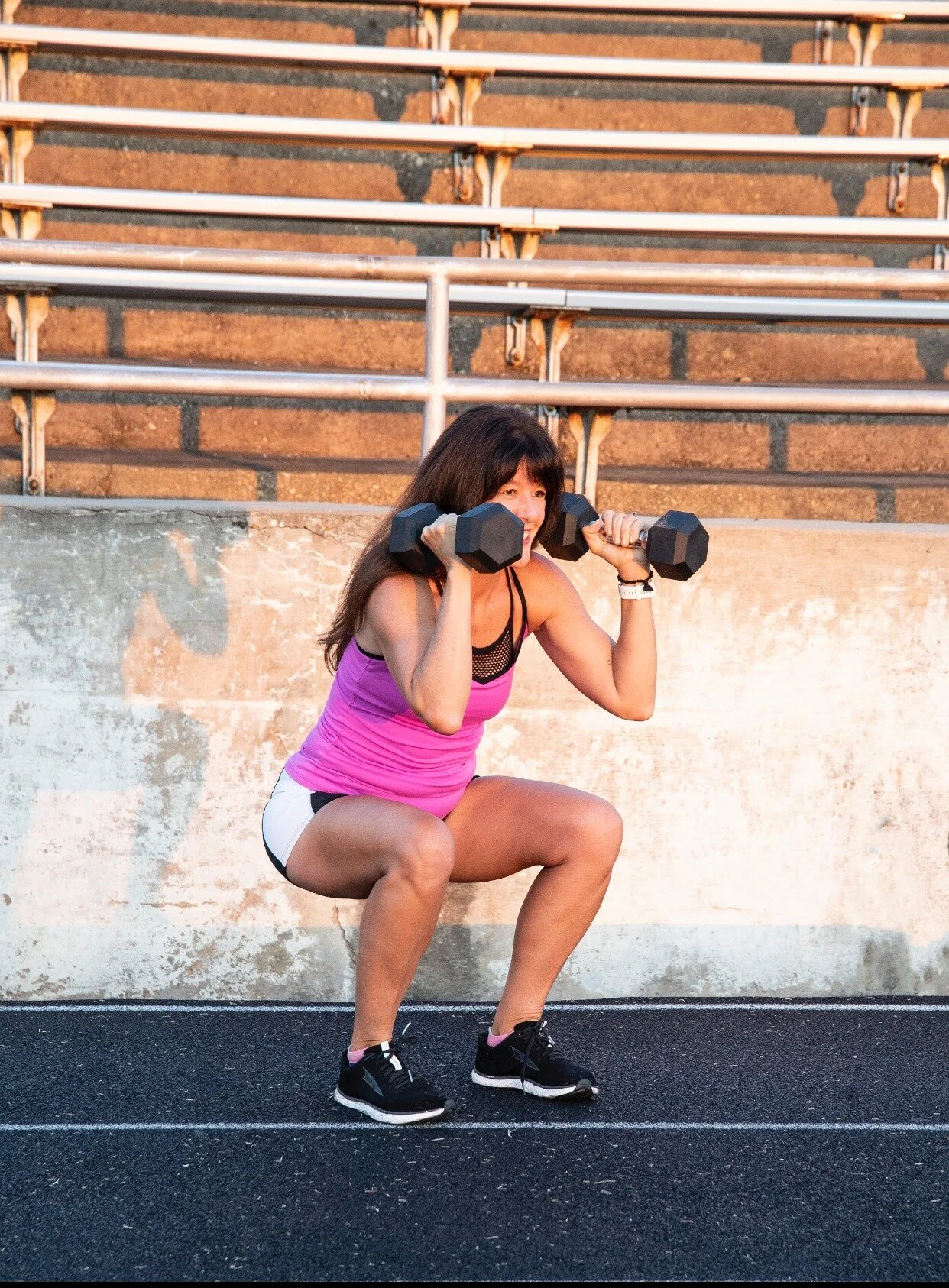
Any time a team gets a first down then you perform 10 squats

PENALTY

One pushup for every penalty yard. 5 yard penalty = 5 pushups

FIELD GOAL

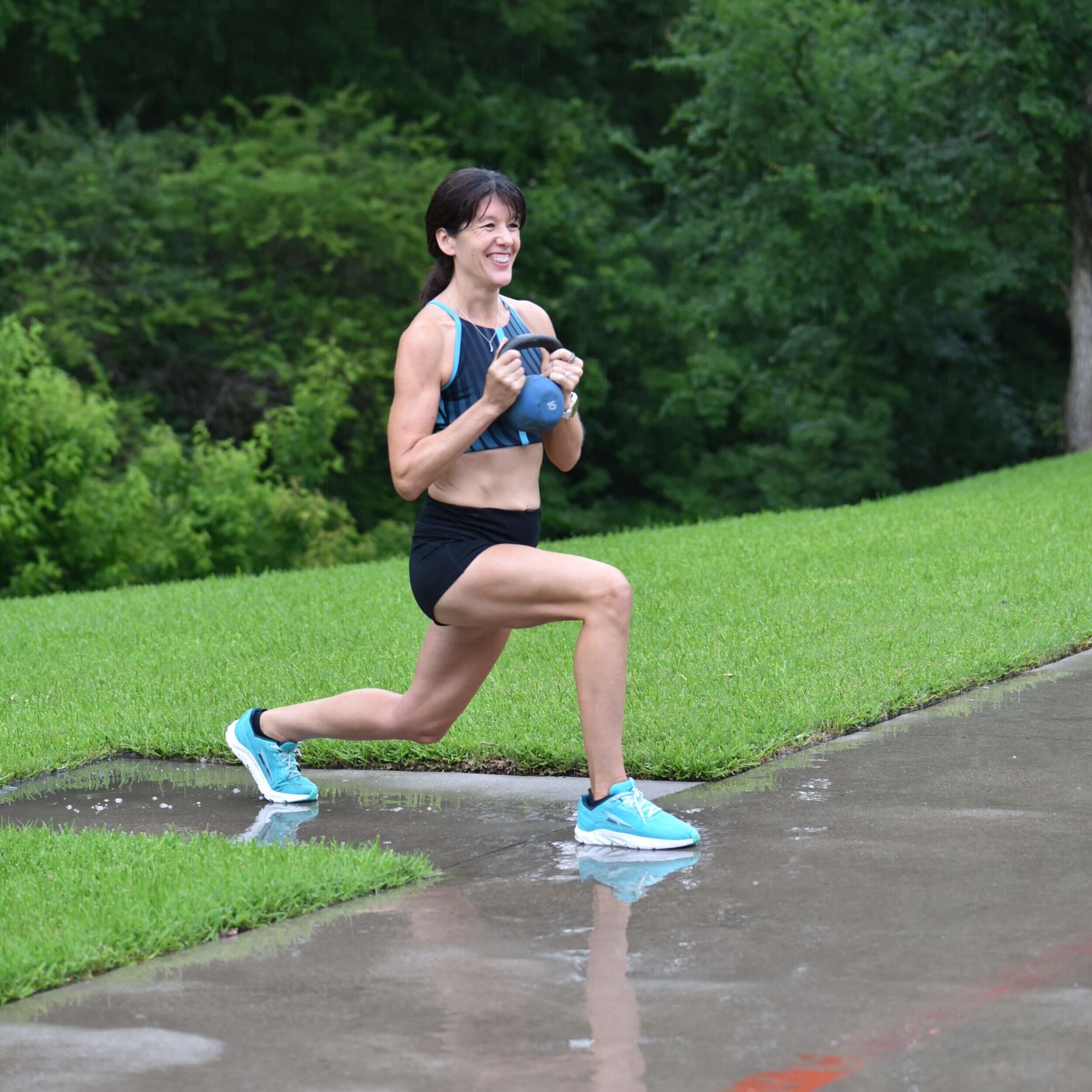
Field goal is worth three points, so let's do three lunges on each leg for every field goal

INTERCEPTION

If there is an interception, pull up a dining room chair (or edge of the couch) and perform 15 chair dips OR as an alternative perform the player's jersey number of jumping jacks. Example: Antonio Brown intercepts the ball, you do 84 jumping jacks. 

TOUCHDOWN

Touchdown is 6 points, so we will do 6 burpees for every touchdown

EXTRA POINT

One minute plank if they kick the extra point or two minutes of jumping jacks if going for two

Let me know how it goes! Who are you rooting for?

Have fun, friends!

Like this post? It helps me when you share or save to Pinterest.


52 Healthy Habits: Week 1 Early to Rise

Welcome to my new series: 52 Healthy habits. This may sound like something I should have started the first week of the year, but I am big believer that making healthy changes, chasing goals and pursuing greatness is something that can start any week or any day, not just during the new year.

It's the fourth week of January, how are your resolutions coming? Most people forget all about their new year's resolutions by March 1st, but I am not going to let that happen. I am going to pursue my goals all year long. 

How do you meet goals? You develop healthy or positive habits. How do you develop healthy habits? You practice them. You commit to them. You make yourself accountable to someone for them.

I already know (from trying to failing) that making a lot of new changes in your life all at once is never an effective strategy, so I am going to tackle 52 healthy habits one week at a time. I plan to build on with a new habit each week. For example, my week one habit is to get up early before work in order to write, blog, workout or work on my business. (I honestly planned on doing this for January 1st but haven't been able to pull it together.) I will focus on this habit for a week and then week two I will work to continue and build on this by adding another habit.

I am not sure yet what the 52 habits will be, but I am sure as the next 52 weeks come and go I will have a lot of opportunity for improvement. I also know that just because I focus on a healthy habit for one week that it will mean it will "stick" for life. I'm just going to do the best I can.

This is an experiment. I am going to try some new things and make some small positive changes. Some of my healthy habits may just be to make my lunch for work the night before instead of rushing around in the morning, or adding more greens to every meal, or increasing my protein intake or reading instead of scrolling social media. This isn't a whole life overhaul but rather an experiment to make small incremental changes that have the potential to snowball into big results.

It's about building consistency, it's about accountability, it's about sustainable healthy habits. 

Up first: The early morning habit. I love getting up early and spending time doing the things that I love before I haul off to my corporate job. Until I don't love it and the warm bed beckons me to shut off the alarm and resign myself to another hour of sleepytime comfort. 

I know that when I write here that I am going to get up at 5:30 and that alarm goes off at the crack of dark thirty, I'll have some accountability to not turn off my alarm clock and go back to bed, because I really don't want to write a post next week telling you that I failed. See how that works? I just created some accountability. Who can you be accountable to?  

I've written a lot about getting up the morning. I've done it successfully in the past and have always felt amazing during those times. It can be hard at first but it is worth it. Especially when I have big goals and dreams to chase.

Will you join me? No matter where you are in your healthy lifestyle journey there is always room for improvement. What small positive healthy habit can you focus on this week? Is it to drink more water? Get outside for some fresh air? Eat one salad a day? Watch less TV? Turn off your cell phone during time with friends/family? Pack a lunch for work? Get 8 hours of sleep? Just choose one small sustainable goal and focus on it for the whole week and let me know how it goes! Here are some ideas to get the creative juices flowing. 


Week 1: Get up at 5:30am to work on my business, blog(s) or to workout. 

Like this post? It helps me when you share!


Coach Lea


Where Should I Run? The Pros and Cons of Common Running Surfaces

When you ask the question "Where should I run?" you should first evaluate your goals. If your goal is to run a road race, you should mostly be training on the road, likewise with trail races. If you have a track meet coming up, it makes sense to practice in the same environment in which you will be performing. With that being said, there are pros and cons to all running surfaces and barring any immediate event, it makes the most sense to vary your running surfaces to help avoid certain repetitive and overuse injuries.

Cement

Running on sidewalks and urban trails, usually made from cement, can be a safe environment for running that is away from the dangers of traffic. 

However, cement surfaces like sidewalks and urban trails are some of the most inflexible surfaces where you can run and can be hard on the joints. There is no shock absorption to reduce the force of impact when your foot hits the ground. Cement can be as much as 10x harder than asphalt.

While cement surfaces may be harder on your body it doesn't mean that you shouldn't run on them. Just be aware of the potential pitfalls and pay close attention to the signals your body sends. If you feel aches and pains give yourself extra rest days and combine with lower impact activities. 

Ashphalt

Asphalt is softer than cement and therefore easier on your joints, so if it is safe to do so, I usually take my running off the sidewalks onto the street, against traffic on low traffic roads. 

While the surface may be softer you may open yourself up to more risk by running on street, even in low traffic areas. You might have to watch out for cars, animals, potholes and running repetitively on a cambered (sloped) road could eventually lead to certain types of running injuries. 

When training for a road race or if roads are most accessible surface for you, leave the headphones at home, pay close attention to your surroundings, run against traffic and change up your route often! 

Track

The track's soft flat surface is easy on the joints and it makes measuring the distance very simple (as each time around the track is 1/4 mile). It is a safe environment away from traffic and you're often in good company with like-minded runners.

However the track isn't ideal for long distance running and running in the same direction around long curves on the track can be hard on the hips and ankles when done repetitively. 

Use the track for shorter speed or interval sessions and take longer runs to the roads or trails if you prefer. 

Treadmill

The treadmill offers shelter from weather, protection from traffic and you have strict control over your pace. It has a soft surface that is easier on the joints than running on cement or asphalt.

To some people the treadmill can feel repetitive and boring and not everyone has access to a treadmill on a regular basis. 

A treadmill is a great tool if you have access to one. Try these boredom busting treadmill workouts to keep things interesting.

Trails

Nature trails offer a soft forgiving surface to run with usually beautiful scenery that is safe away from traffic. Trail running is quiet and can be used as a form of meditation. Trail running can help improve balance and proprioception. 

Depending on the how technical the trails, you may run on uneven ground with loose rocks or gravel which can be dangerous if you fall or twist your ankle. 

The trails are a wonderful place to run, you may need to run at a slower pace to account for an uneven or changing terrain. Run with a friend for safety if the trails are isolated.

Where is your favorite place to run? Do you prefer on one running surface over another? 

Like this post? It helps me when you share or save to Pinterest.


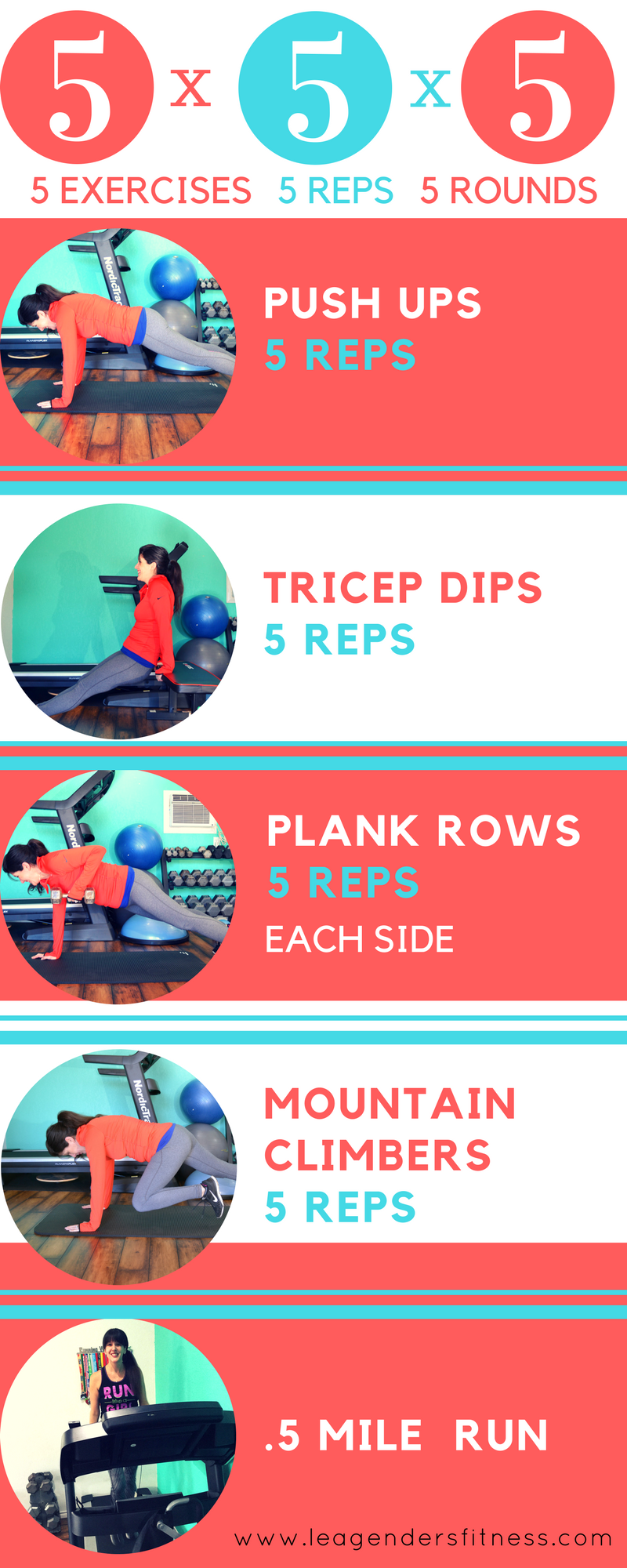
5 x 5 x 5 UPPER BODY WORKOUT 5 EXERCISES | 5 REPS | 5 ROUNDS

Welcome to the latest edition of workout Wednesday! Last week I shared my 5x5x5 Leg Workout, so it seemed only fitting to follow up with the upper body workout version. 

You perform each exercise for 5 reps before moving on to the next exercise without rest. After you complete the five exercises, rest for one minute and repeat the circuit four more times. By the end you will have performed 25 reps of each exercise and ran 2.5 miles. Not too shabby for a strength and running workout!

Set a timer to see how long it takes you get through the five circuits to establish a baseline time frame for future workouts, but you should not rush through the exercises for time. It is more important to perform each exercise with perfect form than it is to complete it quickly. 

5 exercises | 5 reps | 5 rounds

PUSH UPS

Start in a high plank position with your hands placed a little wider than your shoulders. Keeping your body in a straight line, while engaging your core, bend your elbows to lower your chest to the floor. Once in the low position, push back up to the starting position. If this is too challenging, drop to your knees. 

TRICEP DIPS

Position your hands shoulder width apart behind you on a bench. Slide your booty off the front of the bench with your legs extended out in front of you. Keep your elbows close to your sides (don't allow them to flare out) and lower your body toward the floor until your elbows are at about a 90-degree angle while keeping your back close to the bench. From the low position, straighten your elbows to return to the starting position. Keep your shoulders down as you lower and raise your body. If this is too challenging you can bend your legs to modify the exercise.

PLANK ROWS

Start in a high straight arm plank position with your wrists directly under your shoulders with your legs wider than hip width for stability. Keep your body in a straight line from your shoulders to ankles while engaging your core. Do not allow your hips to hike up or sag down.

With your core tight and your glutes engaged lift your right elbow to row as you bend your elbow up toward the ceiling. Keep your elbows close to your side, do not allow them to flare out. Do 5 reps on each side before moving on to the next exercise. I am using a 12 lb weight here  (affiliate link) but you could do this same movement without any weight.

plank rows.gif


MOUNTAIN CLIMBERS

Let's work that core! Start in a high straight arm plank position with your wrists directly under your shoulders with your legs wider than hip width for stability. Keep your body in a straight line from your shoulders to ankles while engaging your core. Do not allow your hips to hike up or sag down. Quickly bring your right leg, then your left leg in to touch your elbows. Right leg, left leg = one rep. 

5 MILE RUN

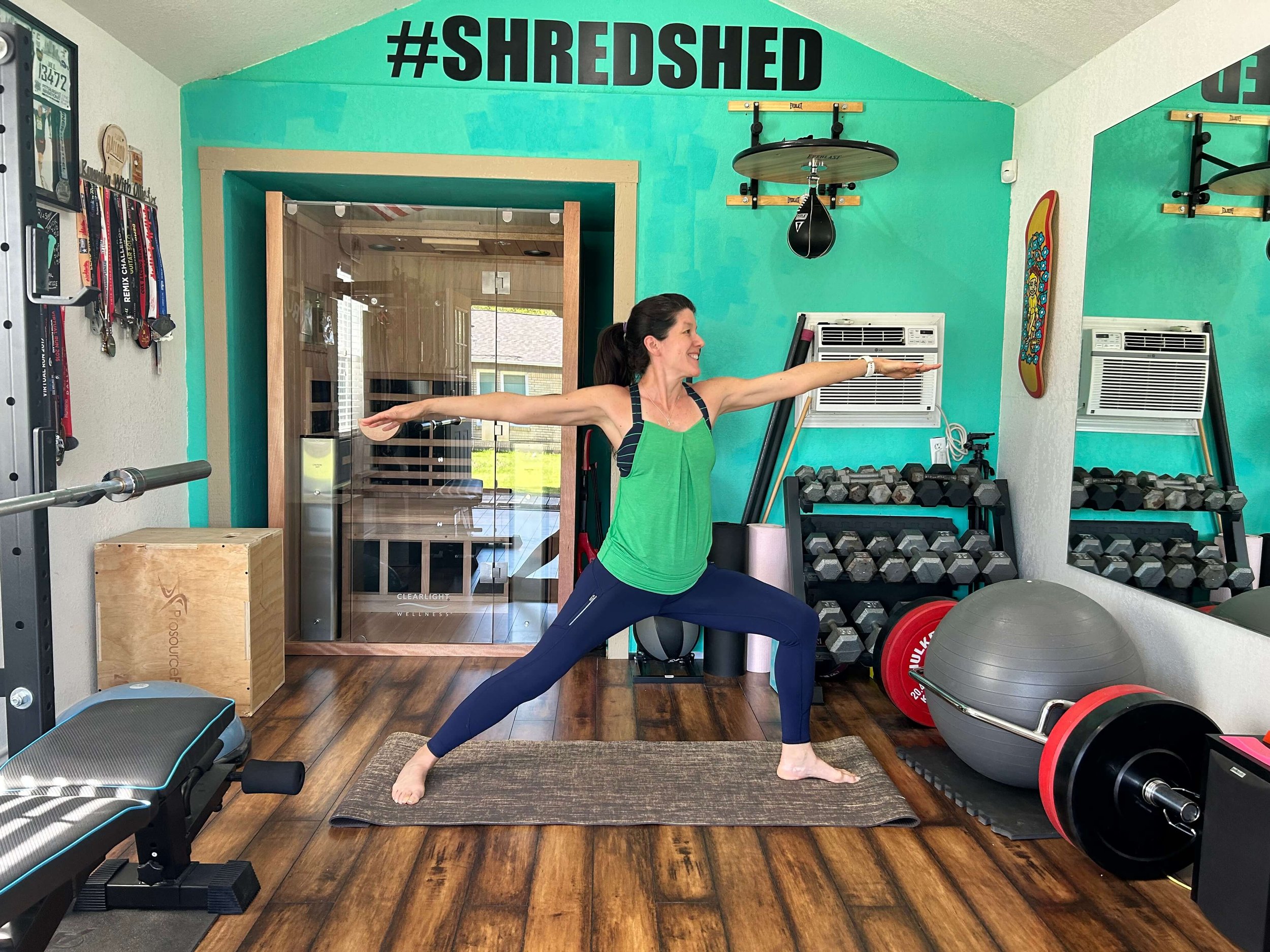
You can do the .5 mile run on a treadmill (like I do in the #shredshed), at the track (like we might do at boot camp) or on the street. If you decide to run on the streets you can measure the distance using a running app or in your car. The pace of your .5 mile run should be comfortably hard, this means you should be pushing your pace slightly outside your comfort zone (not a leisurely jog) but also not going all-out 100%. 

Give it a try and let me know what you think!

Like this post? It helps me when you share or save to Pinterest

WHAT I'M WEARING 

These are affiliate links which means if you make a purchase, I make a small commission with no extra cost to you. This helps support the running (pun intended) of this blog.

Nike Women's Pro Warm Up Zip Long Sleeve Shirt


Hot Tips for Cold Weather Running

I live in Texas so my window of opportunity to write about cold weather running is limited. Last week we had a 30 degree day and a 70 degree day. I pulled out my gloves and hat, only to quickly put them away again. While the weather here is fickle, it does get cold.

I moved to Texas from Pennsylvania largely to get away from the snow and ice. I was 23 at the time and I had just about enough to shoveling the snow out from under my tires, my car locks freezing over and icy road conditions. They don't close the schools and businesses for a drop of snow (or 5 feet) like they do here. You just have to deal with it.

Before I moved here I didn't realize it snowed in Texas. I thought that because it was a southern state, like Florida, that it didn't snow. I was wrong. Obviously we don't get the snow like up north, but it still snows nonetheless. If I would have known it snowed in Texas I may have decided to move somewhere else. Good thing I was fooled because if I didn't move here, I would never have met my husband.

Despite the fact that there is snow in Texas and the temperature can drop quite low, I still want to keep running. I take it indoors on the treadmill all the time, but I prefer to run outdoors, so I try to make it work outside when it is safe to do so.  

1. Dress in Layers

The rule of thumb is to dress for 10-20 degrees warmer than the current temperature, because once you start running, you will warm up considerably. Ideally you would dress in layers. A long sleeve synthetic (aka not cotton) base layer, a warmer zip up on top and if really cold a third layer. You can always remove layers as you go if you get too hot once you start running.

2. Head, Fingers, Knees and Toes

It sounds like a children's song: Head, Fingers, Knees and Toes, but it is a good reminder to cover all exposed skin. We lose heat from our extremities so a hat and gloves go a long way in keeping us warm. For cold and windy days, I like a wear a neck gaiter (either attached to a top or a separate piece) to cover my mouth and nose. 

3. Wear Fitted Clothing

You want to wear clothes that provide both insulation and breathability. Fitted clothing keeps the cold air from creeping in under your clothes. You can layer loose fitting clothes over your first fitted layer.  

4. Avoid cotton socks

Cotton absorbs water and can provide an unfavorable environment for your feet when you sweat. To keep your feet dry and blister free look for socks made from synthetic materials that help wick moisture away from the skin. 

5. Hydrate

It may seem like you don't need to hydrate as much much it is cold but it is just as important as in warm weather running. Hydrate early and often during cold weather runs, just like you would in the heat. 

6. Warm up Indoors

Take five to ten minute and warm up indoors before heading out for a cold weather run. You want to get the blood flowing to your muscles in preparation for your workout. Some jumping jacks, high knees and butt kicks (dynamic stretches) should do the trick. If you like Yoga, also try a few sun salutations to get those muscles warmed up before your run. It may take a little longer to warm up in extremely cold weather so it is important to warm up indoors to prevent injury.

7. Prepare Mentally

Running in cold weather can be uncomfortable, but preparing for it mentally can make it more bearable and make you stronger. I look at it as another opportunity to practice stepping outside my comfort zone. You are building mental toughness (as well as physical toughness) every time you hit the road in uncomfortable situations. Mental toughness is a skill that transcends far beyond your running journey.

Of course, I recommend common sense. In extremely cold, icy or snowy conditions, take your run indoors, schedule a rest day or do some other physical activity inside. Be safe, friends!

Do you run in the cold, take it to the treadmill or take time off until Spring? Will a little preparation, you can run outdoors all winter long! 

Like this post? It helps me when you share or save to Pinterest.