10 Healthy Habits for the Office-Dweller

Working 8-5? It can feel hard to stay healthy and active when you live in cubicle-land for eight hours a day but these easy tips will help you build healthy habits while at the office. Try tackling just one or two at a time at first. Once you've established a healthy habit then build on it with something new. Before you know it all these healthy habits will be second nature. 

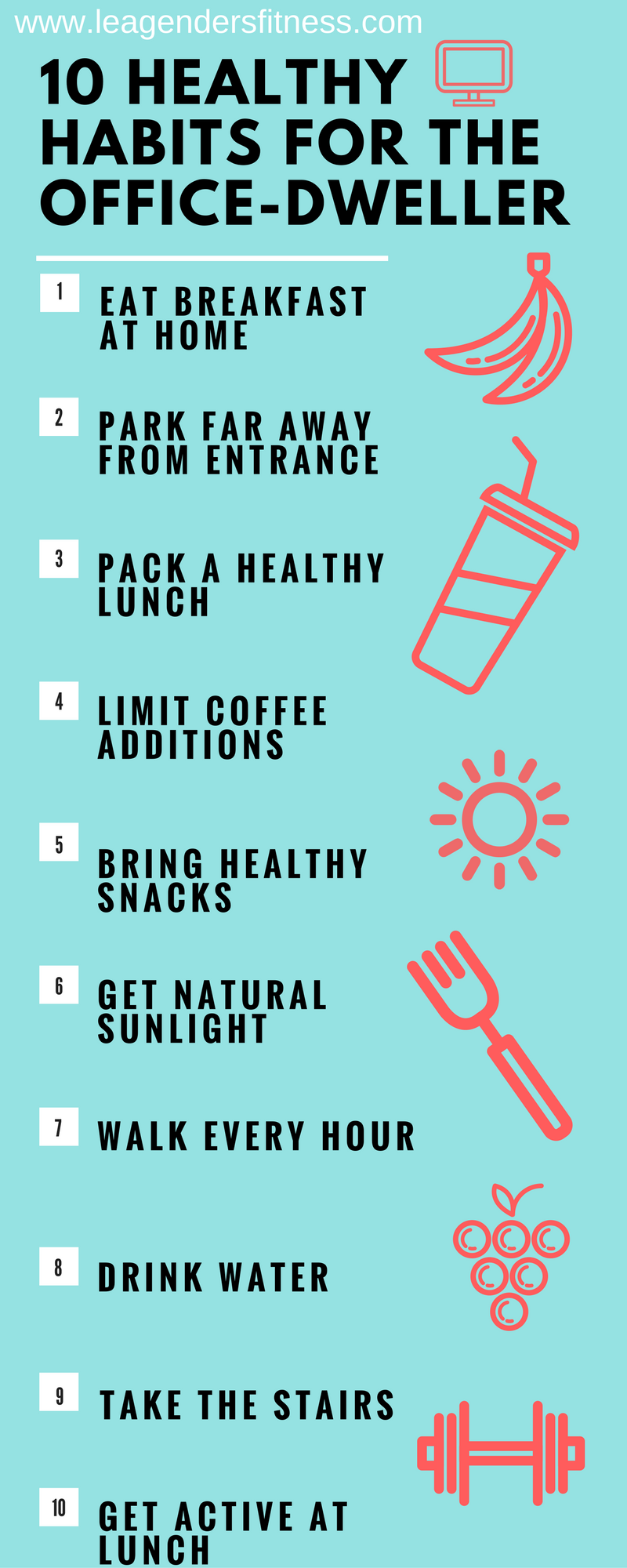
10 HEALTHY HABITS FOR THE OFFICE-DWELLER

EAT BREAKFAST AT HOME

Starting your day off on the right foot often starts with your first meal of the day. Eating a healthful breakfast at home before leaving for work can help limit the temptation of a drive-through breakfast or office donuts. I like to eat eggs and a banana each morning, so when my co-workers start texting on their drive in "Anyone want anything from McDonald's?" It is always easy for me to say "no, thank you." If you don't have time to eat breakfast at home, try making it at home and bringing it to the office to eat later. 

PARK FAR AWAY FROM THE ENTRANCE

Start your healthy habits at the beginning of your work day by parking your car as far away from the entrance as reasonably possible. Getting a few extra steps in the morning (and throughout the day) starts your day off on the right foot. Pun intended.

PACK A HEALTHY LUNCH

I make and pack a salad from home every day. It is healthy, portion-controlled and delicious. I know that no matter what else I end up eating that day, at least I had a big healthy salad packed with vegetables and protein (usually chicken) for lunch. It helps eliminate temptation of high calorie or unhealthy lunches, saves money and establishes a healthy routine. 

LIMIT THE COFFEE ADDITIONS

Be aware of the additions to your morning coffee. You may feel a boost from the caffeine, but adding sugar, creamers and/or flavor shots add empty calories often uncounted calories to your meal. I like my coffee like I like my clothing, black. 

BRING HEALTHY SNACKS TO AVOID THE VENDING MACHINE

Visiting the vending machine can be a bad habit. If you pack healthy snack alternatives, you may never have to visit the vending machine again. Almonds, Pistachios, cheese, grapes, carrots, hummus, low sugar yogurt, cottage cheese, berries, oranges, apples and natural peanut butter are all good healthy snack options for the office. 

GET NATURAL SUNLIGHT 

Are you under the florescent lights all day? Get up and walk outside at least once a day, more if possible. I'm not suggesting you hang out there all day (unless your boss gives the thumbs up), just try to get a couple of quick doses of natural sunlight throughout the day. 

GET UP EVERY HOUR FOR A QUICK WALK

Every hour on the hour I try to get up a take a quick lap around the office. I multi-task by going to see co-workers in their office instead of emailing or calling them. Get up and move around as much as possible. It's good for your mind, body and overall well-being. 

REFILL A WATER BOTTLE

I fill my water bottle in the morning and I'll inevitably have to get up again and use the bathroom. I refill and the cycle continues. Use a restroom on another floor to get moving around a little more than usual. Refill throughout the day to stay hydrated. 

TAKE THE STAIRS

Whenever possible, take the stairs instead of the elevator. Every step counts. I'm pun-tastic today.

GET ACTIVE AT LUNCH

Ever heard of a RUNch? It is run on your lunch break. If you can't run, then walk. If you can't walk, then stretch. Take advantage of your limited free time and get active for at least part of your lunch break. Try to recruit co-workers to get active with you.

I know from my own office experiences that sometimes stress, deadlines, pressure and heavy workloads can make some days fly by in a blur, but if you establish healthy habits in your day it can help you manage stress, think more clearly and improve productivity.

Are you working on establishing healthy habits at the office? Can I help? What works for you? Any questions? Let me know in the comments!
PIN ME

PIN ME

Like this post? It helps me when you share!
 

Coach Lea

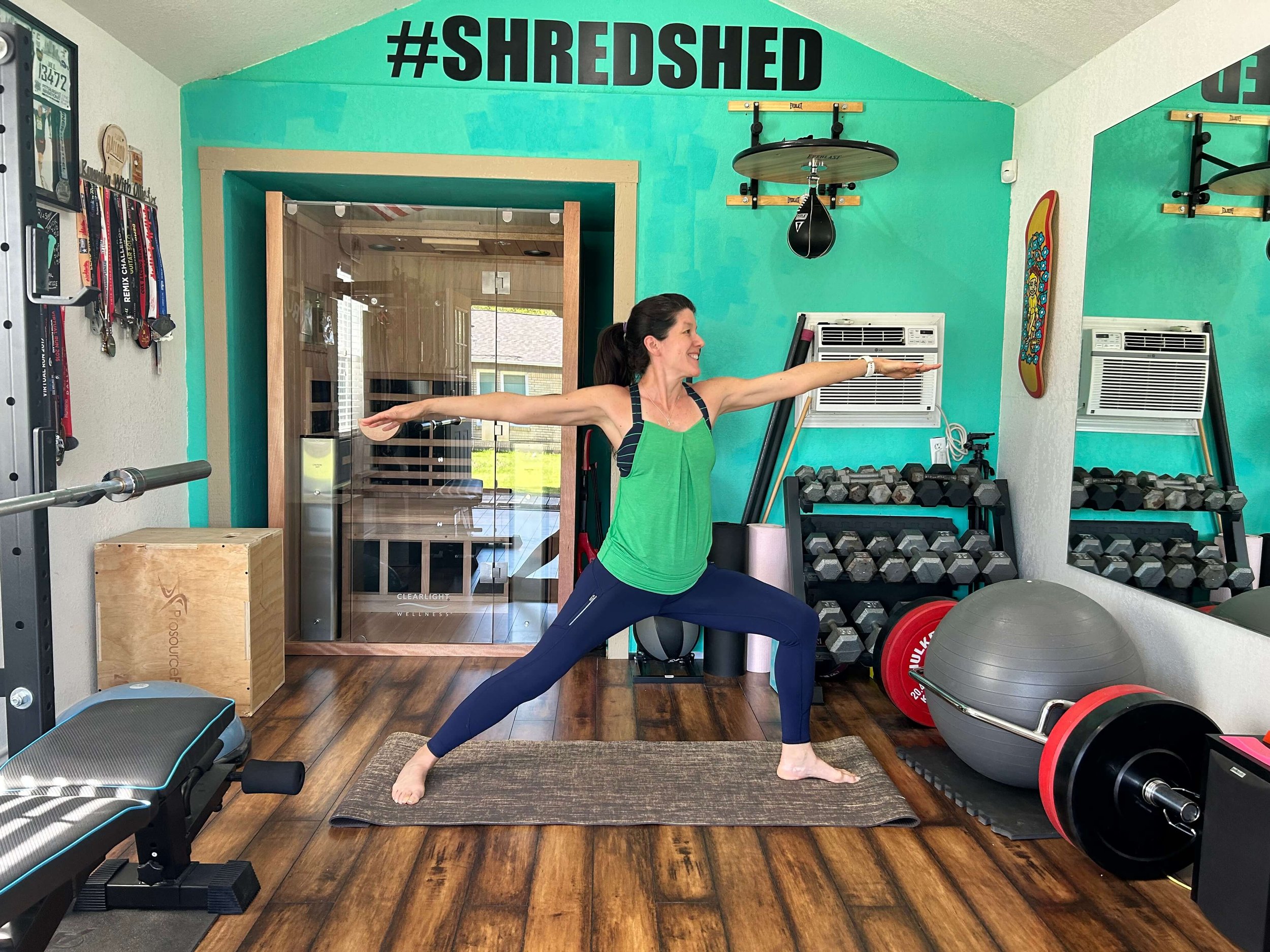
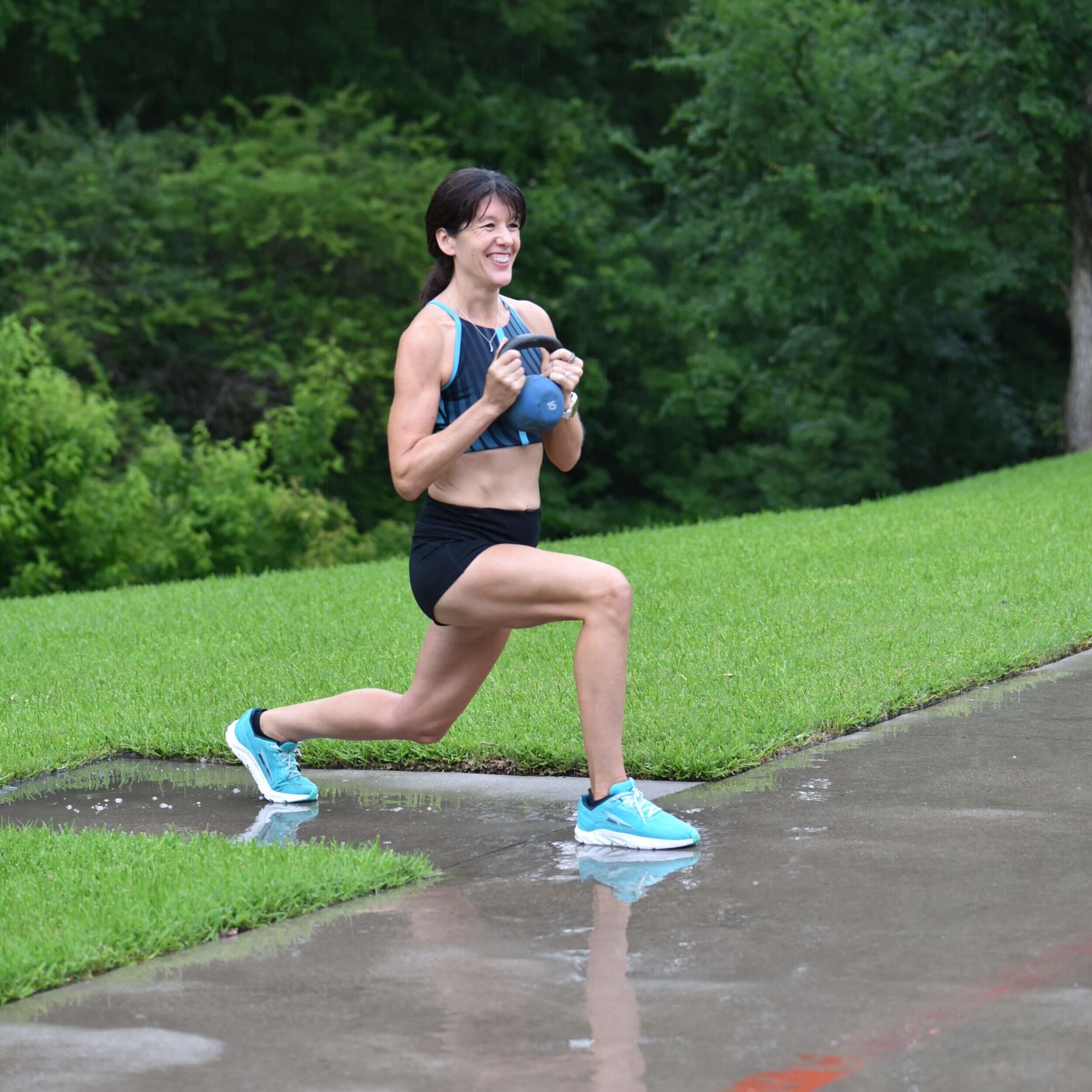
I am a NASM personal trainer and RRCA adult distance running coach that specializes in strength training for runners. I offer in-person training in the Shredshed, online training and Fit to Run bootcamps. If you are interested in a more in-depth running or strength training plan, please contact me. Have questions? I'd love to help. 

While I am a certified personal trainer, I am not your personal trainer. Since I don't know your exercise abilities, injury background or medical history, please see your doctor before beginning any new exercise program.

How to Banish Shin Splints Forever

No one ever said "You're a pain in the shin!" but they should, because it seems to me that shin pain (aka spin splints) are much more common and annoying than a pain in the butt.

I know the feeling. You start running (or start running again), everything is going fine but then you're sidelined by shin splints. It is a very common problem among new runners, but luckily one that is easily treatable. The medical name for spin splits is Tibial Stress Syndrome and while they are metaphorically a pain in the butt, they are literally a pain in the shins. Shin splints are a result of inflammation in the muscle tissue in the front of your leg, generally from overuse or too-much-too-soon.

If you experience mild to moderate discomfort in the shin area when running, you may be experiencing shin splints. Here are a few things you can do to help reduce pain so you can get back to running. Everyone is different, so if you are not improving or the pain gets worse, please see your doctor. You may have a stress fracture or other condition more serious than shin splints. Please don't read blogs for medical advice.

REST

The first step to healing your shin splints is to rest to allow your shins to heal. Low impact cross training like swimming or biking are your best bets to keep up your cardio fitness while you heal.

ICE

Ice your shins to help reduce inflammation. Try icing for 30 minutes on/30 minutes off multiple times throughout the day. 

COMPRESSION

Compression can help circulate blood flow and stimulate healing. Calf sleeves or compression socks while resting is a good place to start.

STRENGTHEN

Try this exercise to build strength around the shin bone.

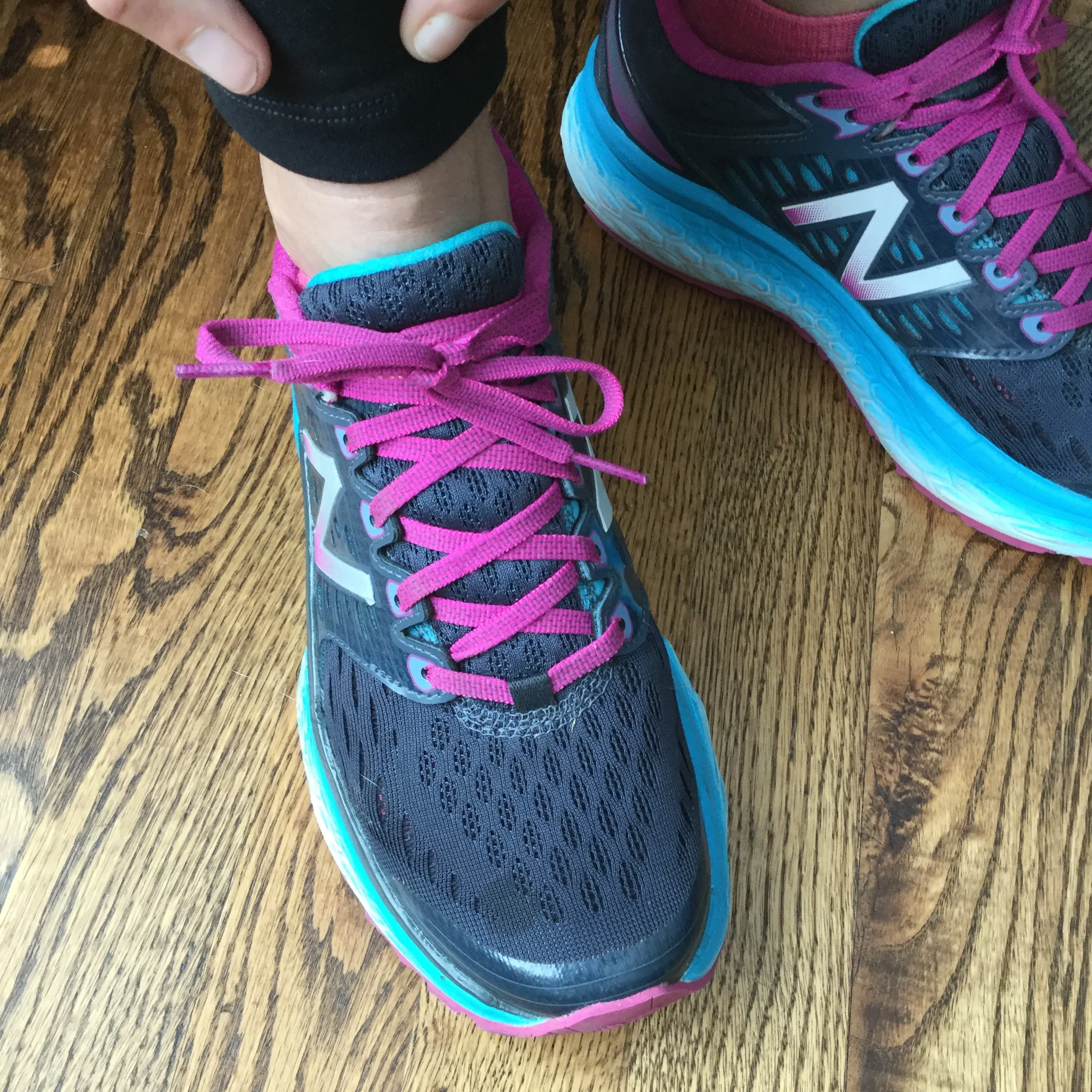
With bare feet place your heel on the edge of a step or curb with your foot hanging off the edge. With your legs straight, point your toes as far down as you can, then point your toes up as far as you can, repeat rapidly for 30 seconds.

Now bend your knees at a 45 degree angle (about half way to a full squat) and repeat the same thing with bent knees.

Rest for 1 minute

Repeat two more times

Repeat every day

Struggling with shin splints? Have questions? Leave them in the comments or be a part of my new series "Ask the Trainer" and have your questions answered in a future blog post.

Like this post? It helps me when you share.


Coach Lea

I am a NASM personal trainer and RRCA adult distance running coach that specializes in strength training for runners. I offer in-person training in the Shredshed, online training and Fit to Run bootcamps. If you are interested in a more in-depth running or strength training plan, please contact me. Have questions? I'd love to help. 

While I am a certified personal trainer, I am not your personal trainer. Since I don't know your exercise abilities, injury background or medical history, please see your doctor before beginning any new exercise program.


Running A-to-Z: U is for Uphill - Tips for Uphill Running

Welcome to another edition of Running A-to-Z where each week I cover a running-related topic following the order of the alphabet. This week we are on letter U: Uphill Running because hill running is a great addition to any runner's training schedule. If you have not yet incorporated hill running into your training, I challenge you to add one day a week of hill training to improve strength, speed and efficiency. 


WHAT YOU NEED TO KNOW START RUNNING HILLS

FORM

Keep your chest and head up with your shoulders back, eyes looking forward (not at the ground). Keep your hands loose (imagine holding a potato chip between your thumb and pointer finger). Pump your arms at a 90 degree angle and do not allow them to cross over the front of the body. Imagine that there is a rope tied to your waist pulling you towards the top of the hill. 

SPEED

Start the hill at a relaxed pace, gradually increasing speed as your reach the crest of the hill. It's important to start slow and build up speed over time. The first few times it may be enough to just jog up the hill. Trust me, you'll feel the change in intensity compared to jogging on flat ground. Over time you can increase speed as you improve.

RECOVERY

Recover fully between repetitions. This may mean walking back down to the bottom of the hill and waiting until your breath is recovered before starting your next hill repeat. 

Always allow at least 48 hours between hard workouts. Never do hill repeats on back to back days. Your body repairs, adapts and grows stronger during rest (not during the workout), so it is important to allow it the proper recovery time. 

REPETITIONS

Start with three or four hill repetitions. You should always finish with feeling like you could do one more rep if your mean 'ol Coach asked you to. You can add more repetitions as you get stronger over time. 

PROGRESSION

There are several ways to progress your hill training. You can find a steeper or longer hill, you can increase the number of repeats, you can increase your pace or you can decrease your recovery time. Progression can be tricky. As you get stronger you want to make sure that find new ways to keep it challenging or else your body will adapt and you will stop improving.

However, it is important not to push progression beyond your current fitness levels or else you risk injury, overtraining and burnout. Start slow and progress slowly over time. Listen closely to your body and always allow proper recovery. 

Are you ready to tackle those hills?

Have questions? Leave them in the comments or be a part of my new series "Ask the Trainer" and have your questions answered in a future blog post.

Like this post? It helps me when you share.

Coach Lea

I am a NASM personal trainer and RRCA adult distance running coach that specializes in strength training for runners. I offer in-person training in the Shredshed, online training and Fit to Run bootcamps. If you are interested in a more in-depth running or strength training plan, please contact me. Have questions? I'd love to help. 

While I am a certified personal trainer, I am not your personal trainer. Since I don't know your exercise abilities, injury background or medical history, please see your doctor before beginning any new exercise program.


Interval Track Workout to Increase Speed

Welcome to another edition of Workout Wednesday! A few weeks ago I wrote a post called types of running workouts to increase speed and I received some feedback that while it was interesting to learn about the types of workouts, people were looking for the specific workouts they could do to increase speed. 

It is hard to provide general interval training plans for people that I don't know. As a running coach, I develop training plans based on my client's current abilities, while keeping in mind their specific goals and limitations. 

It is challenging to assign specific running paces to use for intervals on the internet. One pace would be much too easy for some runners and much too challenging for others. Trying to run at an arbitrary pace because a blog post told you to can lead to injury, overtraining and burnout. AKA don't do it. 

I can get around this limitation by providing paces based on your current 5K pace. This way everyone can work at their own level based on a recently timed race. Have you ran a 5K recently? If not, just map out 3.1 miles on the road and record the time it takes you to complete. Run this 5K as you would an actual 5K race, moderately faster than what is comfortable. It shouldn't be a light easy jog and it shouldn't be an all-out effort run. The sweet spot is somewhere in the middle. Once you have established your current 5K pace, you'll be able to determine the appropriate pace to run each interval. It is important to run based on your current 5K pace, not a 5K race you ran 3 years ago and not the 5K pace you hope to run one day. You should only increase your interval paces when your 5k pace proves to be faster. Got it? 

THE TRACK

Track workouts are often described in meters which can be confusing to those of us who are used to measuring distance in miles. The track makes it very easy to measure distance in meters. You just need to count your laps:

200 meters is 1/2 lap of the track (one straight and one curve). It equals 1/8 mile.

400 meters is one lap around the track. It is equals 1/4 mile.

800 meters is two laps around the track. It equals 1/2 miles.

1600 meters is four laps around the track. It equals 1 mile.

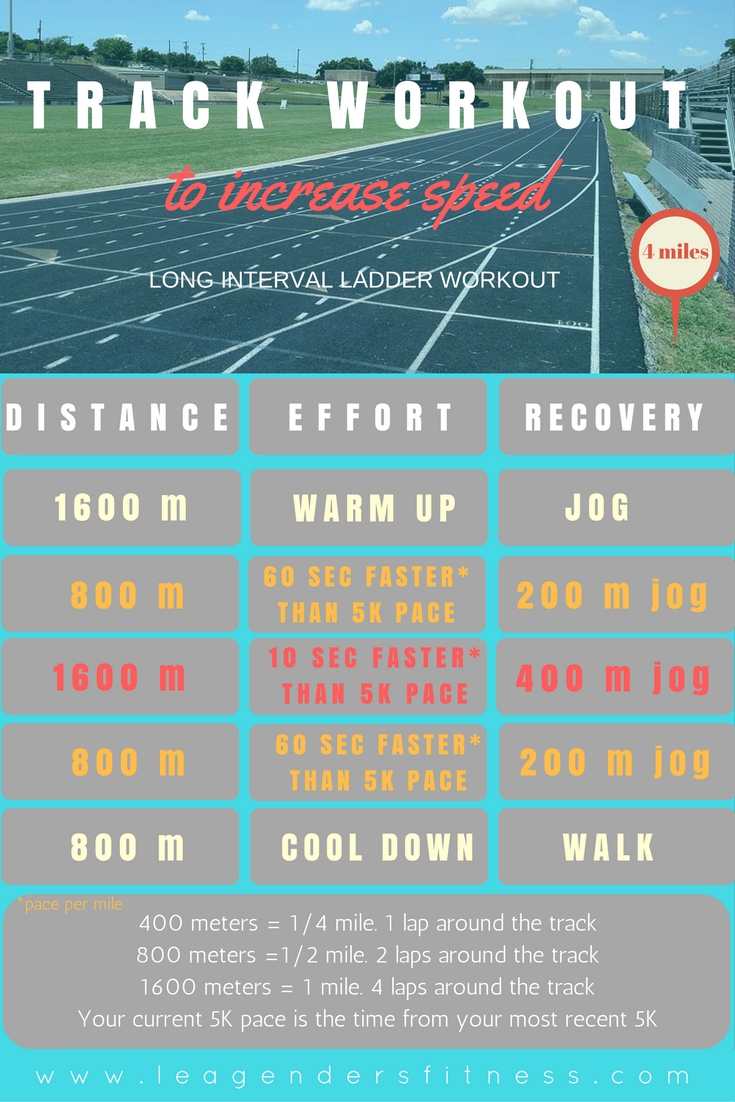
Warm up by jogging for 1600 meters (1 mile / 4 laps around the track).

Once warmed up run 800 meters (1/2 mile / 2 laps around the track) 45-60 seconds faster than 5K pace. If your last 5K was at 10.00 minute mile pace (finished in 31 minutes), you would run this interval at a 9 to 9:15 minute mile (approx 4.5 minutes for 2 laps).

It’s easy. Take your current 5K pace per mile then subtract 45-60 seconds to determine your first interval pace.
— calculating your interval pace


Jog or walk 200 meters (1/8 mile / 1/2 lap around the track) to recover.

Run 1600 meters (1 mile / 4 laps around the track) 10-12 seconds faster than your current 5K pace. If your last 5K was a 10 minute mile (finished in 31 minutes), you would run this interval at 9:48-9:50 per mile

Take your current 5K pace then subtract 10-12 seconds to determine your long interval pace.
— calculating your long interval pace

Jog or walk 400 meters (1/4 mile / 1 lap around the track) to recover.

Run 800 meters (1/2 mile / 2 laps around the track) 45-60 seconds faster than 5K pace. If your last 5K was at 10.00 minute mile pace (finished in 31 minutes), you would run this interval at a 9 to 9:15 minute mile (approx 4.5 minutes for 2 laps).

Jog 400 meters then walk 400 meters to recover and cool down.

That's four miles! You should complete this workout feeling fatigued but also feeling like you could do one more interval if your mean 'ol coach asked you to do it. 

I recommend no more than 2 or 3 speed workouts per week for experienced runners and 1-2 for new runners. Always start with a solid running base of 20 miles per week of easy runs for at least 4-6 weeks before beginning any interval training. Always take a rest day or very easy run the day after a hard interval workout. Run your hard runs hards and your easy runs easy. Remember that adaptation to exercise (i.e. getting stronger/faster) happens during rest, not during the workout. Allow your body the time to recover, rebuild and get faster. Aim for 7-8 hours of sleep each night, fuel your body with mostly foods from nature, eat plenty of protein and carbs and you'll be set up for success.

Wondering about track etiquette? Check out my latest Running A-to-Z post about track etiquette. Don't make these mistakes when running on a track. 

Have questions? Confused? Need clarification? Leave your questions in the comments or be a part of my new series "Ask the Trainer" and have your questions answered in a future blog post.

Like this post? It helps me when you share. 


Coach Lea

I am a NASM personal trainer and RRCA adult distance running coach that specializes in strength training for runners. I offer in-person training in the Shredshed, online training and Fit to Run bootcamps. If you are interested in a more in-depth running or strength training plan, please contact me. Have questions? I'd love to help. 

While I am a certified personal trainer, I am not your personal trainer. Since I don't know your exercise abilities, injury background or medical history, please see your doctor before beginning any new exercise program.