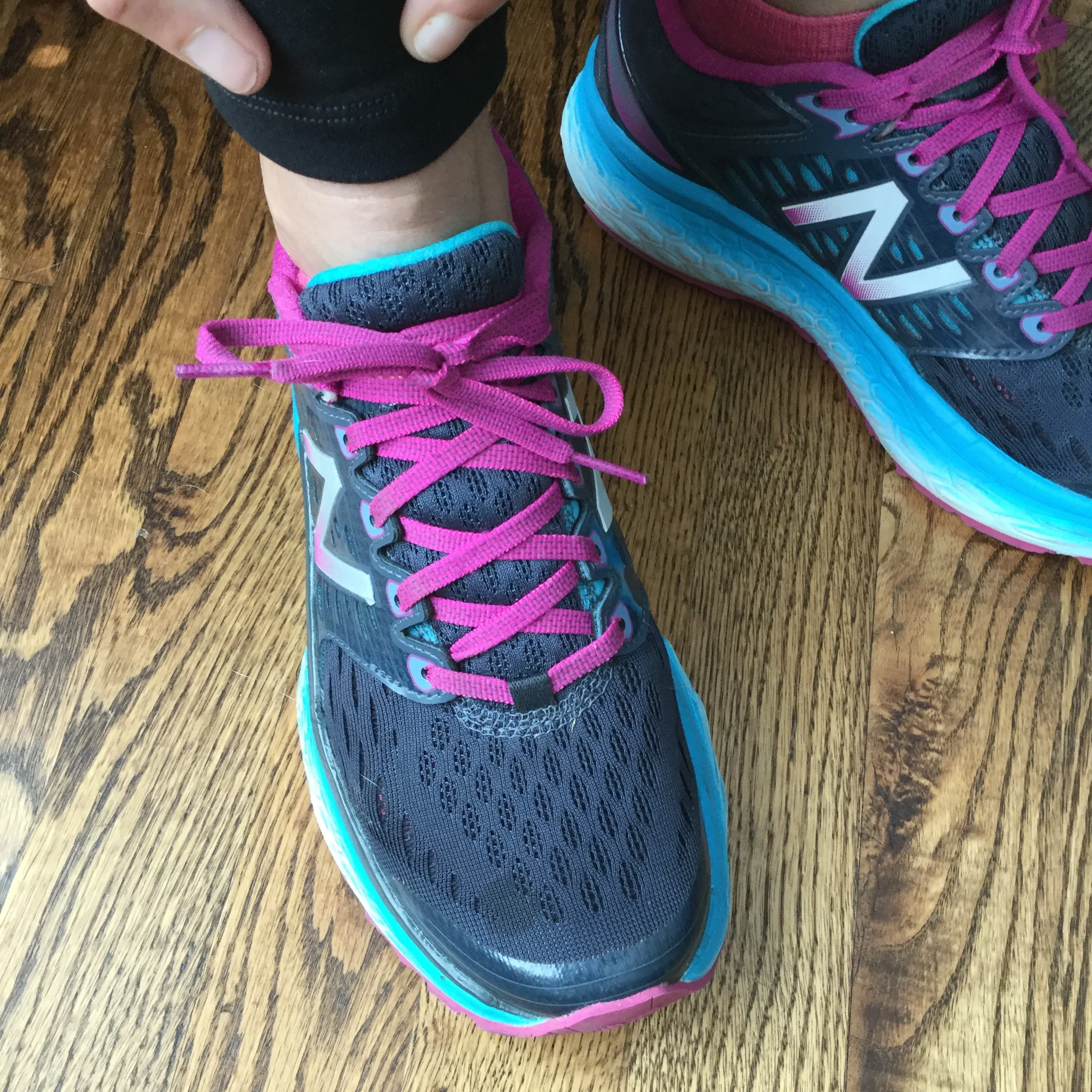
How to Tie Your Running Shoes for Ankle Support and Blister

Hi, Friends! Today I have a quick video on how to tie your running shoes. I know what you might be thinking...

"Geez, Lea, I may not be an expert in running, but I've been tying my shoes since I was three; I think I have that part covered."

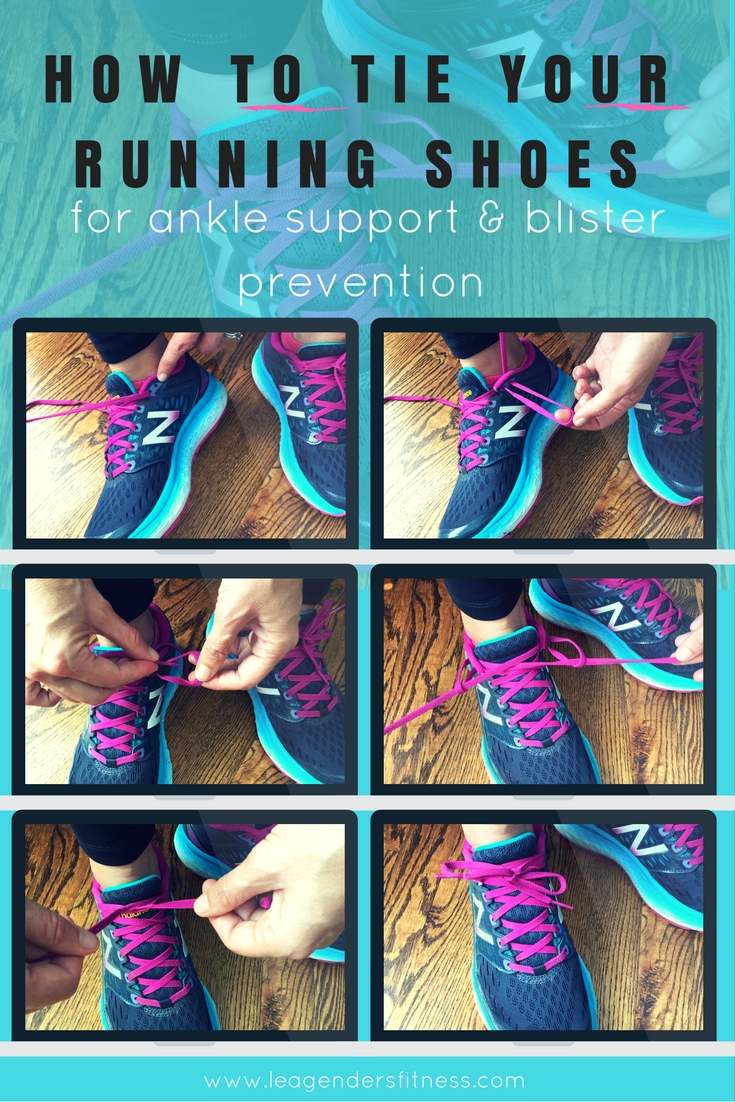
Stay with me. I will show you how to tie your running shoes for better ankle support and to avoid blisters. This technique is called a "heel lock."

How to tie your running shoes for better ankle support and blister prevention

How to tie your running shoes for better ankle support and blister prevention

Ever wonder what that extra hole is for on your running shoes? Watch my short video for an explanation and demonstration on how to tie your running shoes. Watch for a special appearance by the beloved internet sensation, Ollie!

Try it out and let me know how it works for you!

Any questions? Let me know in the comments.

LIke this post? It helps me when you share!
 

Body Weight Boot Camp: Rep Pyramid Workout

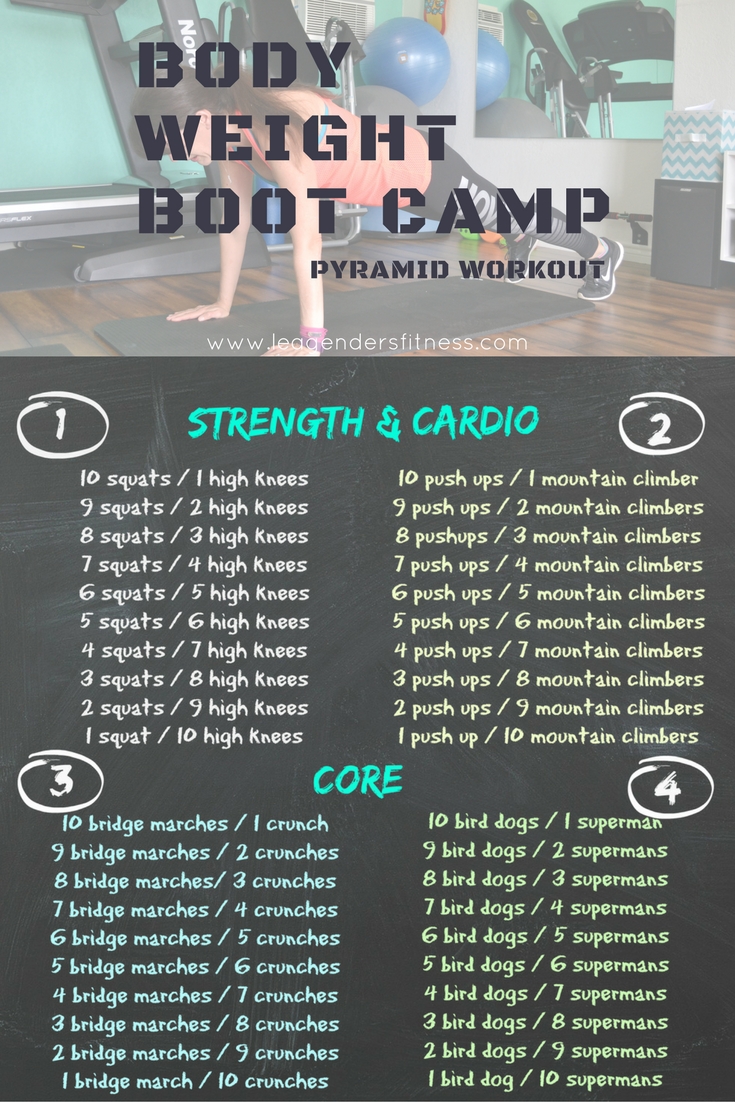
Welcome to the latest edition of workout Wednesday! I am excited to share a great rep-based pyramid workout for you today. This is a high intensity full body workout that you can do anywhere with no equipment. 

Ready to get started? Always warm up before beginning an intense workout. 

CIRCUIT #1: LOWER BODY STRENGTH & CARDIO

The first circuit is a lower body strength and cardio workout. You will perform 10 squats immediately followed by 1 rep of high knees (right up, left up = 1 rep). Without resting, perform 9 squats and 2 high knees, followed by 8 squats and 3 high knees and so on until you reach one squat and 10 high knees. Rest for at least one minute or until you are recovered before moving on the next circuit. 

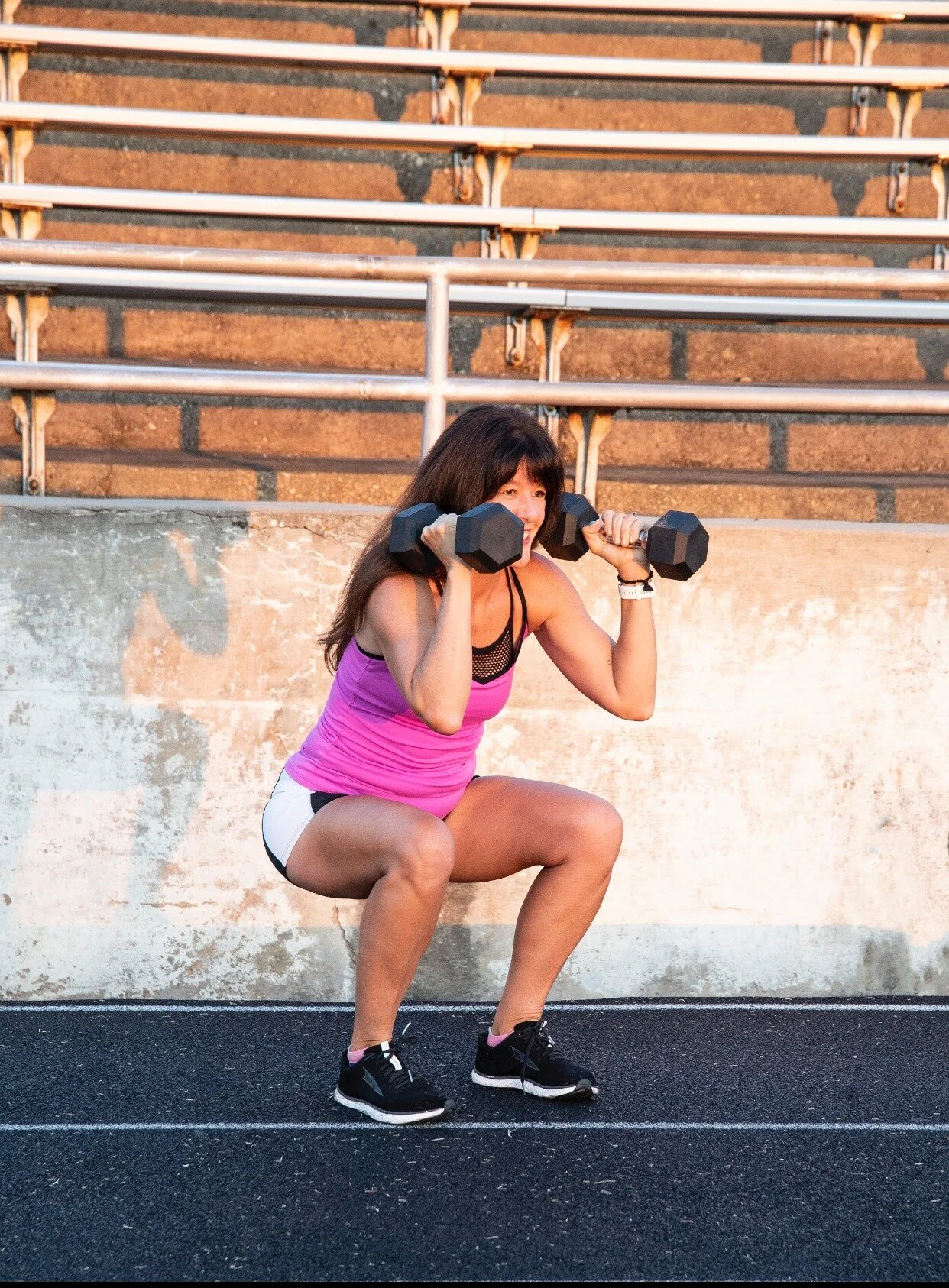
Squat: Starting with your feet hip width apart, your toes pointing forward and your back straight, push your hips back and lower your body until your thighs are parallel to the floor (or as low as your flexibility allows) like you are sitting in a chair. In the low position engage your core, squeeze your glutes and push up to standing while putting your weight into your heels. 

High Knees: Stand up straight with the feet hip width apart. Jump from one foot to the other while using your core to lift your knee to hip height. Swing your arms with each rep. Touch the ground with the balls of your feet quickly moving back and forth between legs.

CIRCUIT #2: UPPER BODY STRENGTH & CARDIO

The second circuit follows the same format as the first. Start with 10 push ups followed by 1 mountain climber (right leg in, left leg in = 1 rep). Then move on to 9 push ups and 2 mountain climbers, 8 push ups and 3 mountain climbers until you reach 1 push up and 10 mountain climbers. Rest until recovered.

Pushups: Start in a high plank position with your hands placed directly under your shoulders. Keeping your body in a straight line, while engaging your core bend your elbows to slowly lower your chest to the floor. Once in the low position, push back up to the starting position. If this is too challenging, drop to your knees. 

Mountain Climbers: Start in a straight arm plank position with shoulders directly over wrists. Step one foot up in line with hip, then step back to plank position then repeat with opposite foot. This is one rep. Move as quickly as possible while keeping your core engaged and back straight.

CIRCUIT #3: CORE 

Let's start the second half of the workout with some core work that includes your abs and glutes. Start with 10 bridge marches (right leg, left leg = 1 rep) followed by 1 crunch. Follow the rep pyramid until you reach 1 bridge march and 10 crunches. Rest until recovered before moving on to the last circuit.

Bridge Marches: Lie on your back with your knees bent 90 degrees and lift your hips off the floor to form a straight line from your knees to your shoulders. With your hips off the floor bring your knees in towards your chest one at a time to march. March on the right leg then left leg equals one rep. 

Crunches: Lying on your back push your lower back into the floor, place your hands behind your head (do not pull) and lift your shoulders and chest up off the floor into a crunch. Pause for 1 second in top position while engaging your entire core before lowering back to the ground. 

CIRCUIT #4: CORE

Last but not least we have bird dogs and supermans for core work that includes abs, glutes and lower back. Start with 10 bird dogs (right arm and left leg extended hold for 1 second then switch sides = 1 rep) followed by 1 superman. Follow the rep pyramid until you reach 1 bird dog and 10 supermans.

Bird Dogs: On all fours with your wrists directly underneath your shoulders lift one arm off the floor to shoulder height while lifting the opposite leg in line with the hip. Hold for one second and switch sides. 

Supermans: Lying face down on the floor with your arms extended in front of you, raise your arms, chest and thighs off of the floor and hold for one second. Slowly lower your arms, legs and chest back down to the starting position.

Cool down and stretch after completing the workout.

Try it out and let me know how it goes.

LIke this post? It helps me a lot when you share!

Coach Lea

I am a NASM personal trainer and RRCA adult distance running coach that specializes in strength training for runners. I offer in-person training in the Shredshed, online training and Fit to Run boot camps. If you are interested in a more in-depth running or strength training plan please contact me. Have questions? I'd love to help. 

While I am a certified personal trainer, I am not your personal trainer. Since I don't know your exercise abilities, injury background or medical history, please see your doctor before beginning any new exercise program.


Running A-Z: O is for Overcoming Running Obstacles

Welcome to another edition of Running A-Z where I cover a running related topic following the order of the alphabet. If you missed any past posts, you can catch up on letters A-N here.

This week we are on the letter O. Overcoming Running Obstacles. I am not talking about those obstacle course races, although those are loads of fun! When starting and continuing on a regular running program we will likely run into both physical and mental hurdles we need to overcome. Let's get over it together and tackle these obstacles. 

Running A-Z: O is for Obstacles

Running A-Z: O is for Obstacles


GETTING STARTED

Whether getting started means running for the first time or just getting out the door for the hundredth time, getting started can be the hardest part of running. If we find we are spending more time thinking about running and reading about running than actually running, it may be time to get over that hurdle. There's nothing left but to do it. Strap on those running shoes and hit the pavement. Sometimes I tell myself that I just need to run a mile to get myself out the door. Once I am out there I almost never want to stop at a mile. After you're done, you'll be glad you did it.

I regret that run.
— said no runner ever


STAYING MOTIVATED

Motivation is tricky because not all people are motivated to run in the same way. Some people find motivation in external sources like signing up for a future race with friends, running to raise money for charity or hiring a running coach. This is initially effective because you feel motivated to do the work due to expectation from others. You wouldn't want to let down your friends, your charity or your coach. Some people are internally motivated. They are motivated to improve themselves, to beat personal records and prove to themselves they can do it. Figure out what motivates you and run with it (pun intended). Sometimes the external motivation sources get you started and the internal motivation is what drives you to keep going. What motivates you? 

INJURIES

It happens to the best of us. We find our running groove and then get sidelined by an injury. The key is to recover properly so you can return to running as soon as possible. Running through an injury only makes things worse and can majorly extend the time you are off. If possible, spend this time cross training, strength training or any exercise that keeps you active but doesn't stress your injury. Talk to your doctor about what is safe. Want to avoid injuries in the first place? Download my Injury Prevention Checklist on the sidebar.

TIME CONSTRAINTS

The biggest obstacle for not exercising or running is not having enough time. I get it. We are all busy, but it is a matter of priorities. What is important to you? If you don't have time, look at your schedule to see where you can make time. Any time wasters in your day? I spend too much time scrolling social media. Is there an opportunity to multi-task? Maybe run with a friend to catch up instead of meeting for dinner or drinks. Maybe watch your favorite TV show (Walking Dead anyone?) on the treadmill. I get up an hour early and do it before I start my day. If you're not a morning person you could squeeze it in during your lunch break or schedule it after dinner. Schedule your workout like any other important task in your day. You don't have to find an hour every day, 30 minutes several times a week will do the trick. If we make it a priority and look closely at how we spend our time, most of us can find the time for it. 

What are your biggest obstacles to overcome in order to run? Did I cover them all? 

Like this post? Please consider sharing. 

Coach Lea

I am a NASM personal trainer and RRCA adult distance running coach that specializes in strength training for runners. I offer in-person training in the Shredshed, online training and Fit to Run bootcamps. If you are interested in a more in-depth running or strength training plan, please contact me. Have questions? I'd love to help. 


While I am a certified personal trainer, I am not your personal trainer. Since I don't know your exercise abilities, injury background or medical history, please see your doctor before beginning any new exercise program.


7 Reasons Runners are Awesome

Last week I wrote a blog post called Runners are Gross: 7 Things We Don't Tell You. My best friend read the article and said "You're not doing a good job in convincing me to become a runner!" She was kidding, of course, since she recently met her personal running goal of running one mile without stopping. Sounds like she doesn't realize I convinced her afterall. I'm sneaky like that, become my friend and I'll figure out a way to get you to run. 

But her comment gave me an idea. Yeah, runners can be gross, but we're also pretty awesome. So in case it wasn't abundantly clear, being a runner is amazing! Here are seven reasons runners are awesome. 

7 reasons runners are awesome

7 reasons runners are awesome

We are goal setters

Runners have an amazing ability to set goals and then smash them. I remember when it was a great accomplishment to run one mile. Then I wanted to run a 5K. Then a 10K. A half marathon seemed impossible, but I trained for it and achieved it. Runners keep setting bigger and bigger goals. Even if we don't achieve our goals in the timeline we expected we keep trying. 

We overcome obstacles

Sometimes we get injured or deal with life issues that get in the way of our running, but we always seem to bounce back. Once we make running a priority in our lives almost nothing can stop us long term. We find a way. If I could apply one characteristic to runners it would be tenacity. We don't give up when the going gets tough. We all have good and bad days, but over the long term we keep going. We are a persistent bunch.

We have mental toughness

Running teaches us to deal with the hard times and work through them in running and in life. I'm not gonna lie, sometimes running sucks, but it is hard parts that make us great. 

We are supportive and uplifting

I can honestly say that in all my years of running I have never come across a significantly negative or unsupportive runner or running group. Runners by large are welcoming, accepting, encouraging and supportive. It doesn't matter who you are, where you come from, how old you are, how much money you have or how many friends you have, chances are if you find a running group they will accept you with open arms. I have yet to see otherwise. 

We have fun

Runners take fun to the next level. Why else would you dress in costumes and tutus to run a race? Runners may be focused and dedicated but they also have a knack for not taking themselves too seriously. 

WE'RE HUMBLE

Just because I am listing 7 reasons why we're awesome doesn't mean we are not humble. Running gives us a ton of opportunities to practice humility. We fail, we fall, we cry, we stink, we crap our pants (wait. just me?) and we get hurt. That's just a few ways running humbles us.

We're Happy

Maybe it is the endorphins, but runners are generally a happy bunch. I think we make our own happiness by goal setting, overcoming obstacles and having fun! The same things that make runners awesome makes us happy. 

Did I miss any? How else are runners awesome? 


Like this post? It helps me when you share!

 

Coach Lea

I am a NASM personal trainer and RRCA adult distance running coach that specializes in strength training for runners. I offer in-person training in the Shredshed, online training and Fit to Run bootcamps. If you are interested in a more in-depth running or strength training plan, please contact me. Have questions? I'd love to help. 

While I am a certified personal trainer, I am not your personal trainer. Since I don't know your exercise abilities, injury background or medical history, please see your doctor before beginning any new exercise program.


Warm up, Cool Down & Stretching

In this day and age we are often short on time so we look at ways to make things more efficient. What can we do faster? What can we do in less time? Sometimes that means that we do interval workouts instead of ones that take more time with long rest periods. Sometimes it means we increase the intensity but spend less time working out overall. These are great solutions to working out more efficiently but one thing you should never do to save time is skip the warm up, cool down or stretching portions of your workout. Skipping your warm up, cool down and stretching will not get you to your goals faster and may lead to injury, hinder your results and performance. 

FOAM ROLLING

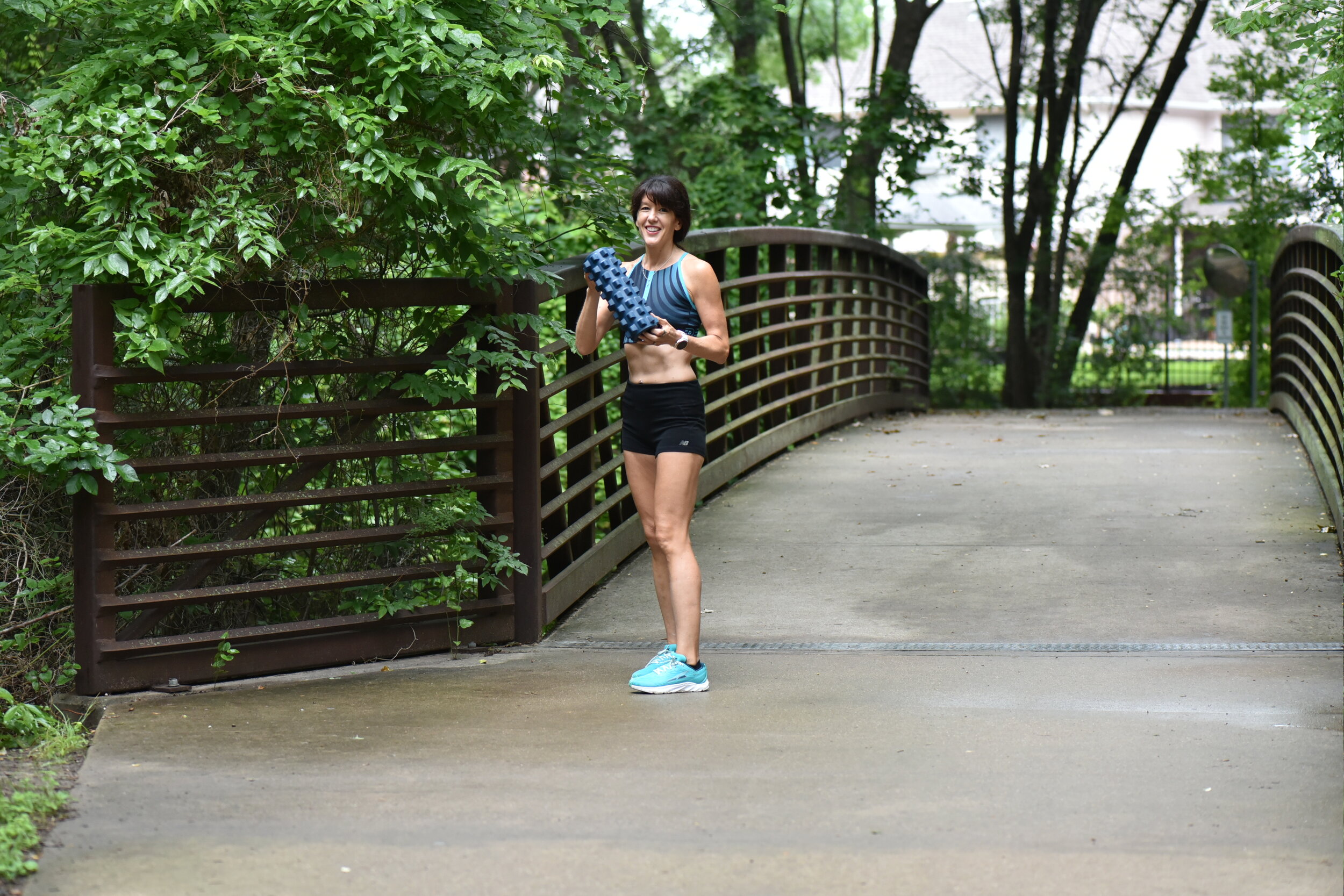
foam rolling in the SHREDSHED

foam rolling in the SHREDSHED

Foam rolling is called self-myofascial release. It is similar to a massage in that it releases muscle tension in overactive or shortened muscles. Use a foam roller (or similar device) before exercise to apply pressure to break up the knots within the muscle to release muscle tightness or tension. Foam rolling is suggested before stretching to potentially improve flexibility. I go into more detail on foam rolling in this post about foam rolling for runners. Foam rolling is appropriate before or after exercise.

WARM UP

GENERAL WARM UP

An example of a general warm up is walking for 5-10 minutes before running or lifting weights. A general warm up is not necessarily specific to the movements that will be performed during the workout, but it prepares your body for the workout by increasing heart rate, raising your body temperature, increasing blood flow to your muscles and mentally preparing you for higher intensities. 

SPECIFIC WARM UP

A specific warm up mimics the motions of the activity that will be performed during the workout. An example of a specific warm up is body weight squats before doing back squats with a weighted bar in the gym or high knees/butt kicks before a run. 

STRETCHING

Stretching before exercise warms up your muscles, improves flexibility and can help correct muscle imbalances. 

ACTIVE-ISOLATED STRETCHING

Active-isolated stretching is moving the joint through the full range of motion and holding the stretch for only 2-3 seconds. This is often considered superior to static stretching (holding the stretch for 30 seconds) because there is some evidence that static stretching before a workout can hinder performance in athletes performing explosive or power exercises. Consider the type of exercise you will be performing when choosing your stretch.

DYNAMIC STRETCHING

Dynamic (or functional) stretches are ideal for reasonably healthy and fit individuals. Dynamic stretches use momentum to take the joint through the full range of motion repeatedly. Hip swings, high knees, butt kicks and skips are examples of dynamic stretches.

COOL DOWN

The goal of the cool down is to gradually cool body temperature, reduce heart rate and slowly transition the body from exercise back to rest. You can reduce soreness and stiffness with a cool down after you exercise.

STATIC STRETCHING

Static stretching is holding the muscle in a stretched position for a minimum of 30 seconds. It allows your body to cool down after intense exercise and relaxes the muscles you worked. Exercise shortens and tightens the muscle, stretching it after exercise returns the muscles to their normal state, beginning the recovery process and improving flexibility.

Repeat after me: "I will never skip my warm and cool down again and I will foam roll and/or stretch before/after every workout." Your body will thank you for it!

Like this post? Please consider sharing.

Coach Lea

I am a NASM personal trainer and RRCA adult distance running coach that specializes in strength training for runners. I offer in-person training in the Shredshed, online training and Fit to Run boot camps. If you are interested in a more in-depth running or strength training plan please contact me. Have questions? I'd love to help. 


While I am a certified personal trainer, I am not your personal trainer. Since I don't know your exercise abilities, injury background or medical history, please see your doctor before beginning any new exercise program.