RUNNING

5 THINGS I WISH I KNEW BEFORE I STARTED RUNNING

One of the great things about running is that you don't need a lot of training, equipment or time commitment to get started. You can just lace up those running-specific shoes, hit the road and TA-DA, you're a runner. That is not to say that you won't learn a lot of lessons along the way. These are five things I wish I knew before I started running so I wouldn't have had to learn the hard way. 


JUST SAY NO TO COTTON

Shirts, shorts and socks that are made of cotton material absorb water (aka sweat). If you run in cotton you'll end up with heavy, wet, sweat-stained clothes or blister-primed feet. Synthetic apparel wicks away moisture so the sweat is pulled away from your body. Look for man-made fabrics with wicking properties for the most comfortable running experience. (Can someone delete those old internet race pictures of me where I looked like I peed my cotton shorts?)

HAVE PATIENCE

Be patient with your progress. In order to avoid injury, burnout or overtraining, slow progression is ok, in fact it is the goal. It is natural for new runners to want to run too much and too fast. If you get injured you'll get knocked out of the game before you ever had a chance to start.

As general rules you should never increase your mileage by more than 10% each week and never increase intensity (speed) and distance (miles) in the same week. Increase your mileage for three weeks in a row then back off the fourth week for recovery. Endurance and speed will come. With time, patience and persistence you can achieve all your running goals, it just doesn't happen overnight.

LEAVE YOUR EGO AT HOME

No one cares about your running pace except you. You probably won't come in first place at any race. You probably won't come in last place either. (If you do, good for you for spending the maximum time on the course and getting the most of your race entry fee.) There will likely always be someone faster and someone slower. Never apologize for being a slow runner or say that you're not a "real" runner. You'll learn pretty quickly that running is a race against yourself and your former self. To "win" at running you mostly just have to overcome your own brain. 

RESTING ISN'T LAZINESS

Your body adapts (aka recovers and grows stronger) during rest, not during the workout. If you never rest, you never allow your body the recovery time it needs to repair and rebuild. Taking scheduled rest days is essential to becoming a successful healthy runner. Listen to your body. I have found as I am getting older (old-lady talk) I need more rest days than I did even five years ago. This is normal. I'd rather take an extra rest day than get injured and not be able to run for weeks or months. 

DON'T JUST RUN

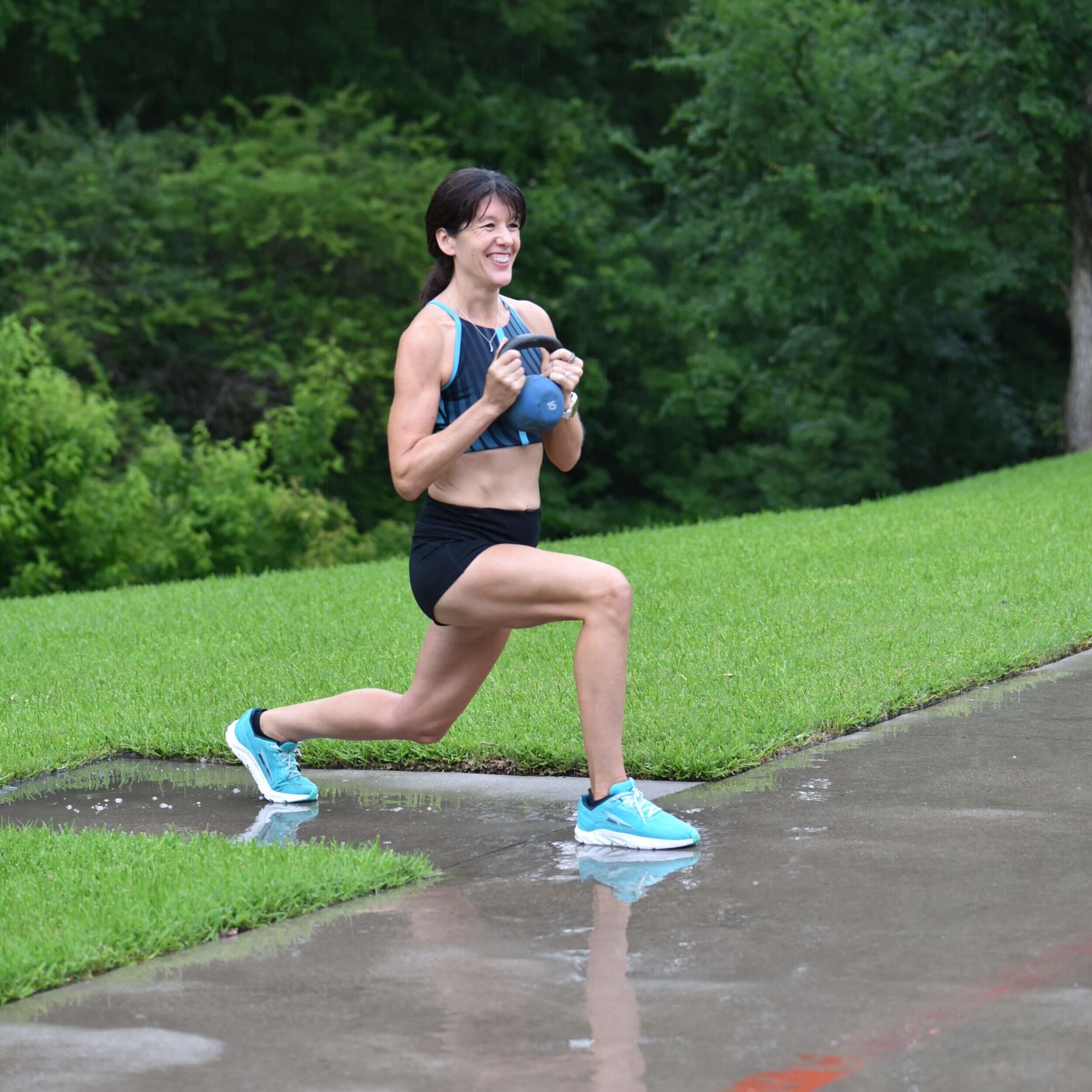
If you've been reading this blog for any length of time you know that I am a huge proponent of strength training for runners. Why? Because for years I was a runner that only ran. I kept getting injured, sidelined and I plateaued in my running progress. I started strength training in addition to my running and became a stronger, less injury-prone, well-rounded athlete. I was a runner first who fell in love with strength training and the benefits much later. Strength training can be a game changer for beginners and advanced runners alike.

What are some things you wish you had known before you started running? Any questions? Need help with a running plan, strength training session or both? Let me know in the comments if I can help and check out my coaching services page.

LIke this post? Please consider sharing.


Coach Lea

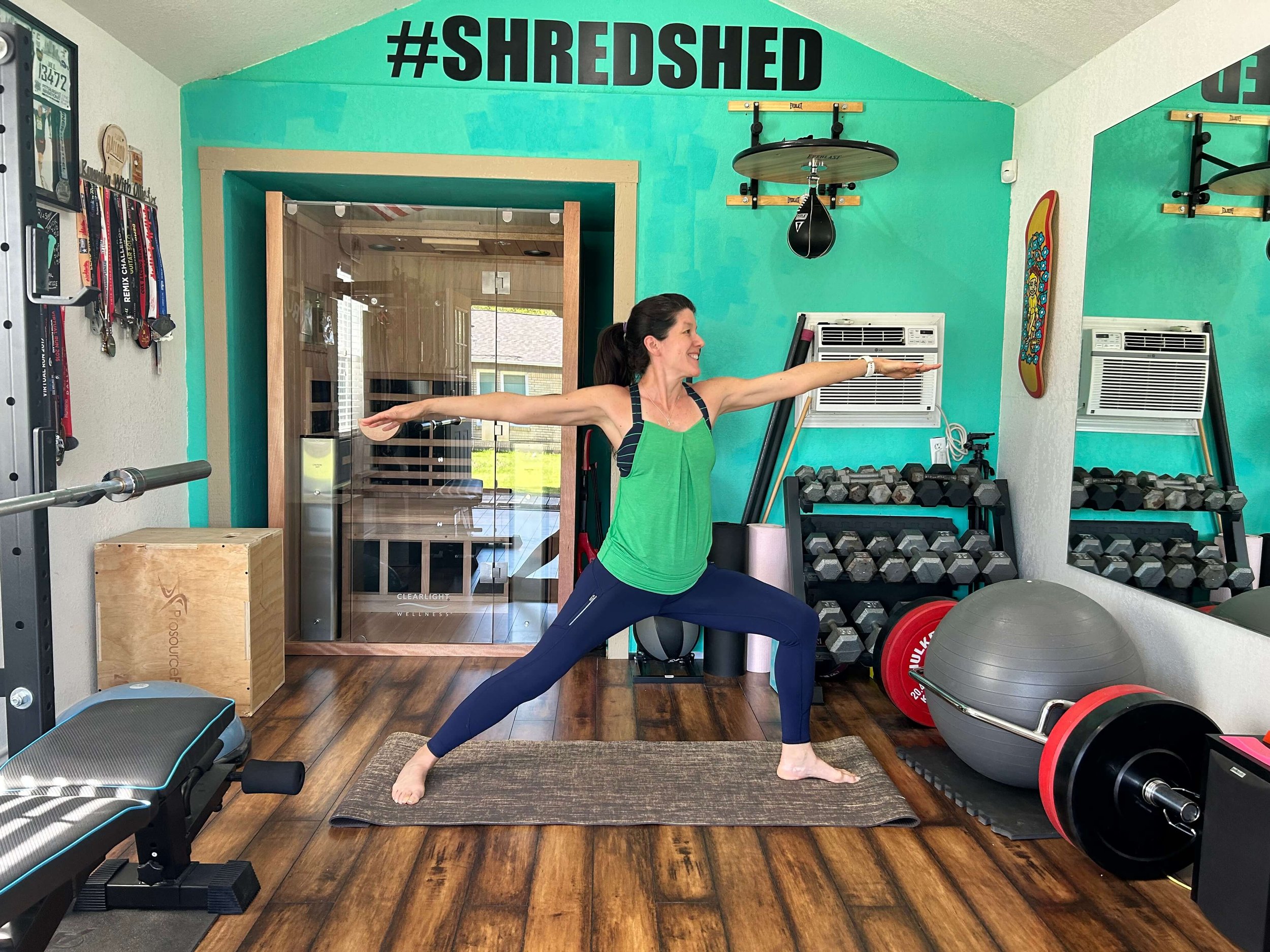
I am a NASM personal trainer and RRCA adult distance running coach that specializes in strength training for runners. I offer in-person training in the Shredshed, online training and Fit to Run bootcamps. If you are interested in a more in-depth running or strength training plan, please contact me. Have questions? I'd love to help. 

While I am a certified personal trainer, I am not your personal trainer. Since I don't know your exercise abilities, injury background or medical history, please see your doctor before beginning any new exercise program. This is an opinion blog. No information in this blog is intended to be taken as medical advice or prescription. Please see your doctor and/or registered dietitian for any health concerns.


 

Check Your Form: Proper Running Form Checklist

Running is one of those great sports that doesn't take a lot of equipment, gear or know-how to get started. Most people can strap on a pair of decent running shoes and hit the streets to begin their running journey. The more that we get out there and practice the better we get at it. 

When you run with proper form your body moves more efficiently through the motions. You can run longer and harder with less risk of injury when your form is in check. How's your form? 

You should embrace your natural running mechanics and make any changes to your form slowly over time. If you find that you need to make a lot of changes, choose one at time and practice it until it becomes second nature before moving on to the next correction. Here are six easy fixes to your form that can result in more efficient running.

Running Form

NECK

Keep your neck straight with your eyes looking straight ahead. Avoid looking down at the ground.

SHOULDERS

Shoulders should be back and relaxed. Drop your shoulders, do not shrug up towards your ears.

ARMS

Arms should be at 90 degree angle. Pump arms forward and backwards, do not cross arms over the front of body.

ELBOWS

Elbows should be kept close to your sides, do not allow them to flare too far out to the sides (aka Phoebe Buffay). Don't do this...ha ha.

HANDS

Hands should be unclenched. Imagine holding a single potato chip between your thumb and forefinger.

FEET

Your feet should land directly under your center of gravity, not far out in front. 

So how did you do? Is your form in check?

Have questions? Leave them in the comments or be a part of my new series "Ask the Trainer" and have your questions answered in a future blog post.

Like this post? It helps me when you share or save to Pinterest.

Coach Lea

I am a NASM personal trainer and RRCA adult distance running coach that specializes in strength training for runners. I offer in-person training in the Shredshed, online training and Fit to Run bootcamps. If you are interested in a more in-depth running or strength training plan, please contact me. Have questions? I'd love to help. 

While I am a certified personal trainer, I am not your personal trainer. Since I don't know your exercise abilities, injury background or medical history, please see your doctor before beginning any new exercise program. This is an opinion blog. No information in this blog is intended to be taken as medical advice or prescription. Please see your doctor and/or registered dietitian for any health concerns.



How to Banish Shin Splints Forever

No one ever said "You're a pain in the shin!" but they should, because it seems to me that shin pain (aka spin splints) are much more common and annoying than a pain in the butt.

I know the feeling. You start running (or start running again), everything is going fine but then you're sidelined by shin splints. It is a very common problem among new runners, but luckily one that is easily treatable. The medical name for spin splits is Tibial Stress Syndrome and while they are metaphorically a pain in the butt, they are literally a pain in the shins. Shin splints are a result of inflammation in the muscle tissue in the front of your leg, generally from overuse or too-much-too-soon.

If you experience mild to moderate discomfort in the shin area when running, you may be experiencing shin splints. Here are a few things you can do to help reduce pain so you can get back to running. Everyone is different, so if you are not improving or the pain gets worse, please see your doctor. You may have a stress fracture or other condition more serious than shin splints. Please don't read blogs for medical advice.

REST

The first step to healing your shin splints is to rest to allow your shins to heal. Low impact cross training like swimming or biking are your best bets to keep up your cardio fitness while you heal.

ICE

Ice your shins to help reduce inflammation. Try icing for 30 minutes on/30 minutes off multiple times throughout the day. 

COMPRESSION

Compression can help circulate blood flow and stimulate healing. Calf sleeves or compression socks while resting is a good place to start.

STRENGTHEN

Try this exercise to build strength around the shin bone.

With bare feet place your heel on the edge of a step or curb with your foot hanging off the edge. With your legs straight, point your toes as far down as you can, then point your toes up as far as you can, repeat rapidly for 30 seconds.

Now bend your knees at a 45 degree angle (about half way to a full squat) and repeat the same thing with bent knees.

Rest for 1 minute

Repeat two more times

Repeat every day

Struggling with shin splints? Have questions? Leave them in the comments or be a part of my new series "Ask the Trainer" and have your questions answered in a future blog post.

Like this post? It helps me when you share.


Coach Lea

I am a NASM personal trainer and RRCA adult distance running coach that specializes in strength training for runners. I offer in-person training in the Shredshed, online training and Fit to Run bootcamps. If you are interested in a more in-depth running or strength training plan, please contact me. Have questions? I'd love to help. 

While I am a certified personal trainer, I am not your personal trainer. Since I don't know your exercise abilities, injury background or medical history, please see your doctor before beginning any new exercise program.


Running A-to-Z: U is for Uphill - Tips for Uphill Running

Welcome to another edition of Running A-to-Z where each week I cover a running-related topic following the order of the alphabet. This week we are on letter U: Uphill Running because hill running is a great addition to any runner's training schedule. If you have not yet incorporated hill running into your training, I challenge you to add one day a week of hill training to improve strength, speed and efficiency. 


WHAT YOU NEED TO KNOW START RUNNING HILLS

FORM

Keep your chest and head up with your shoulders back, eyes looking forward (not at the ground). Keep your hands loose (imagine holding a potato chip between your thumb and pointer finger). Pump your arms at a 90 degree angle and do not allow them to cross over the front of the body. Imagine that there is a rope tied to your waist pulling you towards the top of the hill. 

SPEED

Start the hill at a relaxed pace, gradually increasing speed as your reach the crest of the hill. It's important to start slow and build up speed over time. The first few times it may be enough to just jog up the hill. Trust me, you'll feel the change in intensity compared to jogging on flat ground. Over time you can increase speed as you improve.

RECOVERY

Recover fully between repetitions. This may mean walking back down to the bottom of the hill and waiting until your breath is recovered before starting your next hill repeat. 

Always allow at least 48 hours between hard workouts. Never do hill repeats on back to back days. Your body repairs, adapts and grows stronger during rest (not during the workout), so it is important to allow it the proper recovery time. 

REPETITIONS

Start with three or four hill repetitions. You should always finish with feeling like you could do one more rep if your mean 'ol Coach asked you to. You can add more repetitions as you get stronger over time. 

PROGRESSION

There are several ways to progress your hill training. You can find a steeper or longer hill, you can increase the number of repeats, you can increase your pace or you can decrease your recovery time. Progression can be tricky. As you get stronger you want to make sure that find new ways to keep it challenging or else your body will adapt and you will stop improving.

However, it is important not to push progression beyond your current fitness levels or else you risk injury, overtraining and burnout. Start slow and progress slowly over time. Listen closely to your body and always allow proper recovery. 

Are you ready to tackle those hills?

Have questions? Leave them in the comments or be a part of my new series "Ask the Trainer" and have your questions answered in a future blog post.

Like this post? It helps me when you share.

Coach Lea

I am a NASM personal trainer and RRCA adult distance running coach that specializes in strength training for runners. I offer in-person training in the Shredshed, online training and Fit to Run bootcamps. If you are interested in a more in-depth running or strength training plan, please contact me. Have questions? I'd love to help. 

While I am a certified personal trainer, I am not your personal trainer. Since I don't know your exercise abilities, injury background or medical history, please see your doctor before beginning any new exercise program.


Running A-to-Z: T is for Track Etiquette

Welcome to another edition of Running A-to-Z where each week I cover a running-related topic following the order of the alphabet. If you missed any past Running A-to-Z posts you can catch up on letters A-S in the archives. (Only 6 more letters 'til the end of the alphabet! It's been a fun 20 weeks so far!)

This week we are on letter T. T is for track etiquette. The track can be a confusing and intimidating place for new runners, but it doesn't have to be that way. If you just follow a few basic rules of the road...err...track, you'll fit in a like a pro. 

Warm up stretches or non-running exercises should be done off of the track lanes.

Stay off the grass or field in the middle of the track.

Always run counterclockwise.

The inside lanes are for faster runners. The lanes to the right are for the slower runners and walkers. Always move to the right if there are faster runners than you on the track.

Always be aware of runners around you when you are starting and stopping.

It is nice to have a running partner or two, but do not run more than two people abreast (side by side) so you aren’t blocking other runners from getting by.

Move to the right if you hear someone calling out "on your left". This means that a runner is coming up on your left to pass you. Probably best to leave the headphones at home so you can hear someone calling out to you. 

Do not stand, stretch or chat on the track.

Leave your phone at home or in the car. No texting, talking or scrolling while running or walking on the track.

Always be respectful of other runners, the community and the property. Throw away any used water bottles or litter left on the track or surrounding areas (even if it is not yours).

Got it? Good. The track is a great place for speed work, intervals or laps on a flat, spongy, soft surface that is easier on the joints than concrete or asphalt. Once you learn basic track etiquette, you'll fit in with the some of most dedicated runners in your town.

Stay tuned for Workout Wednesday this week where I will share a track workout you can do to increase your speed. 

Have questions? Leave them in the comments or be a part of my new series "Ask the Trainer" and have your questions answered in a future blog post.

Like this post? It helps me when you share.


Coach Lea

I am a NASM personal trainer and RRCA adult distance running coach that specializes in strength training for runners. I offer in-person training in the Shredshed, online training and Fit to Run bootcamps. If you are interested in a more in-depth running or strength training plan, please contact me. Have questions? I'd love to help. 

While I am a certified personal trainer, I am not your personal trainer. Since I don't know your exercise abilities, injury background or medical history, please see your doctor before beginning any new exercise program.