Have you ever heard of 75 Hard? As a health coach and personal trainer, I usually wouldn’t recommend that kind of program for most people. Sure, some people thrive on intensity and rigid structure, but most of us struggle with strict rules and zero room for flexibility.
What 75 Hard Looks Like and Why All-or-Nothing Rules Backfire
75 Hard goes something like this: two 45-minute workouts a day, with one outside. You drink a gallon of water a day, stick to a nutrition plan that supports your goals with no “cheats” or alcohol, and read at least 10 pages of non-fiction a day for 75 days in a row.
In theory, it sounds great; these are all fundamentally healthy habits. Here is where it runs into trouble from a behavior-change standpoint: if you miss a day, you have to start all over back at day one until you finish all 75 days. There is no room for work emergencies, sick kids, travel, or schedule disruptions, you know…real life. That program encourages an all-or-nothing mindset where anything short of perfection feels like failure.
Then, for the people who do make it through 75 days, what happens on day 76? Often, after white-knuckling their way through the program, they swing far in the other direction, going from all-in to all-out.
People who love the program tell me it builds discipline and helps them train their brain to follow through. If that works for you, and you do not get pulled into swinging back and forth, or you use it to move into a more sustainable routine on day 76, more power to you. If something truly helps you, I’m not here to talk you out of it. The problem is when people think this is the norm or how they “should” be able to operate, when behavior change science says otherwise.
Why Streaks and Perfection Usually Fall Short in Real Life
What I want to help you let go of is the idea that if you cannot sustain 75 days of perfection, something is wrong with your discipline or you failed. You do not need these kinds of extremes to get meaningful results. The core habits themselves (regular movement, nourishing food, hydration, and reading) are great skills to practice. A more sustainable way forward is doing them with planned rest and room for flexibility. Because do you want to be healthy for 75 days or for the rest of your life?
When life gets busy and unpredictable, the real skill is not stringing together 75 perfect days. The way to build habits that stick is by learning to bounce back quickly when you go off plan or learn to make adjustments that fit your life. If you work late and it rains so you miss your outdoor walk or run, you pick it up the next day. If you have a treat at a party, you move on without feeling like you ruined your entire routine, or you have to start over at day one. If you don’t have time for a full strength workout (or two workouts as 75 hard would have you) you simply do a fifteen minute session in your living room, and then celebrate that small win.
Do you see how one mindset has you feeling like a failure for not being perfect, and the other has you collecting small victories every day? Which do you think helps long term sustainability?
Using a Monthly Wheel Habit Tracker Instead of a Streak Or Rigid Program
I have been experimenting with a monthly wheel habit tracker on good old-fashioned paper (or in my Kindle Scribe where I can draw), coloring in spaces at the end of the day when I complete a habit. Looking back across the month shows me, clearly, where I followed through and where there is room for improvement. We tend to overestimate how consistent we are when we rely on memory alone. I hear it all the time, “I think I did pretty well, I’m not sure why I’m not seeing results.” This kind of tracker shows you at glance exactly what you’re doing, and not doing.
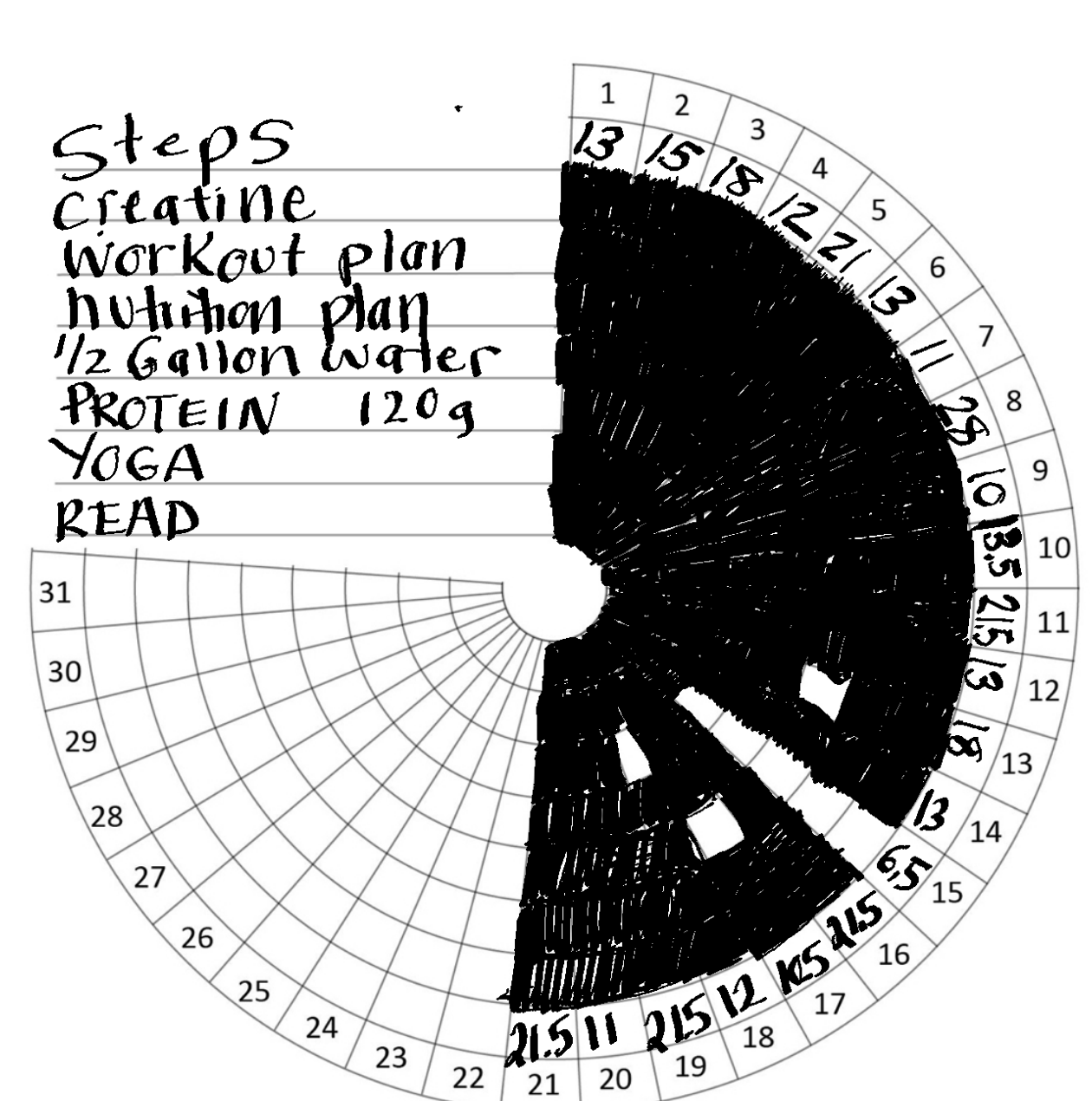
Progress, not perfection is the goal. My month so far at the time I’m writing this post. You can see the first “cold” front we had here in Fort Worth and the day I needed to mope about it. haha.
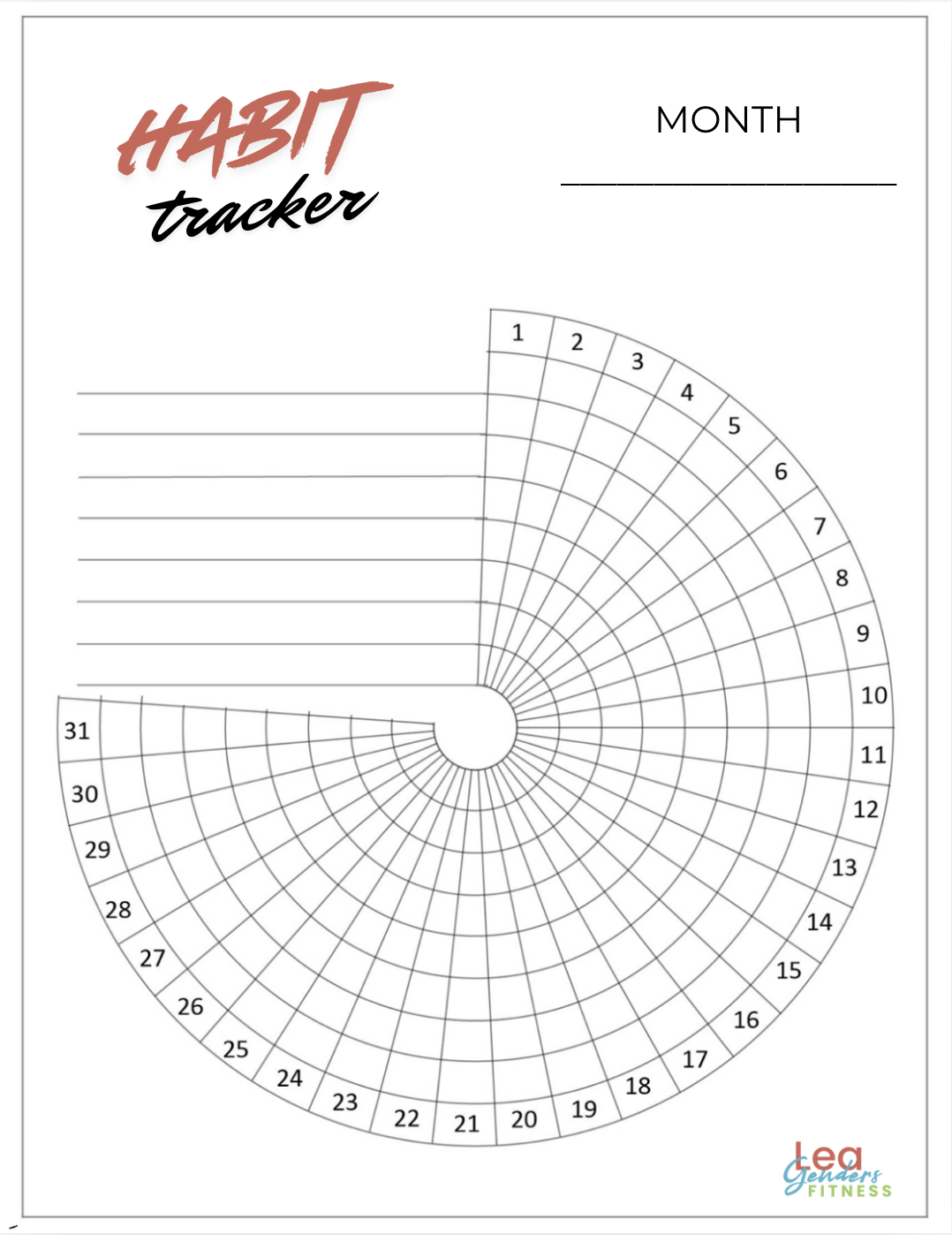
I enjoy a good streak, yet streaks can trigger that same all-or-nothing mindset for many people. A wheel tracker helps solve that because it is not intended to be a wheel of perfection. At the end of the month it is an honest recap of your habits and a look at where you can adjust. I’m not supposed to color in every single box, but I should see a pattern of consistency across the month.
How to Set Up Your Wheel Without Taking on Too Much
You can see above how I set up my wheel, though you can adapt it or build something completely different to fit your life. Before adding rings, hold off on picking up eight brand-new habits at once. Trying to overhaul everything at once usually backfires. A better approach is to track habits you already do well alongside one or two new ones. If you already walk most days, put that on the wheel and stack a new habit onto it. If you already have a solid bedtime routine or an exercise program, use the tracker to reinforce your consistency and celebrate your strengths. You don’t have to fill in every line. Start with a couple of healthy practices, and as you build regularity with one habit, you can layer on a new one the next month.
Ideas for Your Monthly Wheel Rings
Here are a few ideas to get started, but none of these are required. Think about what works for you, your lifestyle, and goals. Don’t feel like you’re supposed to be doing them all. The idea is to get you thinking about what might work for you.
Exercise Plan
Track whether you followed your plan, including coloring in planned rest days so recovery stays part of the process. If you plan to exercise five days a week with two rest days, those rest days count as following the plan when you take them.
Nutrition or Calorie Plan
Dedicate a ring to sticking with a general nutrition plan or a calorie range, whichever makes more sense for you right now. I like a protein ring to see whether I hit my daily protein target. You could track fiber or anything else that matters for your goals.
Supplements
Use a ring to check off daily supplements if a visual cue helps you remember them. I track my creatine because it helps me stay consistent with it.
Steps
I like to write the actual step count inside the wheel, but you could also color the space when you hit a goal you set for yourself, such as 7,000, 10,000, or 12,000 steps. If you don’t count steps, you could track minutes on a walking pad, or any other low-intensity movement in your day.
Water
Add a ring for daily fluid intake if that is a priority for you. One gallon of water (from 75 hard protocol) is about 128 ounces, which can be a lot for smaller people or cooler days depending on sweat, and diet, so keep hydration goals aligned with your individual needs. A possible starting point is half your body weight (in lbs) in water ounces; adjust up or down based on your needs and preferences.
Sleep
Track a target bedtime or a consistent wind-down routine. It’s better here to track what you can control. Time spent in bed, or what time you got in bed, rather than what you can’t control, like how many hours of sleep, or minutes of deep sleep you got.
Life Enrichment
You can add a line for reading, meditation, studying, time with friends, or anything else that adds richness to your week. Health is more than what you eat and how much you exercise, so making social connections, learning opportunities, or spiritual enrichment a part of your routine can help improve your overall health.
Energy or Mood
It can be a good idea to jot down a daily rating so you can look back later and see how your energy and mood connect to your follow-through. Simple faces can help you remember how you were feeling on a particular day.

These are just starting points. The best outcomes come from filling in the rings with habits that matter to you right now. I try to list things I want to do rather than things I don’t want to do. They are called approach goals versus avoidance goals. It is more effective from a behavior change standpoint to color in a space for taking an action you want to build than to spend your day trying not to do something.
Download the Monthly Wheel Habit Tracker
printable wheel habit tracker download link No sign in or email required to download in Canva
Looking Back With Reflection Instead of Judgment
I like the wheel tracker for habits because it’s low pressure, it doesn’t take a lot of time or energy (or another app or technology). You can quickly assess at the end of each day which habits you were able to complete. Because in the end, it’s our daily actions that take us closer to our goals. If we focus on what we do, those outcomes we desire usually take care of themselves in time.
Then, at the end of the month, the wheel allows us to look back on our habits as a reflection rather than judgment, offering a clear look at our strengths and where we might want to focus next month.
Lea
P.S. I am thrilled to offer my end of year online coaching invitation. Not in Fort Worth? Have been thinking about how coaching can impact your training and life? I’d love to talk. No cookie-cutter templates here. As a board-certified health coach, personal trainer, nutrition coach, and running coach, I build custom workouts tailored to your goals and experience delivered right to an app so you can train on your own schedule. You get weekly programming updates, simple nutrition tracking, a one-on-one monthly Zoom strategy call, and direct messaging access to me whenever you have questions. Best price with a one year commitment.
Before anything is official, we will hop on a quick call first so we can talk about your goals, see if I can help you, and make sure we are a good fit. No pressure or obligation. Prefer to email? Let’s chat.


Lea Genders is a board-certified health coach, personal trainer, and workplace wellness consultant based in Fort Worth, TX. She offers corporate wellness programs for employee health and productivity, as well as in-person and virtual training / coaching for individuals worldwide. Her blog shares expert guidance on strength training, running, and sustainable nutrition @fortworth_trainer




Skip the all-or-nothing rules and try a flexible monthly wheel tracker instead. It gives you a clear, judgment-free look at your daily habits and helps you build consistency that lasts in real life.