Quick Strength for Runners

Welcome to another edition of Workout Wednesday! Each week I share a new strength training or running workout. This week I put together a quick circuit that includes some of the strength training moves that are beneficial to runners. If you run (no pun intended) through this circuit twice it should take you about 15 minutes. If you think you don't have time to include strength moves in your training schedule, I challenge you to add this circuit to the end of an easy-effort running day when you run 40 minutes or less. 

quick strength for runners

quick strength for runners

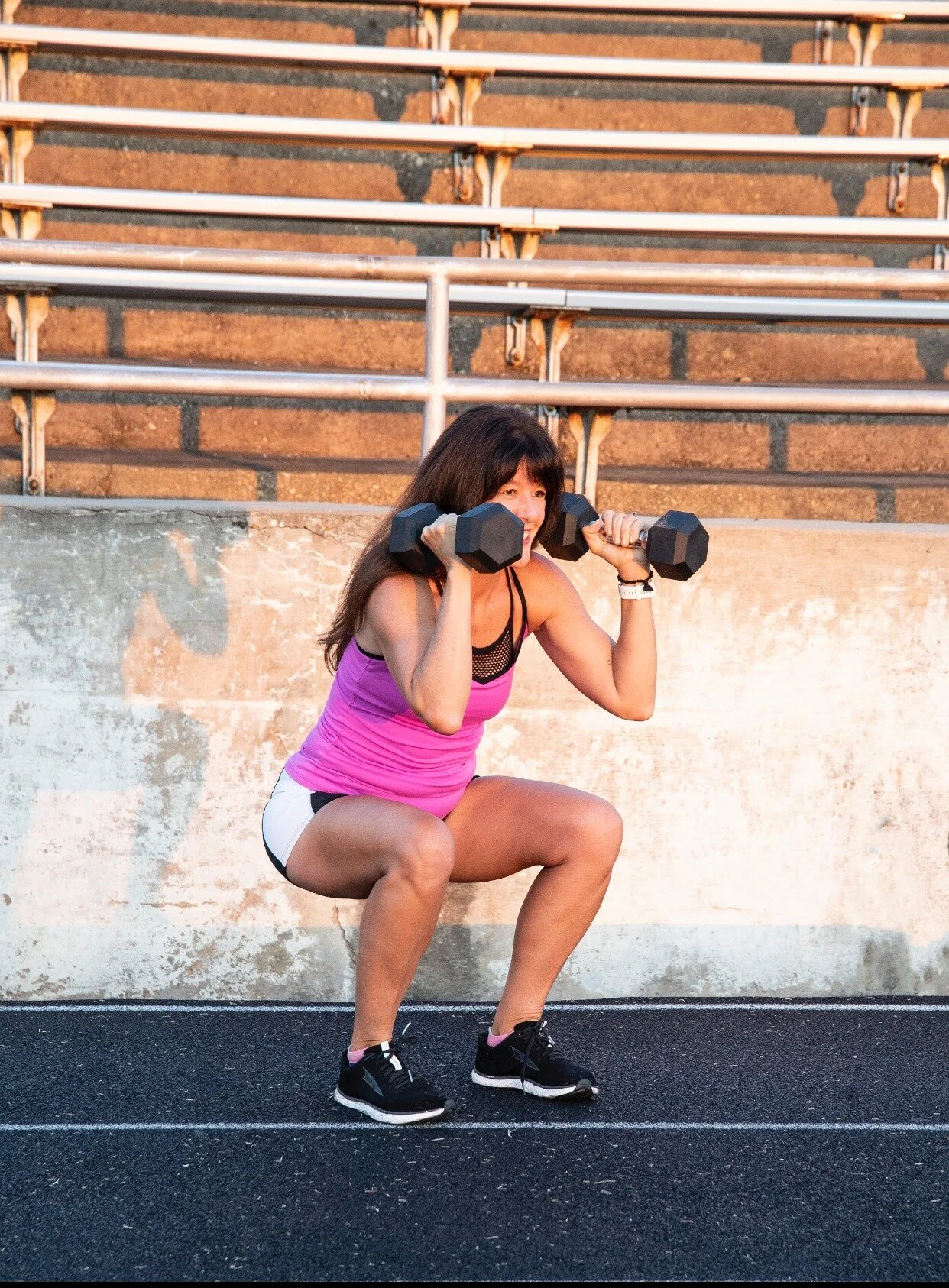
SQUAT: 45 SECONDS WORK/15 SECONDS REST

Squats are a great exercise for runners because they help increase the strength needed to run faster on flats, power up hills and lengthen your stride. 

Starting with your feet hip width apart push your hips back and then lower  your body by bending your knees until your thighs are parallel to the floor or as low as your flexibility will allow. In the low position, engage your core, squeeze your glutes and push up to standing Take a deep breath in as your lower to the squat and breath out as you explode up to standing. Repeat for 45 seconds before resting for 15 seconds, then moving on to the next exercise.

PLANK ROW: 30 SECONDS RIGHT SIDE. 30 SECONDS LEFT SIDE/15 SECONDS REST

Core strength for runners is very important. Strengthening the muscles that make up your abs, hips/glutes, lower back and pelvis are critical to helping you become a stronger, faster, less injury-prone runner.

Start in a high straight arm plank position with your wrists directly under your shoulders and your legs wider than hip width for stability. Keep your body in a straight line from your shoulders to ankles while engaging your core. Do not allow your hips to hike up or sag down.

With your core tight and your glutes engaged lift your right elbow to row as you bend your elbow up toward the ceiling. 

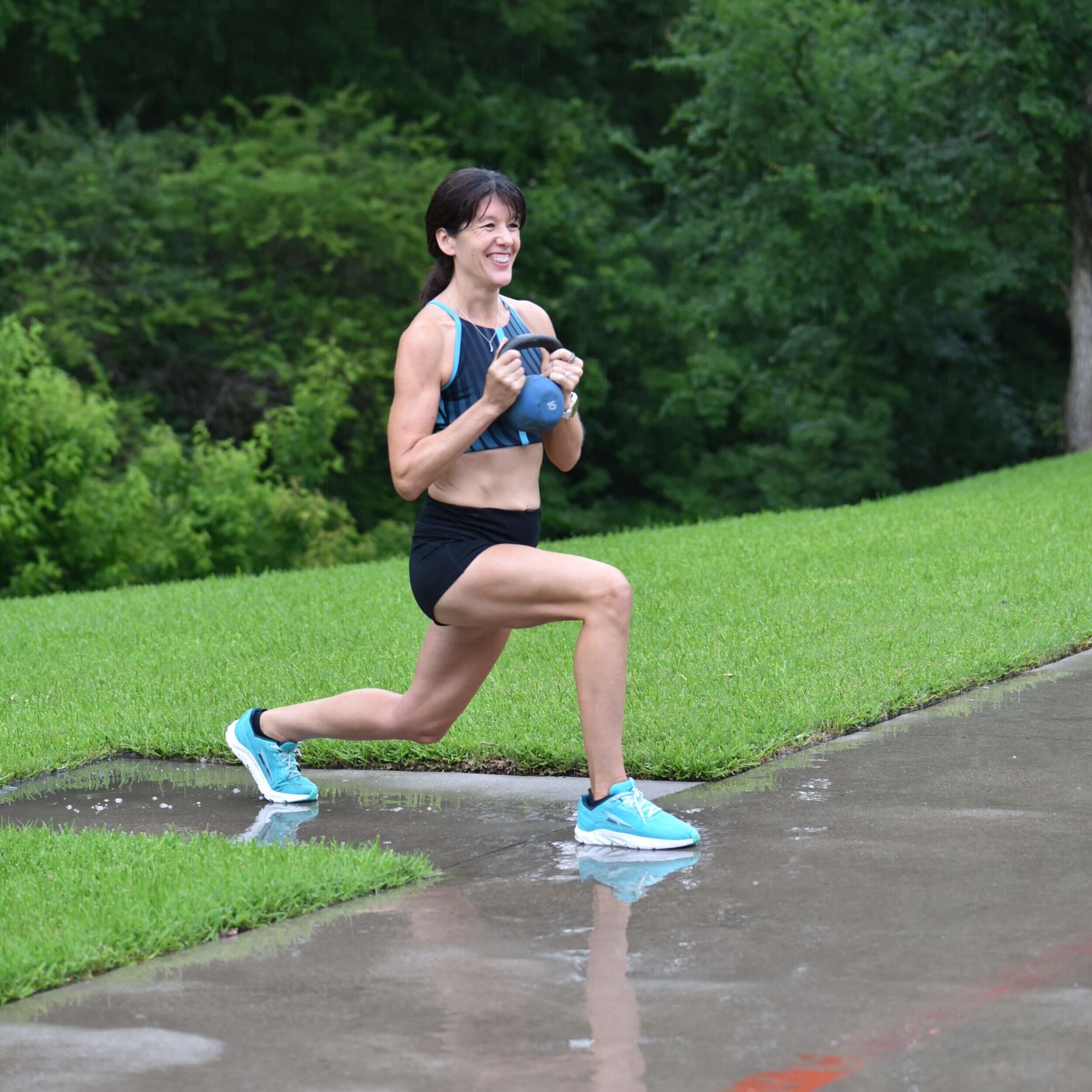
LUNGE WITH TWIST: 45 SECONDS RIGHT, 45 SECONDS LEFT/15 SECONDS REST

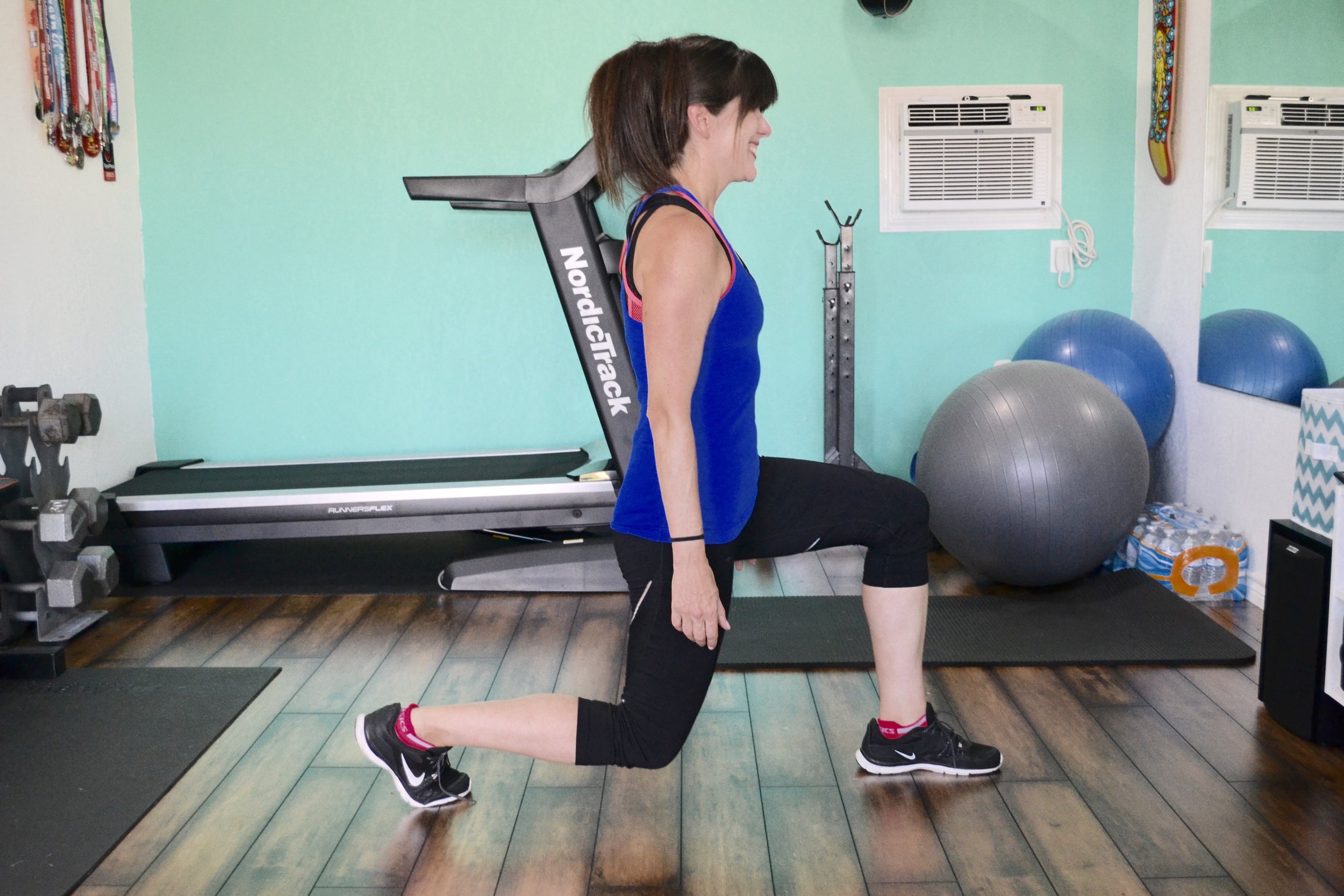
The lunge is a great exercise for strengthening glutes, hamstrings and quads. We add a twist because runners move in only one plane of motion (Sagittal plane: front to back) so it is necessary to gain strength in the other planes of motion. 

With your feet hip width apart and your toes pointed straight ahead, hold your core stable with your back straight Take one large step to lunge forward until your front knee is lined up over your ankle and your back knee is nearly touching the floor. Do not allow your knee to go past your toes. Once you are in the lunge position, twist your torso in the same direction as your front leg. Push back up to standing and change legs. Repeat for 45 seconds then switch legs.

SIDE PLANK: 30 SECONDS RIGHT, 30 SECONDS LEFT/15 SECONDS REST

Move into a side plank position stacking your shoulder, elbow and wrist in a straight line. If this feels good, reach your arm to the ceiling. Hold for 30 seconds then switch sides.

SINGLE DEAD DEADLIFT: 45 SECONDS RIGHT, 45 SECONDS LEFT/15 SECONDS REST

When you run you are essentially balancing on one leg at time repeatedly for the duration of your run. If you perform exercises unilaterally (one side at a time) it will help reduce muscle imbalances, improve core strength & stability and increase runner-specific strength. The single leg deadlift is an ideal exercise for runners.

Standing on one leg, keep your knee slightly bent and perform a deadlift by bending at your hip while keeping your back straight and neck neutral. Extend your free leg behind you in line with your body. Lower until your back is parallel to the floor. With your back straight return to the upright position. Repeat for 45 seconds then switch legs. 

BRIDGE WITH OVERHEAD LIFT: 45 SECONDS WORK/15 SECONDS REST

The hips and glutes generate the power to propel you forward during your stride. This exercise is fantastic for building hip/glute strength for runners. 

Lie on your back with your knees bent and your feet flat on the floor. Reach your arms over your head towards the ceiling while raising your hips off the floor so that your body forms a straight line from your shoulders to your knees. Pause at the top then slowly lower your hips back to the floor. Repeat for 45 seconds. Rest for one minute and repeat the circuit.

Give it a try and let me know how it goes!

Like this post? It helps me a lot when you share with your friends or followers. 


Coach Lea


Running A-to-Z: X is for X-Training

Hi, Friends. Welcome to another edition of my blog series Running A-to-Z where I cover a running-related topic covering the order of the alphabet. I know I've been saying this each week lately, but where has the alphabet gone? These past 24 weeks just flew by and I can't believe this fun little series is coming to a close. It's been a great inspiration for me to find regular topics to write about but also sometimes a struggle. Some letters just didn't have natural running-related topics attached to them (like L, N and J) but I made it work. Stay with me the next couple of weeks as we close out this series. Once we're through I am going to publish the whole thing as a free e-book. If you missed any letters you can catch up on letters A-W in the archives

In the meantime we're on letter X. X is for X-Training or cross-training. Cross-training is essential for runners. It means doing other types of workouts besides running that will improve and enhance your overall fitness and help you reach your goals.


STRENGTH TRAINING

I built my whole business around the notion that runners need to strength train, which is a great form of cross-training for runners. 

Running is no-doubt a great exercise. It is fantastic for weight loss or weight maintenance. It builds cardiovascular endurance, not to mention strong quads and calves, but if all that you do is run, it can leave you a little unbalanced in your fitness. Since running moves in just one plane of motion (the sagittal plane, forward/backward) you need to do other workouts to build strength for lateral movements to prevent muscle imbalances. The types of strength workouts that runners should do are completely different than a bodybuilder's workout. A bench press is a chest exercise that probably won't make you a better runner. A push up, also a chest exercise but works your entire core, is a much better exercise for a runner to improve strength. Runners should pay particular attention to core/hip strength. This will help you become a better runner and help prevent injury. Check out my workout archives for a variety of strength training workouts to try. 
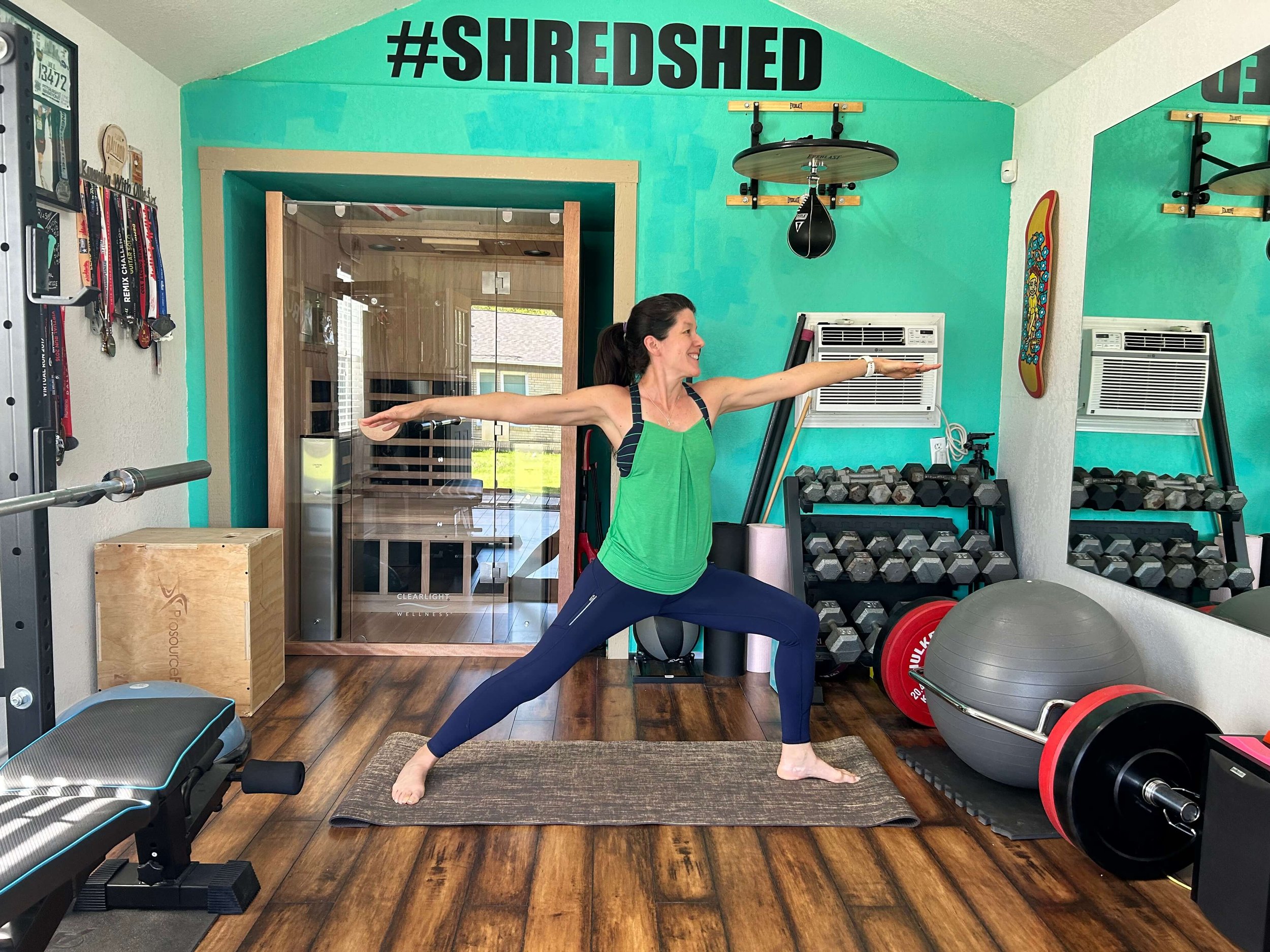
YOGA

I love Yoga for runners. The right type of Yoga is the perfect balance (see what I did there?) of strength training and stretching, both important for runners. A "Yoga for Runners" search on You-Tube produces a lot of quick and effective Yoga sequences for runners. I choose gentle Yoga workouts that are mostly stretching and do them on my active-recovery days or after a run.

BIKING/SWIMMING

Both biking and swimming are great low-impact cardio exercises. They are good for when your body needs a break from the impact of running, but you still want to keep up your cardiovascular fitness. Generally speaking if you want to be a better runner, then you should run more. No one ever became a better runner by biking (they became a better biker) but sometimes your body needs a break and these exercises are both great ways to build and maintain fitness when you're not running. 

EXERCISE CLASSES

Maybe I am a little biased because I teach a bootcamp twice a week but I think group exercise classes are a great way to squeeze in some cross-training. A boot camp combines strength and cardio in a full body workout with a boost of motivation from a certified trainer. The group dynamic can make you push harder and have a lot more fun. 

Do you cross-train? What's your favorite form of cross-training? If you can find a couple days a week to squeeze in some cross-training you'll see great strides in running improvements.

Like this post? It helps me when you share.


Coach Lea

I am a NASM personal trainer and RRCA adult distance running coach that specializes in strength training for runners. I offer in-person training in the Shredshed, online training and Fit to Run bootcamps. If you are interested in a more in-depth running or strength training plan, please contact me. Have questions? I'd love to help. 

While I am a certified personal trainer, I am not your personal trainer. Since I don't know your exercise abilities, injury background or medical history, please see your doctor before beginning any new exercise program. This is an opinion blog. No information in this blog is intended to be taken as medical advice or prescription. Please see your doctor and/or registered dietitian for any health concerns.

Check Your Form: Proper Running Form Checklist

Running is one of those great sports that doesn't take a lot of equipment, gear or know-how to get started. Most people can strap on a pair of decent running shoes and hit the streets to begin their running journey. The more that we get out there and practice the better we get at it. 

When you run with proper form your body moves more efficiently through the motions. You can run longer and harder with less risk of injury when your form is in check. How's your form? 

You should embrace your natural running mechanics and make any changes to your form slowly over time. If you find that you need to make a lot of changes, choose one at time and practice it until it becomes second nature before moving on to the next correction. Here are six easy fixes to your form that can result in more efficient running.

Running Form

NECK

Keep your neck straight with your eyes looking straight ahead. Avoid looking down at the ground.

SHOULDERS

Shoulders should be back and relaxed. Drop your shoulders, do not shrug up towards your ears.

ARMS

Arms should be at 90 degree angle. Pump arms forward and backwards, do not cross arms over the front of body.

ELBOWS

Elbows should be kept close to your sides, do not allow them to flare too far out to the sides (aka Phoebe Buffay). Don't do this...ha ha.

HANDS

Hands should be unclenched. Imagine holding a single potato chip between your thumb and forefinger.

FEET

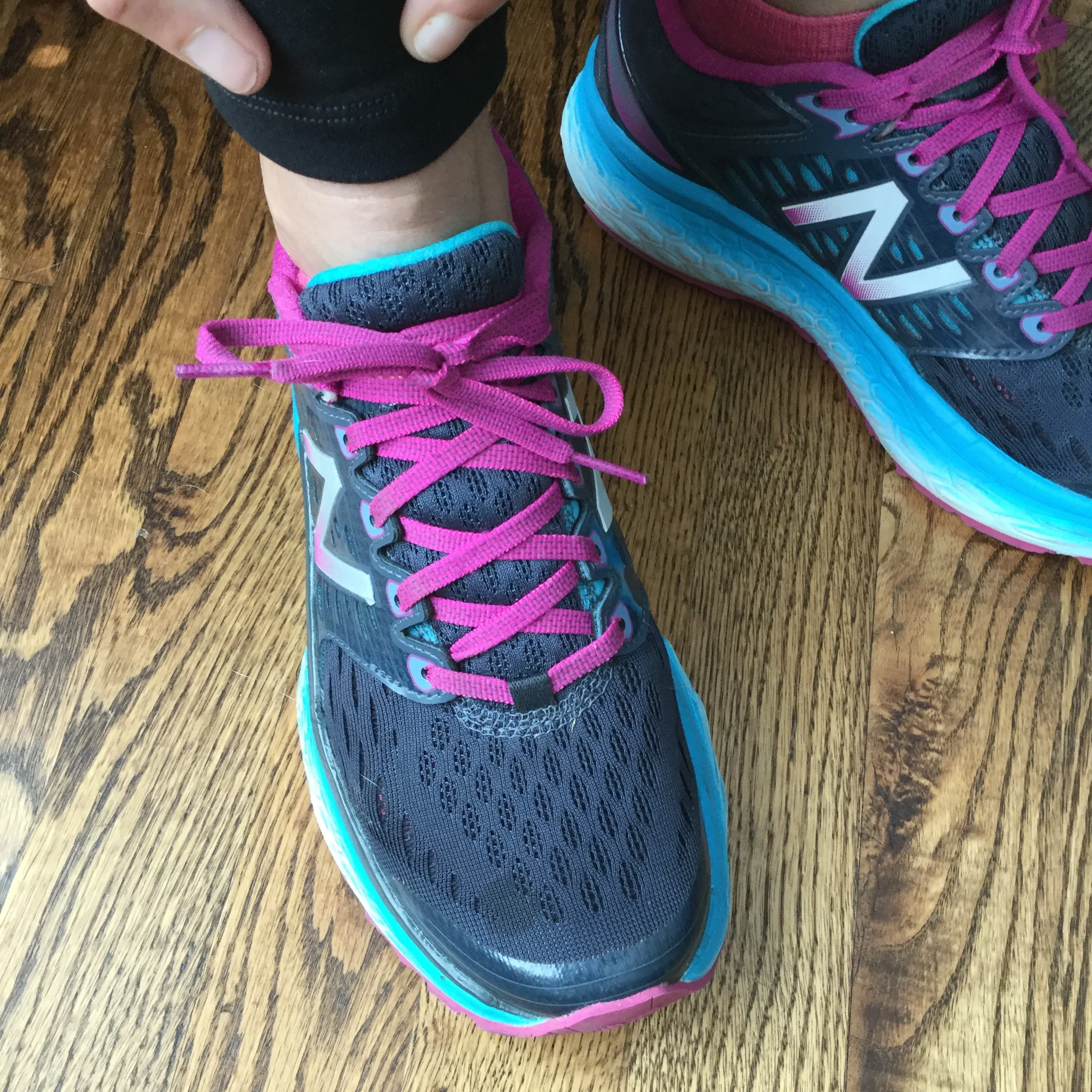
Your feet should land directly under your center of gravity, not far out in front. 

So how did you do? Is your form in check?

Have questions? Leave them in the comments or be a part of my new series "Ask the Trainer" and have your questions answered in a future blog post.

Like this post? It helps me when you share or save to Pinterest.

Coach Lea

I am a NASM personal trainer and RRCA adult distance running coach that specializes in strength training for runners. I offer in-person training in the Shredshed, online training and Fit to Run bootcamps. If you are interested in a more in-depth running or strength training plan, please contact me. Have questions? I'd love to help. 

While I am a certified personal trainer, I am not your personal trainer. Since I don't know your exercise abilities, injury background or medical history, please see your doctor before beginning any new exercise program. This is an opinion blog. No information in this blog is intended to be taken as medical advice or prescription. Please see your doctor and/or registered dietitian for any health concerns.


30 MINUTE TABATA-STYLE FAT BLASTER WORKOUT (GREAT FOR RUNNERS)

Hi, Friends. Welcome to the latest edition of Workout Wednesday. This week I put together a workout that is great for runners who want to squeeze in some strength training but don't have a lot of time. This is a perfect workout for after your run on an easy day (less than 30 minutes) or on a non-running day. It only takes 30 minutes, doesn't require any equipment and is a full body workout. This workout will benefit runners by improving running performance and overall athleticism. Strength training goes a long way in injury prevention for runners by strengthening the muscles surrounding the joints and strengthening the muscles that are not worked during running to help prevent muscle weaknesses and imbalances. Ready to get started?

WHAT YOU'LL NEED

You will need a Tabata timer. You can download free timers in the app store or play store. There are plenty of free options if you don't mind the ads. I use a GymBoss Timer (<--affiliate link) in the #shredshed and at my bootcamps

TABATA: HOW IT WORKS

Tabata is one of my favorite workout formats because it is quick and effective. The idea is to workout as hard as possible (high intensity) for 20 seconds, rest for 10 seconds and repeat for four minutes. 

In this circuit we are combining a strength exercise with a cardio exercise. In each round you will perform:

EXERCISE 1: 20 SECONDS

REST: 10 SECONDS

EXERCISE 2: 20 SECONDS

REST: 10 SECONDS

EXERCISE 1: 20 SECONDS

REST: 10 SECONDS

And so on...for four minutes.

Rest for one minute between rounds. Please always warm up before your workout and cool down/stretch afterwards.

THE EXERCISES

ROUND 1

ALTERNATING LUNGES

With your feet hip width apart and your toes pointed straight ahead, engage your core and keep your back straight. Take one large step with your right leg to lunge forward until your front knee is lined up over your ankle and your back knee is nearly touching the floor. Resist the urge to lean forward or rest your arms on your thighs. Once you are in the lunge position pause for one second and push back up to starting position. Repeat on opposite leg, alternating for 20 seconds.

Lunge

Lunge

SWITCH LUNGES

Lunge forward as described above with your right thigh parallel to the floor. Swing your arms for balance and momentum, jump up and switch legs landing in a lunge with your left foot forward. Repeat for 20 seconds.

ROUND 2

PUSH UPS

Start in a high plank position with your hands placed directly under your shoulders. Keep your body in a straight line from your shoulders to ankles. While engaging your core slowly bend your elbows to lower your chest to the floor. Once in the low position push back up to the starting position. If this is too challenging, drop to your knees. 

MOUNTAIN CLIMBERS

Start in a straight arm plank position with shoulders directly over wrists. Bring your knee in towards your elbow then back to plank position. Repeat with opposite foot. This is one rep. Move as quickly as possible while keeping your core engaged.

Mountain Climbers

Mountain Climbers

ROUND 3

SQUATS

Starting with your feet hip width apart push your hips back and lower until your thighs are parallel to the floor (like you are sitting back in a chair) or as low as your flexibility allows. In the low position, engage your core, squeeze your glutes and push up to standing. Take a deep breath in as your lower to the squat and breath out as you return up to standing.

Squat

Squat

HIGH KNEES

Stand up straight with the feet hip width apart. Jump from one foot to the other while using your core to lift your knee to hip height. Swing your arms with each rep. Touch the ground with the balls of your feet quickly moving back and forth between legs.

ROUND 4

HIGH PLANK

In a high plank position place your shoulders directly over your wrists. Your body should form a straight line from your head to your heels. Don't allow your hips to drop or raise up. Engage your abs and breathe normally. Hold for 20 seconds

High plank

High plank

PLANK JACKS

Starting in a high plank position as described above with your feet together at the starting point. Jump your legs wide out to the sides (like the motion of a standing jumping jack) and then back together.

ROUND 5

SIDE LUNGE (EACH SIDE)

With both toes pointing forward, push your hips back and take a large step to your right and bend your right knee into a side lunge position and straighten your left leg. Lower your hips as low as your flexibility will allow. Push back to starting position and repeat on the other side alternating for 20 seconds.

CURTSY SQUAT WITH HOP

Stand with your feet hip apart. Cross your right leg behind the body and to the left. Bend left knee 90 degrees or as low your flexibility will allow, toes pointing forward. From the low position hop back up to the starting position and lower to the other side. Repeat for 20 seconds.

Curtsy squat in the #shredshed

Curtsy squat in the #shredshed

ROUND 6

SUPER MAN

Lie face down on your stomach with your legs and arms extended and your palms facing the floor. Simultaneously lift your chest, arms and thighs several inches off the floor up toward the ceiling while holding your midsection stable. Hold for two seconds and lower back down.

BURPEES

Stand with your feet hip width apart, lower into a squat position until your hands are flat on the floor in front of you. Jump your legs backwards into a high plank position. Jump both feet forward so you are back in the squat position. Jump up and raise both hands over your head. If this is too challenging, step back and forward from plank position instead of jumping. 

Burpees don't like you either.

Burpees don't like you either.

Give it a try and let me know what you think. Always remember that intense workouts like this one should be surrounded by easy days and/or rest days. Adaptations (aka getting strong) occur during rest. Allow your body the time it requires to repair, recover and get stronger. 

Have questions? Leave them in the comments or be a part of my new series "Ask the Trainer" and have your questions answered in a future blog post.

Like this post? It helps me when you share or save to Pinterest

Coach Lea

I am a NASM personal trainer and RRCA adult distance running coach that specializes in strength training for runners. I offer in-person training in the Shredshed, online training and Fit to Run bootcamps. If you are interested in a more in-depth running or strength training plan, please contact me. Have questions? I'd love to help. 

While I am a certified personal trainer, I am not your personal trainer. Since I don't know your exercise abilities, injury background or medical history, please see your doctor before beginning any new exercise program. This is an opinion blog. No information in this blog is intended to be taken as medical advice or prescription. Please see your doctor and/or registered dietitian for any health concerns.

Running A-to-Z W is Weight Loss (Running for Weight Loss)

Hi, Friends! Welcome to another edition of Running A-to-Z. If you've been following along, each week I cover a running-related topic following the order of the alphabet. I can't believe we are on letter 'W" already. Time flies when you're having fun blogging about running. If you missed any posts in this series you can catch up on letters A-V here.

W is for Weight Loss: Running for Weight Loss

Weight loss should be easy. In order to lose weight you must create a calorie deficit by consuming less calories than the calories burned from maintaining your resting metabolic rate and physical activity. Eat less. Workout more. Easy, right? 

Not so fast. Our bodies are not machines that simply take in fuel and use it until it's gone, there are a lot of factors that go into weight loss: your genetics, your environment, your physiology (hormonal or metabolic conditions), your mindset and your lifestyle & exercise habits. 

Since I am not a scientist, doctor or nutritionist we are just going to cover the basics of running for weight loss. The way I see it, It comes down to three factors:

AEROBIC EXERCISE

Running is a great way to burn calories when you are trying to lose weight. Running burns approximately 100 calories per mile or every 10-12 minutes (depends on some factors, but this is a reasonable average). It is important to note that if you don't like running, then feel free to substitute another cardio exercise that you do enjoy. But I guess if you didn't enjoy running then probably you wouldn't be here, unless you're my mom or my best friend. (Hi, Mom.)

If you are already running, you have a few choices to increase calorie burn. It is generally recommended 250 minutes of aerobic exercise a week for weight loss, which is about 4 hours a week. In short, try to get in 30-45 minutes of cardio most days of the week, but please take rest days.

RUN MORE

If you are currently not running 250 minutes a week, slowly build up the time you spend running by just adding 15 minutes extra a day or one mile a week for three weeks, then back off the mileage the 4th week to recover. Repeat this process until you reach your time goal. Adding too much too soon will only lead to injury or burnout, so it is better to increase slowly over time. The most important thing is to find something that is sustainable. 

RUN AT HIGHER INTENSITY

Short on time? Running High Intensity Interval Training (HIIT) workouts may be the answer. After warming up, trying running for one minute a high intensity that elevates your heart rate and breathing rate until you couldn't hold a conversation outside of a couple words at a time. Then walk or jog to recover for a minute (or longer if needed). Repeat several times for a short and effective workout. You'll increase your calorie burn compared to steady-state running and increase your EPOC (Excess post-exercise oxygen consumption) which means that you are still are burning calories at a higher rate after you complete your workout. My note of caution is to always sandwich high intensity days between low intensity days and rest days. Don't perform high intensity workouts back to back. Never increase intensity and mileage in the same week, as this is a recipe for injury. Give HIIT workouts a try one or two days a week for weight loss.

VARY YOUR WORKOUTS

You body is very good at adapting, which means it gets more efficient performing the workouts. This is good and bad. Great that the workout feels easier, but not so great that you are not burning as many calories as you were three months ago doing the same activity. The key is to continually change the variables so you can continue to improve. You can adjust your pace (run faster), the rest intervals (shorter), the time spent running (longer) or the number of days (more) to continue to progress.

STRENGTH TRAINING

Strength training is essential to weight loss. You can run and lose weight, but weight training helps you build and maintain (aka not lose) muscle mass. Muscle requires more energy at rest, so the more muscle you have the more calories you burn when you are not working out. Weight training increases your metabolic rate, maintains and builds muscle mass, improve performance and helps prevent injury. You don't have to turn into a gym rat, but make time 2-3 days a week for a 30 minute full-body workout session (or maybe 15 minutes after you finish your run several times a week). Runners should put extra focus on hip/core exercises

NUTRITION

Nutrition is probably the most important factor when trying to lose weight. As we discussed above, you want to create a calorie deficit in order to lose weight. We sometimes wonder why runners gain weight when training for marathon? It happens to the best of us. How does someone run so many miles and still not lose weight? Again there are a lot of factors at play, but it often comes down to nutrition. 

Running can make you feel very hungry. If you ran a 14 mile training run, you may feel you deserve that large bacon cheeseburger, side of fries and 2 cold beers. And honestly, I am all about balance. Maybe you did deserve it and that's fine, but once in awhile, not all the time. It's great when it is the exception, not the rule. A cheeseburger after every training run will kill your weight loss efforts. Save it for race day celebrations.

When you are training heavily you may feel hungrier than usual, all the time. It may help to eat small but frequent nutrient-dense meals (aka mostly whole foods) to help curb the hunger. Generally speaking most people do well to eat protein and most of their carbs surrounding their workouts.

The key is to find the balance. You know when your energy is in balance (not too much, not too little) when you look, feel and perform your best. Eat too little and you will feel it and see it in your performance, eat too much and it can lead to weight gain or stalled weight loss. If you struggle to find this balance, I recommend that you work with a nutritionist or registered dietitian (RD).

If you want to use running as a tool to lose weight, I think you are on the right track. You may need to increase the time and/or the intensity you spend running (slowly over time). Don't forget the importance of weight training in the weight loss puzzle and nutrition may be the most important component. Creating a calorie deficit while still maintaining an energy balance is the key to successful weight loss. 

Have questions? Leave them in the comments or be a part of my new series "Ask the Trainer" and have your questions answered in a future blog post.

LIke this post? It helps me when you share. 


Coach Lea

I am a NASM personal trainer and RRCA adult distance running coach that specializes in strength training for runners. I offer in-person training in the Shredshed, online training and Fit to Run bootcamps. If you are interested in a more in-depth running or strength training plan, please contact me. Have questions? I'd love to help. 

While I am a certified personal trainer, I am not your personal trainer. Since I don't know your exercise abilities, injury background or medical history, please see your doctor before beginning any new exercise program. This is an opinion blog. No information in this blog is intended to be taken as medical advice or prescription. Please see your doctor and/or registered dietitian for any health concerns.