Runners need to strength train for optimal performance and to help ward off injuries, but the way a runner needs to strength train is different than a bodybuilder or a powerlifter. Learn the five components of an effective strength training for runners program to maximize your time in the gym so you can get back to running as soon as possible.
How Personalized Run Coaching Can Help You Reach Your Goals
4 MINUTE TABATA-STYLE WORKOUT FOR WHEN YOU DON'T HAVE TIME TO RUN
How to Find Your Perfect Running Pace
The biggest mistake most new runners make is that they start out too fast and burn out quickly. One of the biggest mistakes intermediate runners make is that they run too fast, too often and don't allow for proper recovery. You see a trend here? Whether we are impressing our Instagram friends with speedy paces or we are trying to achieve a pace that is outside of our current fitness level, most of us can learn a lot by putting the GPS away and running by feel.
If we set aside the runner ego that tells us we have to run fast all the time, then we can run by feel on our slow runs and our fast runs to perform better, recover better and reduce chance of injury. So throw away that GPS watch and let's get started. (Ok, that thing is expensive, maybe don't throw it away, just set it aside for now.)
The best way to run by feel is using the Rate of Perceived Exertion chart and the talk test.
how to find your perfect running pace. save to Pinterest for later.
WHY RPE?
Every runner is different. A nine minute mile pace may feel like a RPE 4-6 for one runner and a RPE 9 for another. It's important in your training to work at your own fitness level and not according to arbitrary paces (especially when following workouts on the internet). If you always run according to your personal effort level, you will be able to choose the appropriate paces for your interval runs, long runs and recovery runs and progress accordingly.
RPE 1 NO EFFORT
You are probably participating in marathon of the NetFlix variety at this effort level. Sitting. No effort at all.
RPE 2-3 LIGHT EFFORT
A light effort may be a moderate to brisk walk. It feels easy and you could likely go an extremely long distance before getting tired.
RPE 4-6 MODERATE EFFORT
This effort is a usually a running pace often referred to as conversational pace. It is exactly what it sounds like, you should be able to hold a full conversation with your running partner without taking gasps of breath between words or sentences. My running partner doesn't talk back, but that doesn't stop me. (Note to new runners, it may take 3-6 months before any runs are conversational, this is normal. Just be sure to take plenty of rest days and walk breaks as needed until you get there.)
Easy short runs for recovery and most long runs should be done at conversational pace. Conversational-paced runs should be done the day or two after hard efforts runs or long runs to allow your body to recover.
RPE 7-8 HARD EFFORT
Hard effort pace is sometimes called tempo pace or comfortably-hard pace. You can usually speak a sentence or two but will need to take gasps of breath. You feel like you are working hard, but you still can maintain the pace over a few miles or long intervals. This is usually the top end of your aerobic threshold.
RPE 9 EXTREMELY HARD EFFORT
At a RPE 9 you can only speak a word or two at a time (and that word just might be a cuss word.) You would not be able to hold this pace for a long time or distance. You usually perform at a RPE 9 pace during sprint intervals.
RPE 10 MAXIMUM EFFORT
RPE 10 is the top end of the effort chart. You are completely out of breath and unable to talk at all. You would not be able to hold this level of effort for long. It would most likely be appropriate for short sprint intervals.

RPE CHART
Instead of becoming a slave to your GPS watch, let it work for you. Experiment a little bit with pace on your next run. What pace are you running when you are at conversational pace? What is your hard effort pace? What is your max effort pace? Give it a try and let me know how it goes in the comments, on Instagram or on Twitter. The beautiful thing with RPE is that as you adapt and grow faster/stronger the chart adapts with you.
If you always run your long intervals at RPE 7-8, you will find over time that the pace increases while your effort is the same. Our body adapts to the stresses we place upon it, which means if you run the same pace all the time, it will get easier and your workouts won't be as effective. If you run according to effort and the talk test you will always keep improving.
Like this post? Know someone who would benefit from it? It helps me when you share with your friends and followers.
THE PLAYLIST HIIT RUNNING WORKOUT
I get most excited and energized by blogging, running and rock music so I am always thrilled when I get the opportunity for a passion trifecta to blog about running and music.
Welcome to workout Wednesday when each week I share a new running or strength for runners workout. This week we have a fun running workout that takes all the pressure and stress out of your runs and lets you just go with the flow, or the beat of the music.
The idea is to create a playlist with the beats per minute or BPM in mind. We start with a song with a mid tempo BPM for a moderate pace to warm up and then alternate between higher BPM songs and medium BPM songs until the run is complete.
We naturally match our stride to the BPM so we may feel motivated to keep up a faster pace in sync with the music. Since most songs are around three minutes long (give or take), a playlist built around BPM can be the perfect high intensity interval workout.
The Playlist HIIT running workout. Save to Pinterest for later.
Start off with a song with a mid tempo BPM to get started, then make the next song on your playlist an uptempo song with 155-185 BPM. Some say 180 is the perfect BPM for runners as it's been claimed that 180 strides per minute is the most efficient turnover.
How do you find BPM of popular songs? The site songbpm.com lets you enter any song and it returns the BPM. Spotify also has playlists built around BPM, so you can pick and choose your favorite songs to build you own playlist HIIT workout around the music that you love.
If you like alternative rock like I do, your playlist might look something like mine. With this playlist we are alternating between mid tempo and up tempo songs. I created a playlist on Spotify if you want to hear my song selections. Create your own playlist with the music that you love.
THE PLAYLIST HIIT WORKOUT
Against Me! Don't Lose Touch 120 bpm
The Yeah Yeah Yeahs Phenomena 157 bpm
Band of Skulls - Sweet Sour 127 bpm
The Hives two-timing touch and broken bones 165 bpm
The Black Keys Howlin for you 133 bpm
Cake the distance 183 bpm
Young the Giant My Body 130 bpm
Millencolin - Ray 197 bpm
The fratellis - Henrietta 122 bpm
The Kills Sour Cherry 160 bpm
Create your own playlist and see how it feels to run by music bpm. As a running coach I will advise you to not try to run faster than your current fitness level. If you can't keep up with the tempo of the song, it's always better to go at your own pace for safety and sanity.
I'd like to thank hubby, the drummer, for a little bit of music education as I put together this post.
Like this post? Know someone who might like it too? It helps me when you share with your friends and followers.


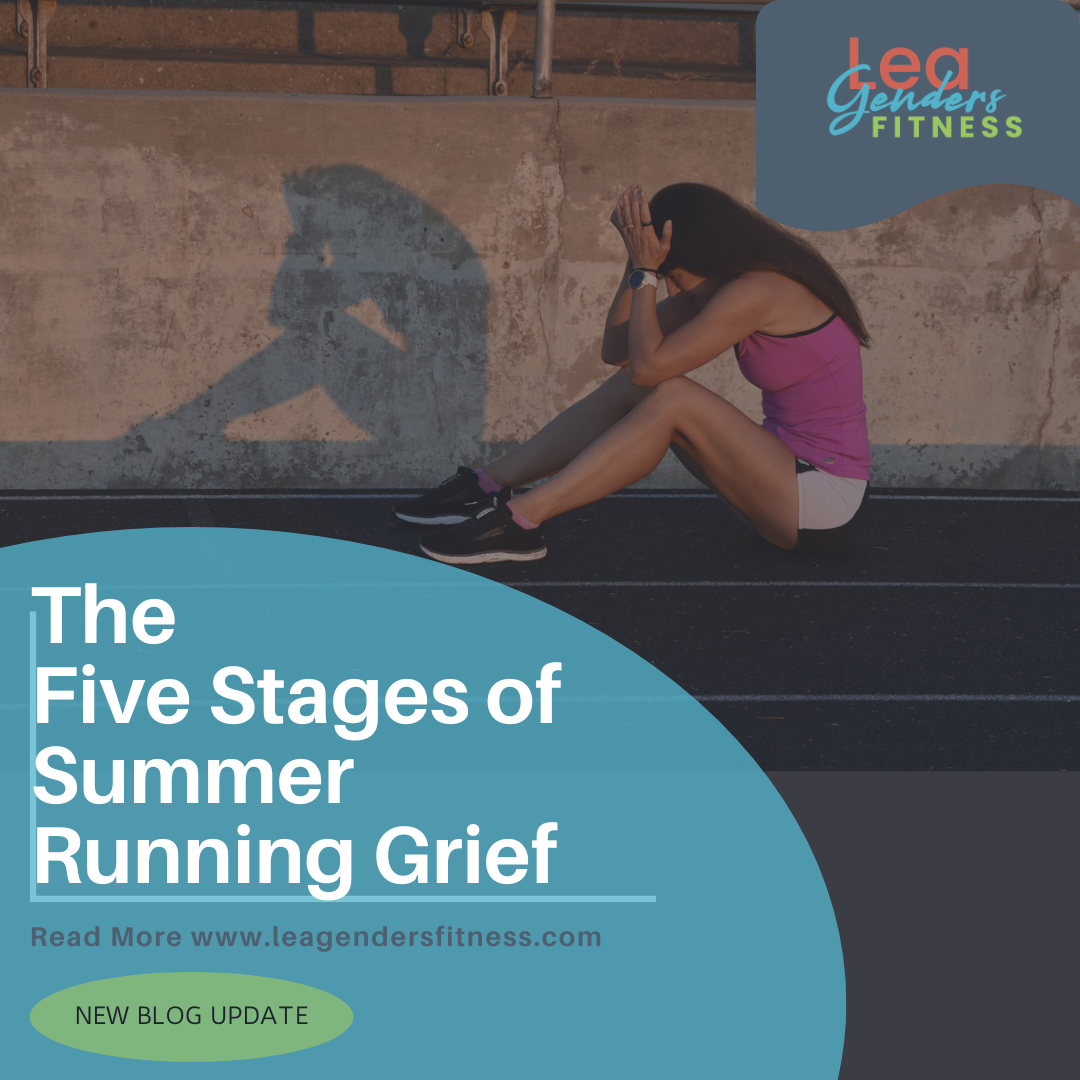
Is it just me, or does summer running amnesia hit every single year? Here we are re-learning those summer running lessons again. If you've ever found yourself bargaining for a breeze or wondering if your PR days are officially behind you, this one is for you. A tongue-in-cheek look at the 5 stages of summer running grief, and a gentle reminder of how to work with the heat instead of fighting it.