RUNNING

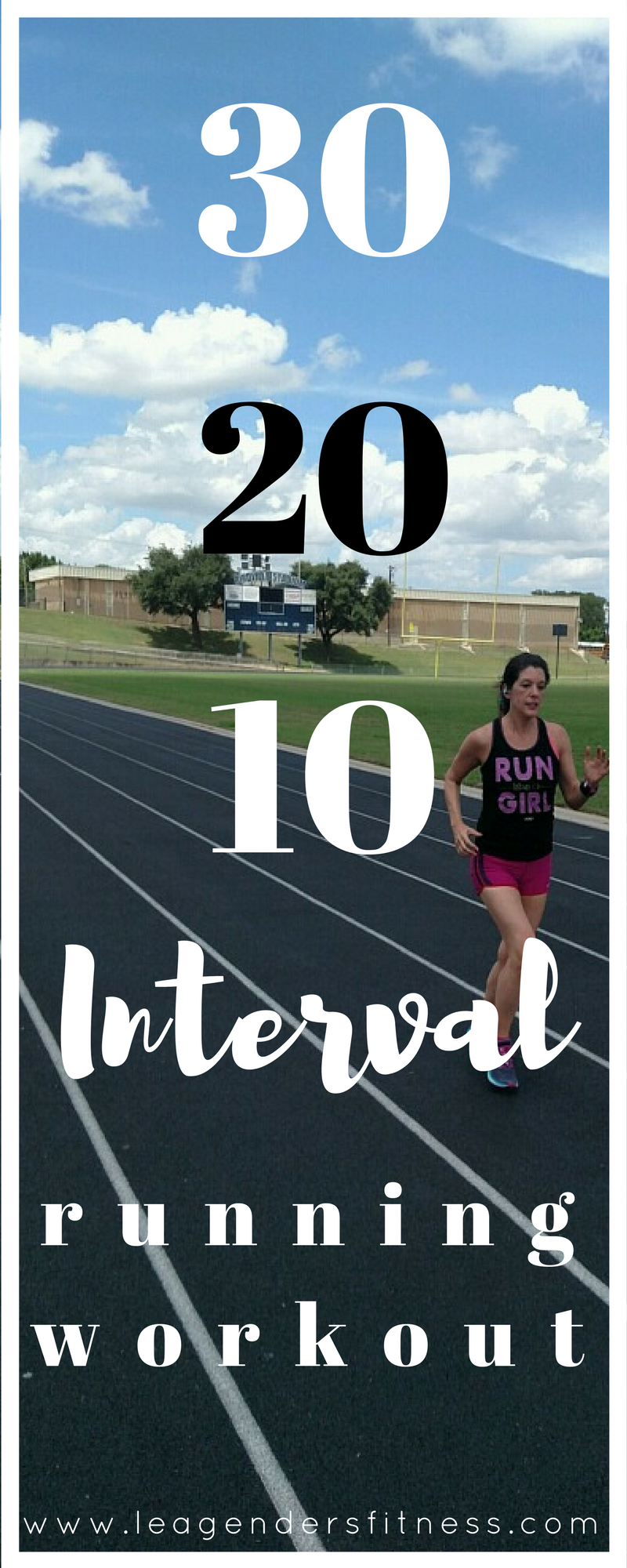
The 30-20-10 Interval Running Workout

Welcome to the latest edition of workout Wednesday! This week I have a great interval running workout for you to try. This workout was developed by Dr. Jens Bangsbo at the University of Copenhagen in Denmark to increase speed in recreational runners. If you are looking for an easy way to incorporate interval or speed training into your running workouts this is a great place to start. You could do it on the street or the track with a timer (affiliate --> I use a gymboss interval timer) or on the treadmill.
This is a by-feel paced workout. That means you don't need a GPS watch to make sure you hit certain paces. All you need is a timer and a pair of running shoes (OK, clothes would probably be a good idea too). 

Warm up by walking or jogging 10 minutes or one mile.

30 seconds

Start at a slow pace for 30 seconds. This should feel very easy, breathing is easy. For a beginner this may even be a brisk walk. It's called conversation pace. You could hold a conversation while maintaining this pace. 

20 seconds

Accelerate to a moderate pace for 20 seconds. This should be your race pace. A little faster than your easy pace but not an all-out-sprint. It should feel comfortably hard. You could probably get out a sentence or a few words between breaths, but you are working too hard to hold a conversation.

10 seconds

Then sprint as hard as you can for 10 seconds. Go for it. Give it all you have for 10 seconds. You can't talk at all while holding this pace. 

Repeat four more times in a row without rest for a total of 5 minutes of these intervals.

2 Minutes

Rest until your breath is fully recovered (about 2 minutes).

Repeat

Repeat these 30-20-10 sessions and rest periods until fatigued (no more than 30 minutes) for a quick and effective speed workout for runners of all levels

Cool down by jogging or walking 10 minutes or one mile.

Doesn't Ollie demonstrate the 10 second sprint pace picture perfectly? Good dog. 

Doesn't Ollie demonstrate the 10 second sprint pace picture perfectly? Good dog. 

Add this workout to your schedule 1-2 times per week with rest days and easy-paced run days in between hard workouts.

A general rule for intense training: A little is better than none and a lot is too much. Remember that our bodies adapt (grow stronger and faster) during rest, not during the workout. Allow your body adequate time to recover between hard workouts for the best results.

Like this post? It helps me when you share. 

Easy DIY Race Medal Hanger

Full disclosure: I'm terrible at DIY projects. I long to have the talent of those Pinterest sorceresses who magically turn random craft supplies into beautiful works of art. When I look for projects I usually search "kid friendly" to make sure it is within my scope of abilities. My largest limiting factor is patience. When I start a project, I just want it to be done, I don't want to wait for the paint to dry or to carefully cut out anything. Can't I just buy one? I needed a DIY project so easy that even I could do it. 

This idea to attempt my own DIY project stemmed from the fact that my current race medal holder is full and I saw one on Etsy that I loved for $75. It was gorgeous, but $75? It looked easy enough, maybe I could do that. I may not be good at DIY, but I had a backup plan...hubby! 

He actually had another big project going on around the house and my medal hanger was probably the last thing he wanted to focus on, but I think when he saw my sad DIY-self trying to spray paint chalkboard paint, he felt pity for me and helped...err...took over. 

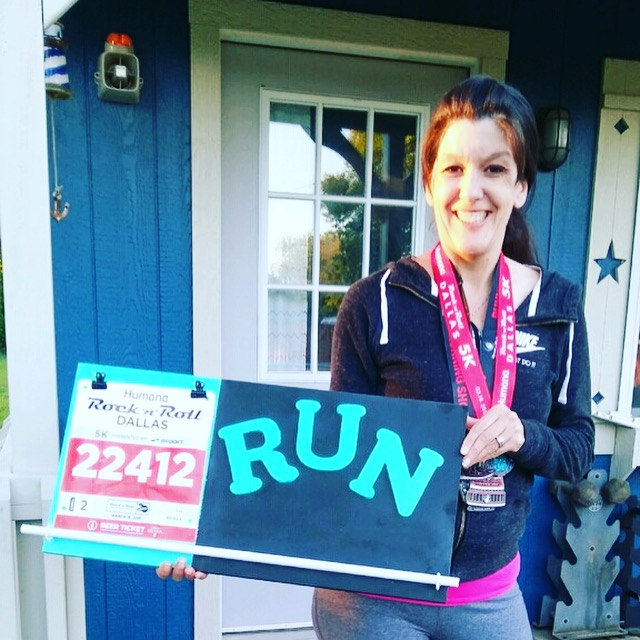
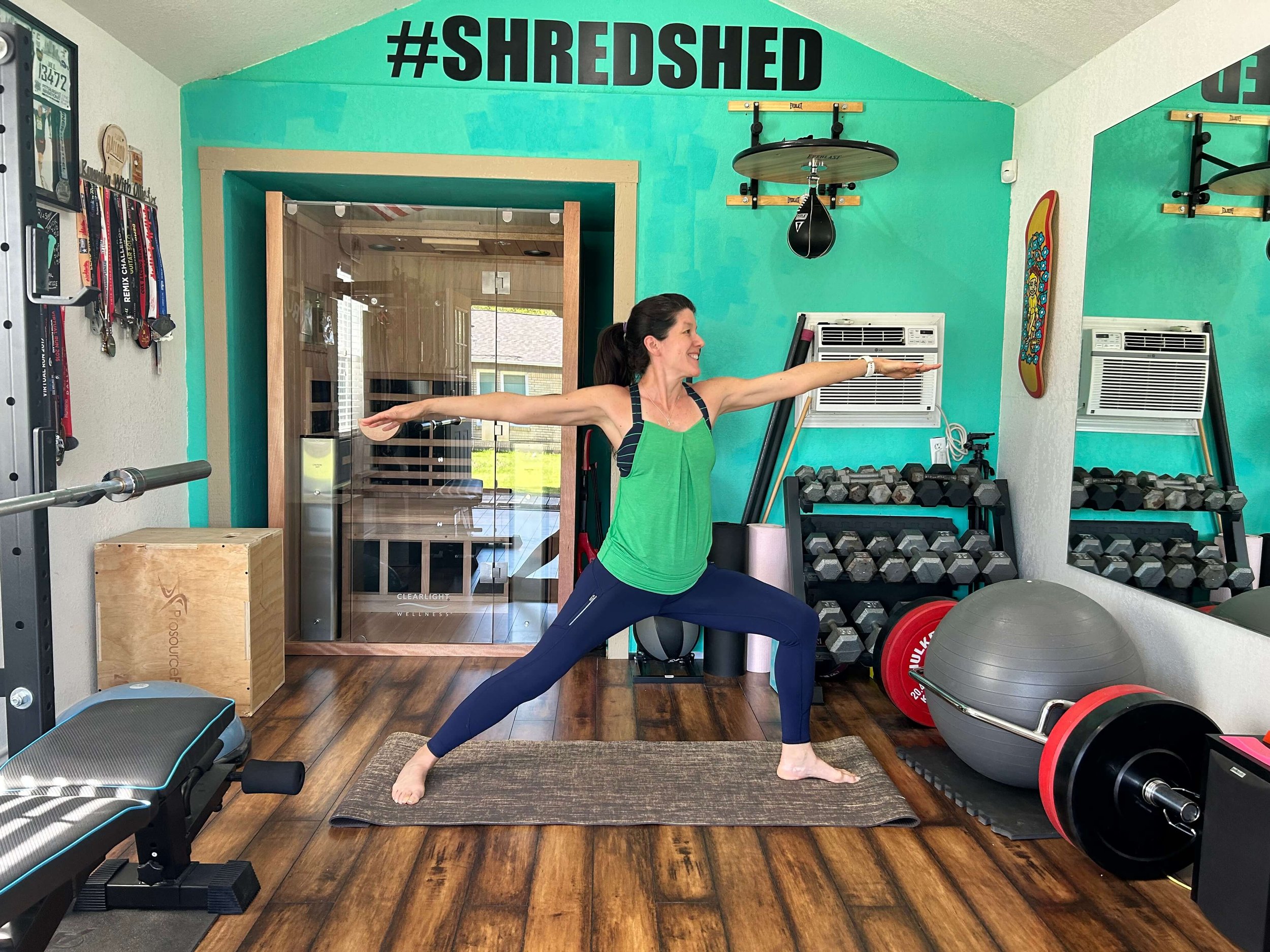
posing with my project in front of the #shredshed

posing with my project in front of the #shredshed

MATERIALS

Shopping for supplies? That I can do. 

I walked all over Home Depot looking for the perfect piece of wood and actually ended up buying a particle board shelf because it was already primed and just about the perfect size.

From Home Depot I bought the shelf, a can of chalkboard spray paint, a wooden dowel rod, a couple of hooks. About $13 total

From Hobby Lobby I bought wooden letters and metal clips. $7

Does the teal color look familiar? It's leftover from the #Shredshed.


THE PROJECT

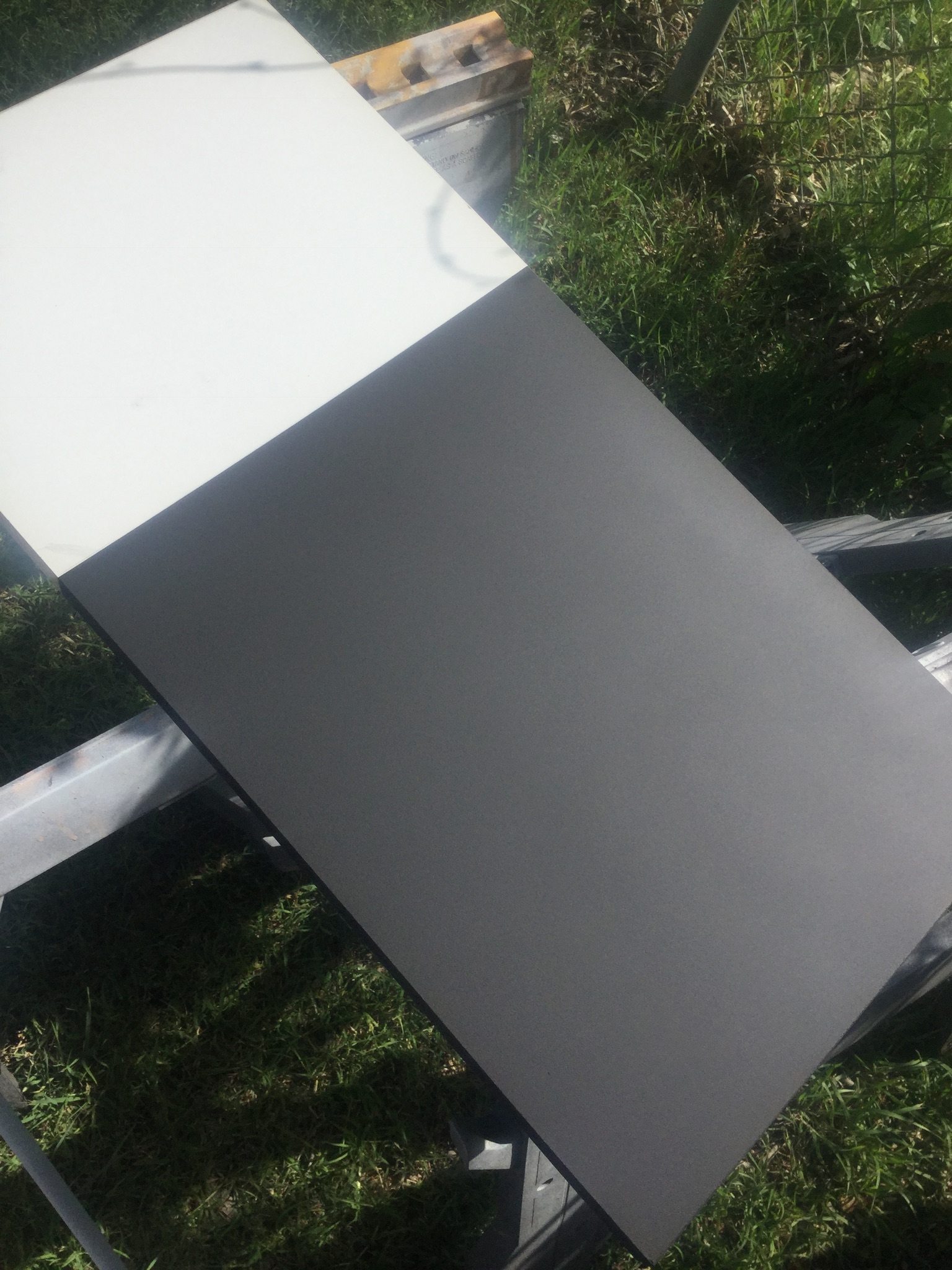
Hubs helped me tape off the board so I could spray the chalkboard paint. I was seriously annoyed when he told me we had to wait 24 hours for the chalkboard paint to dry before we could tape it off to paint the other side. Seriously? Ugh. Waiting. 

We (I use the word "we" liberally) painted the dowel rod white and cut it down to size. (Probably not in that order) Hah. 

I painted the letters, but I painted them on a magazine and that was a terrible idea. Don't do that. The paper stuck to the letters and I spent years (slight exaggeration) cutting the paper off the edges with a razor blade. I also used a paintbrush which was terrible idea number two. Hubby did the 2nd coat with a mini roller. 

lesson learned: Don't paint on a magazine

lesson learned: Don't paint on a magazine

Once everything finally dried and I cut off all that paper, hubs helped attach the clips, screw in the hooks and glue the letters. 

The idea was for it to say "RUN GOALS" and then I could write my current run goals in chalk under the letters. My super crafty-talented friend is going to help me paint the letters GOALS in white paint in some fancy hand lettering under the word run, but we haven't had a chance to get together on that yet. 

I know what you are thinking, For a DIY project, there is not a lot of "Y" going on. So maybe it's a DIYH (Do it Your Husband) or HDI (Husband Does It).

The Y in my DIY at work

The Y in my DIY at work

I'm grateful to have a hubby willing to help me with these types of projects, otherwise I might have had one of those Pinterest-fail pins to share. 

I think it turned out cute and best of all it was made with love. Perfect. Now I just need to add wall hangers on the back and find a spot for it in the #shredshed.

What do you think? Are you a DIY Queen or DIY-deficient, like me? 

Do you display your race medals? 

Like this post?

It helps me when you share on save on Pinterest


Coach Lea


Interval Running Workouts to Increase Speed

Welcome to another edition of workout Wednesday. This week we are talking running intervals. Intervals are get a great way to improve speed, VO2max and running economy, especially when you are short on time. Intervals allow you to up the intensity for short periods of time to get the maximum afterburn effect. We are going to dive into different types of interval running workouts. Sprinkle these workouts into your training once or twice a week to reap the benefits of interval workouts.

TABATA

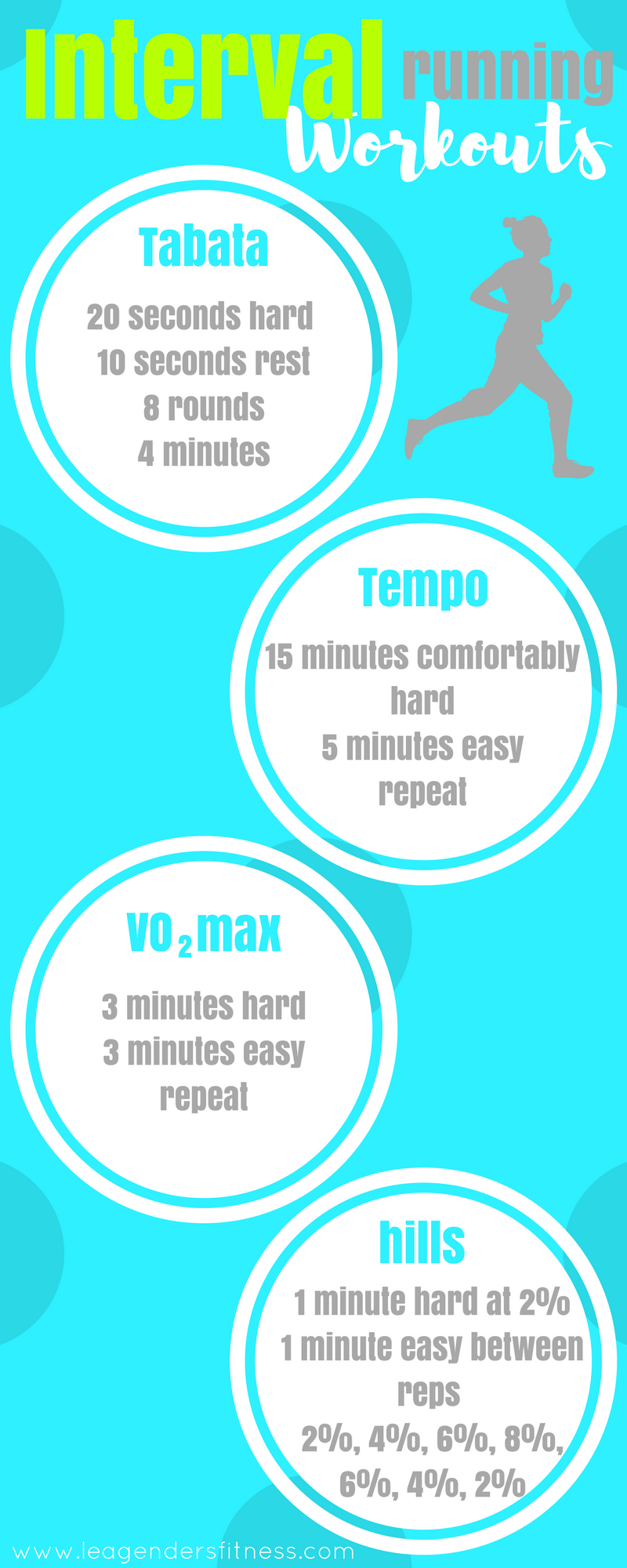
I love the Tabata protocol and if you only have four minutes to workout this is the interval for you. After warming up, run 20 seconds as hard as possible (95% of max heart-rate) then rest completely for 10 seconds. Complete 8 rounds for four minutes. That's one set. Recovery fully between sets. Repeat as many times as your fitness levels allows up to 30 minutes. 

TEMPO INTERVALS

A tempo pace is the fastest aerobic pace you can maintain for a steady-state run. It should feel comfortably-hard. If you ever raced a 5K for time, that is likely your tempo pace. With tempo intervals, after warming up, hold that pace, about 80% of max heart-rate for 15 minutes, then recover with a slow jog or walk for 5 minutes. Repeat.

Another tempo interval variation is to run for five minutes at a comfortably-hard pace, followed by five minutes of easy pace. Repeat for 30 minutes.

V02MAX INTERVALS

VO2max is the size of your aerobic engine. It's the maximum rate at which you consume oxygen and the best indicator of your aerobic fitness.

Warm up then run for 3 minutes hard at 95%-100% of max heart rate. This is the fastest you can run for three minutes without stopping. If you ran faster, you wouldn't be able to keep up the pace for three minutes, if you ran slower, you could probably go on longer than three minutes. It may take some experimenting to find your pace. Run three minutes at an easy pace to recover. Repeat according to your fitness ability up to 30 minutes.

HILLS

Every runner's' favorite interval workout is hills! Right? (crickets). This treadmill hill pyramid variation will challenge you. Hills are great for building strength. After warming up run one minute hard at 2% incline, then recover for one minute at 0% incline. Increase the incline each rep to 4%, 6%, 8%, then back down to 6%, 4%, 2% incline with a one minute easy jog recovery between reps at 0% incline.

Always warm up for 5-10 minutes before beginning a challenging workout and cooldown for 5 minutes once complete. Intervals workouts should be done 1-2 times a week for most runners and 3 times maximum for well-trained athletes. Always allow your body time to rest in-between intense workouts. Remember that adaptation (getting faster, stronger) happens during rest, not the workout. Allow your body the time to properly recover to reap the benefits of these challenging workouts!

Like this post? It helps me so much when you share or save to Pinterest.

5K HOORAY: 3.1 REASONS TO LOVE THE 5K

Happy Fri-YAY! This week we are talking 5Ks because I ran the Dallas Rock 'n' Roll marathon series 5K race last Saturday. While I still claim the half marathon as my favorite race distance, this race reminded me why I love 5Ks and racing in the first place. 

Why 3.1 reasons? Because a 5K race is 3.1 miles. Seems appropriate. 

1. 5Ks ARE FUN FOR EVERYONE

There's no question, most of the people who are out running a 5K are having fun. There are families, friends, kids, tutus and superheroes. A 5K offers a low barrier to entry, most people can at least walk a 5K no matter their current fitness level. It's a fun reason to get outside, get fresh air and some exercise. Even if you are a competitive type, a 5K can be the perfect reason to leave that GPS watch at home and remember why you fell in love with racing in the first place. 

2. 5Ks ARE A CHALLENGE FOR EVERYONE

Yes, 5Ks are fun, but don't get me wrong, that doesn't mean they can't be challenging. The great thing about 5Ks is that everyone can challenge themselves at their own level. For some, simply crossing the finish line is physically demanding enough. For others it may be a time goal. Whether you run a 35 minute 5K or a 19 minute 5K can you always challenge yourself to beat your PR by racing the clock. I once heard a misinformed person scoff that 5Ks were "too easy" and I knew right away that this person never really raced. Sure 3.1 miles may feel easy if you jog 3.1 miles, but if you are racing for time, you can push yourself to your limits (if you want to). 

3. 5Ks ARE EVERYWHERE

There is no shortage of 5K races. Most medium to large cities have organized 5Ks of different sizes almost every weekend. Whether it's a charity race, a city-organized event or a major race company rolling through town, the options for 5K races are everywhere! Want to run a 5K? Try a quick internet search or your local running store for a calendar of local events. 

3.1. NOW YOU CAN FINALLY BUY THAT 3.1 STICKER FOR YOUR CAR WINDOW

Join the club. Buy a 5K bumper sticker to start your running sticker collection and people will repeatedly ask you what it means. Any excuse to talk about running, right? You can hang a medal on a rack in your home, but everyone sees a sticker on your car.

If you want more info on training to run a 5K, I suggest that you start here: How to transition from running and walking intervals to just running. It's a good place to start if you can currently run with with walking intervals. 

Like this post? It helps me when you share.



TREADMILL TABATA WORKOUT

Welcome to the latest edition of Workout Wednesday! You may have noticed I am a little obsessed with the Tabata protocol. Tabata is 20 seconds of work, followed by 10 seconds of rest for 8 rounds totaling four minutes. I use them a lot on my Workout Wednesday posts, I use them at my bootcamps (great for group fitness!) and even in my own workouts. 

I must point out that a true Tabata is a near 100% effort for 20 seconds/followed by complete rest for 10 seconds. This is not exactly what we are doing here, so it is more of a play on the Tabata protocol, than an exact Tabata workout. 

If four minutes doesn't seem like enough of a workout for you, try doing burpees (or other intense exercise) during the 20 second work periods and see how you feel after four minutes. Hah. Otherwise, I stack them with a one minute rest period between each four minute Tabata.

This is a treadmill workout using my version of Tabata protocol. You can download a free Tabata timer app for your phone to easily track the intervals or use a (---> affiliate link) GymBoss timer like I do.

I don't like to assign speeds (mph) or paces to workouts published on this blog because everyone is so different. A 6.0 mph speed (10 minute mile pace) on the treadmill may feel like a leisurely jog to one person and be an all-out sprint to another. Always work at your own level. Please don't try to hit some arbitrary pace because a workout on Pinterest told you to. 

This is why I prefer the RPE chart. The RPE chart levels the playing field. Rate of Perceived Exertion allows you to work at the level that is appropriate for your fitness levels based on how you feel and your breathing rate. 

TREADMILL TABATA WORKOUT

MINUTES 1-4

Start by warming up for four steady minutes (no Tabata) at a 2-3 on the RPE chart. This is to get your blood circulating and prepare your body for a more intense workout. 

MINUTES 4-8

We will start to increase the intensity in this four minute Tabata. Choose a speed that will put you at a RPE 4-6. This may be a jog. You should be able to carry on a conversation at this pace. Cycle through the 20 seconds work/10 seconds rest protocol for four minutes. 

*During the rest intervals you can choose to lower the speed on the treadmill to a walking pace but with only 10 seconds to rest it doesn't give you much time for the belt to slow down before you need to speed back up into the work phase. Some people may choose to simply jump to the sides of the treadmill during the 10 second rest phase and let the belt roll. This could be dangerous, we don't want to fall off the back of the treadmill when we hop back on. Try at your own risk. I personally always choose to go with staying on the slowing belt during the rest. Safety first. 

MINUTES 8-9

Active rest at RPE 2-3 for one minute before starting your next cycle. This is usually a walk or very slow jog.

MINUTES 9-13

This cycle we are going to up the intensity a little more to a RPE 7-8 from the above chart. You should be working hard during the 20 second work intervals. 

MINUTES 13-14

Active rest at RPE 2-3 for one minute before starting your next cycle. 

MINUTES 14-18

This is your last high intensity cycle. Work at a RPE 7-8 again during the 20 second work intervals and RPE 2-3 during the 10 second rests. This is your last Tabata. Make it count. 

MINUTES 18-20

Cool down for at least two minutes by walking.

Give it a try! Like this post? Please consider sharing or saving to your favorite Pinterest workout board.