How To Cut Carbs Without Cutting Your Sanity

Let me start by saying that I love carbohydrates. It's my favorite macronutrient. Our bodies need carbs, especially if we are athletes. Who am I to deny my body something it needs. Amiright? 

Food is not just about nutrients and fuel, it is also about enjoyment. We need to find the balance of what we enjoy eating and what is good for our bodies. Let's find the sweet spot of sanity and sustainability. What healthy eating habits can we sustain for the rest of our lives?

If you tell me I can never have a carb again, then we are not friends. That is simply not sustainable for my lifestyle. I want to be healthy, but I also want to enjoy my life. Finding that balance is key. 

Cutting carbs is popular on the diet circuit because when we cut carbs we lose water right away and the number goes down on the scale. It isn't magic. In the beginning it is likely water weight. It's great. You look a little leaner, the scale shows a lower number and the button isn't popping off your pants anymore. You probably didn't lose fat, but you lost weight. I get it. It feels good. 

When we cut carbs we also cut calories. If you order a hamburger without the bun, you just cut 150-300 calories from your meal. The calorie deficit is also contributing to your weight loss.

I don't have any issues with limiting carb intake to reach body composition goals, the problem arises when we ignore our bodies feedback and take it too far. Our bodies have a way of telling us what it needs. We just need to get in tune with our bodies to hear these messages. 

Carbohydrates aren't bad. When we demonize foods we end up unbalanced and risk nutrient deficiencies. Our ultimate goal should always be health and balance. That includes a healthy body and mind. We shouldn't stress about any foods.

Our bodies are all different and we have different tolerances to carbohydrates. While some people may thrive on a low carbohydrate diet all the time, others will be grumpy, low energy and...did I mention grumpy? (Raises hand.) It's all about experimenting with carb intake and honestly assessing how you look, feel and perform. If you look, feel and perform your best on a low carb diet, then go for it. If you feel like $hit after day three and your workout sucks, maybe it's time to eat some oatmeal.

We are all individuals and have individual nutrient needs. Just because your friend claims to to have lost 20 pounds and feels great on a low carb diet, doesn't mean your body will react the same way. In turn just because I feel like crap on a low carb diet doesn't mean all my clients will too. As a nutrition coach, it is not about pushing my personal diet strategies on my clients, it is about working with them to establish a protocol that works best for their body. 

The key to achieving all the benefits of a low carb diet without going crazy is in carb quality and carb timing. 

FOCUS ON CARB QUALITY

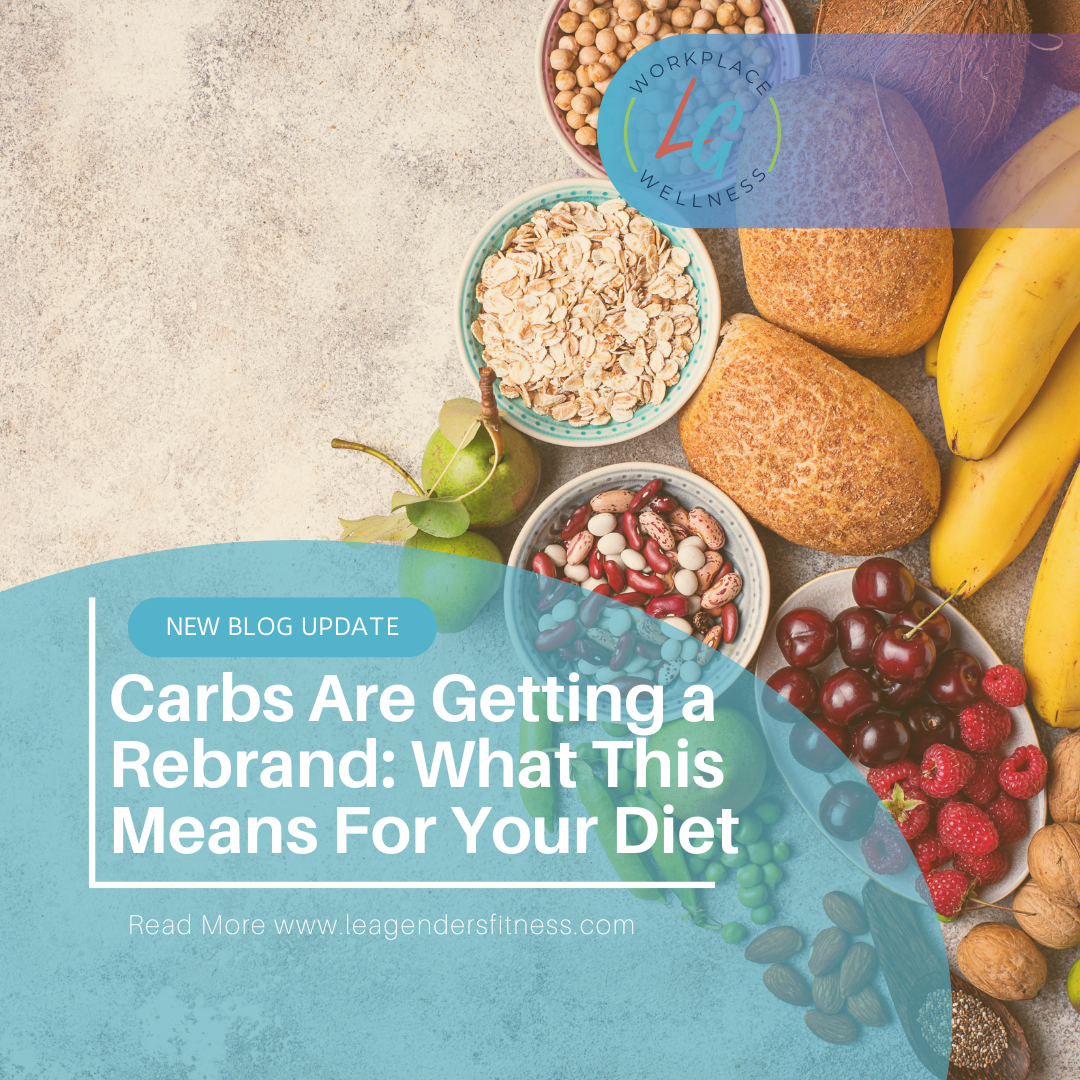
The first way to cut carbs without cutting sanity is to simply cut out processed carbs. If we limit our carb intake to whole foods we eliminate most of the problems with carbs. Carbs aren't bad in themselves, it just so happens that most processed foods are carbs.

If you first work to eliminate or reduce the white flour, added sugar, salty snacks, most packaged foods, cereal, beer and soda you cut out the carbs that are less than ideal. What's left? Fruit, oatmeal, potatoes, whole grains, vegetables, quinoa and rice as some examples. If you limit processed foods and added sugars, that is probably all the carbs that most people need to cut. Especially athletes.

I am also not saying never to eat a potato chip or slice of pizza again, just that these things should be the exception, not the rule. What you do daily matters more than what you do once in awhile.

CARB TIMING

Once you have already reduced processed carbs from your diet you can take it to the next level with carb timing by consuming most your carbs for the day right before and after your workouts and reducing carb intake on your rest days. This is an effective way to ensure your body gets the carbs it needs to perform well, while reducing the chances that there will be excess calories that lead to fat storage. 

Remember that carbs don't make you fat. Fat doesn't make you fat. Calorie surplus over energy needs is a major factor in fat storage. It's about balance. 

Focus on eating whole nutrient-dense foods in proper portions from a variety of food sources for happy healthy body and mind. 

HOW'S THAT WORKING FOR YOU?

There is a lot of controversy surrounding nutrition and people can have very strong beliefs about their diet approach, the best way to eat healthfully and lose weight. The truth is there is no one best diet. Each of our bodies are different and only we know how our bodies respond to different diet philosophies. The problem only arises when we ignore our body's natural feedback in order to stick to a diet that clearly isn't working for us. The bottom line is that if you can honestly say that you LOOK, FEEL and PERFORM your best, then I'd say keep doing whatever you are doing. 

Me? I'm sticking with healthy carbs. Need help with your nutrition strategy? Tired of dieting? Want help making healthy choices while staying sane and balanced? Join my nutrition and lifestyle coaching program for long term sustainable results.

Like this post? I'd love it if you would share.


MINI BAND EXERCISES FOR RUNNERS

Welcome to the latest edition of Workout Wednesday! When I talk to runners about strength training we often talk about minimum required dose. Runners aren't usually thrilled of the idea of spending hours in the gym each week. They run because they love to run. They strength train (or they probably should) because they want to be a stronger, faster runner while reducing the chances of injury.

Minimum required dose is the least amount we can do to get results. The truth is you don't need to spend hours and hours in the gym each week. You can spend 10-15 minutes at the end of each run, or 30 minutes three times a week or an hour twice a week. It depends on your goals, your lifestyle, your preferences and your abilities.

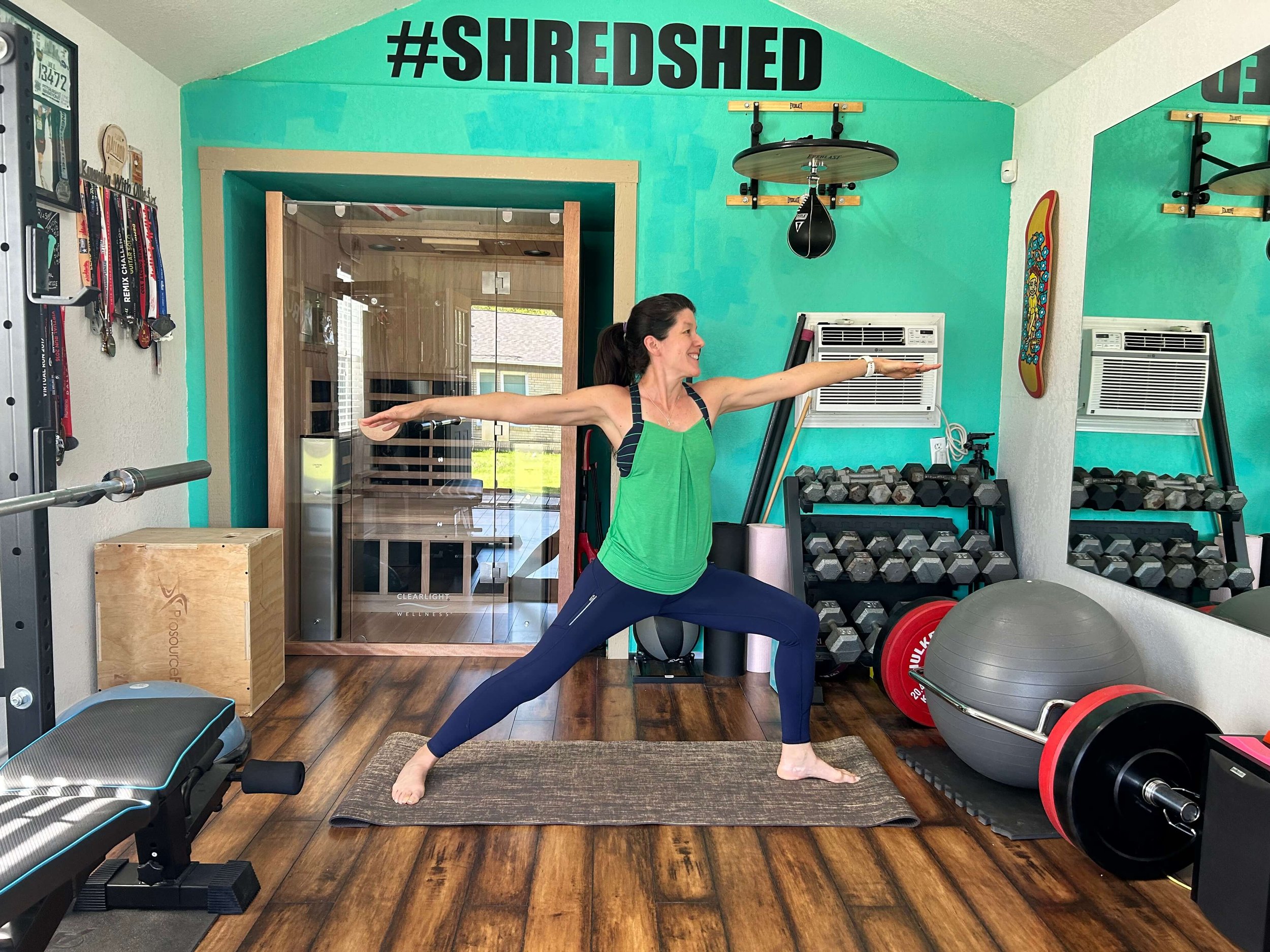
My friend took these pictures for me in the #ShredShed and she sent me this GIF. 

My friend took these pictures for me in the #ShredShed and she sent me this GIF. 

If you want to be a great runner it makes sense to spend a lot of time running. However, investing the time in strength training often yields big results for runners. It is OK to start small and build over time. A little strength training is always better than none. Our goal should be to become well-rounded athletes. 

This post contains affiliate links. That means if you click on a link in the post and make a purchase I make a small percentage of the sale with no additional cost to you. No one is getting rich here, it just helps with the running (pun intended) of this blog. 

This is why I love mini bands. They are very inexpensive, portable and the exercises can be done anywhere at anytime (well, maybe not in the halls at work or school). You don't need to invest a lot of money into strength training equipment, these little bands provide plenty of resistance. You could even put one in your running belt so you can squeeze in some exercises after your outdoor run. 


This weekend I hit the #Shredshed to show you some exercises you can do to incorporate glute/hip strength training into your running routine. Weak hips are often the missing link for runners and can be the source of all kinds of problems and injuries. A little pre-hab can go a long way in injury prevention. 

If you are brand new to this or if you don't have mini bands, you can do these exercises without the bands to start and then add bands in a few weeks in order to continue to progress. Our bodies adapt to the exercises that we do, so every three to four weeks look for ways to make the exercise harder, either by adding more resistance, more reps, more sets, more days, etc. 

I recommend starting by incorporating these exercises at the end of an easy run day two times per week. Start with 2 sets of 10 reps of each exercise. I like to do them in circuit fashion, moving from one exercise to the next with little break, then repeating the circuit one more time.

You can buy mini bands here on Amazon.

Coach's Tip

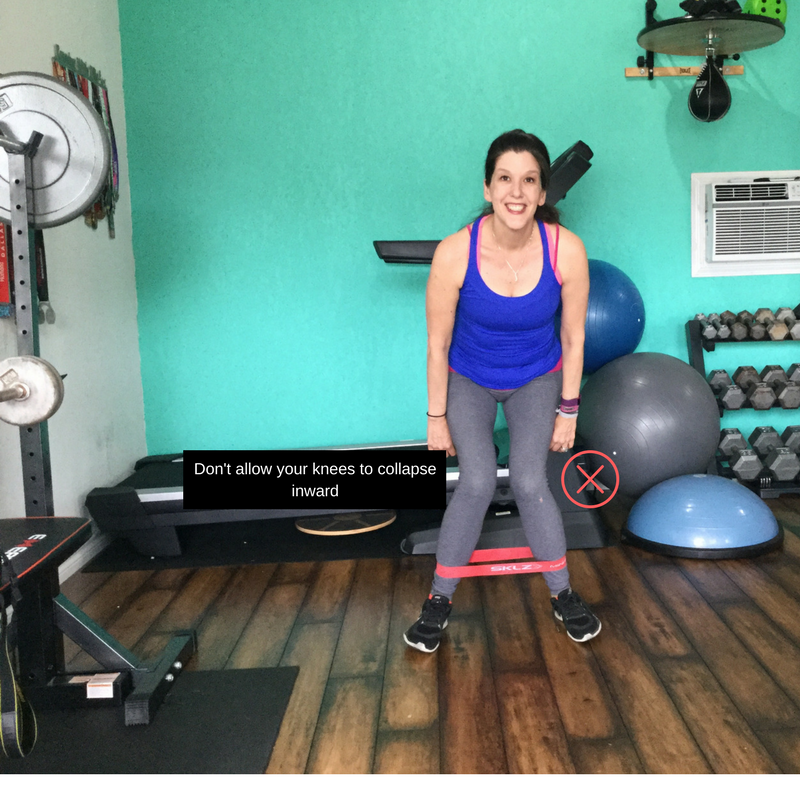
Be careful not to let your knees collapse inward when performing any of these exercises. Work to keep your knees out and inline with your toes. 

what NOT to do.

what NOT to do.

Good luck! Give it a try after your next easy run and let me know if you feel the burn! 

Like this post? It helps me a lot when you share or save to Pinterest.

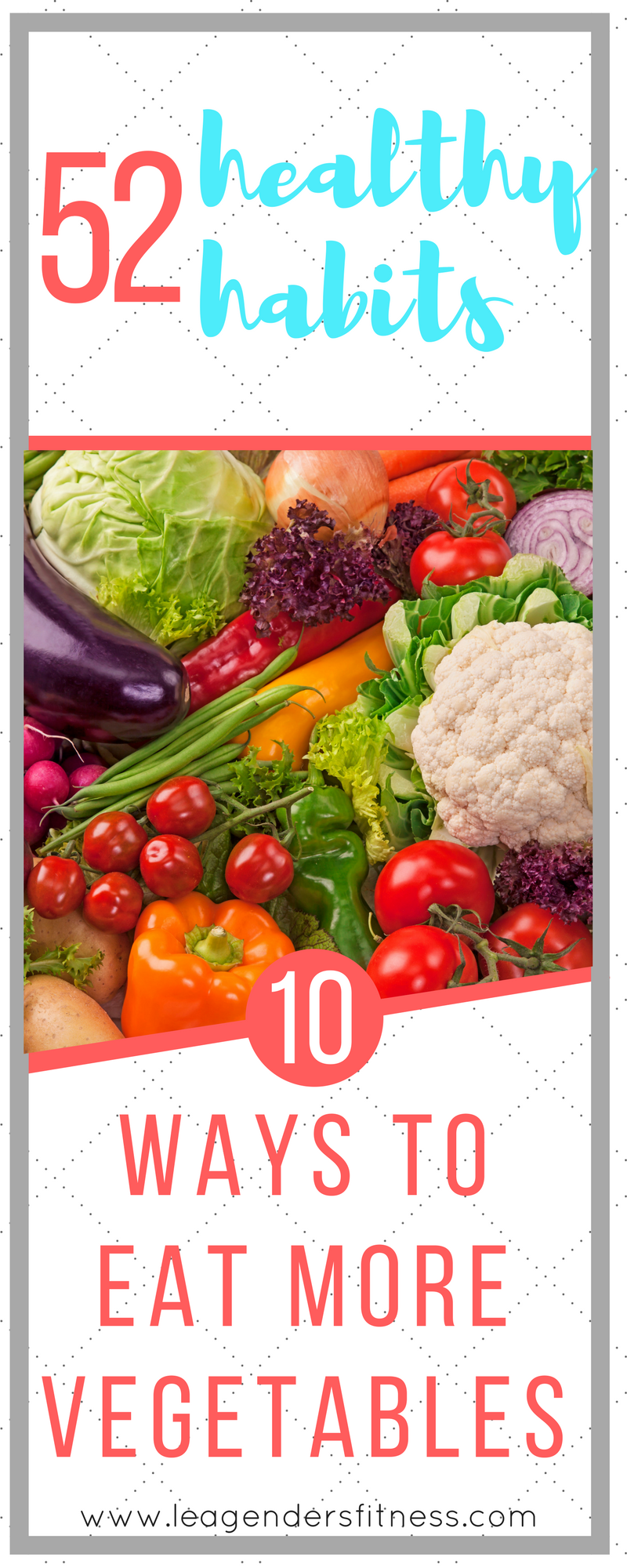
52 Healthy Habits: 10 Easy Ways To Eat More Vegetables

Welcome to the latest edition of 52 healthy habits, when each week I tackle a new healthy habit. Healthy habits are the building blocks of a healthy lifestyle. In this series we look for ways to take small steps forward towards a healthier body and mind. It's not about overhauling our whole lives, it's about tackling one small lifestyle change at a time.

No matter where you are in your fitness journey, from beginner to elite athlete, there is always room for incremental improvements. It's the small things that snowball into big changes. Consistently improving your lifestyle will yield lasting results.

As much controversy that exists around diet and nutrition, one thing that is almost universally agreed upon is that most of us need to eat more vegetables. If you shudder at the thought of choking down soggy steamed squash, I have some better ideas. Vegetables are healthy, convenient and delicious!

This post contains affiliate links. This means if you click on a link and make a purchase, I make a small percentage of the sale with no extra cost to you. No one is getting rich here it just helps with the running (pun intended) of this blog. 

WHY VEGGIES?

Vegetables are high in nutrients and fiber and generally low in calories. They help you feel fuller, longer with less calories. They help fill you up and keep your digestive system healthy. For best results try a variety of multi-colored veggies. Look to add a variety of green, red, orange, purple and yellow vegetables to your diet. It's nearly impossible to overeat vegetables, so next time you're looking for a side dish, a meal or a snack, a vegetable is always a great choice.

10 EASY WAYS EAT MORE VEGETABLES

Add veggies to your eggs

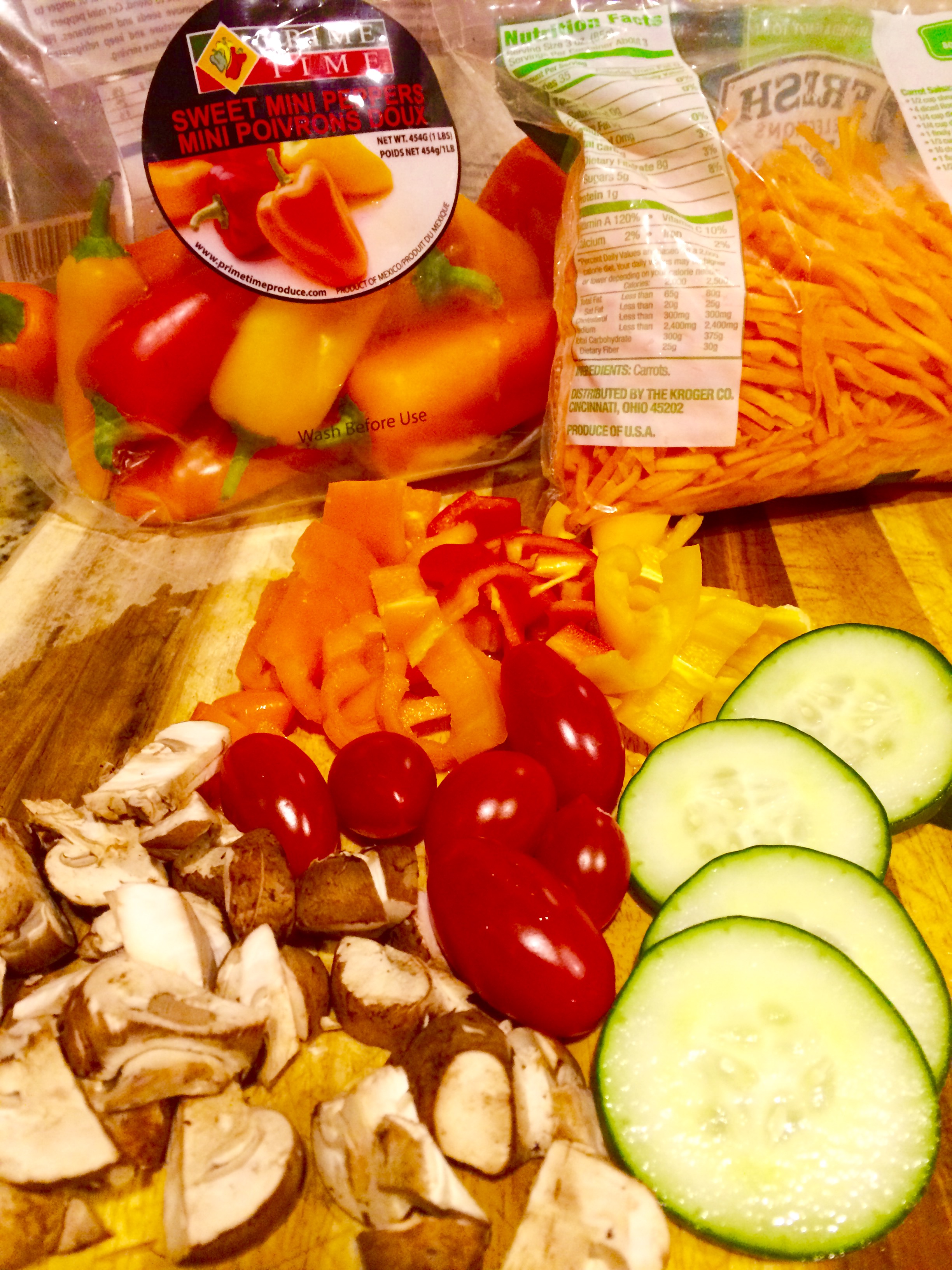
Cut up some peppers, onions, mushrooms and spinach to scramble into your morning eggs. I often prep the vegetables by cutting them up on Sunday for the week, then in the morning, I can just grab a handful and toss into the pan with my eggs. 

Add spinach to your protein shake

An easy, sneaky way to get in a serving of greens is to add a handful of spinach or other leafy greens to your protein shake. When you mix it up with fruit and protein powder you won't even taste it. Think about what other veggies can you add for an anti-oxidant boost. Carrots, celery, cucumbers and beets are all good choices. 

Eat a small spinach salad with every meal

Instead of a side of processed carbs, order or make a salad as a side to your main dish or eat a salad with a lean protein as your meal. You can choose the convenience of pre-washed salad or choose raw spinach that needs washed and cut for a much lower cost. 

Snack on raw veggies

Raw veggies make a great snack. You can chop and wash them yourself to save money or buy them already cut and prepped for convenience. Carrots, broccoli, cauliflower, peppers and celery are all great choices. 

Buy frozen veggies

Frozen vegetables have nearly the same nutrient profile as fresh vegetables. Even if we lose a little in the process, frozen vegetables are still better than not consuming vegetables at all, or say, ordering a pizza. In other words, we do the best we can with what we have. When in a pinch, steamed frozen veggies can be a great option for a quick healthy serving of vegetables.

Add double veggies to a casserole

Casserole dishes are an easy way to sneak in some extra veggies. Just chop and add, or use frozen, you really can't go wrong. Shredded vegetables, like zucchini or summer squash, can be added to your favorite casserole dish without affecting taste or texture.

Dip and spice up

Vegetables don't have to be boring. Uses spices to flavor cooked vegetables. Melt cheese over your broccoli, dip those raw vegetables into a guacamole mixture or make your own Greek yogurt-based dip. 

Make veggie noodles or spaghetti squash

I love spaghetti squash. It is easy to prepare and when you top with pasta sauce and parmesan cheese you may not even realize you're eating a vegetable.

I also love those veggie spiralizers that turn your zucchini, carrots or summer squash into pasta-like noodles.

Join a vegetable co-op

Join a local vegetable co-op to try a variety of fruits and vegetables. You support local farmers while getting an opportunity to try different types of vegetables you normally wouldn't buy. Variety is a huge factor to ensure we are getting all of our vitamin and mineral needs. 

Supplement with powdered greens

Once you added all the whole foods you can in your meals, it may be time to supplement if you still are not meeting your requirements. Whole foods are always better, but a powdered greens supplement can help fill in the nutritional gaps. 

Just try one or two of these suggestions this week to add more vegetables in your diet. I always like to look at a diet as what we can add, rather than what we will take away. If we add vegetables first, we may be less likely to fill up on less-healthy alternatives. 

Are you with me? 

Need to catch up on the 52 healthy habits series? 

52 HEALTHY HABITS SERIES

week 1: Early to Rise
week 2: Track calories
week 3: Macro cycling
week 4: Morning pages (journaling)
week 5: Stop the scrolling (reading instead of social media)
week 6: Be a good student (take time for learning) 
week 7: Strength Training 15 minutes per day   
week 8: Eat more protein
week 9: Take a coffee break (break from caffeine)
week 10: Mindful eating
week 11: Create and follow a sleep ritual

Like this post? It helps me when you share or save to Pinterest. 


Coach Lea


How to Set Goals That Stick: Process vs. Outcome

It's April and a great time to review those New Year Resolutions. Remember those? How's it going? We've had three months to kick off our new year goals. If you are rocking and rolling then congratulations on being part of the small percentage of people that stick to their New Year goals after March 1st. 

If you've struggled to stay committed or forgot all about those goals by now, never fear, we don't have to wait until 2018 to give it another go. April is a new quarter and a perfect opportunity for a new start or a chance to evaluate (maybe change?) those original goals. The truth is if you made big goals for 2017 and they didn't pan out exactly as you hoped, it probably is not your fault. It's the fault of the goal itself. We are human and have certain universal limiting factors. We can make intense goals then try to white-knuckle our way into achieving them using willpower and extreme self-discipline but that hardly ever works. The better way to lasting change is to change the way we set goals. 

HOW TO SET GOALS THAT STICK

You know about setting S.M.A.R.T. goals, right? Make sure your goals are Specific, Measurable, Achievable, Realistic and Timely. These are all important factors for goal setting. In a nutshell, instead of saying that your goal is to lose weight, it is better to say that you want to lose 10 pounds of fat in two months by exercising 4 times a week and reducing calories by 250 per day. Be specific as possible with a goal that you can measure, that is realistic and doable within a reasonable timeframe. 

The biggest issue with most goals is that they are outcome-based goals alone. It's OK to have outcome-based goals (lose fat, run faster, lift heavier), the problem is that we can't always control the outcomes. We can't wish for our goals to come true, we have to work for them. The trouble is that our bodies can be snarky (yes, it's a word) and sometimes even if it seems we do everything right, we still don't see the outcomes we want in the time we expect. That can be frustrating and cause some people to become disheartened and give up.

Some of that may just be having realistic expectations. If it took you five years to put on extra weight, it's just not realistic to expect that you will lose it in two weeks or two months. Yes, we all want results as quickly as possible, but slow and steady wins the race. The secret sauce is finding the sweet spot between sanity and sustainability. We want to set goals we can achieve over the long term without driving ourselves crazy. Healthy lifestyle includes healthy body and healthy mind. If your goals are making you miserable, interfering with your family and social life or making you feel bad about yourself, it might be time to refine your goals. 

SETTING PROCESS GOALS

You set your outcome-based goals (lose fat, run faster, lift heavier, etc.). The next most important thing to do is set your process goals. What are the things you need to do each day in order to achieve your goals? If your goal is to lose fat, then your process-based goals probably would look like something this:

Cardio exercise 3 times a week for 30-45 minutes with one intense interval session, full body strength training 2-3 times a week, 8-10k steps a day and reduce calorie intake by 250-350 calories per day, reduce added sugar intake to under 20 grams a day. (This is just an example, if you are starting from zero, then you would build up to this over time.)

Your goal would be to check off each day or each week that you completed the process goals. At the end of two weeks you might decide to reward yourself (healthfully) for completing all your process goals, even if you didn't see large improvements in your outcome goal. 

If you are nailing the process goals, they become habit. When healthy habits are part of your lifestyle they go a long way to helping you achieve those outcome goals. It's about sustainable actions over the long term. It's not what you can do in one hour or in one week, it's about what you can sustain over the long term. In other words, it is better to lose 40 pounds slowly over six months, than it is to starve yourself, lose it quickly and then gain it back because you reached your goal weight and loosened up on your unsustainable practices. Trust me when I tell you I learned this lesson the hard way.

Here is an example: I am studying for my Precision Nutrition Sports and Exercise Nutrition Level 1 certification. I set process goals and outcome goals each week. My goals last week were to study one hour each night for six nights and at lunch three days per week. I planned to complete three chapters in seven days. See how I included both process and outcome goals? 

Ollie, my study buddy.

Ollie, my study buddy.

At the end of the week I met my process goals but not my outcome goal. I studied each night and at lunch as I had planned but only completed two out of three chapters because I underestimated the length of the chapters and therefore had unrealistic expectations of my outcome this week. It took me longer to get through chapters 13 and 14 than anticipated. I was tempted to rush through the workbook questions in order to finish faster and possibly be able to get in another chapter this week, but I quickly realized that hurrying through the chapter to meet some arbitrary goal was not serving me and my larger purpose (you know, to actually learn this stuff).

So I slowed down and did what was realistic and sustainable. I am closing in on the end of this certification, so an extra few days or an extra week won't make a difference once I am certified, but slowing down to make sure I learn the material is key to my success with the program. I still consider the week a success because I did the actions I needed to do to meet my long term term goal (pass the certification test). 

You see, my outcome goal was unrealistic but I didn't know it until I started the process. This often can happen with our health and fitness goals. Rushing through or trying to speed up the process does not serve us in the long term. 

(Edited to include that I passed the certification test!)

ACTION STEPS

Set your outcome-based big goals, then decide on the actions you need to take each day and each week to reach your goals. Then focus heavily on these process-based goals. Judge your success by your completion of the process goals. If you are unable to complete your process goals, make them smaller until they are achievable. Failed to workout for an hour four times last week? This week try to achieve just 30 minutes 3 times. You have the rest of your life to progress forward. Start small for the best chances of success. A 15 minute workout that you completed is always better than an hour workout you didn't have time to do. 

It's important that your process goals are sustainable. What can you do every day for the long term without driving yourself crazy?

Experiment and find out and you'll be well on your way to achieving all your goals. 

Like this post? It helps me when you share.


Rock 'n' Reps Pyramid Workout

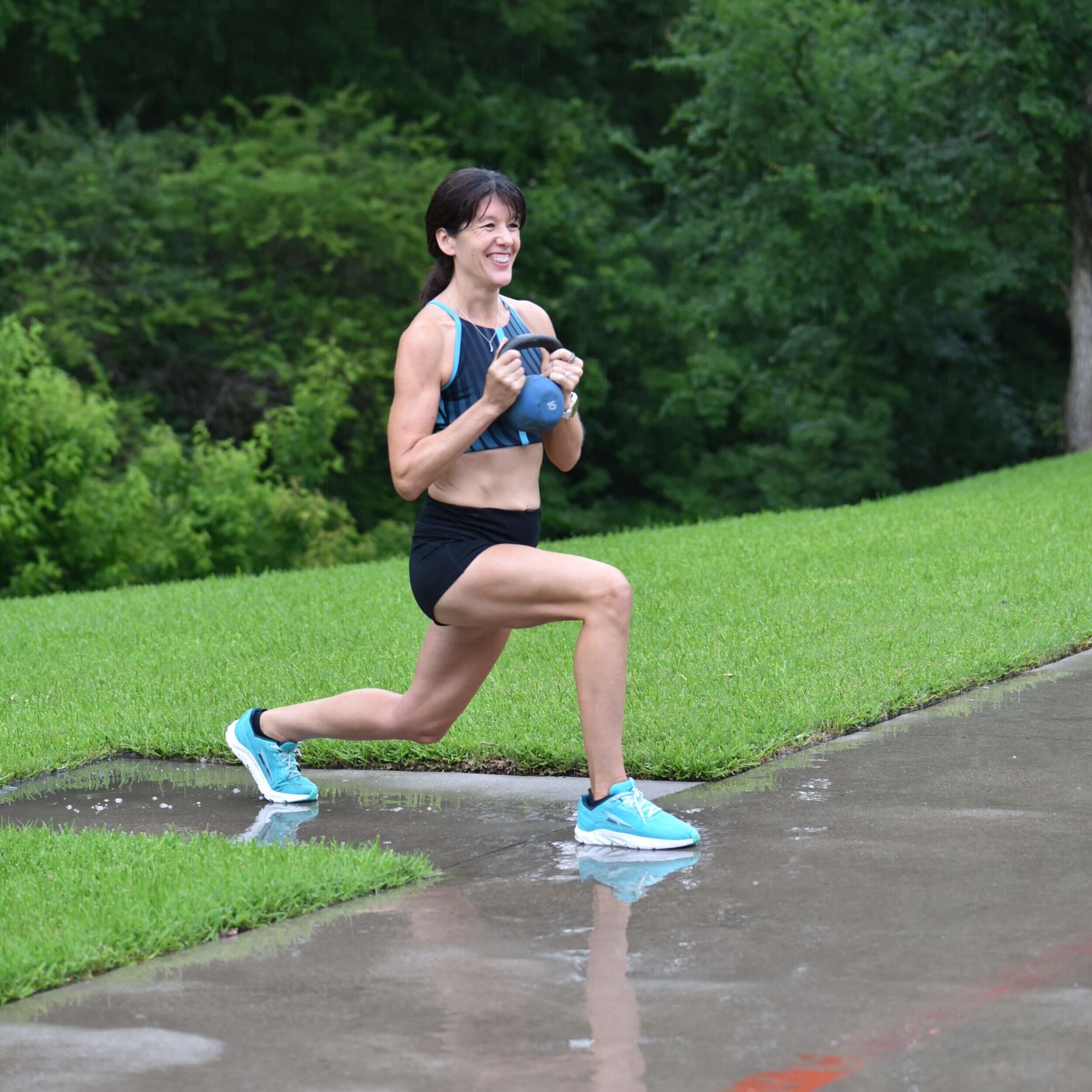
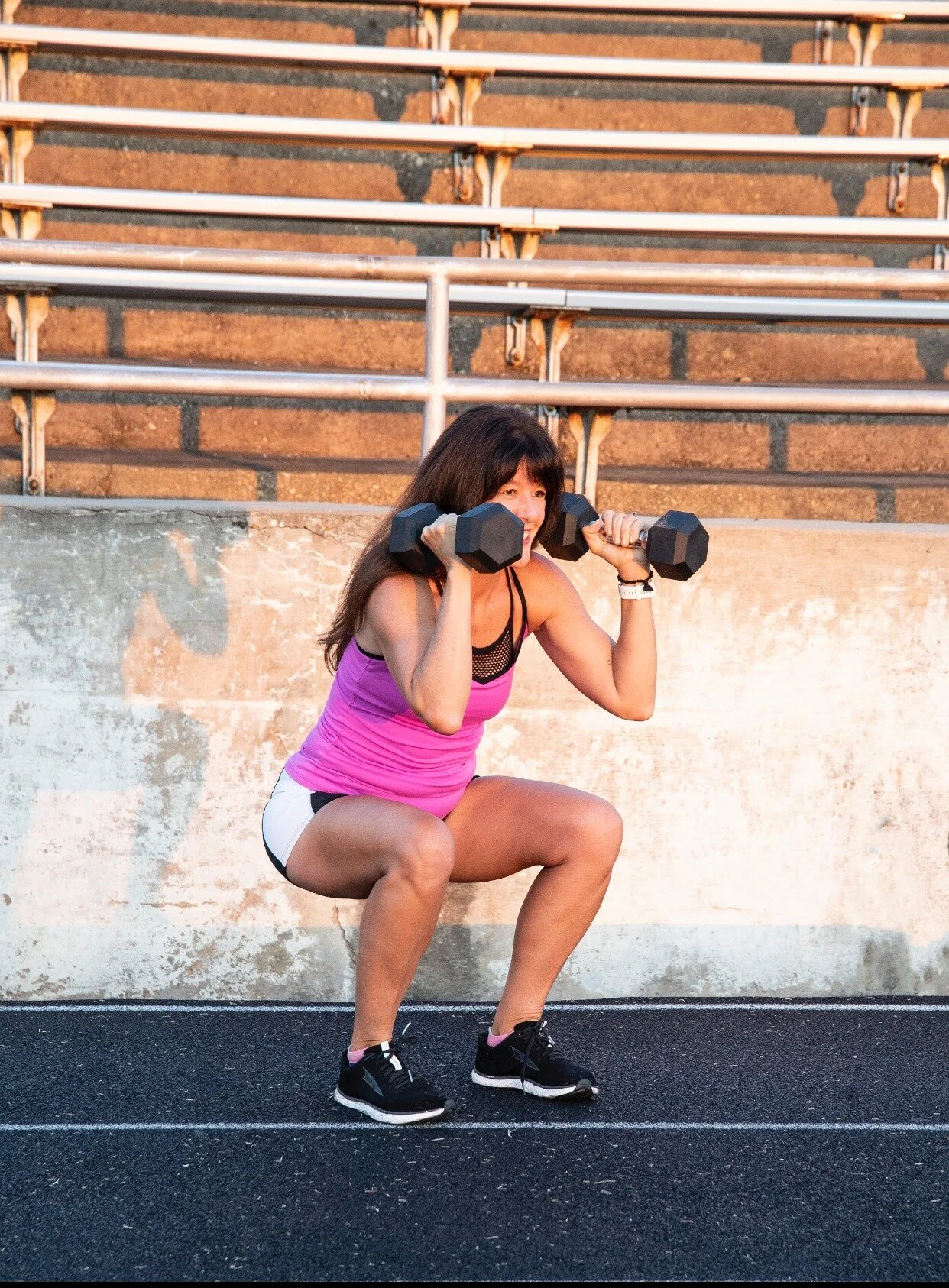
Are you ready to Rock 'n' Rep? Welcome to the latest edition of Workout Wednesday! This week I have a quick workout for you to try after your next easy run. It's the Rock 'n' Reps Pyramid workout. The rock part is an isometric hold. This means you hold the position for the time indicated. You can you use a timer or just count one-mississippi, two-mississippi, etc. Then perform the assigned amounts of reps for each exercise. 

SQUAT PYRAMID

5 second isometric squat hold, 5 reps
10 second isometric squat hold, 10 reps
15 second isometric squat hold, 15 reps
10 second isometric squat hold, 10 reps
5 second isometric squat hold, 5 reps

PLANK AND PUSH-UP PYRAMID

5 second isometric plank, 5 push-ups
10 seconds isometric plank, 10 push-ups
15 second isometric plank, 15 push-ups
10 seconds isometric plank, 10 push-ups
5 seconds isometric plank, 5 push-ups

BRIDGE PYRAMID

5 second isometric bridge hold, 5 reps
10 second isometric bridge hold, 10 reps
15 second isometric bridge hold, 15 reps
10 second isometric bridge hold, 10 reps
5 second isometric bridge hold, 5 reps

This is also a fun one to try if you have a partner. One partner would perform the reps while the other partner holds and then switch roles before you work up and down the pyramid time/reps.

Like this post? It helps me when you share or save on Pinterest