RUNNING

LONG INTERVALS: SPEED WORKOUT FOR THE DISTANCE RUNNER

Welcome to the latest edition of workout Wednesday when each week I share a new running or strength training for runners workout. This week we are talking about speed for the distance runner. If you are a long distance runner training for a 10K, half or full marathon, then this is the workout that will help you progress.

Long intervals are speed intervals from 1/2 mile to two mile repeats with shorter periods of recovery. Long intervals are great for distance runners midway in their training cycle who want to improve their race times.

BENEFITS OF LONG INTERVALS FOR DISTANCE RUNNERS

  • Trains the cardiorespiratory system
  • Trains fast twitch muscle ability which means improved speed and power
  • Trains mental strength to endure longer intervals at an uncomfortable pace 
  • Increases strength and promotes an efficient running form
  • Helps increase the anaerobic threshold which means you can run faster with less effort
  • Helps prepare for faster paces during longer races

Convinced these are worth your time? Great. Now like any good running coach, let me warn you of the potential pitfalls. Intervals workouts should generally be introduced into your training plan after an aerobic base has been established.

When you begin your race training cycle, spend the first 4-6 weeks building mileage at a conversational pace. This period allows your body to adapt to running before increasing the intensity with intervals. You must train your muscles, tendons, joints and ligaments to adapt to the stresses of running before introducing high intensity runs. Speed work may sound fun and exciting (wait. what?!) but if you don't properly prepare for it by building a solid running base first you could end up sidelined with an injury.

It's also important to note that high intensity workouts should be followed by easy effort run days or rest days. Most athletes will thrive on just one or two high intensity runs per week. Work hard and then recover to enjoy the full benefits of the workout.

Coach rant over. 

This workout can be done on a track, a treadmill or a flat course if you have (affiliate link--->) a GPS watch to track your distances on the road. This is one I use, you can see it all over my Instagram feed.
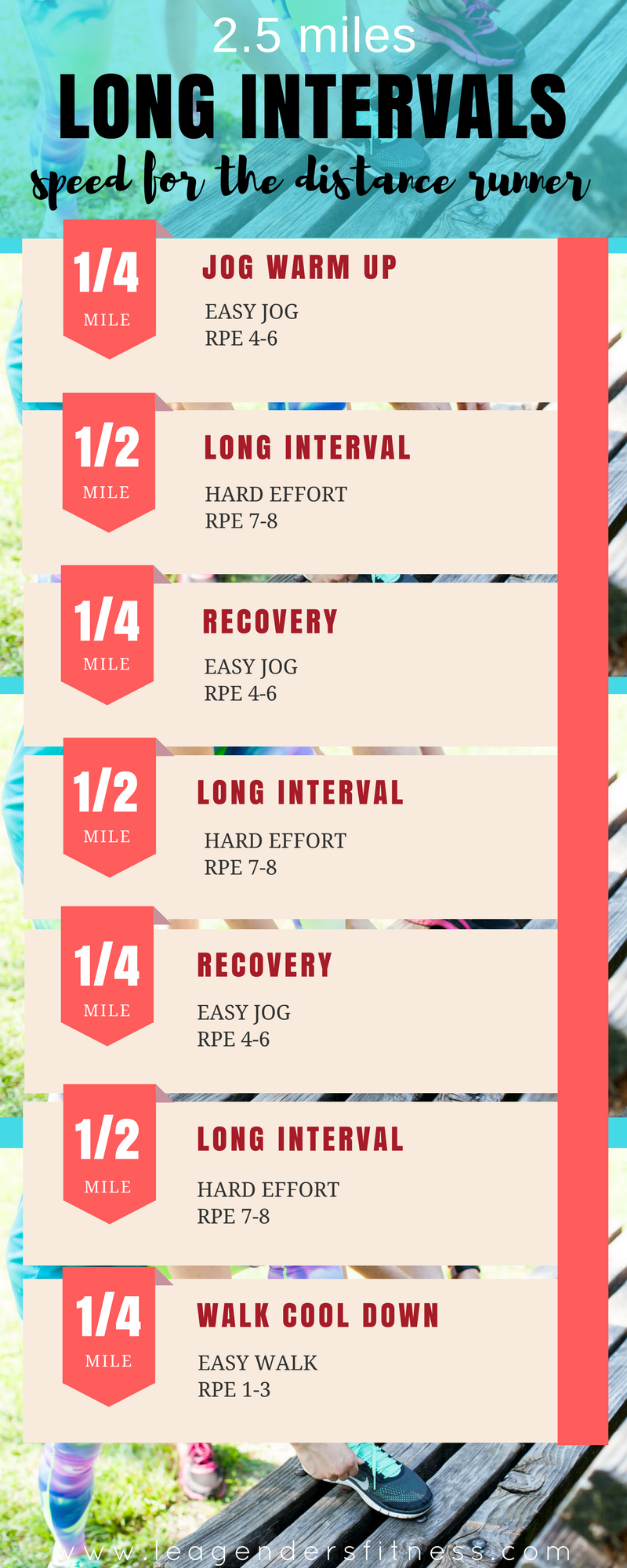
LONG INTERVAL SPEED FOR THE DISTANCE RUNNER WORKOUT (2).png

LONG INTERVALS WORKOUT

WARMUP

Always start your runs with a proper warmup. Check out this post with my dynamic warmup for runners. It's important y'all (insert my fake Texas accent here).

JOG FOR 1/4 MILE

Jog for the first 1/4 mile at an easy conversation pace at a RPE 4-6. Check out my RPE (rate of perceived exertion) chart to find out what the heck that means.

RUN FOR 1/2 MILE AT AN INCREASED PACE

This pace should feel comfortably hard, RPE 7-8. If you go out too fast you won't be able to sustain your pace for a half mile. You should be pushing yourself, it should feel hard, you shouldn't be able to talk much, but it shouldn't be so hard that you're gassed after one minute. Depending on your fitness it will likely take you 3.5 to 5 minutes to complete. It may take some experimenting to find what that pace is for you.

REPEAT TWO MORE TIMES

Repeat the interval/recovery periods two more times. If you are new to this, you may want to start out by just repeating once. Once you get stronger, as your body adapts, look for ways to continue to challenge yourself, either by running at faster paces, running longer intervals, decreasing rest periods or increasing sets. 

COOL DOWN

Walk the last quarter mile to cool down.

Are you training for a big race? Incorporate long intervals into your training cycle to enjoy faster race times. 

Like this post? You'll be my new BRF (best running friend) if you share with your friends and followers. 

Lea signature.jpg


THE RUNNER'S GUIDE TO GEAR UP FOR FALL RACES

Ah, the fall racing season is upon us. So whether that means you are signed up the local turkey trot and jingle bell 5K or training for a fall half or winter full marathon, it is undoubtedly the most wonderful time of year for runners. The cooler temperatures and crisp air gives us a burst of energy that seems to magically increase our speed and endurance after suffering through those long hot summer runs.

If you've been training this summer, it's about that time for some wardrobe changes to accommodate the dropping temperatures and the latest gear and technology to give us that edge (even it's all only in our heads).

This post contains affiliate links. That means if you click on a link in this post and make a purchase, I make a small percentage of the sale with no additional cost to you. No one is getting rich here, it just helps with the running (pun intended) of this blog. Thanks, as always, for your support. I only recommend products that I personally use and love. If I ever accept payment for promoting a product, I will clearly disclose it. In other words, If I hate it, I will always tell you. 

RUNNER'S GUIDE TO GEAR UP FOR FALL RACES.png

Running Shoes

I am a big proponent of shopping local. Buy those new shoes from your local running stores to help support the families and businesses in your community. Give back to the little guy. Comparison shop and read reviews online but go into your local store to get unmatched service and individual attention.

If you've been running in your shoes all summer, depending on your weekly mileage and your usual running surface, it may be time to replace. Everyone is different, but running shoes usually need to be replaced every 500 miles or so. If you look at the bottoms and the tread is worn down and inside the insoles are smashed in, it may be time for a new pair of kicks.

Remember to never wear anything new on race day, so if you do decided it's time for a new pair of running shoes, be sure to give yourself plenty of time to break them in before your big event. I love my New Balance shoes for distance running, but go into your local store so they can help fit you with the right shoe for your individual needs.

Compression Socks

Whether you wear compression socks during your race as a fashion statement, good luck charm (like me) or after your race to hug your calves as they are propped up on the couch for recovery, compression socks or sleeves are a staple in any runner's wardrobe. You can go wild with the patterns and colors, but the science is still out whether compressions socks offer any significant benefit, except when the runner believes it does. Go figure. ProCompression has consistently high-quality socks and sleeves with fun and funky colors.

Running Socks

Friends don't let friends wear cotton socks. Cotton absorbs water (aka sweat) which can cause damp feet, rubbing and blisters. It's the last thing you need while running a race. I was recently introduced to wool socks and I am hooked. They are not just for winter either, wool keeps you cool as well. Weird, I know.

Tops and Tights

The rule of thumb is to dress for 10-20 degrees warmer than the current temperature because once you start running, you will warm up considerably. Ideally you would dress in layers. Running tights, a long sleeve synthetic (aka not cotton) base layer, a warmer zip up on top and if it's really cold, a third layer. It's usually better to underdress than overdress, unless you are willing to leave a layer of clothing on the side of the road.

Running Belt

Unless your running tights have deep pockets, you're probably going to need some place to hold your belongings. You may need to take a selfie or call for a ride mid-run so having your phone and ID on you at all times is best. Once I tied my car key to my shoelaces and my shoe came untied on the trail. Ugh. That's a story for another blog. Now I'm much smarter and use a running belt to hold my belongings when I run. The FlipBelt is my BRF (Best running friend) and this color makes my emoji have hearts for eyes.

GPS Watch

While a GPS watch is not a necessity it is definitely a nice-to-have piece of running gear for the serious runner. These days the GPS on your phone running app is pretty reliable, but if you are obsessed..I mean, if you like to crunch the numbers of miles, paces, heart-rate, etc then a GPS watch is the way to go. This is the one I use, you can see it prominently displayed on my Instagram feed.

Are you ready for fall and the cooler running conditions? Are you geared up for all your fall races? What do you have on the schedule for the rest of this year? Did I miss any of your favorite gear?

Like this post? It helps me when you share with your friends and followers.

Lea signature.jpg

Run Your First or Fastest Race Distance

I will be leading a group 'Couch to 5K’ and I have some online clients training to run a 5K, so I have been pulling together some information on running your first or fastest race. Whether you are training to run your first 5K or your fastest marathon, these resources will help you reach your goal of crossing the finish line.

RUN YOUR FIRST OR FASTEST RACE DISTANCE.png

SET A GOAL

Decide upfront what your goal is for the race. For some it may just be to cross the finish line and that is a great goal. For others it may to cross without taking a walk break. Some people may have a time they want to beat, while others want raise money for a charity. It's your race, you decide what you want to get out of it. Your training will depend on your goal. Decide on your goal first, then work backwards to decide how to train to achieve it. I can help you.

I also recommend spending some thinking about your why. Why do you want to run this race? Having a why will help you keep going when you're in the middle of your training and the excitement of a new goal has worn off. Whether you're raising money for charity, to show your kids what setting and achieving a goal looks like, or to prove to yourself you can do it, having a reason for the goal will help you stick to it when the training gets tough. Try this goal setting exercise to get started.

WALKING TO RUNNING PLAN

running shoes on bench.jpg

There is no shame in walking. Even fast runners sometimes take walk breaks or follow a run/walk training protocol. You decide what works best for you. However, if you want to train to run a race without walk breaks, check out this post on how to transition from run/walk intervals to running without walking. Whatever goal you choose to pursue, consistency in your training is the path to success. It will be hard at first. Keep going. It doesn't get easier, but you get stronger. 

WARM UP FOR RUNNERS

It's important to prep your body before a running workout. I suggest a dynamic warm up to prime your body for running. A dynamic stretch moves the joint through the full range of motion. A quick warm up increases blood flow, warms up muscles, improves hip mobility, core stability and balance. Check out this post for some warm up dynamic stretches.

HIP EXERCISES FOR RUNNERS

DSC_0597.jpg

Hip strength is important for runners to develop because when you run with weak or underdeveloped hips it can lead to all sorts of problems. Strengthening your hips will support your hips, IT band and knees. A few minutes focusing on strengthening these muscles will go a long way in staying healthy (aka not injured) on the road. 

I suggest this five minute hip strengthening workout immediately before your run.

STRENGTH TRAINING FOR RUNNERS

On your off running days, I highly recommend strength training for runners. You don't need to spend an hour in the gym pumping iron, just dedicate some time to runner-specific strength moves. Runners who strength train are stronger, faster and less prone to injury. Start here with my free strength training for runners program.

NUTRITION FOR RUNNERS

Nutrition matters. It matters for performance and recovery. It's important to fuel our workouts with healthy carbs, proteins and fats. Everyone can benefit from eating whole foods, mostly from nature when training for a race. For more information on nutrition for runners, check out this post.

INJURY PREVENTION FOR RUNNERS

You hear a lot about runner's getting injured, but is it because running is an unsafe sport? Is it bad for your knees? I say no. Runners who get injured likely made a critical error in their training. Don't feel bad, it happens to the best of us. If you plan ahead, know the risks, take proper precautions and listen to your favorite coach (that's me, in case you were wondering) then most people can run without injury. Check out my injury prevention checklist to make sure you are taking all the necessary precautions to avoid injury. 

CONSIDER HIRING A COACH

We live in a time of informational overload. Knowledge is power, right? Not so fast. Knowledge is everywhere. Information is abundant. If all it took was the availability of information we'd all we walking around slim and fit with six pack abs. crushing our PRs.

Sure, you can look up a training plan on the internet. There are literally thousands to choose from, but these training plans weren't built for you specifically.

A coach can write a dynamic personalized plan for you based on your fitness abilities, lifestyle and goals. A coach can push you and cheer for you and deliver tough love when you need it. A coach will change your plan as you go to account for your personal progress. 

You can do it on your own. A coach can help get you there faster. Coaches are not just for elite athletes and school kids. Recreational runners can benefit for the guidance from a coach.

Are you ready to crush your goal of running your first or fastest race? Any questions? I'd love to help.

LIke this post? It helps me when you share with your friends and followers. 

Lea signature.jpg

Need for Speed Track Workout

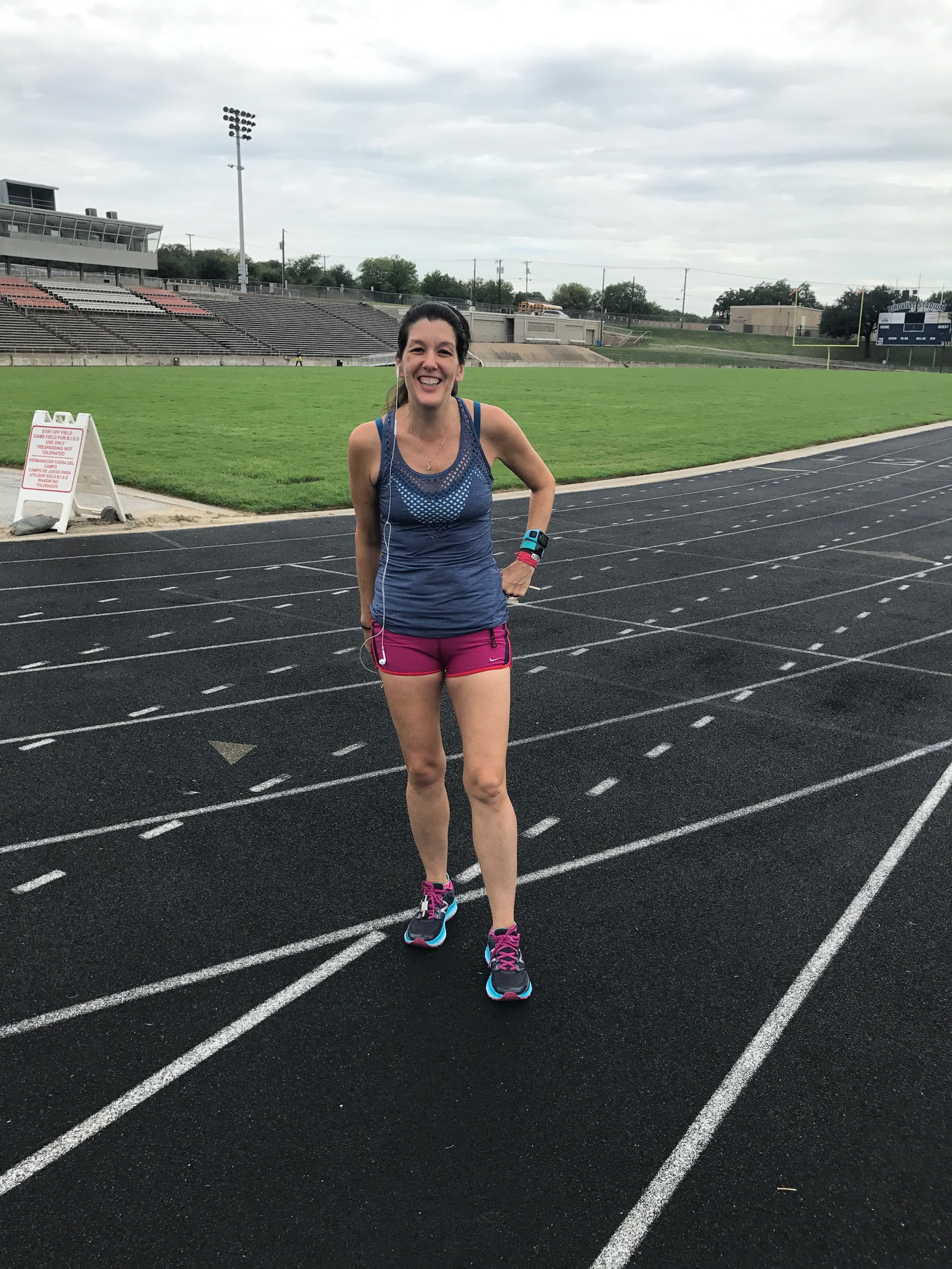
Hello there. Thanks for joining us for the latest edition of Workout Wednesday, when each week I share a new running or runner-specific strength training workout. This weekend hubby and I hit the local school track so I thought I would share my 'need for speed' track workout. 

Long intervals are great for distance runners looking to increase their running pace. The track makes it easy to measure distance without any fancy GPS. 

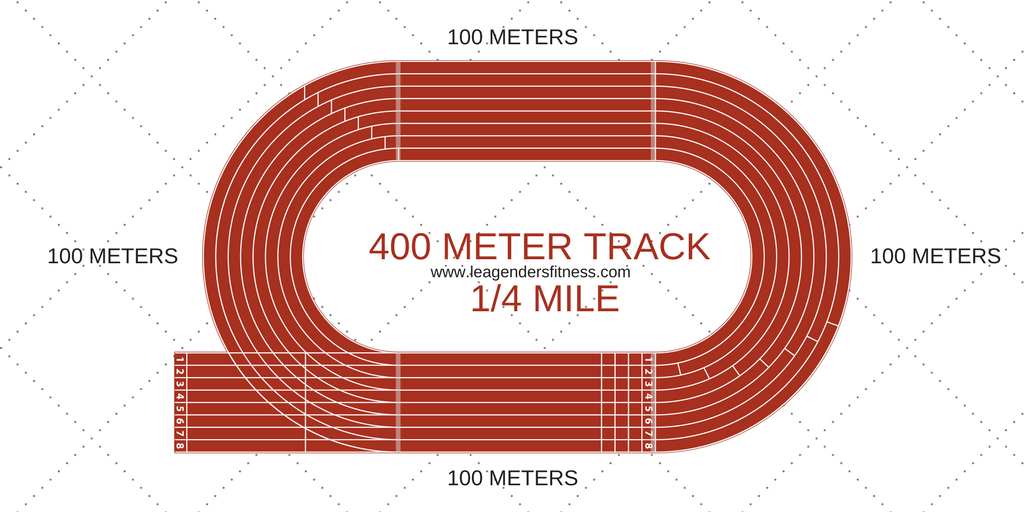
STANDARD 400 METER TRACK

A 400 meter track equals 1/4 of a mile. The straights are 100 meters each and the bends are 100 meters each.

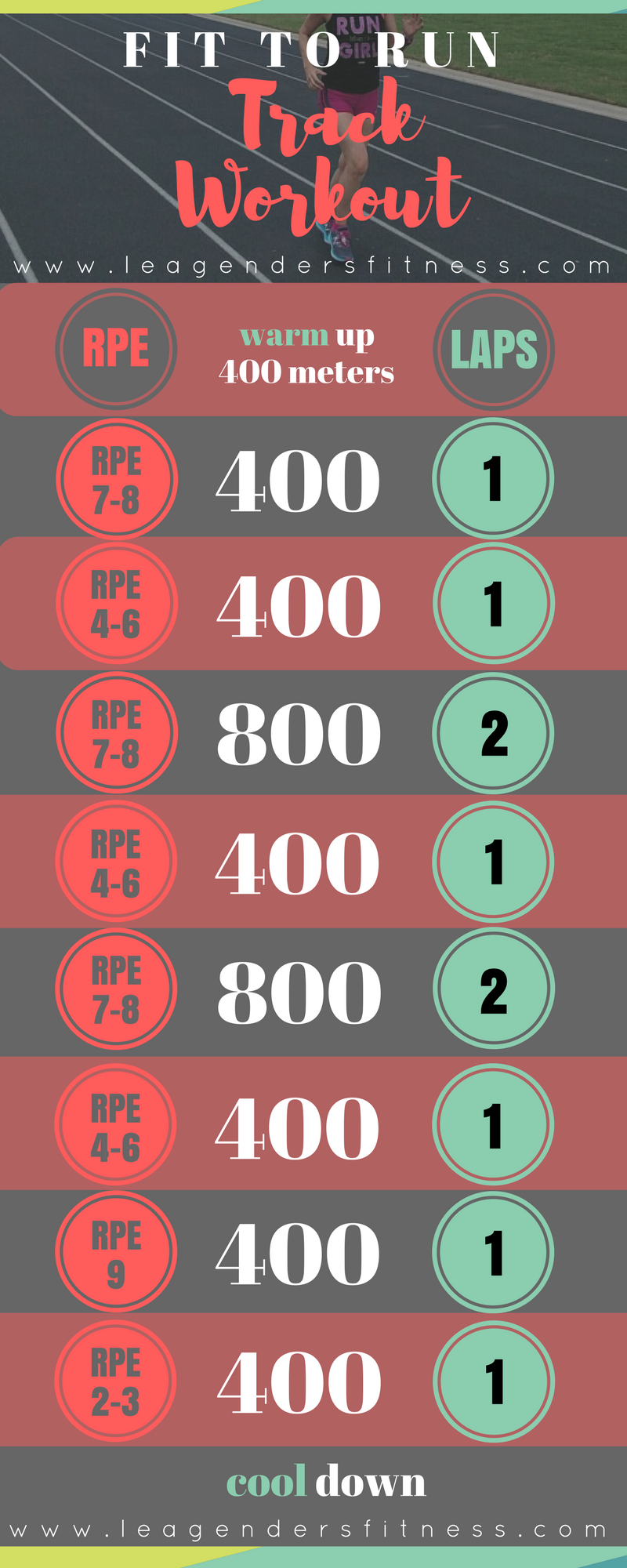
Track workout

Track workout

This workout is based on the RPE (rate of perceived exertion) chart. You can learn more about RPE in this blog post. The beauty of the RPE is that I don't need to assign specific paces for your speed and recovery intervals. That would be impossible for a blog post that reaches millions (ha. OK. hundreds) of runners of different abilities and experience levels. The workout paces are based on how you feel and the talk test. 

THE TALK TEST | RPE CHART

Your RPE can be determined by the talk test.

RPE:1 No effort. You are probably sitting.
RPE:2-3 Light effort. Breathing is extremely easy. You may be walking at a leisurely pace.
RPE: 4-6 Moderate effort. You are working a little harder, maybe a jog, but you can carry on a full conversation at this pace without gasping for air between words or sentences. 
RPE: 7-8 Hard effort. You can speak a sentence or two at a time before having to taking a gasp of breath.
RPE: 9 Extremely hard effort. You can get out a word or two but breathing is labored and talking is challenging.
RPE: 10 Maximum effort. You are completely out of breath and unable to talk. You would only be able to hold this pace for a very short time.

THE WORKOUT

Download a printable PDF of this 'Need for Speed' track workout

Download a printable PDF of this 'Need for Speed' track workout

  • Warm up and run one easy paced lap around the track = 400 meters.
  • RPE 7-8 (see above) Run one lap around the track at a hard effort = 400 meters
  • RPE 4-6 Recover by jogging or walking one lap = 400 meters 
  • RPE 7-8 Run two laps (1/2 mile) around the track at a hard effort = 800 meters. It is important to pace yourself here. Don't go out so hard that you can't make it around the track two times at a sustained pace
  • RPE 4-6 Recover by jogging or walking for one lap
  • RPE 7-8 Run two laps around the track at a hard effort = 800 meters
  • RPE 4-6 Recover by jogging or walking for one lap
  • RPE 9 This is your final push. Run hard for one lap = 400 meters
  • RPE 2-3 Walk your final lap

RECOVERY

A speed interval workout like this one can put additional stress on your body. It is extremely important to take rest and recovery days in between hard workouts. Never try to do hard interval-style workouts back-to-back without rest. Remember it is during rest that you get stronger and faster, not during the workout. Without the rest, you will not see improvements at the same rate.
A workout like this is effective performed just once or twice a week. Well-conditioned athletes may be able to handle three times. Pushing past your abilities only will cause injury and can side-line you from advancing at all. Be patient. Increase intensity slowly over time. Be safe, friends. 

Let's do it! I'm here to help.

Let's do it! I'm here to help.

Any questions? I'd love to help.

Like this post? It helps me when you share with your friends and followers

Lea signature.jpg

Fat Loss for Runners: Why You Gain Weight During Marathon Training

When Alanis Morissette wrote that song in the 90s about irony, I feel like there should have been a verse in there about gaining weight while training for a marathon. Sing along with me...

It's like training for your marathon day
But the more you ran the more you weighed
It wasn't supposed to be this way
And isn't it ironic, don't you think?
 

But just like the rest of the song, it's actually not ironic at all. When you are training for a marathon there is no guarantee of weight loss. Isn't that a jagged little pill to swallow? (You see what I did there?) In fact, it is quite common for runners to gain weight during marathon training. Runners of all shapes and sizes are kicking-ass across finish lines all over the world. So what gives? Running obviously burns a lot of calories, shouldn't we all be losing weight when training to run 26.2 miles?

The first thing to consider is that there is a difference between running for performance and running for weight loss. When training for a marathon you are running for performance. You are training your body to have the capacity to run 26.2 miles and that is a pretty amazing feat (but you "earn" less amazing-looking feet.) To lose weight you have to be in a calorie deficit, taking in less calories than you burn, but that is not ideal for running performance and recovery.

gain weight marathon training (1).png

WHY YOU GAIN WEIGHT DURING MARATHON TRAINING (IT'S NOT ALWAYS NEGATIVE)

YOU GAIN MUSCLE

One reason the scale may seem to be moving in the wrong direction is a positive thing. You are building muscle mass that wasn't there before. Muscle is more dense than fat, so when you lose fat and gain muscle your body fat percentage goes down (yay!) while your weight goes up or stays the same. The number on the scale may have gone up but you improved your body composition. 

YOU INCREASED CARBOHYDRATES (GLYCOGEN) STORES

When you run long distances you are training your body to increase carbohydrate (glycogen) storage in your muscles and liver, which also increases water storage. This is a necessity when you are training to run a marathon. The more glycogen you store the farther you can run without hitting "the wall", but it can add numbers to the scale. It's important to note that this is not fat gain.

YOUR BODY ADAPTS TO THE STRESSES YOU PLACE UPON IT

This is the whole point of marathon training. You train your body to be able to run long distances. You are able to run longer and farther month after month during training. Your body becomes more efficient over time. That means it feels easier to run and you are not expending as much energy. When you first start running your body is less efficient at running, so it burns more calories. Over time your body adapts, becomes more efficient and you burn less calories during the same activity. For marathon training this is a good thing. For weight loss, a double edge sword. 

YOU EAT MORE BEFORE YOU RUN

We've all heard of carb-loading before a big race, but when it's used as an excuse to eat junk foods in large quantities, it can be a factor in weight gain. Fueling for your long runs should include a slow increase of calories from carbohydrates from a variety of mostly whole foods. It doesn't mean three servings of pasta and four servings of garlic bread the night before your long run. Dangit, I wish it meant that. 

YOU EAT MORE DURING YOUR RUN

On average we burn about 100 calories per mile, obviously this varies from runner to runner. After about 90 minutes of running we usually start needing to fuel during our runs. It's necessary, but another reason that weight loss and creating a calorie deficit while marathon training can be so challenging. 

YOU EAT MORE AFTER YOU RUN

Are you seeing a trend here? You just ran 10 miles and your are hungry (or hangry, amiright?). You gulp down a protein shake, take a shower, then meet some friends to treat yourself to an indulgence meal. You can easily put down 1000 calories of burgers, fries and beer. While there is nothing wrong with an indulgence meal, try not to get into the habit of rewarding your hard work with junk food. After all, during marathon training you will be running a lot. If you reward every run with indulgence foods, you can easily out-eat your calorie expenditure. 

YOU MOVE LESS THE REST OF THE DAY

After running 14 miles you crash on the couch with your compression socks snuggling your calves while watching a NetFlix marathon. When hubby asks if you want to go to the mall, you grunt out a no-way Jose (even though his name is Russell). The house isn't getting cleaned, the dog isn't getting walked (by you) and you're not moving until you hear the doorbell ring with your dinner delivery.

The calories you burn while walking around doing everyday activities add up. So while you increased your calorie expenditure during your run, you decreased it the rest of the day. With the added food intake, the decreased activity outside of running, you can easily put yourself into a calorie surplus, which can cause weight gain.

FAT LOSS FOR RUNNERS: WHAT YOU CAN DO ABOUT IT

It can be counter-intuitive to have marathon goals and weight loss goals at the same time, but if you want to keep the weight off while marathon training I recommend always focusing on fat loss, not weight loss. Our goal should be to build or maintain muscle while losing fat.

VARY INTENSITY

Your long runs should be long and slow, but after a month or two of building your milage base you can play with the intensity of at least one other run in the week to help with fat loss. Long interval runs (1/2 mile or 1 mile intervals of hard effort repeats) can help with fat loss while improving your marathon pace. Here is a post I wrote about different types of interval runs. For injury prevention be careful never to increase intensity and mileage in the same week. That means if you are adding miles to your long run, don't also add in a new interval workout or increase the intensity/pace of an existing workout. Only introduce new intensity on weeks you aren't adding mileage. This is important. Got it? Good.

FUEL RESPONSIBLY

Yes, when you are marathon training you need to fuel, which means that you will probably need to eat more than usual. However, don't use marathon training as an excuse to binge eat. Increase calories with a variety of nutrient-dense foods from nature and save the treats for occasional indulgences in moderation. I wrote more about nutrition for athletes (yes, that's you) over in this blog post.

STRENGTH TRAIN

Runners who strength train are stronger, faster and less prone to injury. When you are marathon training, running should absolutely be your first priority, but don't neglect strength training. Short and focused runner-specific strength training sessions just twice a week can help you meet your running and fat loss goals. Muscle tissue uses more energy at rest than fat, so when you build lean muscle you burn more calories during your daily activities, like recovering on the couch. 

Running a marathon is a fantastic goal. I recommend training and fueling for your marathon with performance as your main focus, even if your personal definition of performance is crossing the finish line without dying. Once you achieve that goal, you can adjust your training and nutrition to focus on fat loss for a period of time before you inevitability start your marathon training all over again. 

Any questions about fat loss or weight gain during marathon training? I'd love to help

Like this post? It helps me when you share with your friends and followers.