RUNNING

7 Things You Should Never Say to a Runner

Hi, Friends! Back in 2005 I had a cousin visit me in Dallas from out of town. He was in town for a work conference and reached out to me through my parents to see if I wanted to get together. He was someone that that I knew growing up, but he was several years older than me and we were never that close. I probably hadn't seen or talked to him in ten years prior to that dinner. 

He walked into the restaurant wearing a Titleist hat. I knew it had something vaguely to do with golf, but a golf enthusiast I am not. In an awkward attempt to make conversation with this person who was family, but virtually a stranger I asked him, pointing to his hat, "Are you a Titleist?" 

It was admittedly a really stupid question. As if they just give hats to the winners of golf tournaments. Congratulations on winning, here is your hat to show the world you now hold a golf title. He (righfully) looked at me like I had two heads and informed me that Titleist was a golf ball brand. Ah, OK. Makes sense. 

I don't know golf and I asked a stupid question. People do it to runners all the time. You can't fault them, really. Most of the time they are just trying to take an interest. You don't know what you don't know. I certainly can't expect all my non-running friends to brush up on all things running just so they know the proper questions to ask me, but there are silly things that people say to runners over and over again.

If you want to be informed here is a short list of things you should never say to a runner. 


ISN'T RUNNING BAD FOR YOUR KNEES?

Why is everyone so worried about my knees? Running is good for your health and body. Sure, running is a high-impact activity, but as long as a runner progresses properly (building milage and speed slowly over time) and participates in some sort of strength training activities, their knees will probably be fine. There is some risk in any physical activity, but it is always less risky than being a couch potato. 

DID YOU WIN YOUR RACE? 

We don't run races to win them. Well, most of us. We run races to challenge ourselves, to join in with a community of runners, for fun and mostly just to finish. No, I didn't win. I didn't take the podium. That was never the point. Unless they volunteer the information, you probably shouldn't ask them their finishing time either. A better question to ask would be "Did you have fun?"

I RAN A 5K MARATHON ONCE.

I know the distances can be confusing and a lot of people associate any organized race with a marathon. A 5K is 3.1 miles and a marathon is 26.2 miles. It is an accomplishment to run and finish any race distance, but a 5K is not the same as a marathon. 

RUN, FORREST, RUN.

This stopped being funny in 1995 and it was never funny while being yelled out the window of a car while passing a runner. 20+ years later there should be newer ways to insult runners by now. 

I ONLY RUN IF SOMEONE IS CHASING ME.

I know you're trying to be funny and kudos for the effort, but this is what every "funny guy" says to runners. See also: I only go for beer runs. If you say this to a runner they are groaning on the inside because they have heard it a million times. We politely laugh but you may need to work on your material. 

I TRIED RUNNING ONCE AND I HATED IT.

Everyone hates running the first time they try it. Probably the first 20 times. If you tried running on the treadmill I don't even want to talk to you until you hit the streets or trails. Running is one of those activities that you have to give it a little time in order to adapt. It gets better, it gets easier. I promise. 

That being said, I don't expect everyone to love running. If it is not your thing, then that's fine. I encourage you to try different forms of exercise to find the thing that you do love. The form of exercise that you choose is not as important as just choosing an exercise. Anything. So whether it is running, biking, walking, Crossfit, bootcamp, weight lifting or trampoline jumping, find what you love and go out and actually do it. 

DON'T YOU GET BORED?

Running is a form of mediation for me. It is my quiet time away from technology (and people). It my time to unravel the thoughts, struggles and stresses that get tangled up during the day. It is how I manage stress. It is how I stay healthy. So, no. I don't get bored. 

If you don't know what to say to a runner, just say I am proud of you or congratulations on finishing your race. In the meantime I'll Google "Things to Never Say to a Golfer" so that next time that cousin is in town, I can ask intelligent questions. As long as we can agree that a marathon is 26.2 miles. Every. Single. Time. 

Runners, Did I miss anything?

Like this post? Please consider sharing. 

Coach Lea

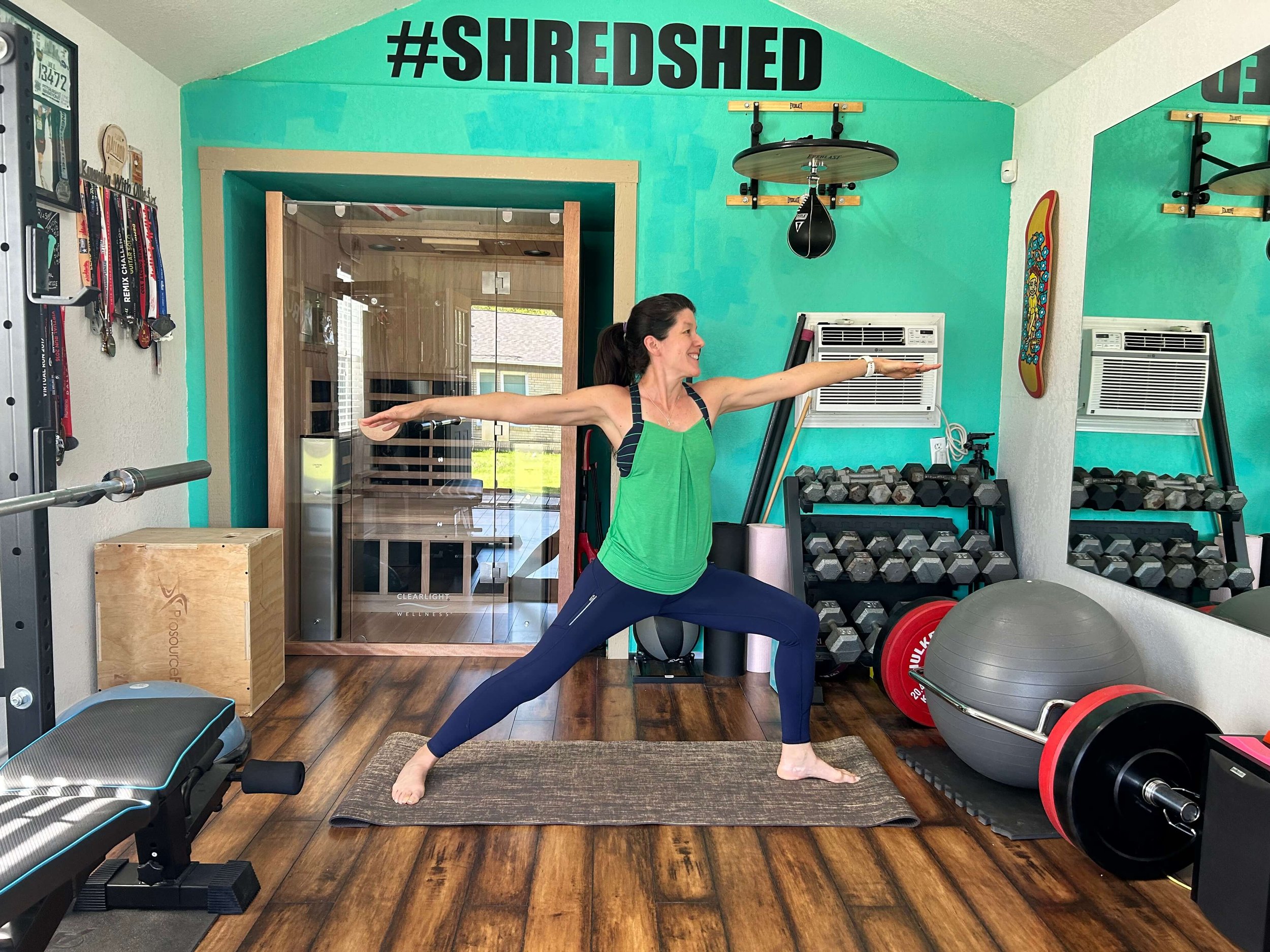
I am a NASM personal trainer and RRCA adult distance running coach that specializes in strength training for runners. I offer in-person training in the Shredshed, online training and Fit to Run bootcamps. If you are interested in a more in-depth running or strength training plan, please contact me. Have questions? I'd love to help. 

While I am a certified personal trainer, I am not your personal trainer. Since I don't know your exercise abilities, injury background or medical history, please see your doctor before beginning any new exercise program. This is an opinion blog. No information in this blog is intended to be taken as medical advice or prescription. Please see your doctor and/or registered dietitian for any health concerns.




How to Transition from Running/Walking Intervals to Running

Welcome the latest edition of Workout Wednesday! This week we are talking about how to transition from running/walking intervals to running without walk breaks.

When you first start running it is very common to use run/walk intervals in order to adapt to running. There is absolutely no shame in walking. A lot of people are very successful running full and half marathons on a run/walk program with very impressive finishing times. If you are happy with your run/walk plan and you're continuing to progress, there is no reason to change your program. However if you're interested in transiting from run/walk intervals to running without walk breaks, I may be able to help you with the plan that worked for me when I first started running.

Most people start in the same place, it is very common be short of breath when you first start running. You have to stick with it through that hard beginning part in order to become a stronger runner. It does get easier, I promise. 

Once you have been performing run/walk intervals for a few months, you may be ready to train to run without walk breaks. I suggest that you have a solid running base before starting this program. You should be running (with walk breaks) several days a week for at least four weeks. Follow the below plan two to three days a week with full rest days in between training days to allow for proper recovery.

HOW TO TRANSITION FROM RUNNING/WALKING INTERVALS TO RUNNING WITHOUT WALK BREAKS

The key to train to run without walk breaks is to first start by taking walk breaks. Hear me out. If you stick with the program you will progress to running without walk breaks.

Walk for a few minutes to warm up. Try some dynamic stretching and/or foaming rolling to warm up before you get started.

Start running at a very slow pace. Go even slower than you think you can maintain. It's better to go too slow than too fast at this point. We can work on speed later, for now we are working on endurance. A slow pace is key.

Run until you feel like you just can't run for one more second, then try to count out 50 more steps. This may help you push past any mental barriers. When your mind says no more, see if your body has 50 more steps. It is important to be sure that you are listening to your body and not your mind. Is your mind telling you can't go on? Or is it your body? Sometimes your mind will tell you to stop, but think about it first. Can I breathe? Are my legs OK? How do I feel physically? If it is just your mind, keep going. Your thoughts can lie, especially when you are trying new things.

Once you are sure it is your body and not your mind slow to a brisk walk. Now here's the key to the whole plan: Only walk as long as you need to in order to recover your breath. It is really important to be honest with yourself and start running again as soon as you are able. When your breathing returns to almost normal It is time to start running again, don't walk for one second longer than necessary.  

Repeat the running cycle. Run as long as you can. When you think you need to stop, try to count out 50 more steps. You are probably feeling uncomfortable, but as long as you aren't feeling any physical pain, push yourself to keep running for just a little bit longer. When you are sure it is your body and not your mind, it is time to walk briskly again to recover.

Start the run cycle again. 

The idea is that you run for as long as you physically can, then walk only as much as necessary. If you continue this cycle, while being completely honest with yourself, over time your run intervals will become longer and your walk intervals will become shorter, until there are no walk intervals at all.

This process can take between four to ten weeks depending on your starting fitness level and dedication to the program. Remember that no matter what you are trying to achieve, consistency with your training is the single best path to success.

I can clearly remember the great feeling the first time I realized that I didn't need to stop for a walk interval, that I could keep running. Don't listen to your mind, listen to your body.

This same technique can be used to improve your running pace. Just replace the walk intervals with slower run internals. Run fast, then run slower to recover until you don't have to run slower anymore at all.

When you set out to run these intervals run according to time and not distance. For example, make a plan to run for 30 minutes, not three miles. You'll find that over time you will be able to cover the distance in less time. 

Give it a try and let me know how it goes.

Like this post? Please consider sharing!

NEED MORE HELP? WORK WITH ME!

How to Stay Motivated to Exercise this Holiday Season

Here we are again heading into the holidays when some people expect to pack on a few pounds before they start all over again on January 1st, but it doesn't have to be that way. We can enjoy the holidays by embracing moderation while continuing to workout and make healthful choices most of the time. If you stay active this holiday season you'll come out on the other side happier and healthier! 

This time of year can be crazy, busy, wonderful and stressful all at the same time, but there is no reason we can't maintain our healthy lifestyle. Eating healthy foods and regular exercise help reduce stress and make us feel our best. Enjoying the family meals and dessert can bring us joy too. We can enjoy the best of both worlds. One way to fully enjoy the holidays is to find ways to stay active. Here are a few ideas on how to stay motivated to exercise this holiday season. 

TRACK FRIDAY

I love the idea of Track Friday instead of Black Friday. I always say that my favorite holiday is Black Friday, when I don't have to get out of my PJs all day and avoid retail establishments at all costs. I know some people enjoy the experience and the thrill of the hunt, but the crowds and chaos can be too much for me. I'd rather stay home and shop on Amazon (I don't even have to put on pants).

Track Friday is a great alternative to Black Friday. As they say on their site, "Shouldn't we be giving instead of just getting?" 

So this year on Track Friday, Join the movement by running or walking anywhere on Track Friday, or run with others by finding or starting a meetup. Start your own personal fundraising campaign, or support a campaign for a cause that you care for. Follow along on social media @trackfriday on Twitter and Instagram. Use the hashtag #TrackFriday when you post! Learn more at trackfriday.org

On the day after Thanksgiving, let’s turn Black Friday into Track Friday, a day focused on charity, community, and health.
— www.trackfriday.org

This one may be worth putting on pants for. See you at the track. 

HOLIDAY RUN STREAK

Runner's World sponsors a Holiday Run Streak every year. The goals is to run at least one mile everyday between Thanksgiving and New Year's Day. It's a great way to stay motivated to lace up those shoes. The average person can probably run a mile between 7-13 minutes. Can you find 7-13 minutes everyday this holiday season? It helps establish a healthy habit during the holidays and even if you don't have time to put in a full workout, you know you at least completed one mile. Here are my tips for a successful run streak.

1. Tell your friends and family your commitment to complete the challenge. If you tell people about your plans, you may feel a bigger obligation to follow through. Tell me if you're doing it in the comments! Who knows you may motivate someone to take on a healthy challenge.

2. If possible, find a streaking partner. Hubby and I did it together in the past. Don't feel discouraged if you are going at it alone, it just shows your dedication. Besides, there is a whole online community completing this challenge, you can find your support online. Use #RWrunstreak to connect with the thousands of other runners completing the streak.

3. Having access to a treadmill is helpful on cold or extremely cold temperatures, but then again, hubby and I did a mile or two in the rain on our streak! Be prepared to bundle up! No treadmill necessary.

4. Listen to your body! If you are injured or sick, no streak is as important as making sure you are healthy and taking care of yourself. Be reasonable and take a real rest day if you need it.

5. Although this is technically against the Runner's World rules of the streak, It is OK to walk your mile for the day. The Runner's World streak police aren't going to pop up from behind the bushes and tell you to pick up the pace. A mile is a mile and sometimes your body needs the rest. Your challenge. Your body. Your rules!

6. I found that getting the run done early in the day was the easiest way to stay consistent. Sometimes it just means getting up a few minutes earlier. 

7. As the streak goes on you'll find it becomes a habit and you will really want to squeeze in your mile by any means possible. Stay with it, after a couple of weeks it will become second nature.

8. Join the other holiday streakers on Twitter with the hashtag #RWrunstreak. Post about your daily mile on TwitterFacebook or Instagram and read about other runners completing the challenge. There is nothing like thousands of like-minded people in an online community to remind you that you are not alone!

9. Use the challenge to motivate yourself to stay active throughout the holidays, but if you miss a day it's no reason to quit, just pick back up where you left off. Again I may be stretching the official rules, but in the end I'd rather say I ran 37 out of 39 days than say I ran for 13 days but then had to quit. 

10. Have fun with it! 

Commit to a run streak this holiday season to build healthy habits and stay motivated this holiday season. WIll you run it with me? 
 

HOLIDAY-THEMED FUN RUNS

Santa Run Texas

Santa Run Texas

An entertaining way to gather up your family or friends for a healthy holiday activity is to participate in a holiday fun run! Whether it's a Thanksgiving day turkey trot, a jingle bell run or a new year resolution run, signing up for a holiday-themed run can be a reminder that exercise is a fun activity for the whole family. Forget about your PR goals, let your stresses go for the day and just enjoy the run. These runs are often also charity fundraisers so you can do good for your community while burning some holiday calories. Break out your turkey costume or santa hat and prepare for the some of the most enjoyable races of the year. I'll be running a turkey trot here in Fort Worth. This Santa Run Texas in Plano looks like another fun holiday-themed event for my local DFW friends. When you sign up for the Santa Run Texas you can get a santa costume with your registration! How fun is that? Sign up and train for a race to stay motivated this holiday season. 

WINTER RUNNINGLAND VIRTUAL RACE SERIES

I'd venture to say that most major cities and even a lot of small cities host some sort of community holiday runs. But If you live somewhere that doesn't have a community event, I have the perfect solution for your holiday run needs.

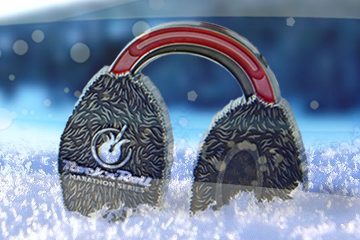
If you are motivated by race bling (aka finisher medals) The rock 'n' roll marathon series is hosting a virtual run series called Winter Runningland. Run on the streets in your neighborhood, stay warm on the treadmill or meet up with friends at the track to earn finisher medals in this virtual run series. There are three virtual runs from now until the end of December and if you complete all three, you get a 4th bonus medal. You can run all three races for $99. It would make a pretty thoughtful gift for a runner that you love (hint hint friends and family).

A virtual run series is a great way to stay motivated to run through the holidays!

Nov 18 – Dec 04 / $29.99 - Winter Hat Medal

Dec 05 – 18 / $29.99 - Running Shoe Medal

This is my favorite one, so cute.

Dec 19 – 31 / $29.99 - Earmuffs medal

I am a member of the Rock 'n' Roll marathon rock 'n' blog team but all opinions are my own and I am not paid or required to post about this event, nor do I receive any payment or commission if you sign up. Just looks like a super fun way to stay motivated throughout the holiday season and add some new race medals to your collection. 


HOLIDAY-THEMED WORKOUTS

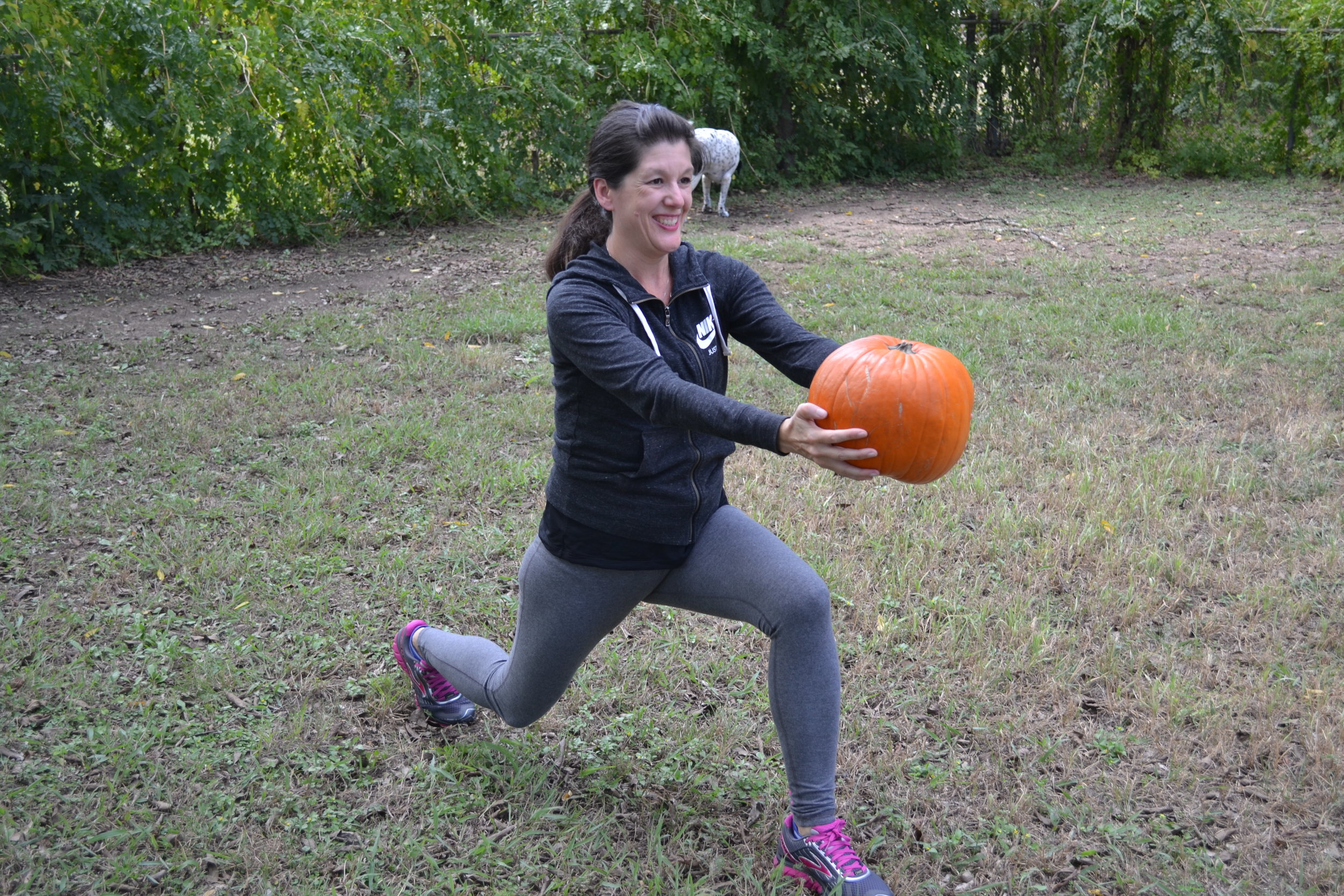
The Great Pumpkin Workout

The Great Pumpkin Workout

Check out my pumpkin workout for a holiday-themed strength circuit that can be done in under 30 minutes. Do the pumpkin workout before you make your Thanksgiving pies. No pumpkin? You can replace it with any weight or medicine ball. (But what fun would that be?) Pumpkins not your thing?

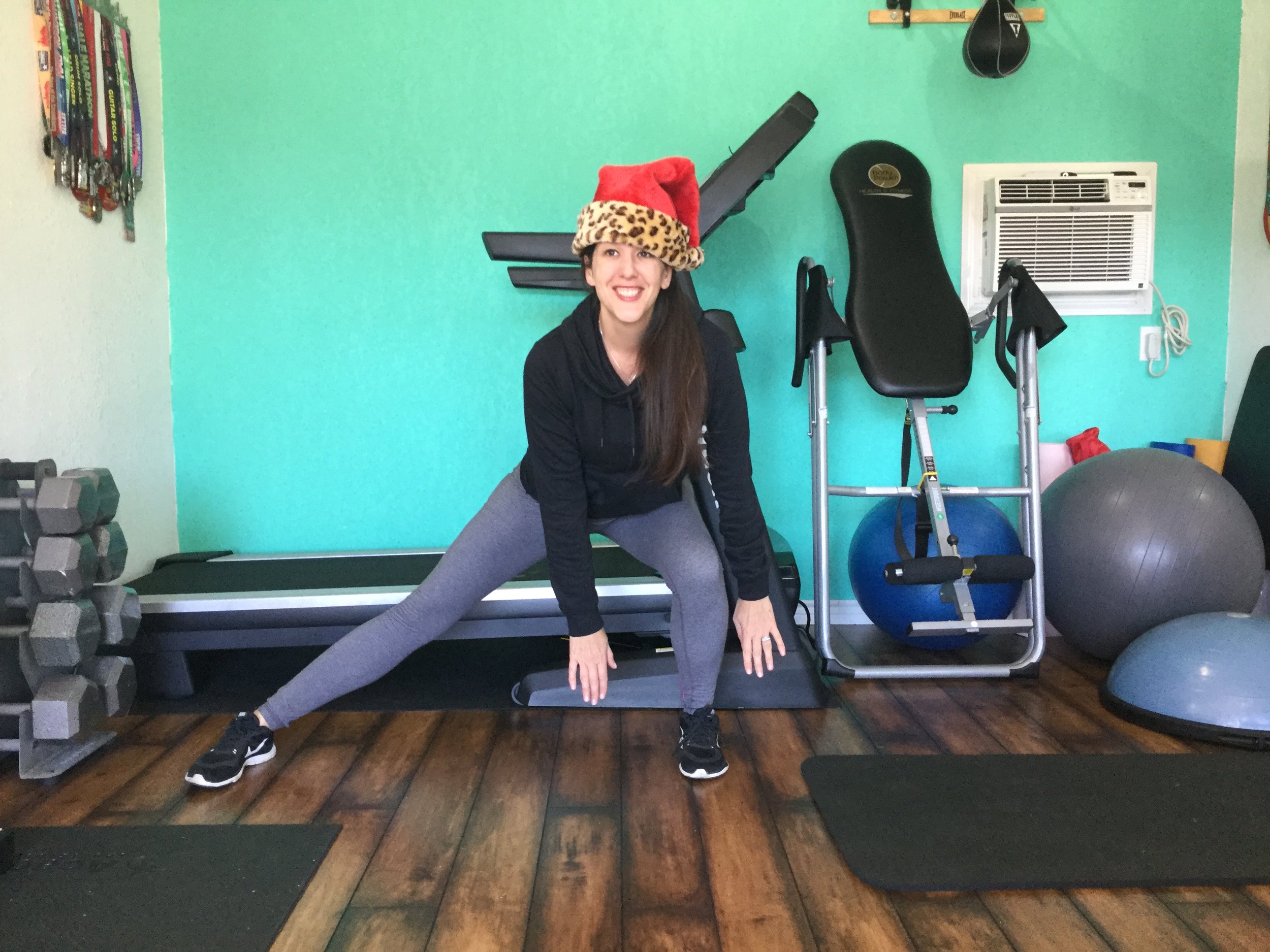
12 Days of Christmas Song Workout

12 Days of Christmas Song Workout

I also have a 12 Days of Christmas song workout that will prove to be both fun and challenging! You know the song..."On the twelfth day of Christmas my trainer sent to me..." 

My workout archive has a ton of bodyweight workouts if you need a few minutes of sweat therapy to destress. 

Did you get any ideas to stay motivated to exercise this holiday season? Will you join me in any of these fun activities? Any other ideas? How do you plan to stay active? Let me know in the comments. 

Like this post? Please consider sharing.


Coach Lea

I am a NASM personal trainer and RRCA adult distance running coach that specializes in strength training for runners. I offer in-person training in the Shredshed, online training and Fit to Run bootcamps. If you are interested in a more in-depth running or strength training plan, please contact me. Have questions? I'd love to help. 

While I am a certified personal trainer, I am not your personal trainer. Since I don't know your exercise abilities, injury background or medical history, please see your doctor before beginning any new exercise program. This is an opinion blog. No information in this blog is intended to be taken as medical advice or prescription. Please see your doctor and/or registered dietitian for any health concerns.

Seven Ways to Improve in Running (That Doesn't Include Running)

In order to become a better runner the number one thing you should be doing is running. The first piece of the puzzle to get into place is consistent running because consistency is foundation of any successful plan. Slowly build a running base until you are running three to four days a week for five to six weeks. Once you build this base, you can start to think about working on speed, strength and adding more milage. Whether you are a beginner or an advanced runner there are ways to improve your running that doesn't include running. 


GET YOUR NUTRITION ON TRACK

Proper nutrition is important for all people to look, feel and perform their best, but for athletes it is even more important. Work to achieve a balance of healthy carbs, fats and proteins from mostly whole food sources to not only fuel your run, but to enhance recovery and feel your best. Follow the 80/20 rule to eat according to your goals 80% of the time and leave 20% open for foods that you enjoy but may not be optimal. I write more about it this in my Running A-to-Z post, D is for Diet.

GET ENOUGH SLEEP

Most of us don't have to choose between sleep and a workout, but if it came down to the choice of a one hour workout or one hour of sleep, how do you think the experts would advise you to spend your time? If you are not getting at least the seven hours a sleep that most people need, the answer is sleep. Going to bed at midnight and setting your alarm for 5am to workout is not doing your body any favors. 

Not getting enough sleep per night can reduce the benefits of healthy eating and exercise. When you don't get enough sleep, your cortisol (stress hormone) levels can rise, which can be associated with fat gain. 

In our busy lifestyles sleep is often is the first thing to get slashed, but knowing how important it is to recovery and improvement it should be given a higher priority, especially for athletes. 

BUILD REST & RECOVERY INTO YOUR WORKOUT SCHEDULE

Resting isn't laziness. Just like sleep, rest and recovery are essential to improving in running. Our bodies adapt, improve, get faster and stronger during rest, not during the workout. We need to allow our bodies the proper time to recover. This includes taking full rest days after hard workouts and alternating hard/easy days throughout the week. 

ADD STRENGTH TRAINING

My favorite topic which is the basis for this blog and my personal training business. Strength training for runners can make you a stronger, faster, less injury-prone runner. You don't have to become a gym rat to reap the benefits of strength training.There are plenty of equipment-free, quick and efficient strength workouts in the archives that you can try at home to get started. 

ADD STRETCHING/FOAM ROLLING

When you run and only run, you sometimes can develop muscle imbalances. You have overactive muscles that are working too hard and compensating for underactive muscles that are not able to do their job. One way to help prevent muscle imbalances is to strengthen the weak muscles (see above) and stretch/foam roll the overactive muscles. I recommend foam rolling before you run and stretching the overactive or tight muscles immediately following your run. Here is a post I wrote on foam rolling that may be helpful if you want to get started. 

GET ON YOUR MENTAL GAME

Running is as much as mental sport as it is a physical one. I am not suggesting that if you visualize yourself running fast that you will magically win your next marathon, but having a strong mental picture of success goes well with your physical training. If you think positive, act positive and ban those negative thoughts, it can make a difference in how you perform. I wrote more on this in a post called Running A-to-Z: M is for metal tricks for running

FIND AN ACCOUNTABILITY PARTNER OR RUNNING COACH

We all need support. Whether it is for accountability, emotional support or technical help, I suggest finding a partner or coach to help you stay on course (pun intended). Friends can be a great motivator to exercise. Sometimes we feel more obligated to others than we do to ourselves. We may not think twice about cancelling on ourselves for our daily workout, but if we know we have someone counting on us we are more likely to show up so we don't let them down. If you don't have any friends or family interested in exercise consider finding an accountability partner online, joining an exercise class, running group or hiring a coach

Any questions? I'd love to help. Let me know in the comments. 

Like this post? Please consider sharing. 


Coach Lea

I am a NASM personal trainer and RRCA adult distance running coach that specializes in strength training for runners. I offer in-person training in the Shredshed, online training and Fit to Run bootcamps. If you are interested in a more in-depth running or strength training plan, please contact me. Have questions? I'd love to help. 

While I am a certified personal trainer, I am not your personal trainer. Since I don't know your exercise abilities, injury background or medical history, please see your doctor before beginning any new exercise program. This is an opinion blog. No information in this blog is intended to be taken as medical advice or prescription. Please see your doctor and/or registered dietitian for any health concerns.


All I Want for Christmas is a New Running PR

Hi, Friends. Welcome to a very special edition of Workout Wednesday! This year has flown by. I can't believe we are embarking on the holiday season once again. I love the end of the year to think about my goals for the upcoming new year, but also get a head start on achieving my goals. Why wait until January 1st to start working towards your goals?

The end of the year is a fantastic time to evaluate our accomplishments of the last year, to think about what went right and what we can improve on. I have a lot of goals for 2017 (maybe bigger and bolder than ever before in my life, it's both scary and exciting) but I'll use the end of November and December to start ramping up for those goals. 

I challenge you, no matter what your goals are for the new year, start thinking about the steps you can take today and throughout December to help get you there. When January rolls around (in a blink of an eye) you'll be that much closer to reaching your goals. 

Today we are talking about running goals. If you know me at all, you know that I am a huge proponent of strength training for runners. When runners strength train along with their running training, they end up stronger, healthier, faster and less prone to injury. 

I put together this four week strength & running schedule to increase speed. It has all the components of a well-balanced training plan. 

PIN ME TO SAVE FOR LATER!

PIN ME TO SAVE FOR LATER!

Who is this plan for? This plan is intended for anyone who has a solid running base. If you have been running three to four days a week for five to six weeks this plan is for you. If you do not have that base yet, get a solid running base under your belt before starting this plan. 

Running

It goes almost without saying, if you want to be a better runner, you need to run more. Staying consistent with your running schedule is one of the most important things you can do to improve. Before starting this program you should have a solid running base. 

In the plan we have several running days:

EASY RUNS:

An easy run is done at conversational pace. It means what it sounds like, that you should be able to carry on a conversation during your run. If you are a beginner this may mean brisk walking. Easy runs are as important for building endurance and allowing proper recovery after hard workouts. 

INTERVALS/FARTLEKS:

Intervals are running workouts that vary the speed to allow for periods of high intensity work followed by recovery. They can be very effective in improving running economy as long as they are done properly. Always allow recovery days or rest days after hard interval work. Never do interval workouts back to back to allow for proper recovery and avoid potential injury. 

Interval Workout

Interval Workout

Fartlek

HILLS:

Hill training is a staple for running strength. One day a week of hill work can help improve speed and efficiency. 

Hill Training

LONG RUN:

Long run training is on the schedule for anyone training to run farther than a 5K (3.1 miles). A long run builds endurance and should be run 1-2 minutes slower per mile than your 5K pace. Long run distances should be increased by no more than 10% each week for three weeks before backing off the distance on the fourth week. A long run is typically anything more than an hour. If you are not training to run long, you can replace your long run on the schedule with any distance at conversational pace. 

Strength Training

Strength training for runners is so important, but it doesn't have to overtake your running schedule. In fact, if your goal is to be a better, faster runner, running should take priority. However, making time for one to two strength training sessions a week can lead to big improvements in your running. 

CIRCUITS:

The way a bodybuilder or power lifter strength trains is completely different than the way a runner strength trains. We train differently for different goals. We are not trying to pack on muscle, but rather increase strength and work out any muscle imbalances. We do a lot of circuit style, HIIT (High Intensity Interval Training) and Tabata-style strength training. These types of workouts help improve strength and endurance because you move from one exercise to the next with minimal rest. They are quick and effective. No need to spend hours in gym. 

Strength Training Workout

Strength Training Workout

Strength Training Workout

CORE (HIPS/ABS)

I separate core workouts from regular strength training because while you will do core work in your strength circuits, you should place special emphasis on making sure you build hip/ab strength. Remember that your core is not just your abdominals, it is essentially everything under your chest and above your thighs. Core work including hip strength is one of the most important things runners can do to avoid muscle imbalances from running and injury. These exercises are not always the most exciting, but they are essential, which is why I recommend adding them on at the end of an easy run day. 

Core Workout

Core Workout

REST

Arguably one of the most important components of a training plan is rest. Your body adapts to the stresses that you place on it during rest. That means your body repairs, rebuilds, gets stronger and faster during rest, not during the workout. If you don't plan for proper recovery you will never allow your body the time it needs to grow stronger. More is not always better. Rest means taking one to two full rest days a week and getting 7-8 hours of sleep at night. If you don't do these things, you could be sabotaging your results. Put in the work, but allow your body the recovery time it requires. 

Download the four week strength and running schedule PDF with clickable resources to running and strength workouts to improve your 5K time before Christmas!

Download the training schedule below to improve your speed by Christmas

Download the training schedule below to improve your speed by Christmas

Any questions? Let me know in the comments. 

Coach Lea

Like this post? It helps me when you share or save to Pinterest.


I am a NASM personal trainer and RRCA adult distance running coach that specializes in strength training for runners. I offer in-person training in the Shredshed, online training and Fit to Run bootcamps. If you are interested in a more in-depth running or strength training plan, please contact me. Have questions? I'd love to help. 

While I am a certified personal trainer, I am not your personal trainer. Since I don't know your exercise abilities, injury background or medical history, please see your doctor before beginning any new exercise program. This is an opinion blog. No information in this blog is intended to be taken as medical advice or prescription. Please see your doctor and/or registered dietitian for any health concerns.