RUNNING

Running A-Z: D is for Diet How to Fuel for Running

It's a four letter word in every sense. It has a negative connotation. I am talking about the word diet. Most people think of the word diet and associate it with being hungry; lettuce and carrot sticks come to mind. But actually the definition of diet is the food a person habitually eats. You could be on an all Twinkie diet or a healthy, balanced diet. What you eat is your diet. 


Carbohydrates

Runners have dietary needs that are a little different than the average person. While you may have heard that runners need to carbo-load before a big race and envision a giant plate of spaghetti and garlic bread to meet these nutritional requirements, the truth is that we shouldn't be that extreme. If fact, consuming large amounts of carbohydrates immediately before an event could lead to gastrointestinal distress (which is the last thing you want during a race). 

Carbs may have a bad name in some nutritional circles, but they are necessary for athletes. If you focus on consuming the right kinds of carbs, unprocessed whole foods, they provide the essential energy and fuel that you need to run strong.

The idea is to have a steady flow of high quality carbs in your system leading up to race day. Choose foods like slow-cooked oatmeal, sweet potatoes and brown rice, rather than bagels, donuts or crackers. If you eat a mostly healthful diet, there is definitely room in your diet to include whatever carbohydrates you enjoy, but for sports fueling, I recommend focusing on high-quality nutrient-dense foods.

A lot of articles you will read will give you a daily % of carbs to include in your diet, but people who do not track their macro-nutrients closely (new runners for instance) may find this confusing. If the guidelines sat to 40% carbs, 30% protein and 30% fat, a lot of people may not understand what that means for their daily diets. 

According to the Road Runners Club of Amercia, the International Olympic Committee developed these guidelines to define nutrient needs according to your activity level and body weight. 

Intensity of exercise                 gram carb/kg body wt         gram carb/lb body wt

Low intensity                                      3-5 g                            1.5-2.5

Moderate (  1 hour/day):                     5-7 g                            2.3-3.2

Endurance (1-3 hours/d):                    6-10 g                          2.5-4.5

Extreme  (>4-5 hours/d):                     8-12 g                          3.5-5.5

This gives you a rough guideline to where to start and then you can adjust accordingly to how your body reacts to the intake. Every single athlete is different and only you can determine what works best for you. It may take some trial and error. Some people are carb-sensitive and may need to cut back from these guidelines to feel optimal. Other athletes may feel low on energy or experience poor performance if they consume less than these guidelines. 

An effective strategy for me has been to consume most of my daily carbs right before my workout and immediately afterwards to refuel and lower my carb intake on days that I don't workout. I know a lot of people are scared of carbs, but it is not necessary to feel this way. You can definitely eat a moderate to high amount of healthful carbs as a athlete and remain slim if you choose the quality of your carbs and your timing carefully. Do some experimenting and see what works for you. 

Protein

I find that a lot of new athletes may not be getting enough protein in their diets. Protein helps muscle growth, repair and adaptation. An athlete should consume protein with 30 minutes to one hour after a workout in addition to meeting their daily requirements. I recommend whole food protein sources like eggs, lean meat, fish, nuts or beans. Protein supplements (like powders or drinks) can be a convenient way to consume your protein when you are short on time or on the go. I enjoy protein shakes occasionally in addition to consuming mostly whole foods. 

National Academy of Sports Medicine recommends the following protein intake according to activity level and weight.

Activity level                           Grams of protein per lb of body weight per day

Sedentary                                  .4 grams per lb

Strength Athlete                       .5 - .8 grams per lb

Endurance Athlete                    .5 - .6 grams per lb


Fat

Repeat after me: Fat does not make you fat. Consuming more calories than you burn will contribute to weight gain. If you make mostly healthy, balanced choices and keep your calorie intake at or below maintenance, no single macronutrient in itself will cause weight gain. I add healthy fats in the form of avocados (in my salads, for example) olive oil for cooking and nuts, like pistachios, for snacking. I find that fats help sustain my hunger. Fats have more calories per gram than the other macronutrients so I recommend that you watch your portion sizes as to not accidentally go over your calorie needs. 

Eating low fat packaged products may actually be less healthful than the full fat versions. Read the nutritional label carefully, food manufacturers often take out the fat in order to display a low fat label, but add in sugar and processed ingredients in its place. Often the full fat versions of foods are the best choices.

Hydration

According to the National Academy of Sports Medicine sedentary men should consume 13 cups of water a day and women nine cups a day. People trying to lose weight should should drink an additional eight ounces of water for every 25 pounds they carry over their goal weight. Water intake should be increased when exercising or during hot weather. 

Work to drink two to three cups of water two hours before exercise to hydrate, drink one cup for every 20 minutes of exercise and replace lost water after exercising. For exercise that lasts more than an hour or in extreme heat consume a sports drink to replace lost electrolytes. When exercising one hour or less, plain water is sufficient.

A Note on Balance and Cheat Meals

I don't like the phrase 'cheat meal' because it implies you are doing something wrong. I live by this statement: What you do occasionally does not impact what you do habitually. This means if you make a habit of choosing healthful, whole foods most of the time, enjoying a less than nutritious meal (like pizza, french fries or fried sushi: three of my favorite indulgences) occasionally won't make a big impact on your overall health and fitness goals. It goes both ways. If you habitually eat fast food and make poor food choices, eating an occasional salad won't impact you positively either.

Bottom line, it's your life. You have to enjoy it too. Sometimes it's Grandma's home cooked meal or celebrations with family and friends that bring meaning to life. You shouldn't have to worry about every calorie consumed. If you make good choices most of the time, there is no reason to turn down Grandma's (or Olive Garden's) garlic bread. (Can you tell I like garlic bread? Second mention in one blog post.)

I am a personal trainer. It is beyond my scope of practice to provide detailed meal plans or advise people specifically on what to eat or not to eat. I am permitted to give general guidelines like I have in this blog post. If you need more specific nutritional guidance, feel as if you have an eating disorder or issues with food, I recommend you speak to a registered dietitian (RD) who has the educational background to help you. Remember that personal trainers, online health coaches and even nutritionists are not permitted by law to provide specific diets to cure or treat any disease, included obesity.

What's your favorite health food and what's your favorite indulgence? Did I mention garlic bread? 

Coach Lea

Like this post? Please consider sharing.

Tweet


Running A-Z: C is for Compression

Marathon runners are known for their compression socks. At any start line you'll see colorful compression knee socks as far as the eye can see. So are they for fashion or function? Are the benefits of compression socks in my head or on my legs?

Like many runners, I've been a fan of compression socks for a long time. Some runners wear compression during their runs, some wear after a long run for recovery, and some like me, do a combination of both.

I think hot pink compression socks during a race makes a fun fashion statement, but is there any real benefit outside of my fashion sense or is it all in my head?

For recovery

Compression has potential recovery benefits. Manufacturers of the products claim they increase circulation in your legs, decrease lactic acid, prevent cramps and minimize muscle fatigue. I personally love the way compression feels on my tired legs after a long run and I believe it helps me recover.

For Performance

Even though runners line up by the hundreds in their compression socks, there is little data that supports that compression can improve running performance. If the athlete believes that his or her compression socks cause him to run faster or longer, that perceived benefit can potentially boost performance, but it is no more scientific than a lucky charm. 

So if you love compression for the fashion statement or it makes your legs feel great during or after a run, I say go for it! There is no harm in compression socks (as long as they are not too tight) and may even provide a psychological boost.

As for me and my legs? I will continue to wear compression socks on race day and to recover. 

What do you think? Fashion or function? 

Coach Lea


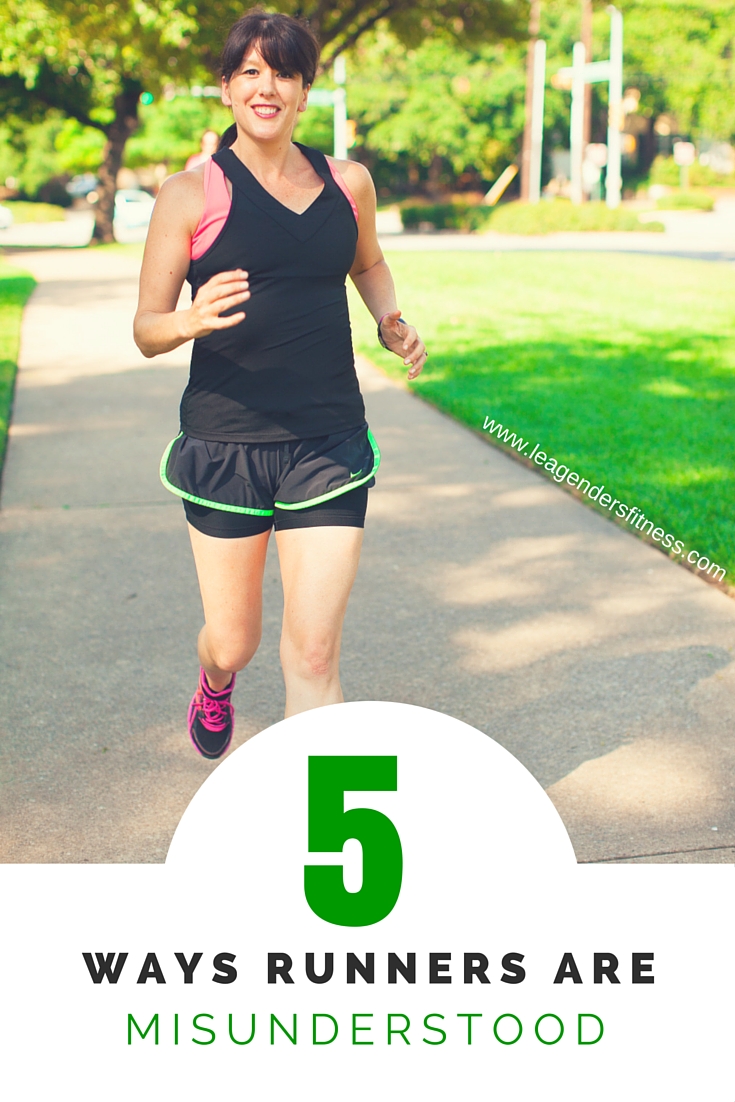
Friday Funny: 5 Ways Runners are Misunderstood

Runners are a rare breed. Our non-runner friends shake their heads at us in disbelief when we talk about things like an "easy" 10 miler, hill repeats or 5am wake up calls. We try to explain our weird ways and even try to recruit them to becoming runners themselves, but we often just leave them confused. Here are five ways runners are routinely misunderstood by our non-running friends. 

five ways runners are misunderstood

five ways runners are misunderstood


The stickers on our cars

Whether they thought the 13.1 or 26.2 sticker on your car was a bible verse or a radio station, their eyes glaze over as we start to recount our last half marathon. They're certainly sorry they brought it up. 

The language we speak

Whether we are speaking in all acronyms (I PR'd and got a BQ!) or we start using weird words like Fartlek, they have no idea what we are talking about...and they're too afraid to ask, because we just might keep talking about running.

Our toenails are optional

Like any good runner we buy our running shoes 1/2 size to one size bigger than our street shoes, but it happens to the best of us: Sometimes our toenails turn black and/or fall off. So when our non-runner friends ask us to go for a pedicure, they sometimes don't understand that some issues are beyond help. We just do the world a favor and wear closed-toe shoes. 

Porta-Potties are a Godsend

Listen, I know they're gross, but when you are a beyond-exhausted runner that has to use the restroom and you see a porta-potty in the distance, you wonder if it is a mirage or if all your prayers have been answered. In that moment a porta-potty is literally the best sight you have ever seen. Hope you remembered to tuck toilet paper in your socks. Try explaining that one to a non-runner.

The early morning alarm

When we skip a night out on Friday because we have an early morning training run, or leave the party early without drinks on Saturday because of a Sunday morning race, it can be hard for our non-runner friends to understand our priorities. Yes, we want to get up at the crack of dawn to run 13 miles in exchange for a t-shirt and a cheap medal. Really! 

Don't get me wrong, I love my non-runner friends. I don't expect them to learn everything about running just because I love it. I'll accept being a misunderstood runner as long as we can agree that a marathon is 26.2 miles. Every. Single. Time.

Have you ever been misunderstood as a runner? 

Coach Lea

5 Ways to Celebrate Global Running Day

Usually on #workoutwednesday I share a strength training workout, but today we are going to do something a little different. Did you know it is a global holiday today? It calls for celebration. 

It seems that nearly every day, it is declared a new social media made-up holiday. You know what I mean. National donut day. World margarita day. National sibling day. National wine day. The list goes on and on. These made-up holidays can be fun way to connect and share on social media, plus who doesn't love a good excuse to drink wine and eat donuts? (Not me. I'm a trainer. Sarcasm font needed here.)

Finally there is a made-up holiday that I can really get behind! June 1st is global running day. I say if you participated in national donut day because it was "a thing" you are now morally and socially obligated to participate in global running day! (ha) If you can use a made-up holiday as an excuse to indulge on donuts, then surely you can use one to motivate yourself to go for a run. Deal? Deal. 


FIVE WAYS TO CELEBRATE GLOBAL RUNNING DAY


1. Go for a run (D'uh.) 

The easiest way to celebrate global running day is to go for a run! Whether it is one mile or ten miles, get out there and hit the pavement. Nothing boosts your mood and clears your head like an outdoor run. 

2. Download a Race Bib

If you want to have a little fun with it go to http://globalrunningday.org/ to pledge your miles and download a running bib. Whether you wear the bib or not is up to you. Your neighbors may look at you funny, but I'm used to it, they look at me funny anyway. 


3. Share on Social Media

What's the point of a made-up holiday if you don't share it with all your friends on social media? Since it is virtually impossible to run a mile without telling everyone you know about it anyway, this is a perfect opportunity to let your Facebook friends know that you are cool and athletic. Use hashtag #globalrunningday and share a sweaty-selfie or a shoefie. While you are at it, search the #globalrunningday hashtag to connect to the millions of other runners celebrating this day.

4. Run for Charity

Run for your favorite charity on Charity Miles. Did you know you can raise money for your favorite charity by logging the miles you are running? It is a great way to give back and all you have to do is run (and download the app). You can do this any day, not just on Global Running Day. 

5. Motivate Friends

Global running day is the perfect opportunity to guilt..errr...I mean motivate your friends to go for a run with you. Once you tell them about global running day they surely won't want to miss out on this once a year opportunity. Who knows, you may end up recruiting the next run fanatic and change someone's life. Gather up your friends and family and make an event of it. 

What do you think? Will you join me in logging some miles on global running day? Let me know in the comments or on social media if you ran today to celebrate! In the meantime, I am still pushing for my own made-up holiday, National Hug a Blogger Day.

Coach Lea


Running A-Z: B is for Breathing (Breathing Tips for New Runners)

Welcome to the newest edition of Running A-Z. This is a weekly series where I cover a new running topic each week following the order of the alphabet. Last week we covered running acronyms. If you don't know what a BQ or a PB is in running, check out that post to get up to date. 

B is for Breathing


It may seem silly to write a blog post about how to breathe, as breathing is something that we don't have to think about normally. When you start to run you naturally will start breathing heavier to provide your lungs with the necessary oxygen. However, breathing is often an issue for new runners. It seems that the lungs give out long before the legs and you are left huffing and puffing when your legs could go on.

There are a couple of breathing strategies that can help you as you move through this phase of your training. 

DEEP BREATHING

Breath through your mouth and your nose to take in as much oxygen as possible. Run with your mouth slightly open. It keeps your face relaxed and makes it easier to breathe deeply. Take deep breaths from your diaphragm, rather than your chest (otherwise known as belly breathing). Practice taking deep breaths, put your hand on your belly to feel it expand and contract with your breath. 

RHYTHMIC BREATHING

Rhythmic breathing is helpful in a couple ways. Try to synchronize your breathing with your steps, it helps with both efficiency and pacing. I personally like a 3:2 breathing pattern. With each step I take three breaths in (right, left, right) and then two out (left, right). Be careful not to hold your breath at any point. (I found at first I had a tendency to hold for a second after the inhales and I had to break that habit.)

A 2:2 or 3:3 are also popular breathing patterns. Two breaths in, two breaths out or three breaths in, three breaths out in time with your steps. Rhythmic breathing can also be a mental distraction. While you're focused on counting your breaths and steps, the miles can seem to move by a little faster.  

It is not just for beginners. I do rhythmic breathing when I need to focus and find my running rhythm. If you do a little experimenting on the road, I am sure you will find the rhythm that works best for you. After some practice, you will find that it comes naturally. 

Of course, talk to your doctor before you start running. If you find that breathing is an ongoing issue even after your have adapted to running, please see a doctor as it could be exercise-induced asthma (or something else all together). 

One thing I can promise about breathing for new runners is that it does get easier. It will get better with practice and conditioning. Before you know it you'll be breathing like a pro. 

Good luck and keep training!
 

Coach Lea