RUNNING

Fit to Run: Run for the Hills

Welcome to the latest edition of Workout Wednesday, when each week I share a new running or strength training workout. This week we are doing hills! Every runner's favorite workout is a hill workout, right? (Crickets). OK, so maybe they are not the favorite, but I assure you hill repeats are some of the most effective interval workouts for runners looking to improve running strength and increase speed. What's not to love about that?

I put together this hill workout that you can try on a treadmill. It is only 19 minutes long, but you'll get in a great workout during a short period of time. 

THE WORKOUT

Always warm-up before beginning any workout. 

Start by running for two minutes at 0% incline
Increase the incline to 2% and run for one minute at a hard effort (RPE 7-8)
Recover by jogging at an easy pace for one minute at 0% incline
Increase the incline to 4% and run for one minute at a hard effort
Recover by jogging at an easy pace for one minute at 0% incline
Increase the incline to 6% and run for one minute at a hard effort
Recover by jogging at an easy pace for one minute at 0% incline
Increase the incline to 8% and run for one minute at a hard effort
Recover by jogging at an easy pace for one minute at 0% incline
Decrease the incline back down to 8%, 6%, 4%, 2% with one-minute easy jog recovery between reps at 0% incline.
Cool down for two to five minutes

WORD TO THE WISE

This is a short but challenging workout. Allow your body adequate time after this workout to properly recover. Most athletes will need two to five rest and/or recovery days between hard workouts. You can do easy runs or lower impact activities during this time. Adaptation (getting faster and stronger) happens during rest, not during the actual workout. Be sure to allow your body the proper time for recovery from intense workouts in order to reap the benefits of your hard work. 

Never blindly follow a workout on the internet. Listen to your body. If you need more recovery time between reps, then take two minutes (or three). If an 8% incline is too hard, then only go to 6% or 4% and work to increase it in the future as you get stronger and fitter. If one-minute intervals are too much, start at 30 seconds. Always work according to your own fitness ability. Pushing beyond your limits will only lead to frustration, burnout, and injury. Start small when necessary and allow yourself the space to grow. Need help? Have questions? I'd love to help. 

Interested in hill workouts that you can try outdoors? I wrote a post last year about running hills that you may find helpful.


Like this post? It helps me when you share with your friends and followers. 

10 Essential Safety Tips for Runners

Running safety has been on my mind a lot lately since I started the Runner's World summer run streak and I've been running outdoors a lot more. It's the kind of thing we tend not to think too much about until something happens to us or someone we love (or we see those scary news stories).

I had a long stretch of time when I did not run outdoors alone at all, because out of nowhere I had a weird feeling about it. I think it's important to trust our intuition. These days I run with hubby when possible and take precautions to run as safely as possible. If I feel unusually uneasy one day, I'll run on the treadmill or take a rest day. We don't need to be afraid to run, just be aware of the risks and take safety measures.


This post contains affiliate links. That means if you click on a link in this post and make a purchase, I make a small percentage of the sale at no additional cost to you. No one is getting rich here, it just helps with the running (pun intended) of this blog. 

RUN WITH A PARTNER WHEN POSSIBLE

There is safety in numbers. If possible, run with a partner, even if that partner is your dog (hi, Ollie!). I run with my husband a lot which makes me feel safer out on the streets. When he runs faster than me, I yell at him from behind to slow down or else I might get murdered back here. All joking aside, team up for safety.

IF RUNNING ALONE LET OTHERS KNOW

Let someone know when you are going on a run alone. Advise them the route you intend to run, when you are leaving and when you return. If could be someone you live with or just a text to a friend. If nothing else it gives you a legitimate reason to #runbrag. 

AVOID RUNNING WITH HEADPHONES

I love running to music, especially my beloved White Stripes, but running with headphones can be dangerous. It's important to stay present and aware of our surroundings. If you can't hear that barking dog, distracted driver or possible predator approaching, you're less likely to be prepared to defend yourself. Save the headphones for the treadmill or track.

WEAR LIGHTS AND REFLECTIVE GEAR AT NIGHT

It's probably best to limit runs to daylight hours, but I know that's not always possible, especially during the winter months. When running in the dark, wear a headlamp or shoe lights and reflective gear. You may look dorky with a headlamp, but safety first, right? Right.

ALWAYS CARRY YOUR CELL PHONE

Always carry your cell phone so you can make a phone call in case of emergency or get too tired and need a ride home (wink). I use a FlipBelt that holds my personal items close to by body while I run. 

CHANGE UP YOUR DAILY ROUTINE

We are creatures of habit and it can be easy to fall into a regular running route at the same time every day. It's a good idea to change up your route or the time of day. Run an hour earlier or an hour later, or on a different day than usual to change it up. Try running your regular route backwards or on different streets. 

ALWAYS CARRY ID

It's an easy thing to overlook. You think that you'll be back in 30 minutes, you don't really need your ID, but if something happens, having identification and/or emergency contact information on you is crucial. You can slide your driver's license in your running belt or wear a shoe ID

RUN ON LOW TRAFFIC STREETS AGAINST TRAFFIC

Run on low traffic streets facing oncoming traffic. It may sound counterintuitive, but when you run against traffic, you can see the traffic coming towards you and will be able to react quicker than if it was coming from behind you. 

AVOID UNFAMILIAR AREAS

When running alone, avoid isolated and unfamiliar areas. You can could easily make a wrong turn and end up in an unsafe part of town. When you are out of town, ask for route recommendations from hotel staff, running stores and local runners. Know in advance who to contact in case of emergency. 

CONSIDER PEPPER SPRAY OR SELF-DEFENSE CLASSES

Consider carrying pepper spray or a personal alarm with you on your run or taking self-defense classes. 

Do you take these safety measures on your run? Any other safety tips you'd like to share? Trust your intuition, take safety precautions and run safe!

Like this post? It helps me when you share. 

Fit to Run: Interval Run

Welcome to the latest edition of Workout Wednesday. I am writing a new running and strength program and if you are subscribed to the blog, you can follow along each week as it unfolds. I will slow-drip the content to my blog readers and once the program is complete I will likely release it as an ebook. 

You can read my introduction to the program here and last week I shared the first workout on the plan: Easy run plus 20 minute strength workout.

We already talked a little bit about goal setting because it is a good idea to have clear goals before starting any new program.

This program will also have a nutrition component. You can get started by checking out this article on how to self-assess your own food journal. More to come in the future on sport and exercise nutrition. 

This post contains affiliate links. This means if you click on a link and make a purchase I make a small percentage of the sale with no additional cost to you. No one is getting rich here, it just helps with the running (pun intended) of this blog. Thanks for your support. 

WEEK ONE, DAY TWO

INTERVAL RUN

Week one day two is an interval run. You will need a timer to track your intervals. I use the GymBoss to time my intervals when I am not on the treadmill.

Interval workouts are great for improving speed and running efficiency. I recommend intervals two times a week to start. 

Always warm up before beginning any running workout. I shared a quick dynamic workout in this blog post. 

This workout uses the RPE chart (rate of perceived exertion). Your pace is based on the talk test. You can learn more about RPE in this post but I'll give you a short rundown for this workout.

After your dynamic warm up begin this workout by walking briskly or jogging slowly before you start your first interval.

You will alternate between a hard effort for 30 seconds and an easy recovery effort for 90 seconds for eight rounds. 

Your 30 second hard effort should be RPE 7-9. It should be difficult to talk or get out a word or two during this interval. It should feel hard enough that you can't hold a conversation, but not so hard that you can't maintain the pace for the full 30 seconds. You may have to experiment with what the right pace is for you. (You have eight rounds to figure it out. wink.)

Your 90 second recovery effort should be a brisk walk or a slow jog in order to recover from your hard interval. 

This workout including the warm up and cool down is about 20 minutes. The workout is shorter in duration but higher in intensity, so be sure to push yourself appropriately during the hard effort intervals for the best results.

Interval workout - save to Pinterest - subscribe for a printable workout

Interval workout - save to Pinterest - subscribe for a printable workout

Give it a try and let me know how it goes. If you are subscribed to my blog you will continue to receive updates on this program. Enter your name and email below for a printable version of the interval workout.

Did you know today is Global Running Day? Join Ollie and me today and pledge to run at least one mile to celebrate with other runners all over the globe. 

Like this post? It helps me when you share with your friends or followers.

52 Healthy Habits: Running Coach Tips to Stay Safe and Sane on the Summer Run Streak

Ahh...Summer is almost here and while most people kick off the unofficial start of summer with a backyard bar-b-que, we runners usually strap on our kicks and participate in Runner's World annual Summer Run Streak.

This week as part of our 52 healthy habits series, we are talking about the Runner's World run streak.

What's a Run Streak, you ask? It an an annual event when runners commit to at least one mile every day from Memorial Day through Fourth of July and share their progress on social media using hashtag #RWRUNSTREAK. 

If you follow this blog, you know I am big on healthy habits and lacing up those running shoes every day for 37 straight days is a fabulous way to establish a consistent running habit while maintaining your fitness through most of the summer.

As a running coach it is my mission to make sure that we all stay safe and sane throughout the streak. You can read Runner's World official FAQs here, but here's my take on the run streak.

1. KNOW YOUR WHY

Why do you want to run the streak? To stay motivated through the summer? To establish a regular running habit? Or because all the cool kids are doing it on social media? It's great to do it just because it's fun, but after a couple of weeks, having a reason why you want to achieve this goal will keep you going once the initial excitement wears off. 

2. MAKE A PLAN

run streak tracking and planning calendar free download

run streak tracking and planning calendar free download

If you don't usually run every day, make a plan as to when you will fit in your mile each day. Most people will be able to run the mile in 15 minutes or less, so decide if you will get up early, run at lunch, right before dinner (or whenever works for you). Schedule your run on your calendar so you know exactly when you will get it done each day. Here in Texas, the summers can get pretty hot, so I use the running streak to motivate myself to get up early before work and run at least one mile.

Make a plan for when things don't go your way. What if it rains? What if you have to work late? What if your dog ate your running shoes? Ollie! Think ahead about how you will handle potential obstacles, because nothing worth doing comes easy. I suppose we could hope that 37 days go by without anything going wrong...there's a first time for everything, but we'd be better off to be prepared for challenges. 

3. ALTERNATE SHOES

While the streak goal is to run at least one mile every day, a lot of runners will probably choose to run more than one mile on some days. When running on subsequent days, it is a good idea to alternate between two pairs of running shoes. Simply changing shoes every other day can help decrease the chance of repetitive use injuries. 

4. DON'T NEGLECT REST AND RECOVERY

On your normal rest days, you will still be running one mile to keep the running streak alive. These days should be very low intensity (aka sloooooow). I can't stress enough the importance of resting your body. While you will probably run a few runs during the week that are longer in distance and higher in intensity, I highly recommend at least two or three days a week of just one very slow easy mile to allow your body time to recover.

5. SLEEP WELL

Speaking of recovery, since you may be putting additional stresses on your body during the streak, it is more important than ever that you aim for seven to eight hours of sleep. It is during rest that the body grows stronger and faster. Make a plan for a good night's sleep. It is a healthy habit that will serve you long after the run streak is over. Here are some tips on how to create and follow a sleep ritual.

6. RAMP UP SLOWLY

If you are not running at all and using the streak to get back on track or start a new running routine, I recommend starting with just one mile a day. No more. Too much too soon will only lead to burnout and possible injury. You can increase your miles as the streak progresses and your fitness levels improve. 

If you are already running a few days a week, start with two to three regular runs during the week and four to five one mile days (according to your current fitness levels). Think about the normal amount of time that your body is accustomed to running each week. To stay safe and injury-free, don't drastically increase the amount of time hitting the pavement.

7. LISTEN TO YOUR BODY

This is fun and we will all be showing off our streak on social media, but no streak is worth your body's health. If you feel aches and pains (other than normal soreness) then I highly recommend that you listen to your body and take some time off as needed. Pain is your body's way of telling you something is going wrong. Ignoring pains will only lead to more serious injury. No streak is worth that. Here is a post I wrote on the difference between pain and discomfort. 

8. THERE'S NO SHAME IN WALKING

Technically speaking, the Runner's World rules say that walking doesn't count. I disagree. Besides, a Runner's World official streak moderator isn't going to jump out from behind the bushes to issue you a citation for walking. Please feel free to run/walk your miles as needed to stay to safe and sane. 

9. BE SOCIAL

If you made it through all my coach safety talk, I want to remind you to have fun and be social. Post pictures (aka selfies or shoefies) of your daily runs and use the hashtag #rwrunstreak on Instagram and/or Twitter. Search the hashtag and leave comments to encourage your fellow run streakers!

Let me know how it goes. I'll be on the lookout for you on social media. 

It's Memorial Day so I also want to take this time to express my gratitude for the men and women of the US armed forces who made the ultimate sacrifice for my freedom. 

scenes from the #Shredshed

scenes from the #Shredshed


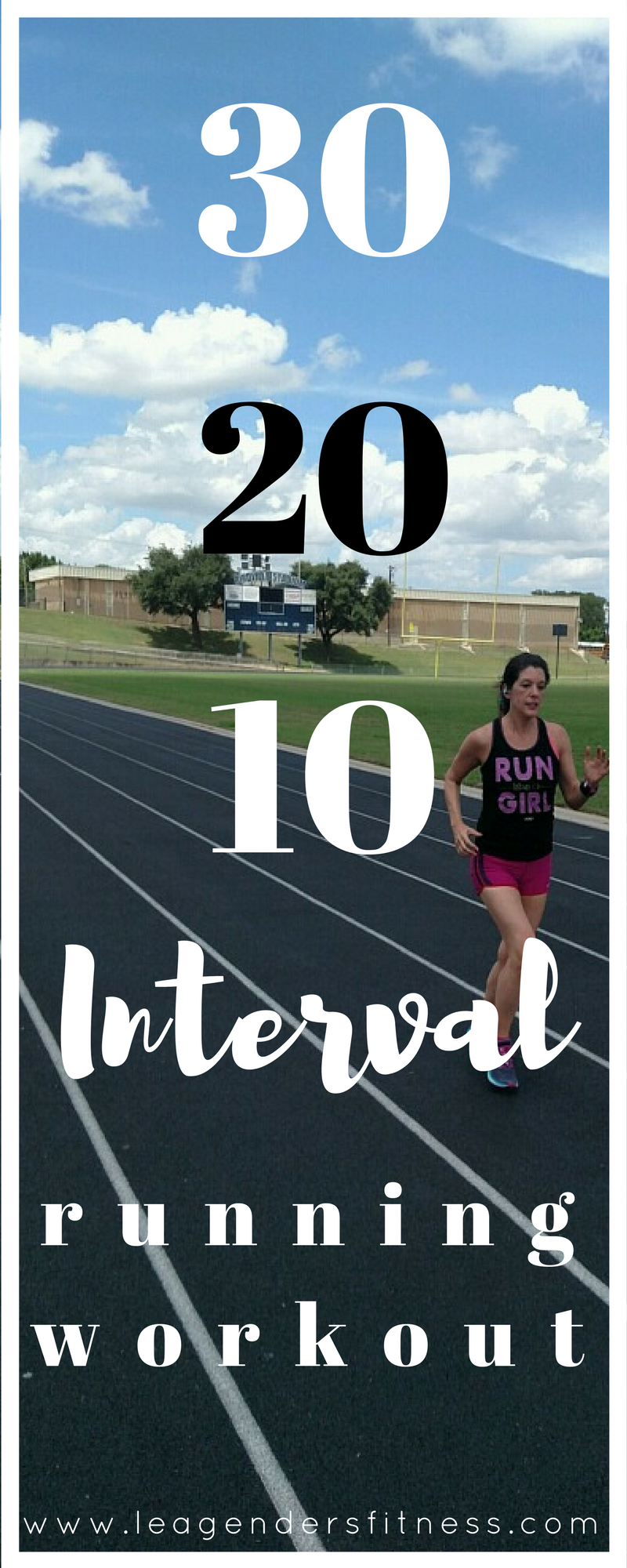
The 30-20-10 Interval Running Workout

Welcome to the latest edition of workout Wednesday! This week I have a great interval running workout for you to try. This workout was developed by Dr. Jens Bangsbo at the University of Copenhagen in Denmark to increase speed in recreational runners. If you are looking for an easy way to incorporate interval or speed training into your running workouts this is a great place to start. You could do it on the street or the track with a timer (affiliate --> I use a gymboss interval timer) or on the treadmill.

This is a by-feel paced workout. That means you don't need a GPS watch to make sure you hit certain paces. All you need is a timer and a pair of running shoes (OK, clothes would probably be a good idea too). 

Warm up by walking or jogging 10 minutes or one mile.

30 seconds

Start at a slow pace for 30 seconds. This should feel very easy, breathing is easy. For a beginner this may even be a brisk walk. It's called conversation pace. You could hold a conversation while maintaining this pace. 

20 seconds

Accelerate to a moderate pace for 20 seconds. This should be your race pace. A little faster than your easy pace but not an all-out-sprint. It should feel comfortably hard. You could probably get out a sentence or a few words between breaths, but you are working too hard to hold a conversation.

10 seconds

Then sprint as hard as you can for 10 seconds. Go for it. Give it all you have for 10 seconds. You can't talk at all while holding this pace. 

Repeat four more times in a row without rest for a total of 5 minutes of these intervals.

2 Minutes

Rest until your breath is fully recovered (about 2 minutes).

Repeat

Repeat these 30-20-10 sessions and rest periods until fatigued (no more than 30 minutes) for a quick and effective speed workout for runners of all levels

Cool down by jogging or walking 10 minutes or one mile.

Doesn't Ollie demonstrate the 10 second sprint pace picture perfectly? Good dog. 

Doesn't Ollie demonstrate the 10 second sprint pace picture perfectly? Good dog. 

Add this workout to your schedule 1-2 times per week with rest days and easy-paced run days in between hard workouts.

A general rule for intense training: A little is better than none and a lot is too much. Remember that our bodies adapt (grow stronger and faster) during rest, not during the workout. Allow your body adequate time to recover between hard workouts for the best results.

Like this post? It helps me when you share.