MOTIVATION

7 Health & Fitness Myths That Won't Die

As a fitness professional I see the same common fitness myths perpetuated year after year. Long after I think these myths have been officially debunked, they rise up again. They just won't die. Let me take a stab (pun intended) of ending them once and for all.

MYTH #1: CARBS MAKE YOU FAT (OR ANY OTHER ONE THING)

TRUTH: Carbohydrates themselves do not cause weight gain. When you over consume any food, it can lead to weight gain. Carbs don't make you fat. Dietary fats don't make you fat. When you consume more calories than your body needs it gets stored as fat. Everyone is a little different, but in general most people can be successful by consuming a wide variety of whole foods from nature, enjoying treats in moderation and keeping an eye on calorie intake versus activity output to avoid fat gain. 

MYTH #2: LIFTING WEIGHTS WILL MAKE WOMEN BULK UP LIKE A MAN

TRUTH: Those "bulky" ladies that you see on the fitness stage and in magazines worked very hard to look exactly that way. It didn't happen by accident. They trained specifically for that look over a long period of time. They may have taken steroids. It takes dedicated effort to put on muscle. If you start lifting weights your results will not look like theirs unless you train specifically for that goal and you do it for years. Pick up the dumbbells or the barbell. You'll develop lean muscle which will help shape your body. Muscle tissue requires more energy at rest, so the more muscle you have the more calories you burn even when you are not exercising. Muscle takes us less space than fat in the body, so when you lose fat and gain muscle, you will look smaller, not bulkier. Ladies with lean muscle look slimmer, fitter and can beat their friends in arm wrestling competitions. Just kidding about that last one. 

MYTH #3: RUNNING IS BAD FOR YOUR KNEES

TRUTH: My favorite myth I love to hate. Too much of anything is usually bad, that is why it is called "too much." Too much running without adequate strength in the hips can lead to knee pain. If you listen to your body, do some runner-specific strength training, get adequate rest/recovery, be patient with mileage and intensity and listen to your favorite coach (that's me in case you were wondering) then running is not bad for your knees. Bad training is bad for your knees. You can't blame bad training on running as a whole. 

MYTH #4: YOU CAN SPOT REDUCE FAT

TRUTH: I know we would all love to believe that we can do 1000 crunches a day to achieve a flat stomach or buy the thighmaster for lean legs, but it is simply not true. You can not spot reduce fat. You can, however, work to reduce your overall body fat percentage through your nutrition and exercise program. Be sure to include weight training (see myth #2) to develop lean muscle for best whole body results. 

MYTH #5 : YOU MUST GO HARD OR GO HOME

TRUTH: People tend to think if they are not killing themselves in the gym, then they won't get results, when sometimes the opposite is true. Yes, we should plan high intensity workouts into our training cycle, but they should be followed by lower intensity workouts to allow our bodies to properly recover. Overtraining can increase our chance of injury, cause burnout, fatigue and irritability.

Spend time on flexibility and mobility work. Take a walk or go on a hike. Be active outside of the gym. High intensity workouts properly programmed are great, just keep in mind there is much more to a well-rounded fitness routine. You should finish your workouts most of the time feeling energized, not beaten down. It's the all-or-nothing thinking that gets us in trouble.

MYTH #6: YOU NEED SUPPLEMENTS TO GET RESULTS

TRUTH: You can get in great shape and never take a single supplement. One of the key principles of fitness success is to start with the basics. Before thinking about supplements, get your basic nutrition, exercise and healthy lifestyle habits in check. If you are sleeping five hours a night, working out inconsistently and binge eating or drinking on the weekends, there are more important things to tackle first. Supplements may (or may not, honestly) give you an edge after you are already doing everything else right. They won't help you if you are not already consistent with your healthy habits. Save your money. (A protein powder supplement can be helpful for when whole food protein is not available or convenient, but not a necessity.)

MYTH #7: IF IT'S ORGANIC IT'S HEALTHY

TRUTH: If you choose to buy organic fruits and vegetables then there is no question that is a healthy choice. However, just because a packaged food boasts the word 'organic' doesn't necessarily mean that it is a healthy option. Case in point: organic Doritos. Organic processed foods are still junk foods. The ingredients are often improved to remove artificial colors and flavors, but they still may be extremely high in sugar, salt and unhealthy fats. And they cost more. I am pretty skeptical of any packaged foods labeled as organic. Portion control and moderation is key when consuming organic chips, cookies and pizza, just like when you consume the non-organic versions. Don't assume because it is labeled as organic that it is a health food. If it comes in a package, it is probably not.

Did I miss any? 

Like this post? It helps me more than you know when you share with your friends and followers. 


52 Healthy Habits: 10 Easy Healthy Nutrition Swaps

Have you been following along with my 52 Healthy habits series? Each Monday we talk about the habits we can develop to in order to live a healthier life. Habits are the building blocks of a healthy lifestyle. You don't have to change all your bad habits or attempt to develop a ton of new healthy habits all at once. In fact, trying to do too much at once can cause overwhelm and ultimately, failure. We, as humans, don't respond well to a lot of changes at once. A better strategy is to tackle one new healthy habit and take the time to cultivate it. Once you have a handle on it, add in another. The slow build approach is a much more sane and sustainable approach over the long term. After all, this is a healthy lifestyle, not a healthy 21 days, healthy 12 weeks or even a healthy year. We want to make changes that stick for life. Are you in? Let's get to it. 

Sometimes the easiest way to change those behaviors that don't bring us closer to our goals, is to make healthy swaps instead. Good or bad, we have already have developed the habit, now we can work on how to make that habit healthier. 

This post contains affiliate links. That means if you click on a link in this post and make a purchase I make a small percentage of the sale with no additional cost to you. No one is getting rich here, it just helps with the costs associated with running (pun intended) this blog.

TEA INSTEAD OF COFFEE

I may be biased here because I am on a break from coffee and feeling great, but I have found swapping my regular morning coffee for hot tea was an easy transition (I mean, after the debilitating headaches went away, of course.) Drinking a hot beverage in my favorite mug was a habit, I replaced that hot beverage for a healthier alternative and now drinking hot tea is my new habit. I go on a break from coffee once a quarter in order to reset my caffeine tolerance, so I am not so dependant on it for those early morning wake up calls. (I was going to say early morning workouts, but let's be real, I haven't been up for an early morning workout in months.)

CINNAMON INSTEAD OF SUGAR IN COFFEE

I love my coffee (which is why I do a reset once a quarter, so I can fully enjoy it again after my break). Drinking coffee is not a bad habit in itself. Caffeine has its health benefits. Usually it's what you add in your coffee that can be the problem. When you add processed flavored creamers and sugars, or order the 500 calorie barista-made drink, you're just consuming empty calories. There's nothing wrong with treating yourself once in awhile, It only becomes an obstacle to achieving your goals when it's a habit.

Swapping cinnamon for sugar is a great way to add flavor and spice to your black coffee without adding sugar. 

SELTZER WATER INSTEAD OF SODA

I was a Diet Coke fanatic for most of my adult life. I wasn't able to quit my several-a-day habit until I found a suitable replacement. Enter seltzer water. I swapped my daily Diet Coke for the fizzy goodness of seltzer water. It's important to note that seltzer water isn't sweet like soda because it doesn't have sugar or artificial sweeteners. It took some time for my taste buds to adjust, but now it is an easy choice for life. 


PLAIN YOGURT WITH FRUIT INSTEAD OF YOGURT CUPS

I've said this before, but it bears repeating now. Most of the yogurt cups you find in the grocery store are not health foods. They often have as much sugar as ice cream (It's no wonder they taste so good!) and riddled with processed ingredients, but are regularly marketed as a healthy choice. Of course, there are exceptions. I like the Siggi's brand for a healthier alternative, it is lower in sugar and higher in protein. Most of the big name yogurts on the grocery store shelf are junk foods masquerading as health foods. 

Swap your yogurt cups for a tub of plain Greek yogurt. Plain Greek yogurt is high in protein. Add fresh or frozen berries, fruit or natural granola. I bought a 8 pack of reusable small plastic cups with lids in order to pack my healthy yogurts for lunch. 

GREEK YOGURT INSTEAD OF SOUR CREAM

Yeah, I thought it sounded a little weird too, but you'll hardly know the difference. Use plain Greek yogurt instead of sour cream in recipes, salad dressings, dips and of course, on tacos. It has more protein and fewer calories than sour cream. Our favorite way to use Greek yogurt in a recipe is in our turkey mushroom caps.

OATMEAL INSTEAD OF CEREAL

No one ever mistook Fruity Pebbles as a health food, but even the healthiest-marketed boxed cereals usually have too much sugar, too many processed ingredients or are too low in nutrients. If you enjoy it, it's fine as an occasional treat, but there are better choices for your daily breakfast habit. A great swap for boxed cereal is old fashioned oatmeal flavored with cinnamon, berries and/or fruit. Add a scoop of protein powder and chopped nuts for a balanced breakfast of healthy carbohydrates, proteins and fats. 

TAKE A WALK INSTEAD OF DESSERT

We all love our dessert and it should be enjoyed once in awhile, but a better after-dinner habit is a daily walk. I know a walk doesn't sound as enticing as a piece of pie, but hear me out. A quick daily walk after a meal helps with digestion, gets you moving and burning calories with minimal impact on your body. You get some fresh air, quality time away from electronics and your dog will thank you too. If you think you don't have time, start with five minutes. Walk to the end of the block and back. Then over time you can work on building up duration and distance.

FROZEN BLENDED BANANAS INSTEAD OF ICE CREAM

Seriously, have you tried this? Take two to three frozen bananas and let thaw slightly before adding to a food processor or blender. Blend slowly until they have an ice cream-like consistency. Add protein powder, cocoa powder or peanut butter powder for flavoring. Share with a friend. A delicious healthy swap for ice cream. 

SPINACH INSTEAD OF ICEBERG LETTUCE

Swap that iceberg for a nutrient-dense alternative, like fresh spinach. Spinach has vitamins, minerals, fiber and even boasts a bit of protein. It is much more nutritious than iceberg and less expensive than those pre-bagged lettuce mixes. We buy a few bunches of spinach and use in our salads all week. 

SPAGHETTI SQUASH INSTEAD OF PASTA

I saved the best for last. I love spaghetti squash as an alternative to traditional pasta. We add low-sugar pasta sauce, parmesan cheese and ground turkey and we can hardly tell the difference from our regular spaghetti dish. If you have a spiralizer, you make spaghetti-like noodles out of almost any vegetable. 

What are your favorite healthy swaps? Did I miss any? Did I give you any ideas? Pick one to try and let me know how it goes. 

Like this post? It helps me a lot when you share with your friends and followers.


5 Books to Add to Your Summer Reading List

I love to read. I often say that I don't have the time to read, but I seem to have plenty of time to scroll Facebook and Instagram. I've been working on spending more of my free time reading and less of it on social media. I am a non-fiction aficionado. OK, maybe not an aficionado, but let's just say I haven't read a fiction book in a long time. I tend to prefer to read real stories about real people.

My summer reading list is full of non-fiction books that I loved and would recommend to my friends. If you are an athlete, an entrepreneur or just looking to be inspired to live a better life, these books are for you. These aren't necessarily the newest books, just the ones that recently made the biggest impact on me. 

This post contains affiliate links. That means if you click on a link in this post and make a purchase, I make a small percentage of the sale with no additional cost to you. No one is getting rich here, it just helps with the costs associated with running (pun intended) this blog.

5 BOOKS TO ADD TO YOUR SUMMER READING LIST

Shoe Dog, Phil Knight
A memoir by the creator of Nike

This book made me laugh, cry and cringe over and over again. It's the story of Phil Knight and how he created the Nike brand by first selling running shoes out of the trunk of his car at track meets long before the popular culture cared about running. This is both a cautionary tale and an inspirational message about becoming an entrepreneur. It's a rough road but, in Phil Knight's case, the payoff changed the world.

INSPIRED & UNSTOPPABLE, TAMA KIEVES
Wildly succeeding your life's work

I highlighted this whole book. There are more words highlighted than not. It's inspiring, funny and practical. Tama recounts her own struggles, self-doubt and roadblocks as she tells her success story. She brilliantly advises us how to overcome our own obstacles as we fulfil our dream of wildly succeeding in our life's work. 

HOW BAD DO YOU WANT IT?, MATT FITZGERALD
Mastering the psychology of mind over muscle

Read this book and then next time you're on the struggle bus at mile eleven during a half marathon (what? just me?) you can recall the stories of high level athletes who overcame so much worse. It's not just us mere mortals who suffer during endurance training and events, but the best of the best learn how to cultivate mental strength to reach their goals. Through the stories of failures and obstacles in this book we learn how to train our mind for success.

ANATOMY FOR RUNNERS, JAY DICHARRY
Unlocking your athletic potential for health, speed and injury prevention

If you read this blog, you probably have some interest in running, so I'd be remiss not include this fantastic book on anatomy for runners. Don't worry, it's a lot more interesting than your college anatomy class. It gets a little science-y at times (insert your own Jesse Pinkman joke here) but if you understand the basic science behind running, it gives you the foundation for injury-prevention. In fact, everything you need to know about staying safe as a runner is outlined in this book including a self-assessment and corrective exercises for muscle imbalances. A must read for any runner.

THE SUBTLE ART OF NOT GIVING A F***
A counterintuitive approach to living a good life

This is a rated PG blog. I'm not one of those bloggers who swears for effect, but I read this book this year and I wanted to include it in my reading list. (Sorry, Ma!). Even when I shared it on Instagram, I edited it for family-friendly viewing. I enjoyed Mark's point of view, which was essentially to really care about the things that matter and let everything else go, but I had another major takeaway. I realized as I was reading the chapters in this book, I had already read many of these stories on his blog. Wait? One can weave together blog posts they already wrote in order to write a book? Mind blown. Excuse me while I go write my own book. 

Have you read any of these books? Do you have any non-fiction suggestions for me? 

Like this post? It helps me more than you know when you share with your friends and followers. 

Are we friends on Instagram?


52 Healthy Habits: How I Broke My Eating Out Habit

Welcome to the latest edition of 52 healthy habits when each week we tackle a new habit to improve our lives. A healthy lifestyle is built on habits, it's what we lean on when our willpower and motivation run out (because we are human and that's what happens). If you take the time and energy to develop healthy habits, then over time you can reap the benefits of an easily sustainable healthy lifestyle. We don't need to overhaul our whole lives at once, just tackle one habit at a time. No matter where you are in your healthy lifestyle journey, from newbie beginner to expert, there is always room for incremental improvements. It's the small changes over time that lead to big results. 

When I talk about healthy habits, I usually talk about the new healthy habits we can develop, rather than focusing on changing bad habits. If you develop healthy habits, often the bad habits get squeezed out naturally. For example if you focus on adding more vegetables to your meals each day, you tend to fill up on fiber, feel more full for longer time and maybe eat less of the unhealthy stuff as a result. I usually like to discuss what we can add to our healthy lives rather than what we need to take away. Today is a little different. 

HOW I BROKE MY EATING OUT HABIT

One of our New Year's Resolutions was to not eat out at restaurants. We committed to prepare all of our meals at home, within reason. It wasn't necessary about eating healthfully, if we wanted hamburgers and french fries, we could prepare them ourselves at home. It was more about controlling our spending than anything else. It just so happens that it is healthier to prepare food at home. The first month of not eating out, I lost five pounds without changing any of my other habits. Happy accident. 

It's not that eating at restaurants occasionally is inherently bad. I happen to enjoy going out to eat. You can eat at restaurants, make healthy choices, make special requests for a healthier meal and control your own portions by eating until 80% full, sharing meals or taking home leftovers. Restaurant eating absolutely can be a part of a healthy lifestyle.

It is only a potential issue when it becomes a habit. Not something that you enjoy, just something you do because...well, that's what you do. If you run through a fast food drive-through for breakfast each morning, it might be a habit. If you go out to eat for lunch every work day, it might be a habit. If you go out to eat dinner every Friday, Saturday and Sunday night, it might be a habit. 

We were going out to lunch every Saturday and Sunday. We would spend hours deciding where to go. Where do you want to go? I don't know, where do YOU want to go? At nauseam. It's not just us, right?. Then a lot of times it would not even be that enjoyable. We would spend $60 or more each weekend for mediocre food with not much payoff. We decided to break our eating out habit by committing to not eating out at all in 2017 (within reason, and I will get to that shortly). 

MAKE THE COMMITMENT FOR ONE MONTH

You don't have to go all in for a year like we did. Try it for four weeks and see how it goes. Look at it as an experiment. After the month is up review how it went. Did you feel deprived? Were you incredibly inconvenienced? Or did you just get used to not eating out and eating at home became your new healthy habit? Did you lose weight? Save money? That is what happened to us.

Once you have a month under your belt, you can make a decision on how to move forward. What was good about it? What was bad about it? Where there any benefits? What were the struggles? Depending on the outcome of your experiment, decide how to move forward. Maybe limit restaurant meals to once a month, or once a week or maybe keep going with the experiment.

BE REASONABLE

In case you were wondering, I am not a robot. I am a human being. I like to eat. I like spending time with friends. I enjoy special occasions with my family. When we committed to not eating out it was with the caveat, within reason. That means when my best friend got married and I went to her rehearsal dinner, I enjoyed a restaurant meal. When an old friend called me up and asked me to go to lunch, I went. When it's someone's birthday at work and the company is picking up the tab for a birthday lunch, I don't stay behind with my Tupperware salad. When I visited my family in Pennsylvania and my Dad wanted to go to Olive Garden, I was there with bells on. The idea is to break the habit, not become a drone. If there is a special occasion, a meaningful social reason or a business obligation, then those times are the exception to the rule. When It's Friday night and no one feels like cooking, or it's Saturday afternoon and we're bored, that's when it's most important that we hold to our commitment. 

SET PARAMETERS

We didn't initially set parameters for what qualified as eating out and it threw us off track in the beginning. My husband started buying hotdogs from the convenience store when we were doing construction on our house. He was working long days and had very little time for lunch.

We thought buying a drink or a snack from the convenience store was inline with our plan, so at first we considered this ok. But after some thought, realized we had created a loophole. While hot dogs weren't necessarily a restaurant meal, it certainly wasn't preparing food at home, so he stopped. If he wanted hot dogs, he would have to buy them from the grocery store and prepare at home. Decide in the beginning what is considered eating out and stick to it. We decided prepared meals from the grocery store were ok, prepared foods from the convenience store or coffee shop were not. You don't have to follow my rules. Set up your own parameters up for what works for you and your lifestyle.

HAVE A MEAL PLAN

The only way this will work is if you plan ahead. If you usually go out to eat at lunch, you'll need to spend time planning and preparing what you'll eat for lunch each day. It's a good idea to have have simple to prepare meals planned out for weekday dinners. Some nights we make turkey burgers, or veggie omelettes or have a crock pot meal prepared. The easier the better. If your nightly meal is easy to prepare, you'll be less tempted to go out to eat or order in. 

Be realistic with your meal plan. Don't plan extravagant meals on a Tuesday night when you know your time is limited. Don't put fish on your meal plan when you don't actually like fish, just because you think it's healthy. Try to marry what you think you should do with what you will actually do. Plan healthy meals that you enjoy. Then have a backup plan.

We all know life throws us curve balls that can thwart our best intentions. Have a plan for when your plan fails. A rotisserie chicken or prepared salad from the grocery store can be a quick and convenient meal while still sticking to your commitment. A freezer meal may not be the healthiest thing you can eat, but it can be a lifesaver on those crazy days when nothing goes as planned. It's not about being perfect. It's all about making the best choice available in the moment. 

INDULGE

This is by no means intended to limit indulgence meals, fun or enjoyment in food. We still eat all the foods we enjoy. We make burgers and pizza at home and buy grocery store sushi for our indulgence meals. Try looking up copy cat restaurant recipes to prepare your favorite restaurant meal at home. Plan a fancy meal at home. Just because you temporarily gave up restaurants doesn't mean you have to give up good food. I'm not a fun hater. 

How often do you eat out? It is for enjoyment or is it just a habit? Is there room in your lifestyle to cut back on restaurant meals? Give it a try and let me know how it goes!

Like this post? It helps me when you share with your friends and followers. 


My Fitness AHA Moment: How I Made Lasting Permanent Change

When did you have your fitness AHA moment? You know, the time you realized that fitness was going to be an integral part of your life. For me, I went through stages. 

I spend a lot of time on this blog dishing out fitness and nutrition advice and I thought it would be helpful if I shared a little bit about where I came from and how I got to where I am today. I'm not perfect. I miss workouts and eat unhealthy foods sometimes...just like every other human on this earth. I do my best to make the best choices possible considering what's reasonably available. I mess up all the time but I also make great choices all the time. For me and my journey, it was all about learning balance. 

I think it first started when I went to the doctor's office for flu symptoms, so I was already feeling like crap when the nurse asked me to step on the scale before I went in to see the doctor. I stripped off my jacket and kicked off my shoes, because you know, every quarter pound matters.
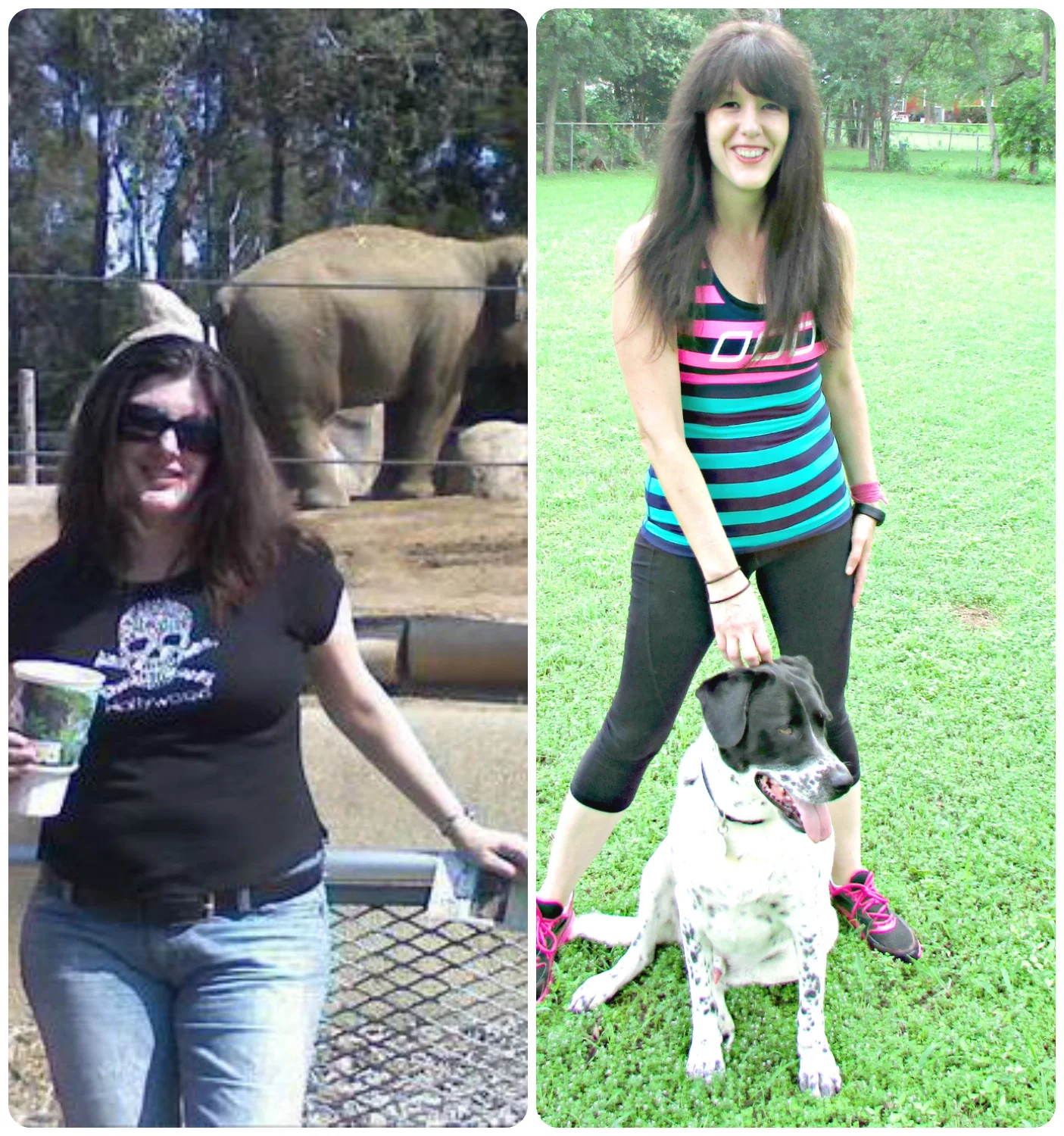
I hadn't stepped on a scale in a long time. I knew I weighed more than I would like, I knew my pants were tight, I knew I was overweight. I didn't know the number. When that number flashed back at me it was a reality check I wasn't emotionally prepared for. I came in for flu medication but sat there on the doctor's table with tears rolling down my face. 

The doctor was unsympathetic, he sternly told me I could take control if I would eat better. He didn't tell me what "better" meant. He didn't even ask me what I was currently eating. He recommended that I go on an "elimination diet" but I didn't know what that meant, I thought it meant cutting out carbs. He asked if I exercised and when I told him I was a runner (on and off, mostly off at that point), he said "Well, exercise doesn't help much with weight loss anyway." 

Now I was pissed and sad. How the hell did I get here? I stopped at the grocery store on my way back to work after my office visit and picked up some cottage cheese and blueberries for lunch 'cause that sounds satisfying and filling. (insert sarcasm font here.)

It was the first time that it hit me that I really needed to make some changes. I remember thinking, "Do I just have to accept that I am a fat person now?" It wasn't always this way. I was thin. It was the combination of poor nutrition, approaching my thirties and a switch from a retail management job to a sedentary desk job. It all caught up with me. Not in a day. Probably not in a year. But it slowly crept up over time and I realized I had a problem. For a moment I thought I had to accept my new reality, but I knew I could do better. I was ready to make some changes. I wasn't ready to give up. But I had some learning to do.

That was how it started but it didn't end there. It wasn't easy. I didn't magically lose all the weight and become happier. I made a lot of mistakes. I started over a lot. I lost weight and gained it back more times than I care to recount. 

I followed stupid fad diets, I exercised too much. I got obsessed with the scale. I'd eat too little and run too much for as long as my willpower would allow (sometimes a year). I'd try to live on cottage cheese and skinless chicken breast. Then life would happen, I would get sick, or go on vacation or deal with a stressful event and it would all fall apart. Then I would get overwhelmed. I drank too much wine. I ate too much. I wasted a lot of time (years!) in an all-or-nothing mindset. I was either on my diet or off. I was either running or I wasn't. My weight reflected that inconsistency.

But those first 40 pounds I gained and my learning experiences around yo-yo dieting over the better part of a decade was one of the best things that ever happened to me. I had to make those mistakes in order to learn. If I had been able to maintain a low weight with my unhealthy behaviors I never would have had the motivation to make real and lasting changes that not only affected my weight but my health and wellness. If I had never have gained the weight I would have never would have gotten healthy.

I learned that I love exercise. It makes me a better person. I love nutrition. I love feeding myself well and how that makes me feel. All these experiences, all these mistakes, they led me to becoming a fitness blogger, then a personal trainer, running coach and nutrition coach so I can help other people get on the fast track to making better decisions, to cut through the BS and make lasting sustainable changes. I help people so they don't have to waste time making the same mistakes that I did.

Today, fitness and health are my passions. I couldn't imagine life without this blog and my training. They are my creative outlets, my saving grace.

The most important lesson that I learned in all of this is that it is not about perfection, it is about making the best choice possible of what's reasonably available to me. It's not all-or-nothing. It's a little of everything. It's learning to find the balance of what is enjoyable, healthy and sustainable for life. It's about building healthy habits. When I stopped trying to be perfect and decided I would do the best I could, everything changed. 

Can you relate? 


Like this post? It helps me a lot when you share with your friends and followers.